spot_imgspot_img
spot_img
Home Blog Page 125

CYBERCRIME REPORTING AND INVESTIGATION

0

VINOD BHAT

Delhi, Feb 11:

‘Police’ and ‘Public Order’ are State subjects as per the Seventh Schedule of the Constitution of India. The States/UTs are primarily responsible for the prevention, detection, investigation and prosecution of crimes including cyber crime through their Law Enforcement Agencies (LEAs). The Central Government supplements the initiatives of the States/UTs through advisories and financial assistance under various schemes for capacity building of their LEAs.


The Ministry of Home Affairs has set up the ‘Indian Cyber Crime Coordination Centre’ (I4C) as an attached office to deal with all types of cyber crimes in the country, in a coordinated and comprehensive manner.


The ‘National Cyber Crime Reporting Portal’ (NCRP) (https://cybercrime.gov.in) has been launched, as a part of the I4C, to enable public to report incidents pertaining to all types of cyber crimes, with special focus on cyber crimes against women and children.


The ‘Citizen Financial Cyber Fraud Reporting and Management System’ (CFCFRMS), under I4C, has been launched in year 2021 for immediate reporting of financial frauds and to stop siphoning off funds by the fraudsters. As per CFCFRMS operated by I4C, till 31.12.2025, financial amount of more than Rs. 8,189 Crore has been saved in more than 23.61 lakh complaints. A toll-free Helpline number ‘1930’ has been operationalized to get assistance in lodging online cyber complaints. As per NCRP & CFCFRMS operated by I4C, total amount reported by citizens due to cyber frauds from the year 2021 to 2025 are as under:


Year


Number of financial frauds complaints on NCRP


Amount Reported


(₹ In Crore)


2021


2,62,846


551


2022


6,94,446


2290


2023


13,10,357


7465


2024


19,18,835


22848


2025


24,02,579


22495


Note: Data is dynamic in nature.


Cyber crime incidents reported on National Cyber Crime Reporting Portal, their conversion into FIRs and subsequent action i.e. filing of chargesheets, arrest and resolution of complaints, thereon are handled by the State/UT Law Enforcement Agencies concerned as per the provisions of the law.


The state of the art National-Digital Investigation Support Centre (previously known as National Cyber Forensic (Investigation) Laboratory {NCFL(I)}) has been established, as a part of the I4C, at New Delhi (on 18.02.2019) and at Assam (on 29.08.2025) to provide early stage cyber forensic assistance to Investigating Officers (IOs) of State/UT Police. Till 31.12.2025, National-Digital Investigation Support Centre, New Delhi has provided its services to State/UT LEAs in more than 13,299 cases pertaining to cyber crimes.


The Central Government provided continued support to the States/UTs for upgradation of the State Forensic Science Laboratories. As per the available information, Cyber forensic divisions are available in 27 State / UT FSLs namely, Himachal Pradesh, Mizoram, Rajasthan, Jharkhand, Kerala, Tripura, Uttar Pradesh, Karnataka, Chhattisgarh, Gujarat, Odisha, Puducherry, Uttarakhand, Assam, Manipur, Delhi, Maharashtra, West Bengal, Haryana, Andhra Pradesh, Tamil Nadu, Bihar, Jammu & Kashmir, Meghalaya, Goa, Arunachal Pradesh and Telangana. The Government of India has established a National Cyber Forensic Laboratory (Evidentiary) (NCFL (E)) at the CFSL, Hyderabad with a total financial outlay of Rs. 37.34 crore. Further, 07 Central Forensic Science Laboratories (CFSLs) are also operational across the country to assist in investigation of cybercrime cases.


The Ministry of Home Affairs has released financial assistance to the tune of Rs. 132.93 crores under the ‘Cyber Crime Prevention against Women and Children (CCPWC)’ Scheme, to the States/UTs for their capacity building such as setting up of cyber forensic-cum-training laboratories, hiring of junior cyber consultants and training of LEAs’ personnel, public prosecutors and judicial officers. Cyber forensic-cum-training laboratories have been commissioned in 33 States/UTs and more than 24,600 LEA personnel, judicial officers and prosecutors have been provided training on cyber crime awareness, investigation, forensics etc.


This was stated by the Minister of State in the Ministry of Home Affairs Shri Bandi Sanjay Kumar in a written reply to a question in the Rajya Sabha.


World Unani Day celebrated at Government Dental College, Srinagar

0


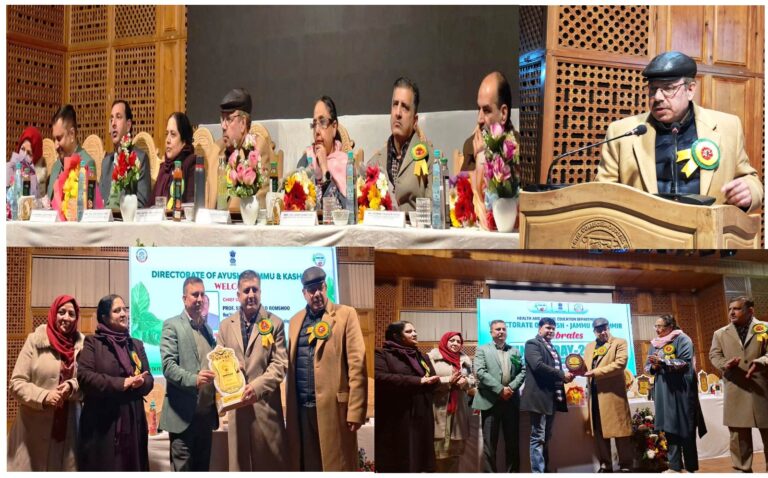
SRINAGAR, FEBRUARY 11: World Unani Day was celebrated with great enthusiasm and academic significance at Government Dental College, Srinagar, under the theme “Innovation and Evidence in Unani Practice.” The event commemorated the birth anniversary of the eminent Unani physician, educationist, and freedom fighter Hakim Ajmal Khan, whose vision continues to guide the advancement of the Unani system of medicine in India.

Prof. Shakil Ahmad Romshoo, Vice Chancellor, Islamic University of Science & Technology (IUST), graced the occasion as the Chief Guest. Prof. (Dr.) Iffat Ahmad Shah, Principal, Government Unani Medical College Ganderbal; Prof. Dr. Sandeep Kour Bali Principal, Government Dental College Srinagar; Prof. (Dr.) Shabir Ahmad Shah, MS Govt Dental College Srinagar; Dr. Showkat Hussain Ittoo, Registrar, Board of Ayurveda and Unani System of Medicine; Dr. Sujad Hussain Shuja, Assistant Director, Directorate of AYUSH, J&K also Participated in the program.

In his address, the Vice Chancellor paid rich tributes to Hakim Ajmal Khan, describing him as a reformer who institutionalized Unani education and emphasized scientific temper in traditional medicine. He stated that the theme of this year,” Innovation and Evidence in Unani Practice” resonates deeply with Hakim Ajmal Khan’s vision of combining classical wisdom with modern research methodologies. He further informed the gathering that IUST has established a dedicated Unani Cell to promote advanced research in Unani medicine, and that the University has initiated Postgraduate and Ph.D. programmes in the Unani system, thereby creating a robust academic and research ecosystem for the discipline in Jammu & Kashmir.

Prof. (Dr.) Iffat Ahmad Shah, in her address, highlighted the monumental role of Hakim Ajmal Khan in strengthening medical education and public health institutions in India. He emphasized that innovation in Unani practice must be rooted in authentic classical knowledge while being supported by scientific validation and interdisciplinary collaboration.

The Keynote Address on the theme was delivered by Dr. Sujad Hussain Shuja, Assistant Director, Directorate of AYUSH, J&K, who spoke extensively about translating the legacy of Hakim Ajmal Khan into contemporary action through clinical documentation, pharmacological research, drug standardization, and integration of innovation with evidence-based practice. He highlighted the recent achievements of the Directorate of AYUSH, J&K, in expanding AYUSH healthcare services, strengthening academic institutions, and promoting research initiatives across the Union Territory.

The programme commenced with a welcome address by Dr. Mushtaq Payer, District Ayush Officer Srinagar, who described Hakim Ajmal Khan as a symbol of intellectual excellence and national service, whose contributions laid the foundation for modern Unani institutional frameworks in India.

The event also featured an impressive poster presentation session by students from various Unani colleges of Kashmir, showcasing innovative research concepts and evidence-based clinical perspectives aligned with the theme.

The function witnessed participation from District Officers AYUSH of Kashmir Division, Medical Officers (Unani), research scholars, faculty members, and students, reflecting strong academic engagement within the Unani fraternity.

The celebration reaffirmed the collective resolve to carry forward the visionary legacy of Hakim Ajmal Khan by strengthening innovation, research, and evidence-based advancement of the Unani system of medicine in Jammu & Kashmir.

J&K Govt Appoints Finance Secretary as UT-Level Nodal Officer for 8th Pay Commission

0

Srinagar, Feb 11: The Jammu and Kashmir Government has designated the Administrative Secretary, Finance Department, as the Union Territory-Level Nodal Officer in connection with the implementation of the 8th Pay Commission recommendations.

According to Government Order No. 182-JK(GAD) of 2026 dated February 11, 2026, issued by the General Administration Department (GAD), the Administrative Secretary, Finance Department, will coordinate and liaise with the Department of Expenditure, Ministry of Finance, Government of India, regarding matters related to the 8th Pay Commission.

The order states that the nominated officer will act as the focal point for all correspondence and coordination between the Union Territory administration and the Centre concerning the implementation process.

Over 12.3 Lakh Smart Meters Installed In J&K : Govt

0

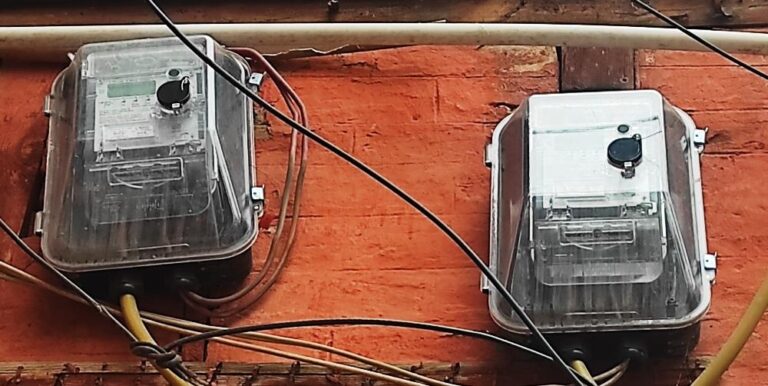
Jammu, Feb 11; The Jammu and Kashmir administration has installed more than 12.36 lakh smart electricity meters across the union territory under central schemes, the government informed the legislative assembly on Wednesday.

The data was shared by the Jammu and Kashmir Power Development Department (PDD) in a written reply to a question from legislator Waheed-Ur-Rehman Para.

The installation is being carried out under the Prime Minister’s Development Package (PMDP) and the Revamped Distribution Sector Scheme (RDSS), with REC Power Development and Consultancy Limited (RECPDCL) as the lead implementation agency.

According to the district-wise data accessed news agency Kashmir News Service (KNS), a total of 6,27,492 smart meters have been installed in the Jammu division, with the highest number in Jammu district (3,04,468), followed by Samba (58,707) and Kathua (57,320).

In the Kashmir division, 6,09,015 meters have been installed. Srinagar leads with 2,39,147 installations, followed by Baramulla (87,732) and Anantnag (77,943).

The department also stated that 1,600 smart feeder meters have been installed on 11kV feeders across ten districts of the Jammu division.

In response to a query, the PDD clarified that the smart meters adhere to the national standards and specifications prescribed by the Bureau of Indian Standards (BIS) and the Central Electricity Authority (CEA).

Notably, The smart metering initiative is a nationwide programme aimed at improving billing efficiency and reducing aggregate technical and commercial (AT&C) losses in the power sector. (KNS)

Kaushal Rath flagged off with “Yuva AI for All” for Democratising AI Literacy Across India

0

VINOD BHAT

Delhi, Feb 10:

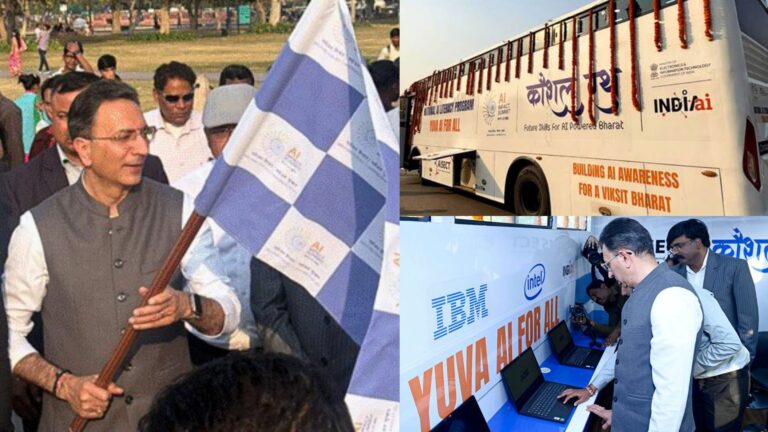
IndiaAI, Ministry of Electronics & Information Technology (MeitY) in collaboration with All India Society for Electronics and Computer Technology (AISECT), today flagged off Kaushal Rath, a mobile Artificial Intelligence (AI) awareness initiative under the National AI Literacy programme “Yuva AI for All.” The initiative aims to expand access to foundational AI education and bridge the digital divide by reaching students, youth, educators, and learners in semi-urban and underserved regions.


Kaushal Rath is a fully equipped mobile computer lab with internet-enabled systems, audio-visual tools, and structured training modules. It will travel to schools, colleges, ITIs, and community spaces to deliver hands-on exposure to AI and Generative AI tools, supported by trained facilitators and contextualised Indian use-cases.


Flagged off from India Gate, New Delhi by Shri Jitin Prasada, Union Minister of State for Commerce & Industry and Electronics & Information Technology, the initiative reflects the Government’s commitment to building an AI-ready India through inclusive digital capacity building and responsible technology adoption.


Launching the initiative, the Minister of State Shri Jitin Prasada stated, “Through the Yuva AI for All initiative and the Kaushal Rath, we are taking AI awareness directly across the country, especially to young people. The bus will travel across regions to familiarise students and youth with the uses and benefits of Artificial Intelligence, fulfilling the Prime Minister Narendra Modi’s vision of ensuring that awareness and access to opportunity transcend geography and demography.” Adding to this, he also said that “The Yuva AI for All with Kaushal Rath initiative is a precursor to the India AI Impact Summit 2026, which is set to take place in New Delhi next week. It is a great pride for India to be hosting a Summit of this kind for the first time, to be held in the Global South. “


Speaking at the launch, Smt. Kavita Bhatia, Scientist G, MeitY and COO of IndiaAI Mission highlighted, “Under the IndiaAI Mission, skilling is one of the seven core pillars, and this initiative advances our goal of democratising AI education at scale. Through Kaushal Rath, we are enabling hands-on AI learning for students across institutions using connected systems, AI tools, and structured courses, including the YuvAI for All programme designed to demystify AI. By combining instructor-led training, micro- and nano-credentials, and nationwide outreach, we are ensuring that AI skilling becomes accessible to learners across regions.”


The Kaushal Rath flagging off from India Gate acts as a mobile awareness center. It will travel across Delhi-NCR to:


Provide on-the-spot registrations for the course.

Showcase AI use cases to students and the general public.

Build momentum for the upcoming India AI Impact Summit 2026.

Key Highlights of the Course:


Accessible Learning: A 4-hour, self-paced program consisting of six comprehensive modules.

Zero-Coding Requirement: The curriculum focuses on AI concepts, ethics, and real-world applications, making it accessible to individuals from all academic backgrounds.

National Impact: Launched in collaboration with global and domestic partners like Future Skills Prime, iGot Karmayogi, Coursera, TCS iON and others. The course aims to foster a future-ready workforce.

Certification: Participants receive official recognition upon completion, adding value to their professional and academic profiles.

Kaushal Rath will contribute to national outreach and capacity-building efforts in the lead-up to the India AI Impact Summit 2026, to be held from 16 to 20 February 2026 at Bharat Mandapam, New Delhi. Envisaged as the first global AI summit to be hosted in the Global South, the Summit will be anchored on the pillars of People, Planet, and Progress, and will focus on translating global AI deliberations into development-oriented outcomes aligned with India’s national priorities.

23 SKIMS Faculty Elevated as J&K Govt Clears Major Promotion Order

0


KD NEWS SERVICE

SRINAGAR, Feb 10: In a significant administrative decision aimed at strengthening medical education and tertiary healthcare delivery in the Union Territory, the Jammu and Kashmir Government has ordered the promotion and regularisation of 23 in-service faculty members of Sher-i-Kashmir Institute of Medical Sciences (SKIMS) Medical College Hospital, Bemina. The promotions have been cleared on the recommendations of the Departmental Promotion Committee (DPC) and the Jammu and Kashmir Public Service Commission (JKPSC).

The order, issued by the Health and Medical Education Department under Government Order No. 94-JK(HME) of 2026, dated February 10, 2026, accords prospective promotions to faculty members serving across a wide range of medical disciplines. The decision follows JKPSC communication dated January 29, 2026, and reflects a long-pending exercise to streamline faculty hierarchies and fill senior academic positions at the premier government medical institution in Srinagar.

According to the order, several Associate Professors have been promoted to the rank of Professor, while a larger number of Assistant Professors have been elevated to Associate Professor positions. In the Department of General Medicine, Dr. Tariq Ahmad Bhat has been promoted from Associate Professor to Professor, while Dr. Manzoor Ahmad and Dr. Abdul Ahad Wani have been elevated as Associate Professors. The Microbiology department has seen the promotion of Dr. Arshi Syed as Professor and Dr. Talat Masoodi as Associate Professor.

In the Physiology department, Dr. Farhana Ahad has been promoted to Professor, while Dr. Mumtaz Gowhar has been elevated to Associate Professor. Similarly, in Radiology, Dr. Mohammad Farooq Mir has been promoted as Professor and Dr. Imran Nazir Saroo as Associate Professor, reflecting a strengthening of senior academic leadership in this critical diagnostic specialty.

The order also covers promotions across core and super-specialty disciplines. Dr. Syed Qubitiyah Khursheed of General Surgery, Dr. Aliya Shah of Biochemistry, Dr. Semira of Pharmacology, Dr. Ayaz Rehman of ENT, and Dr. Asif Ahmed of Pediatrics have all been promoted to the rank of Associate Professor. In Chest Medicine, Dr. Mir Elias has also been elevated as Associate Professor, while Psychiatry faculty member Dr. Nizam Uddin has received a similar promotion.

In Pathology, Dr. Bushra Rashid Shafq has been promoted as Associate Professor, and in Community Medicine, Dr. Beenish Mushtaq has been elevated to the same rank. The Department of Gynaecology and Obstetrics has witnessed promotions at both senior and mid-senior levels, with Dr. Anjum Malik being promoted as Professor and Dr. Sami Jan as Associate Professor, strengthening academic supervision in women’s healthcare services.

The Anatomy department has also received a boost, with Dr. Ashfaq ul Hassan promoted as Professor and Dr. Rohul Afza Kaloo elevated to Associate Professor. In Dermatology, Dr. Farah Sameem has been promoted to the rank of Professor, marking a key advancement in a specialty witnessing rising patient footfall in Kashmir.

Welcoming the development, Principal SKIMS Medical College Prof Dr Fazl Q Parray congratulated all the promoted faculty members and termed the decision a well-deserved recognition of their academic commitment, clinical excellence and years of dedicated service. He said such promotions not only acknowledge individual merit but also strengthen the institutional framework by ensuring experienced leadership across departments. Prof Parray encouraged the newly promoted Professors and Associate Professors to treat their elevation as a greater responsibility towards students, patients and the institution, urging them to further raise standards of teaching, research and patient care, and to continue working with renewed dedication to make SKIMS Medical College a centre of excellence in Jammu and Kashmir.

The government order specifies that all promotions and regularisations shall take effect prospectively and shall remain subject to the outcome of writ petitions, if any, pending before courts of competent jurisdiction. The order has been issued with the approval of the competent authority and has been issued by Secretary to the Government, Health and Medical Education Department. Officials said the move is expected to improve academic stability, enhance teaching standards and strengthen healthcare delivery at SKIMS Medical College Hospital, which caters to patients from across Kashmir and adjoining regions.

HM Amit Shah delivers keynote address at National Conference on “Tackling Cyber-Enabled Frauds & Dismantling the Ecosystem” in New Delhi

0


VINOD BHAT

Delhi, Feb 10;

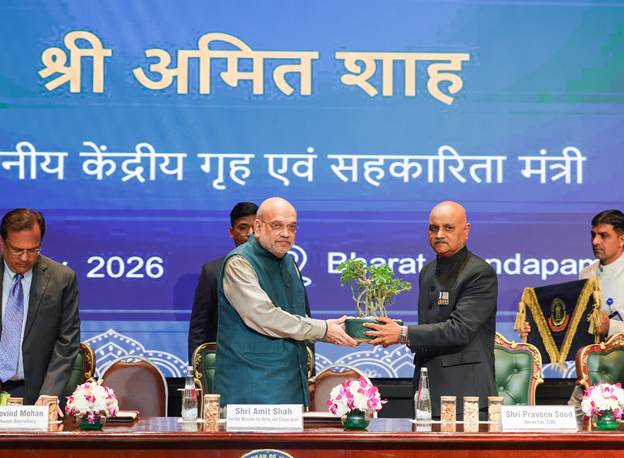
Union Home Minister and Minister of Cooperation, Shri Amit Shah delivered keynote address at National Conference on “Tackling Cyber-Enabled Frauds & Dismantling the Ecosystem” in New Delhi, today. The Home Minister presided over an Investiture Ceremony of CBI Officers and inaugurated the New Cybercrime Branch of the Central Bureau of Investigation (CBI). Shri Amit Shah also launched State Cyber Crime Coordination Centre (S4C) dashboard of Indian Cyber Crime Coordination Centre (I4C), Ministry of Home Affairs. On this occasion, Union Home Secretary, Secretary, Department of Personnel and Training (DOPT), Director, Intelligence Bureau (IB), Director, CBI and other senior officers were present.


In his key note address, Union Home Minister and Minister of Cooperation, Shri Amit Shah congratulated the CBI and the I4C for organizing this important conference. He said that multiple government agencies are working together in a coordinated manner to prevent cybercrime. Shri Shah said that I4C, State Police forces, the CBI, the National Investigation Agency (NIA), the Enforcement Directorate (ED), the Department of Telecommunications, the banking sector, the Ministry of Electronics and Information Technology (MeitY), the Reserve Bank of India (RBI), and the judiciary are collectively making every possible effort to curb cybercrime. He emphasized that each institution has a critical role and responsibility, and that close coordination among all stakeholders is essential to achieve the desired outcomes. Shri Shah said that the initiative by the CBI and I4C as extremely significant, adding that it will help connect various government departments and agencies with one another and ensure effective implementation of their efforts, which will lead to the expected success.


Union Home Minister said that under the leadership of Prime Minister Shri Narendra Modi, the journey of ‘Digital India’ over the past 11 years has been remarkable. He pointed out that 11 years ago, the country had only 250 million internet users, whereas today India has crossed 1 billion internet users, reaching new heights in the digital domain. Broadband connections have increased nearly 16 times and have also surpassed the 1-billion mark. Shri Shah said that the cost of one gigabyte of data has declined by 97 percent, which has significantly expanded both internet access and usage. He said that the rise in number of internet users and the connectivity of Parliament to Panchayats through BharatNet is a remarkable achievement of Digital India. Under the BharatNet project, only 546 village panchayats were connected 11 years ago, while today more than 200,000 village panchayats have been brought under the project. He also informed about the unprecedented growth in UPI transactions, stating that in 2024 alone, India recorded more than 181 billion digital transactions with a total value exceeding ₹233 trillion.


Shri Amit Shah said that prior to the launch of UPI, comparison about digital transactions was not possible, but in 2024 more than 181 billion digital transactions were carried out. Ensuring the security of these transactions rests on a strong system which is being steadily strengthened. He said that if we look at it from a global perspective, India has set new records in digital transactions and every second digital transaction in the world is taking place in India. It underscores the need to further strengthen and secure the country’s digital payment ecosystem at the global level. The Home Minister added that in 2024 alone, 97 percent of all payment system transactions were conducted through digital modes, and in terms of volume, this figure reached 99 percent. Securing these transactions is our highest priority.


Union Home Minister and Minister of Cooperation also highlighted progress in the area of financial inclusion. Earlier, around 600 million people in the country belonged to families without a single bank account. However, as of February 2026, more than 570 million Jan Dhan accounts have been opened. Similarly, the number of RuPay debit cards has reached 39 crore 81 lakh, and by December 2026, this figure is expected to cross approximately 50 crore. Shri Shah said that along with these massive digital transactions, the government has directly transferred more than ₹48 lakh crore to the accounts of nearly 176 crore beneficiaries through Direct Benefit Transfer (DBT). He said that the GeM portal, Open Market, and other government platforms are also part of this same digital ecosystem. With 100 crore internet users, more than 181 billion UPI transactions, and 57 crore Jan Dhan accounts, India is rapidly advancing towards becoming a cyber success society.


Shri Amit Shah said that cyber security is no longer limited to economic security but now it has become an integral part of national security. Home Minister said that therefore safeguarding economic, social, administrative, and national security dimensions, while continuing to advance the digital revolution is a collective responsibility of all stakeholders.


Union Home Minister and Minister of Cooperation Shri Amit Shah said that since its establishment in January 2019, the I4C under the Ministry of Home Affairs has successfully created a strong and comprehensive cyber infrastructure across the country. He noted that I4C has also established effective and seamless coordination among various government agencies. He said that essential cyber infrastructure has been developed in different parts of the country, enabling the initiation of timely, effective, and decisive action against cyber criminals. Home Minister said that the time has now come to build upon these achievements and attain the desired level of success. He added that in terms of action against cybercriminals, criminal justice processes, and money recovery cases, we have definitely made progress, but there is still a need to strengthen many dimensions more effectively.


Shri Amit Shah said that cybercrime, which was earlier carried out at an individual level, is now being executed in an institutionalized manner. Cyber criminals are continuously evolving their methods by using various kinds of advanced technologies. He said that it is the collective responsibility of representatives of all agencies and departments engaged in combating cybercrime to deeply understand their challenges and commit to minimizing vulnerabilities at every possible level. Home Minister called for concrete and coordinated efforts to make the fight against cybercrime more effective.


Union Home Minister and Minister of Cooperation said that the Ministry of Home Affairs has adopted a comprehensive and multi-dimensional strategy to combat cybercrime. The key pillars of this strategy include real-time reporting of cybercrime, a robust network of forensic laboratories, capacity building, research and development, promotion of cyber awareness in society, and ensuring cyber hygiene in cyberspace. He said that our goal is to bring together all relevant stakeholders including the CBI, NIA, RBI, state police forces, other investigating agencies, and government departments, to create a coordinated and highly secure ecosystem. Shri Shah said that such coordination essential to effectively combat cybercrime and to make India’s digital ecosystem safe and trustworthy.


Shri Amit Shah said that from January 2020 to 30 November 2025, the I4C reporting portal has been accessed over 230 million times. This clearly reflects the platform’s widespread acceptance and importance. As of 30 November 2025, more than 8.2 million cybercrime-related complaints had been registered on the portal, of which 184,000 were converted into FIRs, and a large number of complaints were effectively resolved. Shri Shah said that by 31 December 2025, around 62 banks and financial institutions had joined this mechanism. He said that the Ministry of Home Affairs has set a clear target to onboard all banking and financial institutions, including cooperative banks, fully into the system before December 2026.


Union Home Minister Shri Amit Shah said that through 361,000 cyber fraud complaints, the government has successfully safeguarded ₹8,189 crore, which is a significant achievement. He said that the according to estimates, the total amount of fraud was around ₹20,000 crore, out of which we have frozen or returned ₹8,189 crore to the victims. He congratulated I4C, CBI and all related organizations for this achievement. Shri Shah said that whenever a cyber fraud complaint is reported, the first natural question asked is what the government is doing about this. He said that by December 2025, the Ministry of Home Affairs had cancelled more than 12 lakh suspicious SIM cards and blocked the IMEI numbers of over 3 lakh mobile devices. He informed that till now, 20,853 accused persons have been arrested in cybercrime cases.


The Home Minister said that for an effective prevention of cybercrime, we require nationwide awareness, a strong national mindset, and unwavering determination at all levels. He said that although the pace of investigation has been drastically improving, he said much more remains to be done. Shri Shah said that as digital transactions have grown rapidly, the associated risks have also increased. Cyber criminals, who once relied on simple manual hacking, are now using complex automated techniques. What were once isolated “lone wolf” attacks have evolved into organized and systematic criminal operations. He added that cybercrime has now become an industry where accounts are bought and sold as a service. Since criminals continuously adopt new technologies, he said that there is need for collective and sustained efforts to stay two steps ahead by moving beyond traditional approaches.


Shri Amit Shah said that the helpline 1930 has proved to be an effective tool in saving victims of cyber fraud. He requested all police units across the country to ensure that a sufficient number of call handlers are deployed at the 1930 call centres. If a victim’s call is not answered even after ringing several times, by then their money is gone, and it places a serious question mark on the credibility of 1930. He further stated that similarly, all private, public, and cooperative banks should immediately adopt the Mule Account Hunter software jointly developed by the Government of India and the Reserve Bank. Until all banks completely clean their accounts using this software, it will not be possible to provide full protection to consumers.


Shri Amit Shah informed about the critical role of the CBI and NIA in preventing cybercrime, particularly crimes originating from outside the country. He stressed the importance of strong communication and coordination among all institutions. He also highlighted that lapses in the “chain of custody” of digital evidence often prevent conviction, posing a major obstacle to justice. The Home Minister said that if we do not have taken adequate steps, cyber fraud would not have remained just an ordinary crime, but would have turned into a national crisis. Therefore, all stakeholders must act simultaneously and urgently whether it is identifying call centers operating domestically or abroad, conducting awareness campaigns, strengthening the 1930 helpline, reducing call response times, or improving coordination between banks and I4C.


The Home Minister said that 795 institutions, including banks, fintech companies, NBFCs, and e-commerce platforms, are currently connected with I4C. He said that these institutions must treat I4C as a priority and ensure swift responses to its calls. He said that many times banks prioritize reducing NPAs (Non-Performing Assets), which is also correct, but the security of customers should be an equally important priority. Shri Shah said initiatives such as the appointment of Cyber Warriors, the launch of the large online training program ‘CyTrain,’ and the establishment of cybercrime forensic training laboratories in several states. He expressed confidence that the two-day workshop would align all efforts in one direction, make them more result-oriented, and strengthen a culture of timely action. Shri Shah added that timely prevention of cyber fraud is the most powerful weapon, and this requires collective awareness, coordination, and firm resolve from all stakeholders.


Shri Amit Shah said that Prime Minister Shri Narendra Modi had run cybercrime awareness campaign and strengthened infrastructure. The Prime Minister has repeatedly addressed cybercrime awareness through the “Mann Ki Baat” program. However, Shri Shah stressed that this challenge cannot be addressed by the Prime Minister’s efforts alone. He said that we must work together to enhance awareness and maintain sustained action to keep the nation safe from the growing threat of cybercrime.


On the occasion, the Union Home Minister and Minister of Cooperation, Shri Amit Shah presented Medals for Distinguished and Meritorious Service and Kendriya Grihmantri Dakshata Padak to the following CBI officers:


1. President’s Medal for Distinguished Service (Republic Day-2025) was presented to Shri Ghanshyam Upadhyay, IPS (OR:99), JD/Head of Zone (EO Zone), CBI, New Delhi; Shri Tejpal Singh, Assistant Inspector General, Complaint & Coordination Cell, CBI, Policy Division, New Delhi; Shri Bhani Singh Rathore, Sub-Inspector of Police, CBI, ACB, Jaipur and Shri Aikodan Balkrishnan, Assistant Sub-Inspector, CBI, ACB, Goa.


2. Shri Pradip Kumar, IPS (TN-2003), Joint Director/ Head of Zone, ACHQ Zone, CBI, New Delhi was presented Police Medal for Meritorious Service (Republic Day-2022) and Shri Kuldeep Dwivedi, IPS (JH-2005), Joint Director (Pers), CBI, Head Office, New Delhi was presented Police Medal for Meritorious Service (Republic Day-2025).


3. Kendriya Grihmantri Dakshata Padak-2024 (Investigation) was presented to Shri Prabhat Kumar Ambastha, Inspector, CBI, BSFB, Kolkata and Smt. Savita, Inspector, CBI, AC-III, New Delhi.


The two-day conference is being organized by the CBI in collaboration with the Indian Cyber Crime Coordination Centre (I4C), Ministry of Home Affairs. On first of the conference following sessions were held:


Session 1: Cyber-Enabled Fraud Ecosystem: Trends, Magnitude and Challenges


Session 2: Mule Accounts & Financial Laundering in Cyber Fraud: Investigations and Role of AI


Session 3: SIM/eSIM & Telecom Infrastructure: Misuse in Cyber Frauds and Regulatory Framework


The Conference witnessed broad and representative participation from stakeholders across the law enforcement, financial, regulatory, technological, and academic ecosystems. A total of 362 delegates attended the conference physically. This included 97 delegates from States/UTs (State Police units), 19 from I4C, 14 from Telecom Service Providers, 30 from Central Law Enforcement Agencies, 27 from PSU Banks including RBI, RBIH and NABARD, 52 from Private Banks including AU Small Finance Bank, 49 from State Cooperative Banks, 19 from Urban Co-operative Banks and related institutions, 01 from Crypto Currency Exchanges, 09 from Payment Aggregators, 05 from IT/Social Media Intermediaries, 08 from Stakeholder Ministries, 21 from Private Companies, 04 from Academia, and 07 from NTRO, NATGRID, CERT-IN and C-DAC (Hyderabad).


In addition to physical participation, the conference was telecast live to 2,356 locations, covering all State Police units and all CBI branches across the country. This enabled officers and officials at field formations to join the proceedings in real time, ensuring nationwide outreach and institutional engagement on issues relating to cyber-enabled frauds and coordinated response mechanism.

RailTel Secures ₹455 Crore Kavach Project from West Central Railway

0


The project covers important high-density corridors covering 1067 RKM of Jabalpur Division of West Central Railway


RailTel Corporation of India Ltd., a Navratna CPSE under the Ministry of Railways, has achieved a significant milestone in the area of railway safety and modernization by securing a major order of implementing KAVACH system covering 1067 RKM of Jabalpur division of West Central Railway.

VINOD BHAT

Delhi, FEB 10: Kavach is India’s Indigenous Automatic Train Protection (ATP) System. RailTel has project valued at ₹454.95 crore, for Survey, Design, Supply, Installation, Testing and Commissioning of Trackside Kavach Systems across key routes of the Jabalpur Division of West Central Railway. The project will be implemented over important and high-density corridors covering 1067 RKM, including Itarsi – Manikpur Section, Mahdeiya – Bina Malkheri–Mahadeokheri, Entire Katni Complex, Bina Malkheri – Agasod Section, Satna – Rewa Section, Kaima – Sagma Section and Bansapahar – Ohan Section of Jabalpur division of West Central Railway. The scope includes installation of Kavach equipment at stations, level crossing gates and IBS locations, along with OFC works, erection of towers and associated civil, track and electrical works under EPC mode.


The entire work is planned to be completed within 960 days as per the EPC agreement. Kavach is Indian Railways’ flagship Indigenous Automatic Train Protection system developed under the vision of Atmanirbhar Bharat. It is designed to prevent train collisions, over-speeding, and signal passing at danger (SPAD), thereby significantly enhancing passenger safety and operational reliability. RailTel is already working on 2 projects for deploying Kavach covering 1109 route kilometres track of East Central Railway.


Shri Sanjai Kumar, Chairman & Managing Director, RailTel, said: “This prestigious Kavach order from West Central Railway is a proud moment for RailTel and a strong recognition of our capabilities in delivering critical railway safety infrastructure. Kavach is a transformational initiative for Indian Railways, and RailTel remains committed to supporting the national mission of safer, smarter and technology-driven rail operations through indigenous solutions.”


Arms, Explosives Recovered During Army Search Operation in Kupwara

0


Kupwara, Feb 10: The Army on Tuesday recovered a cache of arms and explosive material during a search operation in the Kandi forest area of Kupwara district, officials said.


The recovery was made by troops of Indian Army unit 47 Rashtriya Rifles during a cordon and search operation launched in the forested belt following specific inputs.


Officials said the seized material includes 150 rounds of 7.62 mm ammunition, one suspected under barrel grenade launcher, 12 units of plastic explosive, 18 electric detonators, and electric wire with a connector packed inside a plastic container.


The recovery of explosive material has raised security concerns in the area, prompting intensified surveillance and search efforts in nearby forest stretches. Officials said the operation was carried out to prevent possible militant activity and ensure the safety of locals in the region.


Security agencies have taken custody of the recovered items for further examination. A detailed investigation has been initiated to ascertain the source of the arms and explosives and to identify those responsible for concealing the material in the forest area.


The Army and other security agencies continue to maintain a high level of alert in Kupwara, particularly in forested and border areas, to thwart any attempts aimed at disturbing peace and security. [KNT]

Awantipora Police Expose QR Code Fraud; Accused Identified

0


KD NEWS SERVICE

Awantipora, Feb 10: Awantipora Police have taken cognizance of complaints regarding cheating of local shopkeepers through misuse of QR codes for digital payments.


During the course of inquiry, it was revealed that Sameer Ahmad Hajam,

S/o Shabir Ahmad Hajam,

R/o Boh, Awantipora,

was involved in cheating shopkeepers by showing fake/forged payment confirmation through QR codes and dishonestly obtaining money.


Police have initiated necessary legal action as per law, and further investigation is underway to ascertain the full extent of the fraud and involvement of any other persons.


Shopkeepers and the general public are advised to verify successful credit of payments in their bank accounts before handing over goods, and report any suspicious activity immediately to the nearest police station.


Awantipora Police remain committed to protecting citizens from cyber and digital frauds.