spot_imgspot_img
spot_img
Home Blog Page 127

FLW 2026 Launched in Jammu, Spotlight on KYC for Safe Banking

0


KD NEWS SERVICE

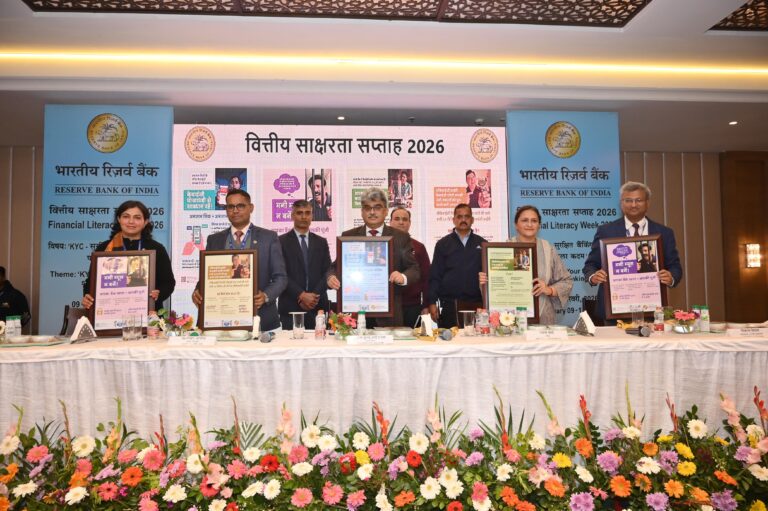
SRINAGAR, Feb 9: The inaugural event of Financial Literacy Week (FLW) 2026 for the Union Territories of Jammu and Kashmir and Ladakh was held on February 9, 2026, at Hotel Vivanta, Jammu, under the aegis of the Reserve Bank of India (RBI), Jammu. The programme marked the beginning of a week-long nationwide awareness campaign aimed at strengthening financial literacy and promoting safe banking practices among citizens.

The event was graced by Shri Atal Dulloo, Chief Secretary, Government of UT of Jammu and Kashmir, as the Chief Guest, in the presence of Shri Chandrashekhar Azad, Regional Director, RBI Jammu. The inaugural function witnessed participation from senior government officials, banking leaders and key stakeholders from the financial sector.

Among the prominent dignitaries present were Ms. Rachna Sharma, Secretary, Rural Development and Panchayati Raj Department; Shri Vidhu Shekhar, Additional Deputy Commissioner, District Jammu; Shri Deepak Dubey, Joint Director, Information Department, Jammu; Shri Vikas Mittal, General Manager and Officer-in-Charge, NABARD Jammu; and Shri Sunit Kumar, Chief General Manager, J&K Bank, along with controlling heads of various banks. Officers and representatives from the Government, RBI, banks and financial institutions, and members of the UT Level Bankers’ Committee (UTLBC) of J&K and Ladakh were also present.

Earlier in the day, FLW 2026, being observed from February 9 to February 13, was formally inaugurated at the national level by RBI Governor Shri Sanjay Malhotra in Mumbai. The Reserve Bank has been observing Financial Literacy Week annually since 2016, with each edition focusing on a specific theme targeted at different segments of the population, with the objective of spreading awareness on critical financial issues through focused and structured campaigns.

The theme for FLW 2026 is “KYC – सुरक्षित बैंकिंग की ओर पहला कदम / KYC – Your first step to safe banking”. The sub-themes include Basics of Know Your Customer (KYC), Central KYC Registry (CKYC), and Account Hygiene and Financial Discipline. The theme underlines the importance of KYC as the cornerstone of a safe, transparent and secure banking system.

In his opening remarks, Shri Chandrashekhar Azad, Regional Director, RBI Jammu, highlighted that during the previous year, a nationwide campaign for saturation of Financial Inclusion (FI) schemes was conducted at the Gram Panchayat level. As part of this large-scale initiative, re-KYC of bank accounts was undertaken by banks across the country. RBI Jammu, in coordination with banks and other stakeholders in Jammu & Kashmir and Ladakh, actively participated in the campaign to ensure that eligible account holders in every Gram Panchayat could complete their KYC re-enrolment.

Building upon the awareness generated during the re-KYC campaign, RBI has placed special emphasis on comprehensive public education on KYC during FLW 2026. The campaign seeks to address multiple aspects of KYC compliance. Firstly, it aims to dispel misconceptions by clarifying that while KYC is a mandatory regulatory requirement, it is simple, secure and convenient, with multiple modes available for compliance. Secondly, the initiative focuses on familiarising customers with the Central KYC (CKYC) facility, which significantly simplifies the KYC process by allowing data reuse across financial institutions.

Another key focus area of the campaign is consumer protection. The public is being cautioned against fraudulent calls, messages and links related to KYC updation, which are often used by cyber fraudsters to deceive customers and cause financial losses. Additionally, the campaign is being used to sensitise people about the grave legal and financial consequences of becoming “money mules” by unknowingly or knowingly allowing their bank accounts to be misused in return for inducements.

Throughout the week, the Reserve Bank of India, in collaboration with banks and other stakeholders, will conduct a series of financial awareness programmes, outreach activities and campaigns across the country, including in the UTs of Jammu & Kashmir and Ladakh. RBI has also emphasised that these initiatives will continue beyond Financial Literacy Week to ensure sustained awareness and long-term impact.

Through this collective and coordinated effort, the RBI aims to reinforce the message that KYC is not merely a regulatory formality, but a crucial step towards building a secure, resilient and trustworthy financial ecosystem that safeguards the interests of every bank customer.


Fatal accident at Khrew cement factory claims worker’s life

0


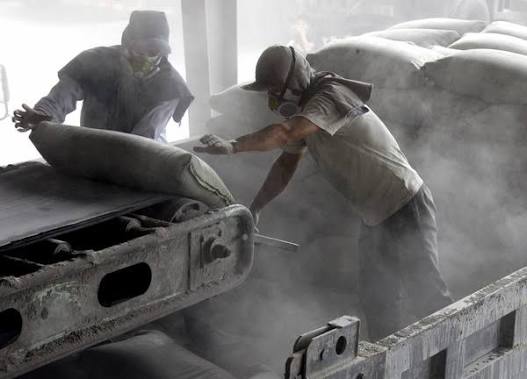
Pulwama, Feb 9: A private employee lost his life in a fatal accident at Cemtac Cement Factory in the Khrew area of Pulwama district on Monday, officials said.


The incident occurred within the factory premises when a dumper bearing registration number JK01AF-7211 allegedly hit a worker during routine operations. The deceased has been identified as Gh Rasool Regoo.


Officials said the dumper was being driven by Ab Majid Sheikh at the time of the incident. Regoo sustained serious injuries and was immediately shifted to Primary Health Centre Khrew, where doctors declared him dead on arrival.


Police reached the spot and took cognizance of the incident. Legal formalities have been initiated and an investigation has been launched to ascertain the circumstances leading to the fatal accident.


Further details are awaited. (CNS)

Histrocity of Koshur & Kashmir. Evolution of Anantnag. Beyond Myths and Counternarratives

0


From the Kush Settlements to the Harmonious Echoes of Masjid, Temple and Gurdiwar in Anantnag

Latief U Zaman Deva

According to Hindu mythology, the Kashmir Valley was once a vast lake called Satisar, named after the goddess Sati, Shiva’s wife.

A demon named Jalodbhava lived in this lake and terrorised the local Naga people, who were serpent-worshipping tribes depicted in Hindu art as half-human, half-snake. The goddess Parvati, Shiva’s consort, killed the demon to protect them. Eventually, the Vedic sage Rishi Kashyapa drained the lake, making the valley suitable for human settlement.

But a counter perspective is that the Valley of Kashmir and its surrounding hill territories came into being as a result of the continental drift. The emergence of the mountains created pressure & temperatures leading to the draining of water towards the downward Indian plains, including Baramulla.

Geological studies and research point out that the Valley was millions of years ago a lake, and its water found an outlet in Baramulla through a narrow gorge due to volcanic activity.

Indigenous population

Some sources claim the first inhabitants of Kashmir Valley descended from Prophet Noah (29003900 BCE). According to these accounts, Noah’s grandson Kush founded an empire, and his people—the Kush race—migrated widely across Asia.

The location of the Kush empire is disputed. Some place it along the southern Nile River in present-day Sudan and Egypt, while Biblical references point to southern Iraq or Saudi Arabia. Further research suggests the Kush tribe settled in the Middle East, founding a village called Kash near Baghdad and establishing settlements named Kashan, Kashaf, and Kashi in Mesopotamia.

These people named cities, rivers, and mountains after the name of their ancestor, Kush. Kashan River in Mesopotamia and Kashmar in Nishapur, Iran are two examples. In Central Asia, there are settlements like Kashmohra in Merv, Kash village in Bokhara, Kashband and Kashania in Samarkand, and Kashgar in East Turkistan, now Xinjiang China.

As a result of their move towards present-day Afghanistan, Pakistan and Kashmir, the mountain range separating the sub-Continent from Afghanistan is named as Hindu-Kush. In Pushtu, beyond this range is Hind and the settlement South of this mountain range is called Kashmor.

On their arrival in Kashmir, the Kush people first settled in Kishtwar before migrating almost en masse to the main Valley. In Babarnama (Memoir of Babar, the founder of Mughal dynasty in India ), translated into Persian by Ab Rahim Khan-i- Khanna, the Kush people are stated as inhabitants of northern mountains beyond Kashmir.

In the Hindu Kush mountains and the Zabarwan hills east of Srinagar, there are sites historically called “Takht-i-Sulaiman” (Throne of Solomon), linked to Prophet Sulaiman (10th century BCE). This also suggests a possible 2nd wave of migration timeline for Kashmir. The Kush people, who descended from Prophet Noah, may have been the first settlers, followed by later migrations during Prophet Sulaiman’s era.

These successive waves of migration, along with cultural, religious, and geographic influences, likely shaped the ancestry of the Kashmiri (Koshur) population.

Kashmir’s recorded history spans 5,000 years, with anthropological evidence reaching back 7,000 years. This rich historical record helps us understand the ethnicity of Kashmir’s inhabitants, excluding the Gujjar and Pahari tribes, who are more recent settlers. The Gujjars migrated from Georgia and Russia to Gujarat before moving to Kashmir, while the Paharis came from the Pothohar region in Rawalpindi Division, Pakistan.

Dr Abdul Ahad, an acclaimed historian and archaeologist, concludes that “genetic evidence confirms continuity between the Neolithic inhabitants of Burzahom and the Valley’s present population”.

Researchers’ conclusive findings about the identification of the aboriginals who were inhabitants of the Valley during the period preceding 3000 BCE shall settle whether it were ancestors of the Kush only or an admixture of Kush and other races & ethnicities. By now at least the excavations at this Neolithic site haven’t manifested a direct anthropomorphisation with idols of Hindu deities.

Godfrey Thomas Vigne, a 19th-century traveller, who extensively toured the Valley, writes in his travelogue “Kashmir, Ladakh, Iskardo; The Countries adjoining the mountains 1842”, about the proximity between Biblical and historical figure Kush, Koshur and Kashmir.

Maiden habitation in Anantnag.

The Nilamata Purana, a Sanskrit text from the 6th-7th century CE, mentions Anantanaga (the serpent of Vishnu spring). This name is believed to relate to Anantnag, meaning “sacred springs” or “countless springs.”

However, only 9 springs actually exist in the foothills overlooking Anantnag. These are: Gurtum Nag, Himali Nag, Gaji Nag, Devi Bal, one Nag (spring) & two sulphur springs in Nagbal, Sonir Prokhur, and Malakh Nag. From Donipawa to Phyroo, no other visible springs exist beyond these nine. The entire stretch along the foothills is now covered by densely populated residential areas and graveyards, making it unlikely that the area was ever water-covered except for these nine springs.

The entire area was uninhabited till the beginning of the 11th century CE but by 12th century, human presence can be spotted. Kalhan Pandit in Rajtarangini has heavily relied on Nilamata Puran, but additional material support is lacking.

The conclusion that the area was once uninhabited is based on population data. Anantnag had 5,656 people in the 1873 census and 11,985 in the 1941 census, roughly doubling over 68 years. By applying this doubling rate backward in thirteen 68-year intervals, the population would reach zero, suggesting the area was uninhabited before that point.Famine, droughts floods, outbreak of epidemics & Plagues didn’t occur only during the interval of 1873-1941 but have had been a regular phenomenon during medieval times also. Statistical analysis based on principles of progression and recession viz undisputable data of the two census periods may not impact drastically on the conclusions about the area now known as Anantnag was at some point of time during medieval periods an uninhabitable area.

In 14th-century chronicles by Sheikh Noor-ud-Din Wali, the area now called Anantnag is referred to as “Anch-e.” This settlement is identified by the landmark “Anch-e-Teep,” a hillock north of the city, now known as Fatehgarh.

This lends credence to the origin of the area as Islamabad, which came into existence in 1662 by amalgamation of Sherpur, Malakh Nag, Dangharpur and Kadipur habitations comprising of over 500 people by Islam Khan, who was the Governor of Kashmir for two years during Aurangzaib’s reign (1658-1707).

Springs and Syncretism

The largest spring is located at Nagbal. During the Karkota dynasty, King Lalitaditya Muktapida (724-760 CE) reportedly rebuilt at this desolate place a temple Vihar serving the pilgrims as also for the workers constructing the Martand Temple, the Nalanda of Kashmir and for arrangement of logistics for it.

Later, a Gurdwara was built nearby where Guru Nanak, the first Sikh Guru (1469-1539), and Guru Angad, the second Guru (1504-1552), are said to have stayed, despite there being no Sikh population in Anantnag then or now. Across from the Gurdwara, Dara Shikoh (1615-1659) constructed a mosque.

In 1920, Maharaja Pratap Singh (1885-1925) fenced off the area falling under the site known as Masjid as no-man’s land to prevent communal conflict. This action followed the disputes between the minority community, who claimed exclusive rights to the site as a whole , and the majority community, who wanted to retain at least the mosque site.

The conflict led to the division of land and its downstream shallow ground between the two communities. Under the partition plan handed down by the administration, Upper terraced grounds fell in the share of the minority community and the lower shallow land, named Sher Bagh, went to the majority community.

Maharaja Ranbir Singh (1857- 1885) constructed the Ananta Bhagwaan Temple, followed by the Shiva Temple by Maharaja Pratap Singh, within the premises later on during 1920 apportioned in favour of the minority community.

The heartening reality is that the Devi Bal temple and Masjid-i-Baba Dawood Khaki ( Ground floor constructed by Mir Mohammed Syed ,illustrious son of Amier Kabir & ist floor by Baba Dawood khaki) stand side by side, not quite hand in hand, but together for the last over 500 years without ever even a small friction. Equally captivating is the scene each morning and evening when hymns from all three places of worship resonate almost simultaneously across Nagbal and Sher Bagh.

This is a living testimony of syncretic Kashmir.

The author is IAS ( Retd) & former Chairman J&K Public Services Commission. 

JKPSC and JKSSB collect Rs 48 crore in two years as application fees: Govt

0

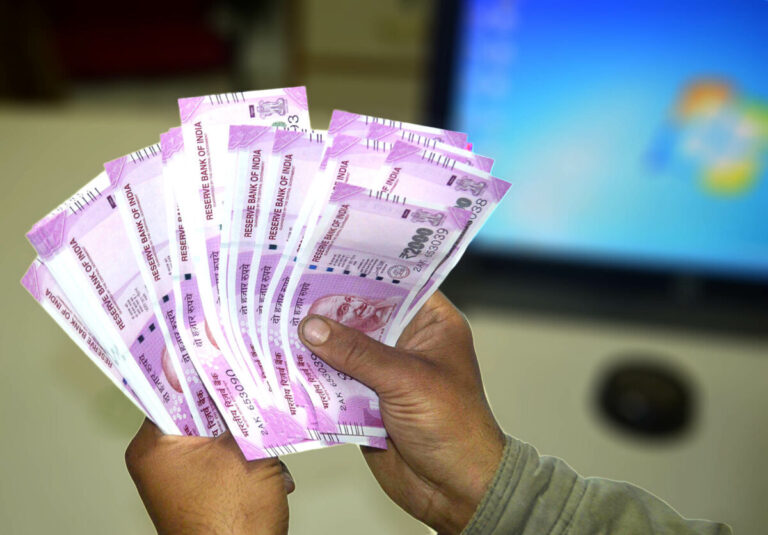
Srinagar, Feb 9: The Jammu and Kashmir government on Monday informed the Assembly that the Jammu and Kashmir Public Service Commission (JKPSC) and the Jammu and Kashmir Services Selection Board (JKSSB) together collected over rupees 48 crore as application fees over the last two financial years.

In a written reply to a question from PDP MLA Waheed-ur-Rehman Para, the government provided a year-wise breakdown of the fees collected by the two recruitment agencies.

The figures showed that during 2023–24, JKPSC received rupees 7.39 crore, while JKSSB collected rupees 7.09 crore from applicants. In the following financial year, collections rose sharply, with JKPSC securing rupees 10.50 crore and JKSSB rupees 23.88 crore.

Overall, JKPSC accumulated rupees 17.90 crore and JKSSB rupees 30.98 crore in application fees during the two-year period, the reply said.

HM Amit Shah chairs a security review meeting on Left Wing Extremism in Raipur, Chhattisgarh

0

VINOD BHAT

Delhi, Feb 08:

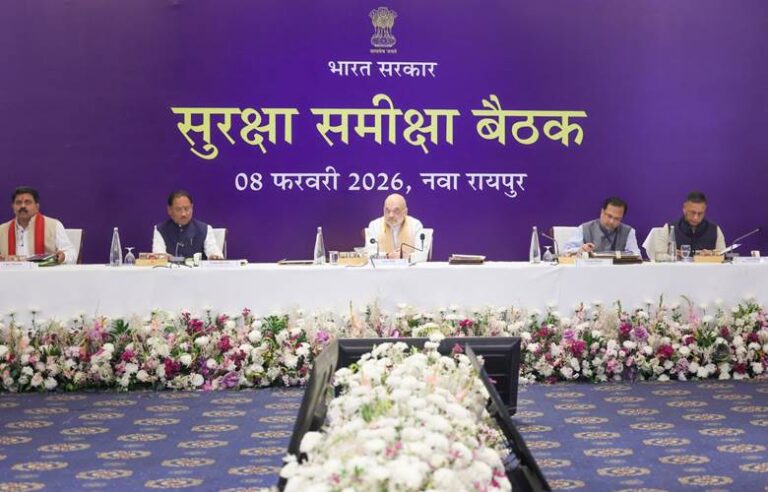
Union Home Minister and Minister of Cooperation Shri Amit Shah today chaired a security review meeting on Left Wing Extremism (LWE) in Raipur, Chhattisgarh. The Home Minister also held a review meeting regarding various development works in Chhattisgarh. The meetings was attended by Chhattisgarh Chief Minister Shri Vishnu Deo Sai, Deputy Chief Minister Shri Vijay Sharma, Union Home Secretary, the Director of the Intelligence Bureau (IB), Special Secretary (Internal Security) in the Ministry of Home Affairs, Chief Secretary of Chhattisgarh, Director Generals of the Central Reserve Police Force (CRPF), National Investigation Agency (NIA), Border Security Force (BSF), Indo-Tibet Border Police (ITBP) as well as Home Secretaries and Director Generals of Police (DGsP) of Chhattisgarh, Telengana, Jharkhand, Odisha and Maharashtra.


CR3_7162.JPG.jpeg


Addressing the meeting, Union Home Minister Shri Amit Shah said that the security-centric strategy of the Centre and Chhattisgarh government, along with infrastructure, strikes on the Naxal financial network, and the surrender policy, have yielded positive results. He expressed confidence that Naxalism will be completely eliminated before the upcoming 31 March.


Union Home Minister Shri Amit Shah said that Chhattisgarh was once a stronghold of Naxal violence, but in the double engine government being run under the leadership of Prime Minister Shri Narendra Modi, it has now become a symbol of development. He said that the youth of Chhattisgarh are accelerating progress in sports, forensic science, and technical education while also preserving their culture and traditions.


IMG_8906.jpg.jpeg


Shri Amit Shah said that the double engine government is leaving no stone unturned to completely eradicate the menace of Naxalism from the country. He said that under the Modi government, Naxalism has reached the verge of its end and the country will become completely Naxal-free before 31 March 2026. The Home Minister said that the country will soon be freed from Naxalism, which has pushed many generations into the darkness of poverty and illiteracy. Shri Shah said that the ongoing fight against Naxals must not be scattered. Stressing the need for smooth coordination between various states and central agencies, he said that the remaining Naxals must not be allowed to flee to other states.


Union Home Minister said that Chhattisgarh has made remarkable progress on both the security and development fronts. He said that it must be ensured that people in Naxal-affected areas receive equal opportunities for development.

Ashwini Vaishnaw Flags Off New Asansol–Bokaro Train Service

0

VINOD BHAT

Delhi, Feb 08:

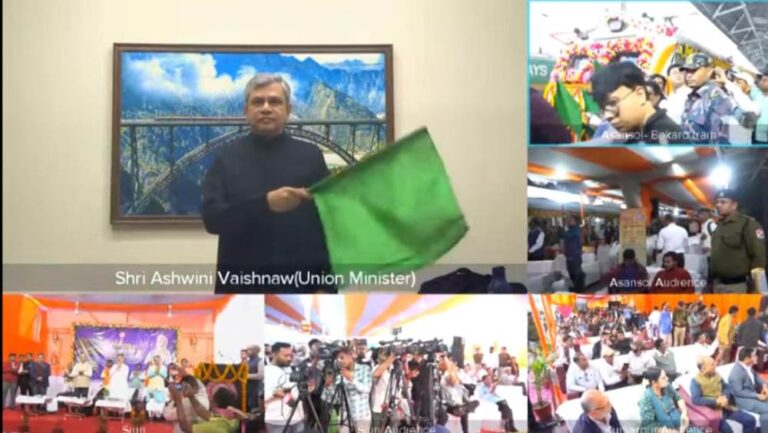
Shri Ashwini Vaishnaw, Union Minister for Railways, Information & Broadcasting and Electronics & Information Technology, inaugurated the Siuri Road Over Bridge, dedicated the Kumarpur Road Over Bridge to the nation and flagged off the new Asansol–Bokaro train service through video conferencing today.


Speaking on the occasion, Shri Ashwini Vaishnaw stated that these projects mark a significant step towards strengthening rail infrastructure, enhancing safety and improving regional connectivity in West Bengal and adjoining areas. The Union Minister mentioned that this year a record budget allocation of Rs. 14,205 crores has been allocated for Railway in West Bengal which is more than 3 times than the average allocation during 2009-2014. He also mentioned that Railway Projects worth about Rs. 92,000 crore are continuing in West Bengal which will facilitate infrastructural transformation in this State.


Shri Vaishnaw also mentioned that recently Hon’ble Prime Minister has initiated more than a dozen new trains to facilitate enhancement in rail connectivity for the people of West Bengal. The first Vande Bharat Sleeper train started running from West Bengal. This indicated the visionary initiative of ‘Purvoday’ taken by Hon’ble Prime Minister towards development of this region.


Shri Vaishnaw, Hon’ble Railway Minister also mentioned that the first Bullet Train for West Bengal has been announced in this year’s Rail Budget and this Bullet Train will start from Siliguri. At the same time, Hon’ble Prime Minister has approved for an East-West freight corridor connecting West Bengal with Gujarat. Another initiative is being taken for construction of an underground rail corridor at the Chicken-Neck part of North Bengal as a strategic step for safe and secured transportation.


Siuri Road Over Bridge


The newly constructed Road Over Bridge in lieu of Level Crossing No. 22B/T near Siuri Railway Station has been completed at a project cost of Rs 42 crore. The bridge will remove long waiting time at the level crossing and ensure faster, safer and smoother daily travel for residents of Siuri and adjoining areas. It will significantly enhance safety by eliminating a busy crossing, reduce congestion around Siuri station and improve mobility for students, workers and local commuters. The ROB will also enable uninterrupted movement of emergency vehicles during critical situations.


Kumarpur Road Over Bridge


Another major infrastructure addition is the Road Over Bridge at Kumarpur in lieu of Level Crossing No. 1Spl/E between Barachak & Hirapur Yard Line, constructed at a cost of Rs 55 crore. Located on the important GT Road corridor, it serves as a key link between Asansol city, large parts of Paschim Bardhaman district and Jharkhand. The bridge will facilitate faster and smoother movement of trade and traffic within the state and with neighbouring states, enhance safety on a heavily used route and reduce congestion around Asansol, improving daily commuting for local residents.


Asansol–Bokaro Train Service


On the same occasion, the new train service between Asansol and Bokaro Steel City was flagged off, strengthening connectivity between two major steel hubs of the country. The service will benefit industrial workers, daily commuters and local residents. Running via Paschim Bardhaman and Purulia districts of West Bengal and Bokaro district of Jharkhand, the train will enhance both intra-state and inter-state mobility and support regional economic and social connectivity. The regular run of 63592/63591 Asansol – Bokaro Steel City – Asansol MEMU passenger will commence from 10th February 2026.


UIDAI Completes One Crore Mandatory Biometric Updates for Schoolchildren

0

Vinod Bhat

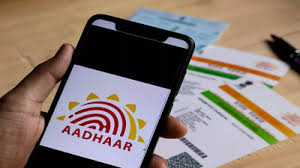
New Delhi: In a significant achievement under its ongoing mission-mode drive, the Unique Identification Authority of India (UIDAI) has crossed the milestone of completing over one crore Mandatory Biometric Updates (MBUs) for school-children studying in 83000 schools across the country.

UIDAI had initiated this special MBU drive for school-children in September 2025 after a successful technological integration with the Unified District Information System for Education Plus (UDISE+) application, that enabled visibility of MBUs status of children at schools. This breakthrough helped the UIDAI and schools to jointly identify children who were due for an MBU, and hold camps at schools to complete the MBU.

Shri Bhuvnesh Kumar, CEO, UIDAI, had written to Chief Secretaries of all States and Union Territories apprising them of this initiative by UIDAI and requested their support in conducting focussed MBU camps at schools. UIDAI Regional Offices spread across eight locations in the country have worked tirelessly for five months to coordinate this massive exercise with all the stakeholders, i.e. the Education Departments of States & Union Territories, District-level administration, UIDAI registrars and the school authorities. The mission mode campaign continues to be operational till such time all schools in the country are covered. This initiative has already benefitted 1 crore children in 83,000 schools and many more are set to gain from it.

A child under the age of five enrols for Aadhaar by providing the photograph, name, date of birth, gender, address and birth certificate. The fingerprints and iris biometrics of a child are not captured for Aadhaar enrolment below the age of five because these are not mature at that age. Therefore, providing fingerprints and iris information in Aadhaar by following the process of MBU, upon crossing the ages of 5 and 15 years, is an essential requirement for children. Lack of MBU in Aadhaar may lead to difficulties while carrying out authentication for receiving benefits under various Government schemes, registering in competitive and university examinations like NEET, JEE, CUET etc.

In order to incentivise children to complete MBU and to make the service accessible to all, UIDAI had waived off the charges payable for MBU by children in the 7-15 age group, from 1st October 2025 for a period of one year. Further, MBU by children between 5-7 years and 15-17 continues to remain free of charge.

In addition to camps held at schools, children can also complete their MBU at any of the Aadhaar enrolment centres and Aadhaar Seva Kendras running across the country. About 1.3 crore MBU transactions have also been completed in the same period, by children visiting these centres.

Mata Vaishno Devi Shrine Board has decided to fill vacant positions, with recruitment process set to begin shortly

0


It’s Board’s resolve to make Katra clean, vibrant, and equipped with modern infrastructure for residents and the millions who arrive as pilgrims: LG Sinha

SMVDSB has decided to spearhead sports development across the Jammu region- cultivating future champions, safeguarding youth health, and transforming Jammu & Kashmir UT into a national sporting powerhouse alongside its spiritual eminence

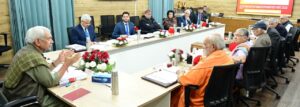
Jammu, 08 Feb : Shri Mata Vaishno Devi Shrine Board in its meeting today has taken a series of high-impact decisions to completely transform the Mata’s Shrine and its surrounding region into India’s leading and most vibrant spiritual destination-earning worldwide acclaim.

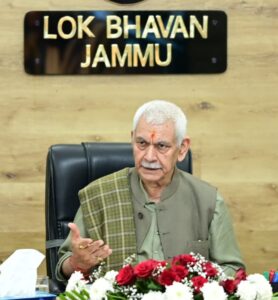
The meeting was chaired by the Lieutenant Governor Shri Manoj Sinha, who is also the Chairman of the Shri Mata Vaishno Devi Shrine Board.

The Shrine Board has approved three key initiatives: an international museum dedicated to Maa Shakti’s spiritual heritage, a sound-and-light spectacle modeled on global pilgrimage sites, and a documentary on the Mata Vaishno Devi Shrine.

In another important initiative, the Shri Mata Vaishno Devi Shrine Board has decided to fill vacant positions, with recruitment process set to begin shortly.

The SMVDSB has also greenlit the establishment of coaching centers offering free NEET preparation to youth from surrounding areas.

The SMVDSB approved formulation and phased implementation of a rehabilitation plan for the service providers on Mata Vaishno Devi track, like ponywallas etc, in line with the directives of the National Green Tribunal.

i.In a significant move, a committee has been constituted to assess strategies for expanding pilgrimage numbers, enhancing pilgrimage experience and present recommendations to the board.

Shri Mata Vaishno Devi Shrine Board has resolved to prioritize purchases from self-help groups, women and young local entrepreneurs to supercharge regional economy.

The Board has decided that the Shri Mata Vaishno Devi Shrine Board would source Mata’s offerings locally, channeling funds directly into community growth.

Since Mata’s abode puts Katra city on the global map, the board has decided to contribute directly for city’s transformation.

“It’s Board’s resolve to make Katra clean, vibrant, and equipped with modern infrastructure for residents and the millions who arrive as pilgrims,” the Lieutenant Governor said.

Shri Mata Vaishno Devi Shrine Board has decided to spearhead sports development across the Jammu region- cultivating future champions, safeguarding youth health, and transforming Jammu & Kashmir UT into a national sporting powerhouse alongside its spiritual eminence.

The Board also emphasised on specialised training for religious practitioners (Pujaris).

The Board reviewed and ratified actions taken since the previous meeting and took key decisions on 25 important agenda items aimed at strengthening the Board’s functioning and improving pilgrim services.

Emphasizing pilgrim safety, the Board approved enhancement of insurance cover from ₹5 lakh to ₹10 lakh per pilgrim. Besides, endorsed the preliminary concept for constructing an International Museum with the consultation of Asian Heritage Foundation dedicated to Mata Vaishno Devi Ji at Natali, Katra. The proposed Shakti Museum will be the first of its kind and would serve as a religious, educational and cultural center. Additionally, the state-of-the-art light & sound shows will bring mythology to life through a fusion of tradition and innovation. The Lieutenant Governor requested the Board to provide concrete suggestions, enabling the project to be initiated in the coming months and completed within a two-year timeframe.

Progress of major infrastructure projects was reviewed including construction of the Exit Track at Bhawan, New Vaishnavi Bhawan, widening of the Yatra track from Sanjichhat to Bhawan, slope stabilization works, construction of Shri Shankaracharya Ji Temple and allied amenities at Katra and School for Divyangjan at Chaitanya Ashram, Jammu. The Board directed strict adherence to timelines while ensuring the highest standards of quality and safety.

Regarding the newly developed helipad at Village Hutt, the Board approved that following execution of a revised MoU, SMVDSB will provide a one-time financial grant to Shri Shiv Khori Shrine Board under the Shrine Act for development and upgradation of pilgrim infrastructure. It was also approved that heli services for both Shrines will operate from the same helipad for the convenience of pilgrims.

The Board appreciated the community welfare initiatives of renovating 15 schools in Reasi and Udhampur districts damaged during the heavy rains of August-September 2025 within just five months.

The Board lauded the initiative of establishing a Sadhna Kaksh (Meditation Hall) at Bhawan; terming it a significant step towards enriching the spiritual well-being of pilgrims. Approval was also accorded for grant-in-aid to institutions under the SMVD Charitable Society, including Gurukul, Hospital, Sports Complex, College of Nursing.

The Board expressed appreciation for the greening initiatives undertaken by SMVDSB and approved a comprehensive Annual Green Plan for 2026–27. The Lieutenant Governor directed the CEO to reaffirm the commitment to environmental sustainability with particular emphasis on promoting a clean and green Katra Town and its surrounding areas.

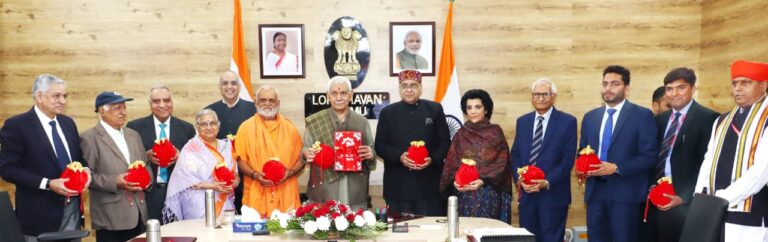
On the sidelines of the meeting, the Lieutenant Governor laid foundation stones for several pilgrim-centric facilities aimed at enhancing infrastructure and spiritual experience. These included construction of three new temples in Reasi district, restoration of two ancient temples in Jammu district at an estimated cost ₹1.21 Cr, redevelopment of the Bhairon Ji Temple Complex and construction of staff accommodation at Bhawan and Bhairon Ji. The Lieutenant Governor also inaugurated newly constructed cottages at Katra and launched an improvised Pouch Prasad containing dry fruits, an engraved coin depicting the Holy Pindies and a sacred Mouli (Kalava) for free distribution among pilgrims.

Earlier, the Chief Executive Officer, SMVDSB presented a detailed overview of the Board’s activities and progress achieved in implementation of decisions taken during previous meetings.

The meeting was attended by all Board Members including Mahamandleshwar Shri Swami Vishveshvaranand Giriji Maharaj, Shri Baleshwar Rai, Dr. Ashok Bhan, Smt. Sudha Murty, Smt. Gunjan Rana, Dr. K.K. Talwar, Shri Kulbhushan Ahuja, Shri Lalit Bhasin and Shri Suresh Kumar Sharma.

Dr Mandeep K. Bhandari, Principal Secretary to Lieutenant Governor and Shri Sachin Kumar Vaishya, Chief Executive Officer, SMVDSB also attended the meeting.


Ashwini Vaishnaw Inaugurates Zetwerk’s Electronics Manufacturing Facility in Bengaluru

0

Vinod Bhat

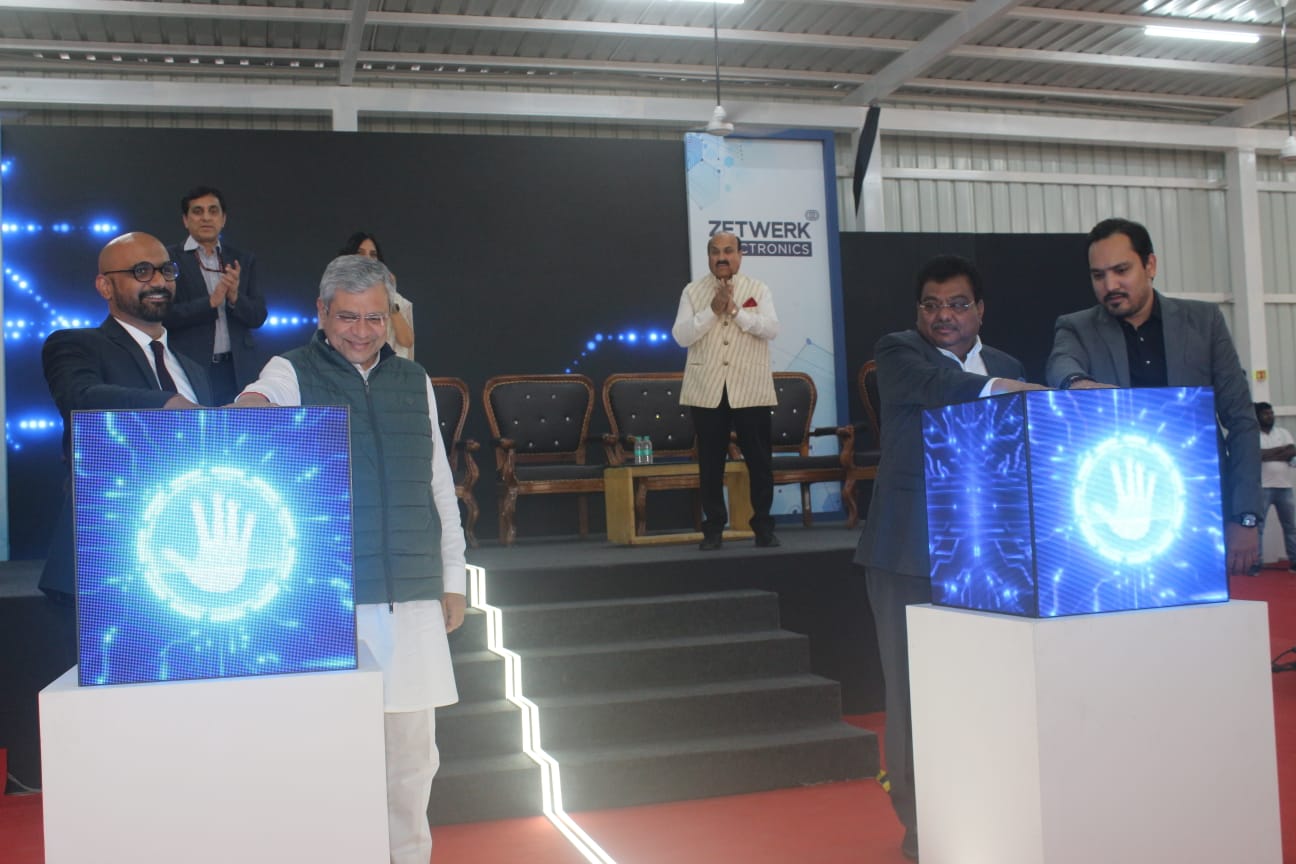
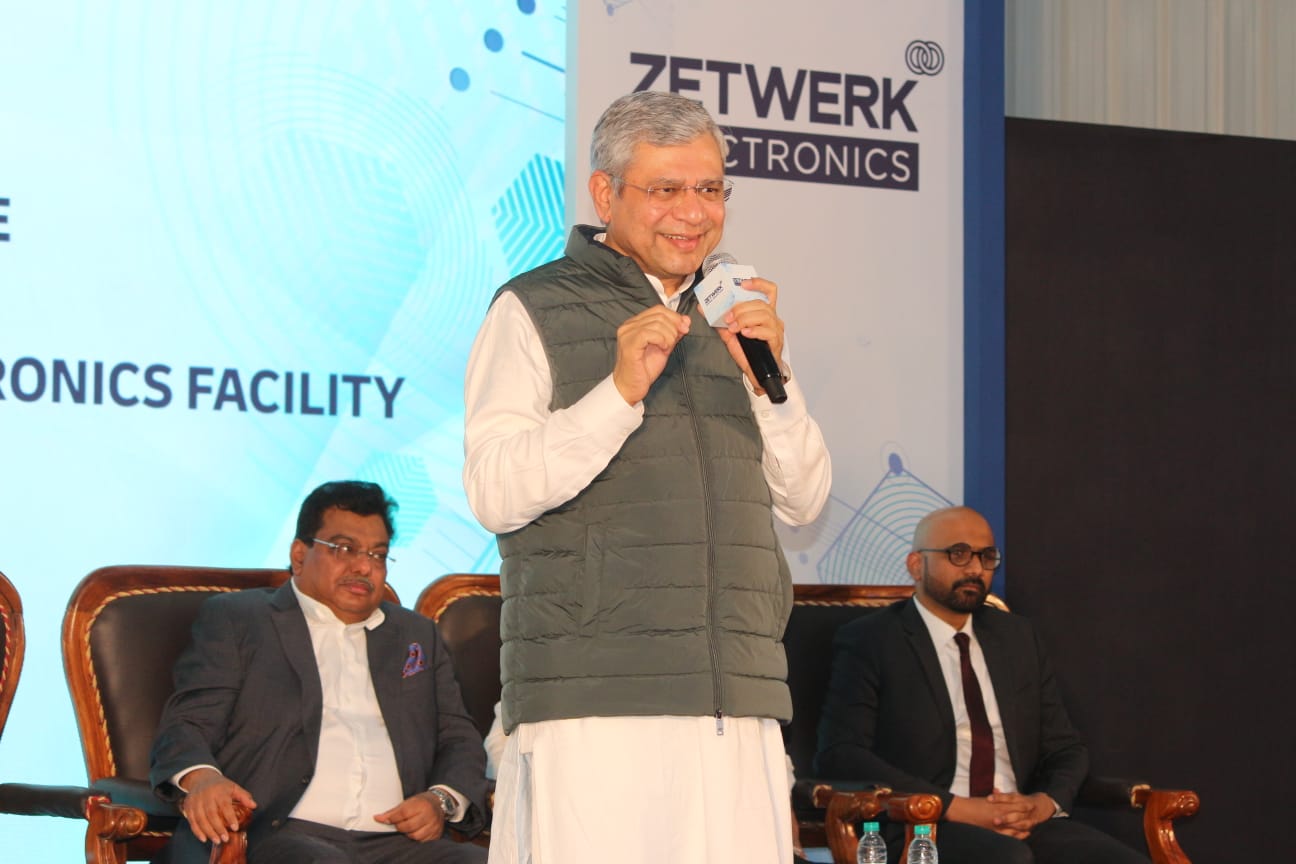
New Delhi: Minister for Railways, Information and Broadcasting, and Electronics and Information Technology Shri Ashwini Vaishnaw and Karnataka’s Minister for Large and Medium Industries, M.B. Patil today inaugurated Zetwerk Electronics’ new world-class manufacturing facility for defence, automotive, and IT hardware electronics built in Bengaluru. Inaugurating the program, the Union Minister stated that every product manufactured here will meet high-quality standards. The Minister noted that the manufacturing of electronic components is now growing rapidly. Already, 46 approvals have been granted, and Karnataka is set to receive investments exceeding ₹10,000 crore.

The Minister said that, In the recent budget, the Finance Minister increased the budget for the electronic component manufacturing scheme from ₹22,000 crore to ₹40,000 crore. This will significantly accelerate the electronics manufacturing journey. Our Prime Minister has set a production target of $500 billion by the 2030-2031 financial year. Therefore, we all need to move very quickly in that direction. Today, people are designing complete ‘2-nanometer’ chips in India, which is a major achievement for the country, and equipment manufacturers have also started coming to India. The Minister mentioned that Applied Materials and Lam Research have been brought to India, and the next goal should be to bring ASML.

He further added that commercial production will begin this year. In the coming days, the first commercially produced chip from a semiconductor plant will be in our hands. ‘Semicon 2.0’ will be effective, focusing on design, equipment manufacturing, chemicals, gases, validation, and yield improvement—all functions required for a sustainable semiconductor journey.

We aim to prepare 85,000 silicon engineers over 10 years, and in four years, we have already trained 67,000. Consequently, a large part of chip design will practically happen in India. This will be a major shift in the coming years. With the arrival of the ‘fab,’ we have now mapped a path from 28- nano meter to 7- nano meter, which will be part of Silicon 2.0. We believe in a cooperative system and that the country grows only when all states grow. The Minister urged not to have a narrow outlook but a broad vision to make India a ‘Viksit Bharat’ by 2047. He stated that, Hon. Prime Minister has given us this vision, and we should all work unitedly and focus toward that single goal.

J&K Shines at OTM Mumbai, Bags Best Adventure Tourism Award

0


TAUSEEF AHMAD

SRINAGAR, Feb 8: The Jammu and Kashmir Tourism Department made a strong and impactful presence at OTM Mumbai 2026, one of Asia’s premier travel and tourism marts, drawing widespread attention from national and international tourism stakeholders. The three-day event was held from February 5 to 7 at the Jio World Convention Centre, Bandra Kurla Complex, Mumbai, and served as a significant platform for showcasing the vast and diverse tourism potential of Jammu and Kashmir.

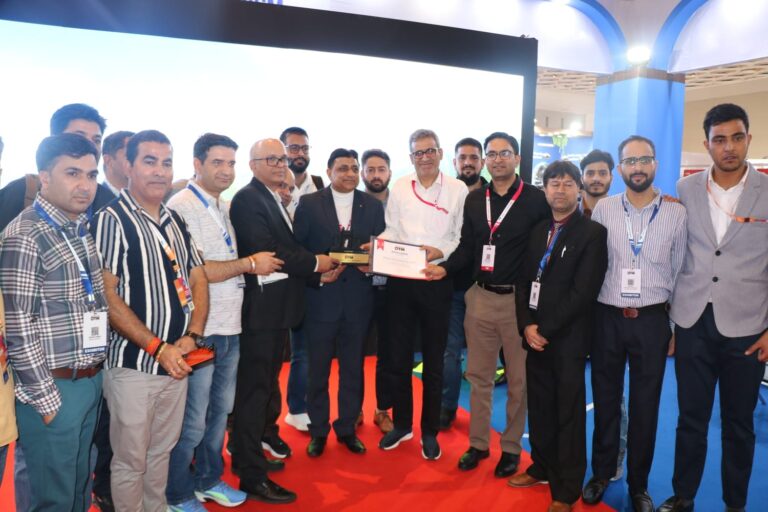
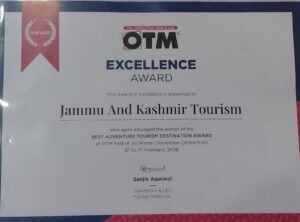
Adding to the significance of its participation, Jammu and Kashmir was conferred with the prestigious “Best Adventure Tourism Destination” award, reinforcing the region’s growing reputation as a global hub for adventure and experiential tourism. The recognition was seen as a major boost for the Union Territory’s tourism sector, particularly in promoting activities such as trekking, skiing, mountaineering, rafting, and eco-tourism.

The Jammu and Kashmir Tourism Department set up a dedicated and visually striking pavilion, which recorded heavy footfall throughout the three-day event. Officials said the J&K pavilion emerged as one of the major highlights of OTM Mumbai 2026, attracting tour operators, travel agents, destination management companies, hospitality groups, and tourism professionals from across India and abroad.


The J&K delegation was led by Director Tourism Kashmir, Syed Qamar Sajad (JKAS), whose supervision and active on-ground engagement played a crucial role in ensuring the department’s effective participation. His interactions with industry stakeholders helped facilitate meaningful discussions on promoting Jammu and Kashmir as a year-round tourist destination.

Director Tourism Jammu, Vikas Gupta, along with other senior officers of the Jammu and Kashmir Tourism Department, also participated in the event. The officials remained engaged throughout the travel mart, holding extensive interactions with exhibitors, tour operators, and travel trade representatives to explore new avenues of collaboration and tourism promotion.

The Jammu and Kashmir Tourism Pavilion stood out for its distinct design, vibrant branding, and immersive presentation. In addition to the main pavilion, J&K Tourism branding was prominently displayed at the International Pavilion, while exclusive lanyard branding further enhanced the department’s visibility across the venue, ensuring sustained engagement with visitors and delegates.

The pavilion witnessed a large number of interactions with domestic and international tourism professionals. Multiple structured meetings were held with leading travel companies, tour operators, and destination management firms, focusing on future partnerships, tour packages, and promotional strategies aimed at increasing tourist inflow to the region.

A key attraction at the J&K pavilion was the incorporation of interactive elements, including trade meetings and a virtual reality (VR) experience, which allowed visitors to virtually explore some of Jammu and Kashmir’s most iconic destinations. Officials said the VR experience generated significant interest and helped visitors gain a realistic and immersive feel of the region’s scenic landscapes and adventure offerings.

The pavilion also showcased the rich cultural heritage of Jammu and Kashmir through the display of Kashmiri classical musical instruments and traditional handicrafts, including papier-mâché items. The cultural presentation added a unique dimension to the tourism promotion by highlighting the region’s artistic and cultural identity alongside its natural beauty.

Notably, officials said this was the first time that Kashmiri crafts and cultural elements were prominently displayed at OTM Mumbai as part of tourism promotion. The initiative was aimed at providing direct exposure to local products and craftsmanship, thereby supporting artisans while enhancing the overall destination branding of Jammu and Kashmir.

Co-exhibitors representing Jammu and Kashmir expressed satisfaction over the Tourism Department’s well-planned marketing strategy, the aesthetic appeal of the pavilion, and the structured engagement with tourism industry stakeholders. They said the initiative created valuable networking opportunities and opened new possibilities for business collaborations.

Officials described the overall response at OTM Mumbai 2026 as highly encouraging and expressed optimism that the extensive outreach and global exposure would translate into increased tourist arrivals to Jammu and Kashmir in the upcoming tourism season, further strengthening the region’s tourism economy.