spot_imgspot_img
spot_img
Home Blog Page 131

UPSC Civil Services Prelims On May 24; Mandatory Face Authentication For Aspirants

0

New Delhi, Feb 5: The Union Public Service Commission (UPSC) has made face authentication mandatory for all aspirants at examination centres and introduced strict eligibility restrictions for candidates already appointed to certain services.


These changes were announced in an official notification for the Civil Services Examination (CSE) 2026, released on Thursday.


The commission announced 933 vacancies for this year’s recruitment cycle, which include 33 posts reserved for persons with benchmark disability. The preliminary examination of the competitive examination will be held on May 24, it said.


The prestigious exam is conducted annually by the UPSC in three stages — preliminary, main and interview– to select officers of Indian Administrative Service (IAS), Indian Foreign Service (IFS) and Indian Police Service (IPS) among others.


“In order to ensure a secure and smooth examination process, all candidates will be required to undergo face authentication at the examination venue mandatorily. Candidates are advised to enter the examination venue well in time for face authentication/identity verification and frisking,” the UPSC notification read.

Applicants are strongly advised “to use their Aadhaar card as ID documents for easy, effortless and seamless verification and authentication of ID and other details”, it said.

The notification clarifies new “restrictions” aimed at candidates who have already secured positions through previous examinations.

According to the notification, any candidate currently serving in the IAS or the IFS “will not be eligible to appear” for the 2026 examination.


If a candidate is appointed to the IAS or IFS after the preliminary exam, they will not be eligible to appear in the “main” phase of the test “notwithstanding having qualified” in the prelims. If appointed after the commencement of the main exam but before the results are declared, they will not be considered for any service/post under the CSE 2026 results.


Candidates already selected or appointed to the IPS will not be eligible to opt for or allocated to the same service again through the CSE-2026 examination.

Candidates allocated to the IPS or Central Service Group ‘A’ in the CSE-2026 “will have the option to appear in immediate subsequent CSE-2027” exam, provided they obtain a one-time exemption from joining their training from the concerned authority.

The UPSC has also cut down from existing seven to five days, the time frame for making representation on the question paper.

The Commission will be providing an opportunity to the appeared candidates to make representations on the questions asked in the papers of the examination and on the answer key of the question paper (objective type) of the civil services preliminary examination in a time frame of 5 days (five days), it said.

Other Backward Classes candidates applying for CSE-2026 must produce OBC (non-creamy layer) certificate based on the income for the financial year 2022-2023, 2023-2024 and 2024-2025 and issued on/after April 1, 2025 (after the completion of FY 2024-25) but not later than the closing date of the submission of application form for civil services prelims, which is February 24, the UPSC said.


Applicants are also required to upload their photograph and capture their “live photograph” while filling up the Common Application Form (CAF). They are required to sign three times (one below the other) on a plain white paper using a black ink and upload the same while filling up the CAF, the notification said.


“The candidates will not be allowed to withdraw their applications after the submission of the same. Further no correction /alteration/modification in any field(s) of the application form is allowed after submission,” it said, adding that applicants are required to submit their applications online via the official website at https://upsconline.nic.in.

Indian Railways to Operate Record Number of Holi Special Trains This Year to Facilitate Smooth Passenger Travel

0

Vinod Bhat

New Delhi: To ensure comfortable and hassle-free travel for passengers during the upcoming Holi festival, Indian Railways has planned the operation of more than 1,410 Holi Special Trains across its network. The number will increase upto 1500. These special services are aimed at meeting the surge in passenger demand during the festive period and ensuring smooth connectivity between major destinations.These special trains are scheduled to operate in the month of March. For Holi 2025, a total of 1,144 special train trips were operated.

Zone-wise, the Central Railway (CR) will operate 209 Holi special trains, while the Western Railway (WR) has planned the operation of 231 trains to cater to heavy passenger traffic on western routes. The East Central Railway (ECR) will run the highest number of special trains at 285, followed by the South Central Railway (SCR) with 160 services. The Northern Railway (NR)  will operate 108 Holi special trains, whereas the  North Western Railway (NWR) has planned 71 trains.

Further strengthening connectivity, the North Central Railway (NCR) will operate 66 special trains, and both the North Eastern Railway (NER)  and the East Coast Railway (ECOR)  will run 62 trains each. The South Western Railway (SWR) will operate 47 trains, while the West Central Railway (WCR) has planned  43 services. The Southern Railway (SR) will operate 39 Holi special trains, and the South East Central Railway (SECR) will run 15 services. Additionally, the Konkan Railway (KR) will operate 9 special trains, and the Northeast Frontier Railway (NFR) will run 2 trains to meet regional demand.

Indian Railways remains committed to ensuring passenger convenience, safety, and efficient operations during major festivals.

Union Home and Cooperation Minister Amit Shah formally launched India’s first cooperative-based taxi service ‘Bharat Taxi’

0

VINOD BHAT

Delhi, Feb 05:

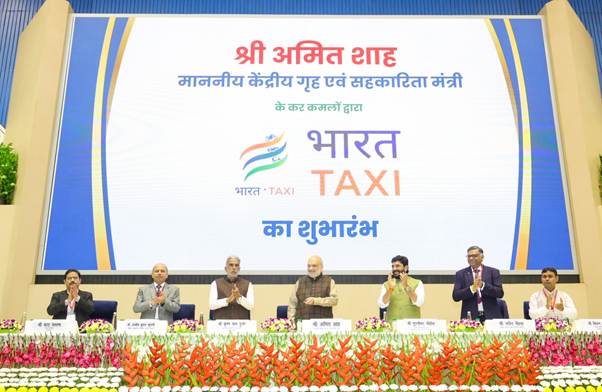
Union Home and Cooperation Minister Shri Amit Shah today formally launched India’s first cooperative-based taxi service ‘Bharat Taxi’ in New Delhi. On this occasion, Union Minister of State for Cooperation Shri Krishan Pal Gurjar and Shri Murlidhar Mohol, and Cooperation Secretary Dr. Ashish Kumar Bhutani, along with several dignitaries, were present. More than 1,200 “Sarathis” (driver partners) from various States participated in this historic programme, reflecting broad support for Bharat Taxi’s driver-empowerment and cooperative-ownership-based model.


Addressing the programme, Union Home and Cooperation Minister Shri Amit Shah said that under the leadership of Prime Minister Shri Narendra Modi ji, the Ministry of Cooperation is developing an ownership-rights model for people working in the unorganised sector. He said that within three years, from Kashmir to Kanyakumari and from Dwarka to Kamakhya, Sahakar Taxi will become a very big medium for the welfare of our taxi Sarathis. Shri Shah said that when he first raised the subject of Sahakar Taxi before Parliament, many people—especially companies connected with taxi operations—questioned why the government was entering the taxi sector. He said such people do not know the difference between ‘Sahakar’ (cooperation) and ‘Sarkar’ (government). Shri Shah said the government is not entering the taxi sector; rather, cooperation (Cooperation) is entering the taxi sector.


Union Cooperation Minister Shri Amit Shah said that perhaps for the first time in the whole world, such a unique company is coming into existence whose real owner is neither any individual nor any external company, but the Sarathi who drives the taxi. Every Sarathi brother-sister associated with Sahakar Taxi is the true owner of this cooperative taxi society. He said this concept will bring a fundamental transformation in the life, self-confidence, and economic condition of the Sarathis who join Sahakar Taxi. Shri Shah also said that many such models have succeeded in our country earlier. Only 11 milk producers started Amul. Today, in Gujarat, a huge banyan tree of more than 36 lakh women livestock-rearers has taken shape. These women livestock-rearers do business worth more than one lakh twenty-five thousand crore rupees. He said this model shows that when ordinary people themselves become owners, even a small beginning can yield very big results. He said that today, women livestock-rearers are earning up to one crore rupees annually by selling milk, which is the marvel of the cooperative model.


Shri Amit Shah appealed to taxi Sarathis that they are driving taxis now; they will continue to drive taxis even after joining Sahakar Taxi, but there will be one major difference between the two. He said that at present, the wheel of the taxi puts money into someone else’s pocket, but now the earnings from the wheel of the Sarathis’ taxis will go into the Sarathis’ own pockets. He said this idea is born from the spirit of cooperation. The real meaning of cooperation is that when many people with small amounts of capital pool their strength, they can together accomplish very big tasks. Those with very large capital do big work alone and the profit also remains limited to only a few people. Shri Shah said that the cooperative model being discussed today is the newest and most successful beginning in today’s time. He said now the wheel of the taxi will not run for someone else’s earnings, but for the prosperity and well-being of taxi Sarathis.


Union Cooperation Minister Shri Amit Shah said that many world-class cooperative models have already been built in India, including Amul, IFFCO, KRIBHCO and similar institutions. He said none of these cooperative institutions had very large initial capital. Similarly, in Sahakar Taxi, the highest share capital is only 500 rupees, and that very 500 rupees is giving Sarathis the status of real owners. He said this small amount is going to become the foundation of the taxi Sarathis’ hard work, self-respect, and economic freedom.


Shri Amit Shah said that after elections held every five years, two representatives chosen by taxi Sarathis will sit on the Board. They will look after their interests and take decisions for them. This is the soul of cooperatives and the spirit of true ownership rights. He said Sahakar Taxi will keep only 20 percent of the total profit with itself; that is, out of 100 rupees, Sahakar Taxi will keep only 20 rupees with itself—whose owners are Sarathis themselves. Shri Shah said the entire profit will go into the account of the Sarathi associated with Bharat Taxi. He said the owners of the 20 rupees that remain in Bharat Taxi’s capital account will also be Sarathis themselves.


The Union Home and Cooperation Minister said that Bharat Taxi has been conceptualised by bringing together all three existing types of taxi vehicles, including four-wheeler taxis, three-wheelers, and two-wheelers. He conveyed a message to the nation’s Matri Shakti that Bharat Taxi will accord the highest priority to their safety. He said we have prepared a special concept of Sarathi Didi under which, in the coming time, there will be a separate window for ‘Sarathi Didi’ in the app, through which any woman who registers will be picked up only by ‘Sarathi Didis’. Shri Shah said ‘Sarathi Didis’ will arrive on two-wheelers and will safely take women to their destination at a very low fare. He said this facility will prove to be a very big and practical relief for women. In the coming days, through Sarathi Didi, the nation’s Matri Shakti will have access to an option of safe, affordable, and dignified travel. This is not merely a service, but an important step towards women’s safety, self-reliance, and dignity.


The Union Home and Cooperation Minister said that Bharat Taxi has entered into agreements (MoUs) with a total of nine major institutions including Delhi Traffic Police, Delhi Metro Rail Corporation, Airport Authority, IFFCO Tokio Insurance, State Bank of India. Through these agreements, Bharat Taxi’s customers will get many additional facilities, and at the same time, all these institutions will be able to avail Bharat Taxi’s services easily. He said these institutions have now become stakeholders in Sahakar Taxi’s success. This new taxi concept based on an ownership model has been launched for the first time in India today, which not only brings the spirit of ownership rights for Sarathis, but also presents a reliable and convenient option for passengers and various institutions.


Shri Amit Shah said that the fixed charge decided by Bharat Taxi will remain separate from the Sarathis’ account. Besides this, Bharat Taxi will not deduct even one percent commission from the sweat-earned income of Sarathis, due to which their prosperity will increase rapidly. He said the objective of Bharat Taxi is not to increase the company’s capital, but to increase the profit and income of Bharat Taxi’s real owners—the Sarathi brothers and Sarathi Didis. Shri Shah said the payment made by the customer will be transferred directly and immediately, automatically, into the Sarathi’s account. There will be no need to wait for this. No Sarathi’s account will be closed without proper hearing. However, Sarathis also have a responsibility to behave well with customers, maintain the goodwill of their taxi, and focus on service quality. He said a complete system has been put in place for hearing complaints, and action will be taken only after a fair hearing.


Union Cooperation Minister Shri Amit Shah said that until now, terms like booking fee, platform fee, and heavy commission used to fatten the company’s balance sheet and reduce the Sarathi’s earnings. In Bharat Taxi, there is no arrangement for any such fee or commission, and Sarathis themselves will be the owners. This idea may not be understood by people with a western mindset, but this is the real strength of cooperation.


Shri Amit Shah said that the beginning of Bharat Taxi is also the beginning of opening new dimensions for the cooperative sector. The cooperative movement has been running in India for the last 125 years, but now the time has come to take the cooperative model into newer and newer sectors. He said that under the leadership of Prime Minister Shri Narendra Modi ji, the Ministry of Cooperation is preparing an ownership-rights model for people working in the unorganised sector. In the coming time, we will take this model forward in three to four such sectors where the fruits of the sweat and hard work of the person who works will remain with that person.


The Union Home and Cooperation Minister said that the four core mantras of Bharat Taxi are—Ownership, Security Cover, Dignity, and “Everyone’s Wheel, Everyone’s Progress”, i.e., fair distribution of dividends for all. With these four objectives, Bharat Taxi has been started, and in the coming time it will prove to be a very successful experiment. He said it was established on 6 June 2025 and from today it is being commercially launched. Within just 8 months, in Delhi and Gujarat, more Sarathis and customers have joined Bharat Taxi than any other taxi company. No other company has achieved registrations on such a large scale in such a short time. He said that in the coming days, our Sarathi brothers and sisters will automatically be able to get the benefit of insurance, government employment schemes, loans, subsidies, and all government schemes related to gig workers. We are continuously working in this direction so that every Sarathi gets full dignity, security, and economic strength.


Shri Amit Shah said that Prime Minister Shri Narendra Modi ji had started an important initiative in 2020-21 for the welfare of gig workers. Now, in the 2025-26 budget, the Government of India has brought many schemes and facilities for more than one crore twenty-five lakh gig workers across the country. Earlier, the right to register on the e-Shram portal was only for those whose pension used to be deducted or who were formally recognised and registered as workers. Now, by removing this limit, one crore twenty-five lakh gig workers of the country can register themselves on the e-Shram portal. He said that all Sarathis associated with Bharat Taxi can now easily get registered on the e-Shram portal. After registration, they will automatically get free treatment up to five lakh rupees for themselves and their family under the Pradhan Mantri Jan Arogya Yojana. As soon as they join Bharat Taxi, Sarathis will start getting this free medical facility. In addition, several other social security schemes available for workers registered on the e-Shram portal will also automatically become active for you.


The Union Home and Cooperation Minister said that Bharat Taxi’s model will not only strengthen the economic condition of Sarathis, but will also ensure their dignity, security, and ownership. He said that the facility of SOS alert has been made available in the Bharat Taxi app, through which security and assistance can be obtained immediately in an emergency. At present, eight helplines and assistance centres have been established in Delhi-NCR, and in the coming time, an extensive network of such centres will be laid across the country. The entire grievance redressal process will be operated at three levels—through the app, on the website, and through a toll-free number. Along with this, our representatives will regularly meet with Sarathis so that every problem can be resolved on time. He said that from today Sarathis are completely free from hidden charges. Taking hidden charges is a kind of deception with the Sarathi. There will also be freedom from toll, parking and all other additional charges. Also, a 24 hours, seven days helpline will always be available for Sarathis. For now, it is beginning in some cities of Gujarat, Delhi and NCR. But in less than the next three years, we will reach every State and every big city of the country.


Union Cooperation Minister Shri Amit Shah said that in the coming days, we will include many new services in Bharat Taxi and expand it continuously. He conveyed a message to all customers and Sarathis of Delhi-NCR that from today Bharat Taxi is fully starting in their service. This is not just a taxi service, but is going to become a strong medium to increase the prosperity, self-respect, and economic strength of crores of Sarathis of our country. He said that so far, more than 2.5 lakh drivers in Delhi-NCR have joined Bharat Taxi, more than 8.5 lakh passengers have become part of this family, and our agreements with several big companies are also in the final stage. He expressed confidence that Bharat Taxi’s future is very bright.


Earlier in the day, Bharat Taxi’s launch was symbolically marked by a grand rally of 100 cars from Indira Gandhi International Airport to Vigyan Bhawan. This rally presented a strong display of unity, pride, and collective strength of the country’s taxi community.


During the programme, the top five Sarathis with outstanding performance were felicitated for their notable contribution, to encourage driver ownership and participation under the cooperative model. Each honoured Sarathi was provided personal accident insurance certificates and family health insurance coverage of ₹5 lakh, reflecting Bharat Taxi’s commitment to driver welfare and social security.


During the programme, in the presence of the Union Home and Cooperation Minister, nine Memorandums of Understanding (MoUs) were also exchanged with leading public and private partners, with the objective of strengthening operational integration, digital enablement, and service quality.


Under the MoU signed between Delhi Traffic Police and Sahakar Taxi Cooperative Limited, Bharat Taxi will be permitted to digitally operate 34 prepaid taxi booths across 21 locations in Delhi, thereby enhancing passenger safety, transparency, driver income, and service quality. With the support of Delhi Traffic Police, Bharat Taxi has also established a Joint Command and Control Centre, which includes real-time ride monitoring, SOS alerts, and rapid emergency response mechanisms, promoting road safety, regulatory compliance, and commuter security.


Under the MoU with the National e-Governance Division (NeGD), MeitY, advisory and technical support will be provided to Bharat Taxi under the Digital India framework, enabling integration with DigiLocker, UMANG, and API Setu. This will provide Sarathis with paperless onboarding, unified access to government services, secure interoperable operations, cashless payments, and improved operational efficiency.


Under the partnership with Delhi Metro Rail Corporation (DMRC), last-mile connectivity will be provided at 10 major metro stations through bike taxis, e-autos/CNG autos, and cabs, allowing passengers to plan and pay for end-to-end journeys on a single platform, while enabling higher trip volumes and reduced idle time for drivers.


The MoU with the Airports Authority of India (AAI) will regulate Bharat Taxi operations at AAI airports nationwide, including pickup zones, signage permissions, and strict security and service standards, thereby enabling regulated airport operations across India.


Under the agreement with Delhi Tourism and Transportation Development Corporation / Delhi Airport Parking Services (DAPS – GMR supported), Bharat Taxi’s white cab services have been permitted at multiple parking locations across IGI Airport terminals. DAPS will provide a 20% discount on the ₹245 per-trip pickup fee for the first year, which will complement Bharat Taxi’s Kaali Peeli services and significantly increase airport ride volumes and revenues.


IFFCO Tokio has been onboarded as Bharat Taxi’s insurance partner, providing personal accident cover of ₹5 lakh for drivers at nominal rates, along with advisory support for long-term driver welfare and insurance solutions.


Under the MoU with Paytm, digital payments, co-branded offerings, and fintech enablement will be enabled, including payment gateway integration and access to Paytm’s partner ecosystem. Paytm is also supporting driver group health insurance with family coverage.


The partnership with GMR will further strengthen airport mobility operations and reinforce Bharat Taxi’s regulated access and service expansion at IGI Airport terminals.


Under the MoU signed with SBI, priority financing will be made available for commercial passenger vehicles under schemes such as Pradhan Mantri Mudra Yojana. Sahakar Taxi will identify and support eligible driver-owners, while SBI will ensure expeditious consideration in line with its prevailing guidelines.
Ganderbal Girl Soliha Zahoor Pedals Her Way Into India’s Cycling Spotlight

0


Touseef Wani


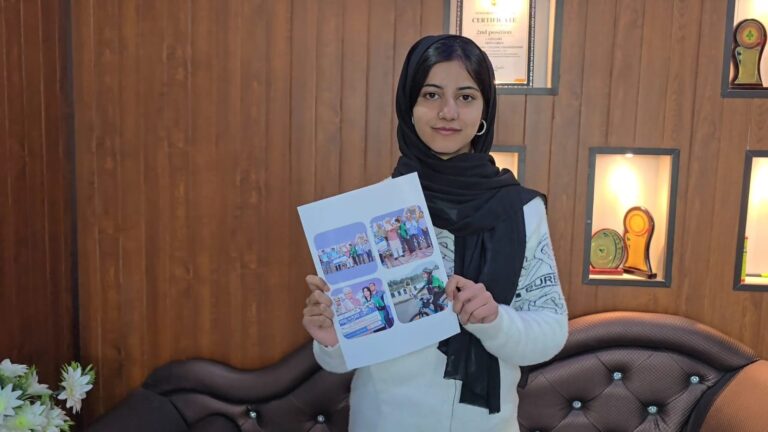
Ganderbal, Feb 05: Soliha Zahoor, a youngcyclist from Wanipora Saloora in Ganderbal district of Jammu and Kashmir, is fast gaining recognition on the national sports circuit after representing the UT in four major cycling championships across India. Balancing school with rigorous training, the Class 12 student is now being seen as one of Kashmir’s rising faces in competitive cycling.


Her rise in competitive cycling reflects not just personal excellence but a broader shift toward greater participation of girls in sports from rural Kashmir.

Driven by an unwavering passion for cycling, Soliha has represented Jammu & Kashmir in four national-level cycling championships held across different states of India.


Her participation in prestigious events such as the Road Cycling Championship in Puri (Odisha), the Mountain Bike Championship in Panchkula (Haryana), and the Track & Road Cycling Event in Vijaypur (Karnataka) highlights her growing stature in the sport.


Training relentlessly, often starting her day before dawn, Soliha exemplifies discipline, resilience, and commitment qualities that define true athletes.


Making history as the first girl cyclist from Ganderbal, Soliha has broken social and geographical barriers, becoming a beacon of hope for aspiring young athletes, especially girls.


Her achievements have earned her recognition at the highest levels, including an honor from the Lieutenant Governor of Jammu & Kashmir, who awarded her a cash prize in acknowledgment of her outstanding contribution to sports.


Adding to her list of accomplishments, Soliha secured first position in a prestigious cycling race organized by the Indian Army, covering the challenging route from Baramulla to Kaman Post (Aman Setu).


For this remarkable feat, she was felicitated with a cash award and a memento by senior Army officials, further cementing her reputation as a rising star in Indian cycling.


Soliha’s journey has also taken her to national youth platforms, including the Cyclothon, Pedal for Peace, where she interacted with leading figures from the sports fraternity.


Her dedication impressed the Minister for Youth Services and Sports, Satish Sharma, whose words of encouragement have further strengthened her resolve to pursue excellence.


Beyond medals and accolades, Soliha Zahoor stands as a role model for young girls in rural Kashmir, inspiring them to dream big and challenge stereotypes.


She has been widely appreciated by schools, local media, and youth organizations for promoting a culture of fitness, discipline, and inclusivity through sports.


With clear aspirations, Soliha aims to receive advanced professional training, represent India on the international cycling stage, and mentor young girls to pursue sports fearlessly. Her journey is a powerful reminder that talent, when supported by hard work and determination, knows no limits.


As she continues to push boundaries and chase her dream of donning the Indian colours internationally, Soliha Zahoor is undoubtedly poised to leave an indelible mark on the world of cycling. The road ahead is challenging but for Soliha Zahoor, every challenge is just another race waiting to be won.

Defence Secretary visits Surgical Eye Camp at Military Hospital, Bhuj

0

3-day camp restores vision to over 200 veterans & civilians

Delhi, Feb 05:
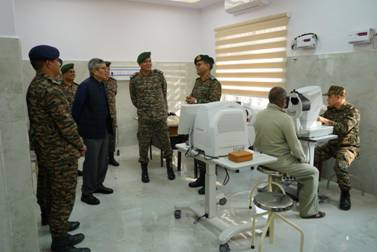
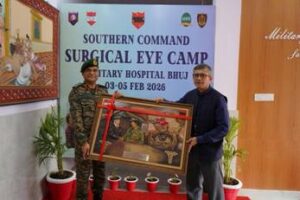
Defence Secretary Shri Rajesh Kumar Singh, along with General Officer Commanding-in-Chief, Southern Command Lt Gen Dhiraj Seth, visited the Surgical Eye Camp at Military Hospital, Bhuj, organised in collaboration with Army Hospital (Research & Referral), New Delhi. Conducted under the aegis of Southern Command, the three-day camp (03–05 February 2026) successfully restored the vision to over 200 veterans, their dependents, and civilians from the Kutch region.

A group of men in military uniformsDescription automatically generated

This outreach event targeted a population of nearly 3,000 across the Kutch district, including beneficiaries from more than 120 villages of Bhuj Taluka, covering remote border villages such as Lakhpat, Narayan Sarovar, and Dayapar. The surgeries were performed using state-of-the-art ophthalmic equipment and premium intraocular lenses, adhering to the highest clinical and safety standards.

The Defence Secretary appreciated the initiative, describing it as a commendable example of the Indian Army’s commitment to veterans’ welfare and military–civil cooperation. He acknowledged the impact of such outreach programmes in improving the quality of life of beneficiaries in remote and border areas.

In recognition of exemplary service, the Defence Secretary felicitated Brigadier Sanjay Kumar Mishra, Consultant and Head of Department (Ophthalmology), and the surgical eye team from Army Hospital (R&R) for their outstanding contribution in delivering high-quality ophthalmic care under challenging field conditions. He also interacted with patients in the post-operative wards, enquired about their well-being, and personally distributed post-operative medicines and spectacles to several beneficiaries.

India–US Trade Deal: No Compromise on Agriculture or Dairy; Farmers’ Interests Fully Protected: Shivraj Singh Chouhan

0

VINOD BHAT

Delhi, Feb 05:
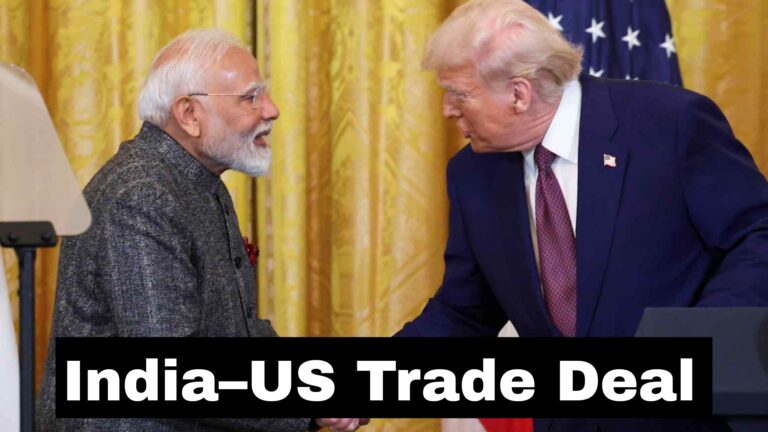
Amid opposition allegations surrounding the India–US Trade Deal, Union Minister for Agriculture & Farmers’ Welfare and Rural Development, Shri Shivraj Singh Chouhan, today firmly stated that the agreement fully safeguards India’s agricultural interests, particularly those of the farm and dairy sectors. He underlined that under the leadership and guidance of Prime Minister Shri Narendra Modi, the deal reflects a new benchmark of diplomacy, development and dignity, with the Prime Minister making it clear from the outset that farmers’ interests are non-negotiable. Addressing the media in Delhi, Shri Chouhan reiterated that India’s staple grains, fruits, major crops, millets and dairy products remain completely secure and face no threat whatsoever. He emphasized that the interests of small and large farmers alike have been fully protected, and that the agreement will create fresh opportunities rather than risks for Indian agriculture.

Clarification on Concerns Regarding Small Farmers and US Farm Products

Responding to the apprehension that over half of India’s population depends on agriculture and that small farmers may be affected, the Minister assured that no sudden or disruptive entry of foreign products will take place in the Indian market. He stressed that no market segment has been opened in a manner that could harm Indian farmers, and all major crops, food grains, fruits and dairy products remain shielded. On the confusion triggered by a recent tweet from the US Treasury Secretary about increased access for American farm products, Shri Chouhan said that Commerce Minister Shri Piyush Goyal has already clarified the facts in Parliament. He reiterated that India has not opened its markets in any way that puts pressure on domestic farmers, and that the protections for key agricultural commodities remain intact.

Boost for Rice, Spices and Textile Exports

Highlighting the export potential unlocked by the agreement, Shri Chouhan noted that India already exports rice to many countries, including the United States, and recently recorded exports worth around ₹63,000 crore. He stated that reduced tariffs will directly benefit India’s rice, spices and textile exports, and that growth in textile exports will help millions of cotton-growing farmers. The Minister affirmed that the deal is unequivocally in the interest of Indian farmers and opens up new export avenues, despite the misinformation being spread by the opposition.

When asked about the opposition’s demand that the government explain the details of the trade deal in Parliament, the Minister reiterated that all details of the agreement would be shared in due course. He emphasized that the core principle remains clear and unchanged: the interests of Indian farmers are fully protected.

“Farmers Are Annadata: Serving Them Is Equivalent to Worship”

Shri Chouhan stressed the need for clear communication to prevent confusion or fear among farmers, given the enormous size of the agricultural sector. He reaffirmed: “Farmers are our Annadata, the providers of life. Their welfare is the nation’s welfare, and their interests are absolutely secure.” In an emotional note, the Minister said that serving farmers is akin to worship, and that the Modi government will continue to stand firmly with farmers at every step.

Kashmiri Scholar’s Book Released at AMU

0

Dr. Zubair’s work offers insights into dialogue among civilizations, making it a valuable resource for students and scholars of Islamic Studies, Turkish Studies, and those interested in Islam-West discourse.


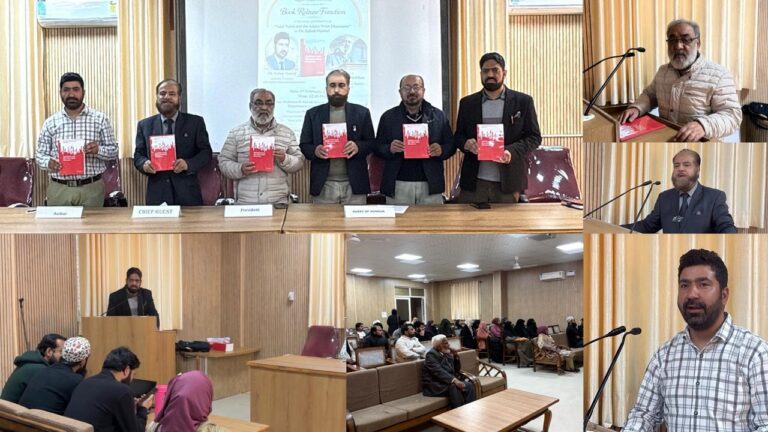
Aligarh, Feb 05: The Department of Islamic Studies, Aligarh Muslim University, organised the formal launch of a book titled Said Nursi and the Islam–West Discourse authored by Dr Zubair Hamid, Assistant Professor, Jammu and Kashmir Higher Education Department. The programme was attended by faculty members, researchers, research scholars and students.


Chief Guest Prof Abdul Majeed Khan observed that the book offers a balanced and research-based contribution to contemporary discussions on Islam–West relations and holds relevance for promoting intercultural understanding.


Presiding over the programme, Prof Adam Malik Khan, Chairman, Department of Islamic Studies, noted that the publication of the book by Springer reflects its academic merit and global scholarly acceptance.


Earlier, Introducing the book, Dr Tauseef Ahmad Parray, Department of Islamic Studies, Women’s College, AMU, highlighted its core arguments, research approach and academic relevance.


Speaking on the occasion, author, Dr Zubair Hamid shared insights into the research and publication process, describing the study of Said Nursi as a demanding academic endeavour shaped by rigorous review and scholarly guidance.


The book was formally released by Prof Abdul Majeed Khan, Prof Adam Malik Khan, Dr Bilal Ahmad Kutti, Dr Tauseef Ahmad Parray, Dr Ijaz Ahmad and the author. The programme was conducted by Shahab Saqib, while the vote of thanks was proposed by Saleh Rahman.

PIB Media Delegation from Srinagar Gains Insight into Marine Fisheries Research at ICAR–CMFRI, Vizhinjam

0

Exposure to advanced aquaculture, hatchery technologies and marine biodiversity conservation


Visit forms part of PIB Srinagar’s ongoing media tour to Kerala

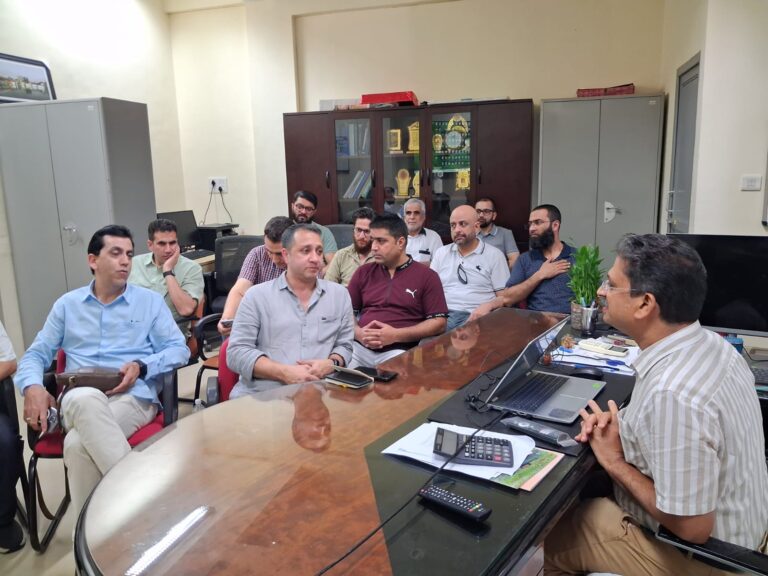
Thiruvananthapuram, Kerala, Feb 05:  As part of the ongoing media tour organised by the Press Information Bureau (PIB), Srinagar, media delegation from Srinagar visited the ICAR–Central Marine Fisheries Research Institute (CMFRI), Vizhinjam Regional Centre, today to gain first-hand insight into marine fisheries research and advanced aquaculture technologies.


During the visit, the delegation interacted with Dr. B. Santhosh, Head, Vizhinjam Regional Centre, ICAR–CMFRI, who briefed the journalists on the mandate, research focus and ongoing scientific interventions of the institute in the marine fisheries sector. He highlighted CMFRI’s role in sustainable marine resource management, mariculture development and technology dissemination aimed at enhancing fish production, livelihoods and nutritional security.


The delegation was also guided by Dr. Rathi Bhuvaneswari, Senior Scientist, through the Sagarika Marine Research Aquarium, which showcases marine biodiversity and research-driven awareness initiatives. The team also was given a walkthrough of the Silver Pompano Broodbank, developed for quality seed production.


The team further visited the Breeding and Hatchery Complex of Giant Trevally and Silver Pompano, the Bivalve Hatchery, Microalgal Photobioreactor, and the Live Feed Copepod Unit, where detailed explanations were provided on scientific breeding, larval rearing, live feed production and innovative technologies supporting marine aquaculture and coastal livelihoods.


The interactions and facility visits provided the media delegation with comprehensive exposure to CMFRI’s efforts in advancing climate-resilient, sustainable and technology-driven fisheries and mariculture practices.


The visit to ICAR–CMFRI, Vizhinjam, forms part of a five-day media outreach programme organised by PIB Srinagar to familiarise journalists from Jammu and Kashmir with key national research institutions, infrastructure projects and development initiatives in Kerala. The delegation is being led by Shri Majid Pandit, Media & Communication Officer, PIB Srinagar, who is the Conducting Officer for the programme.

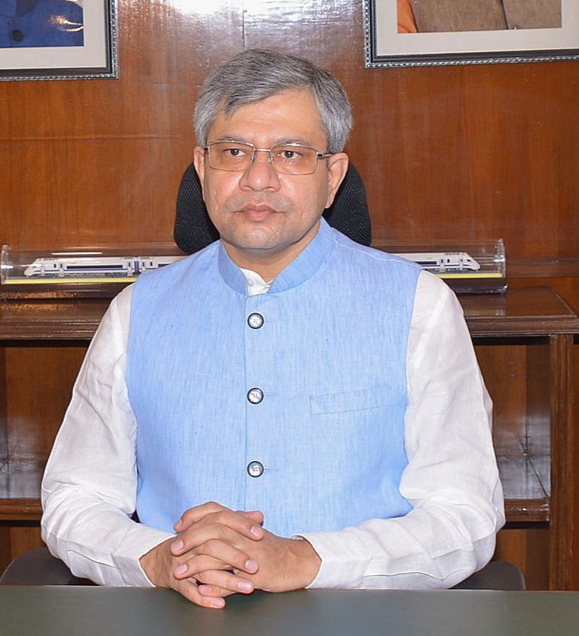
Works of 172 Stations Completed Under Amrit Bharat Station Scheme: Ashwini Vaishnaw

0

VINOD BHAT

Delhi, Feb 05:

Station Redevelopment


For redevelopment of Stations with a long-term approach, Ministry of Railways has launched Amrit Bharat Station Scheme. The scheme involves preparation of master plans and their implementation in phases to improve the stations. The master planning includes:


• Improvement of access to station and circulating areas


• Integration of station with both sides of city


• Improvement of station building


• Improvement of waiting halls, toilets, sitting arrangement, water booths


• Provision of wider foot over bridge/air concourse commensurate with passenger traffic


• Provision of lift/escalators/ramp


• Improvement /Provision of platform surface and cover over platforms


• Provision of kiosks for local products through schemes like ‘One Station One Product’


• Parking areas, Multimodal integration


• Amenities for Divyangjans


• Better passenger information systems


• Provision of executive lounges, nominated spaces for business meetings, landscaping, etc. keeping in view the necessity at each station


The scheme also envisages sustainable and environment friendly solutions, provision of ballastless tracks etc. as per necessity, phasing and feasibility and creation of city centre at the station in the long term. So far, 1337 stations have been identified for development under this scheme. Till now, works of 172 stations have been completed.


Safety of Bridges


Safety of Bridges across the country is accorded high priority by Indian Railways (IR). To ensure greater degree of safety/safeguards for bridges, there is a well-established system of inspection of Railway bridges on IR. All the bridges are inspected twice a year by designated officials, once before the onset of monsoon and a detailed inspection after the monsoon. In addition, certain bridges are also inspected more frequently depending upon their condition as decided by the Chief Bridge Engineer (CBE). Comprehensive Technical inspection of important & major bridges is done in a way that 20% of such bridges are inspected annually.


Repair/Strengthening/Rehabilitation/Rebuilding of bridges is a continuous & ongoing process and is undertaken based on inspections of bridges. During 2022-2025 (upto Dec’2025), 8,626 nos of railway bridges have been repaired / rehabilitated/ strengthened / rebuild in Indian Railways.


In addition, certain railway bridges are also inspected more frequently depending upon their condition. Repair/strengthening/rehabilitation /rebuilding of railway bridges is a continuous process and is undertaken whenever so warranted by their physical condition as ascertained during these inspections. Special technical audit is also conducted and follow up action is taken. The inspection of Subways/RUBs is conducted before and after the onset of the monsoon. Steps has taken to reduce water-logging in Road Under Bridges (RUBs) and subways, such as improved drainage in new designs, diverting water to natural drains, providing humps and cross-drains, sealing joints, and installing high-capacity pumps at vulnerable sites.


The methodologies of bridge rehabilitation works are provided in Indian Railway Bridge Manual (IRBM). Adherence to the quality assurance plan (QAP), inspection & testing plan (ITP) is ensured through contract management and general and special conditions of contract.


The retention of security deposit till defect liability period, penal provisions like termination of contract have been incorporated for accountability of executing agency. Completion of Bridge works depends on various factors like location, type, approval of schemes, availability of approach road, duration of working season in a year due to climatic conditions, availability of blocks, imposition of speed restrictions etc.


Coach Manufacturing


Presently, there are three coach manufacturing units operational in the country under Ministry of Railways. The cost of development of coach manufacturing units varies depending upon factors such as location, the type of coaches proposed to be manufactured, planned production capacity, and the machinery and plant to be installed. Expenditure on the development of coach manufacturing units is incurred over extended periods and across multiple phases covering the initial setting up of the units as well as subsequent upgradation and augmentation of the facilities from time to time. For example, the expenditure incurred on the setting up of the latest operational coach manufacturing unit- Modern Coach Factory, Raebareli is Rs. 3,042.83 crore.


Further, Rs. 2443 Cr has been sanctioned for various projects related to the upgradation/ augmentation of the three operational coach manufacturing units viz. Integral Coach Factory, Chennai, Rail Coach Factory, Kapurthala, and Modern Coach Factory, Raebareli.


LHB Coaches


Regarding proliferation of LHB coaches, it is mentioned that the work of replacement of ICF coaches with safer and more modern LHB coaches has been taken up in a phased manner. Technologically superior LHB coaches have better riding, improved aesthetics and features like Lightweight design, Anti climbing features, Air suspension (Secondary) with failure indication system, stainless steel shell and disc brake system etc.


Production of LHB coaches during 2014-25 vis-à-vis 2004-14 is as under:


Period


LHB coaches manufactured


2004-14


2,337 nos.


2014-25


42,677 nos. (more than 18 times)


Stalls at Railway Stations


To ensure availability of adequate facilities for travelling passengers, allotment of stalls at railway stations is done through e-auction/e-tender in accordance with extant policy in vogue from time to time.


Presently, there are 11650 stalls/units at railway stations, allocated to eligible applicants including those from SC/ST communities. There is no provision in the extant policy for allocation of free stalls at railway stations.


Cleanliness


Cleanliness is a continuous process and Indian Railways (IR) makes every endeavour to keep coaches in properly maintained and clean condition. Railways have taken several measures as follows to monitor and ensure cleanliness and hygiene in coaches including washrooms:


· Mechanized Coach Cleaning is being ensured during primary maintenance for better cleaning of the coach including interior, exterior and toilets.


· On-Board Housekeeping Staff Service is being provided to ensure cleanliness on run and to attend to any passenger grievance.


· Clean Train Station service has been introduced for mechanized cleaning in identified trains including washrooms during their scheduled stoppage enroute. Dedicated team of staff equipped with high pressure jet machines and cleaning equipment carries out cleaning followed by drying of coach toilets.


· All passenger coaches have been installed with bio-toilets so that no human waste is discharged from coaches on the track resulting in improved cleanliness level. The details of provision of bio toilets are as under:


Period


Number of Bio-Toilet fitted


2004-2014


9,587


2014-till date


3,61,572


· Regular monitoring is done through inspections, and feedback received through Rail Madad/RailOne app and other passenger interfaces.


IR has dedicated budgetary provisions for maintaining cleanliness & hygiene at stations and trains. No component of passenger fare is charged on account of providing cleanliness.


Food and Catering


Indian Railways serve about 58 cr meals every year on average. About only 0.0008% complaints are received on average. Based on inquiry on these complaints during the last three years, a fine of Rs 2.6 cr has been imposed.


In order to take passenger feedback, the complaint management system over Indian Railways has been strengthened, simplified and made more accessible over the last few years through the introduction of RailMadad Portal. With the launch of RailMadad Portal, Indian Railways provided passengers a single window system to register complaints and suggestions.


IRCTC and Railway officials conduct surprise and periodic checks to ensure compliance with catering standards on trains. IRCTC has deployed supervisors and catering assistants for ongoing monitoring of onboard services and real-time resolution of passengers grievances. To enhance inspection coverage, IRCTC has engaged additional Hospitality Monitors for sectional oversight of catering services on mail express trains


Indian Railways continuously endeavour to make available food items to the travelling passengers as per the prescribed rates. Necessary steps are accordingly taken by Indian Railways from time to time to ensure the same. Following steps have been taken by Railways to curb overcharging in trains :


· SMS is sent to passengers with a link of menu and tariff to make them aware of rates.


· Installation of Point of Sale (POS) machines for billing and cashless payments.


· Conducting awareness campaigns to promote billing and curb overcharging.


· Rates stickers on Packaged Drinking Water (PDW) Buckets and Tea/Coffee urns.


· Introduction of e-pantry service in Mail/Express trains to facilitate passengers to book meals through an online module.


· Implementation of QR code enabled Identity Cards to onboard catering staff.


· Distribution of pamphlets to create awareness regarding the rate of catering items and Packaged Drinking Water bottles.


· Special Inspection Drives to check overcharging and billing issues.


· Imposition of suitable penalty in cases of overcharging, if any.


Over 2,400 Health Vacancies to Be Filled in J&K : Govt

0

Jammu, Feb 5 ; Acknowledging an acute shortage of doctors and paramedical staff in rural and remote areas, the Jammu and Kashmir administration on Thursday said it has initiated the process to fill over 2,400 vacancies in the health department.

In a written reply to a question by Congress leader G A Mir in the assembly, the government said 480 posts of Medical Officers have been referred to the Jammu and Kashmir Public Service Commission.

It said 292 vacancies in the non-gazetted category from various directorates have been referred to the Jammu and Kashmir Services Selection Board (JKSSB), which has advertised these posts.

The reply said 290 more vacancies from the Directorate of Health Services, Jammu, have been sent to the JKSSB, and another 608 posts are being processed for referral.

For Kashmir division, 802 posts are under examination for referral to the selection board, it said.

The government said contractual recruitment of doctors and paramedical staff is already being undertaken under the National Health Mission to bridge immediate gaps, especially in far-flung and under-served areas.

On the demand for fast-track or local-level contractual hiring, the government said recruitment at constituency or district level outside the NHM framework is “not feasible”, as appointments must be made in accordance with prescribed rules, and any parallel arrangement may lead to “administrative and legal complications”. (KNS)