New Delhi: Indian Railways successfully managed rail traffic during the Mauni Amavasya period, operating 244 special trains across the country since 3 January 2026, ensuring smooth and convenient travel for devotees. These trains, run by 31 trains of Northern Railway (NR), 158 trains of North Central Railway (NCR), and 55 trains of North Eastern Railway (NER), served around 4.5 lakh passengers. The special services were planned and managed carefully to facilitate hassle-free journeys and safe travel during the festive period.
On 18 January, Prayagraj witnessed the peak of festive travel with 40 special trains in operation, including 11 trains of NR, 22 trains of NCR, and 7 trains of NER, carrying approximately 1 lakh passengers. Notably, all regular trains ran as scheduled, demonstrating effective planning and operational efficiency by Indian Railways.
The successful operation of these special trains reflects Indian Railways’ commitment to providing safe, convenient, and uninterrupted services to passengers during peak festive periods. The railways continue to leverage technology, resource planning, and coordination across zones to manage large-scale passenger movements efficiently.
TAUSEEF AHMAD
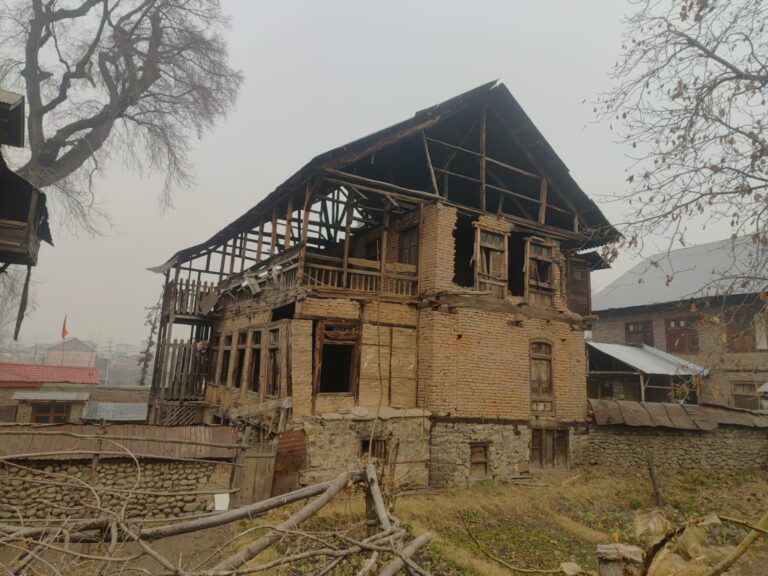
SRINAGAR, Jan 19: Kashmiri Pandits living across different parts of India on Monday observed the 36th anniversary of Exodus Day, recalling the painful memories of their mass displacement from the Kashmir Valley in 1990 and reiterating their long-standing demand for a safe, dignified and permanent return to their ancestral homeland.
The day marks one of the darkest chapters in Kashmir’s contemporary history, when thousands of Kashmiri Pandit families were forced to flee their homes amid fear, targeted threats and violence. The community continues to describe the episode not as voluntary migration, but as a forcible exodus that uprooted them overnight from their cultural, social and emotional roots.
More than three decades later, while the Valley has witnessed significant political and security changes, members of the displaced community say the yearning to return to Kashmir remains alive. However, they stress that such a return can only materialise if the government ensures complete security, sustainable rehabilitation and long-term peace.
“Nobody wants to remain away from their homes,” said Opender Koul, a Kashmiri Pandit, while speaking to Kashmir Despatch. “People are interested in returning. It is always good to go back to your own environment, to your roots. But this decision is not in the hands of individuals or even the community alone. It is purely a government call. Safety must be ensured from all angles.”
Koul said that while emotional attachment to Kashmir is deeply ingrained among Pandits, fear and uncertainty continue to prevent large-scale return. “If there is fear, people will hesitate. The government must first ensure safety, proper rehabilitation and a sense of stability. Only then will families feel confident enough to come back,” he said.
Another member of the Pandit community echoed similar sentiments, emphasising that return would be a gradual process rather than a sudden movement. “Confidence-building is key. If ten families return and feel secure, they will call another ten. That is how resettlement happens. But the beginning must be strong, well-planned and secure,” he said.
Responding to recent remarks made by National Conference president Dr Farooq Abdullah, Koul said it is true that many Kashmiri Pandit families are now settled in Delhi, Jammu, Mumbai and even abroad, with younger generations pursuing education and employment opportunities outside Kashmir—much like Muslim families from the Valley.
“Children have to work. If jobs are not available in a place, people migrate. That is natural migration and happens everywhere,” he said. “But what happened in 1990 was entirely different. It was forcible displacement, and that is what makes it unfortunate and tragic.”
Koul acknowledged that government initiatives like employment under the Prime Minister’s package have provided some relief to a section of the community, but said a comprehensive and inclusive return and rehabilitation policy is still missing.
“We still have our homes here. Our memories, our culture, our identity are connected to this land. Kashmir is our motherland. If peace continues and the government creates the right atmosphere, we hope to be back in the Valley again,” he said.
At the same time, he cautioned against sweeping claims of complete return. “People are interested, yes. But no one can say that 100 percent of the community will return unless the government creates strong conditions of safety, stability and economic opportunity,” he added.
Earlier in the day, National Conference president Dr Farooq Abdullah, while speaking to the media, also commented on the issue, stating that many Kashmiri Pandits never left the Valley and continue to live there even today.
“There are many Pandits who stayed back. When others left, they did not leave. They are living comfortably in their villages,” Abdullah said.
He asserted that return is a natural right of the displaced community and questioned the narrative of restrictions. “Who is stopping them?” he asked, while simultaneously stressing that rehabilitation must be carried out with proper planning and sensitivity.
Abdullah also highlighted the long-term social and emotional impact of displacement on families. “They have settled outside, grown old there, and their children are studying in schools and universities. One day, they will return and live here, but it has to happen in a proper and organised manner,” he said.
Meanwhile, Deputy Chief Minister of Jammu and Kashmir, while reacting to the issue, urged the Centre to take swift and decisive steps towards the rehabilitation of Kashmiri migrant Pandits. He said the return of the displaced community is essential to restore the Valley’s traditional ethos of harmony, brotherhood and cultural diversity.
“The return of Kashmiri Pandits will restore the beauty and harmony of the Kashmir Valley,” the Deputy CM said, adding that inclusive coexistence has always been Kashmir’s strength and must be revived through concrete action.
As Kashmir observes another Exodus Day, the voices of displaced Pandits continue to underline a common message — exile was never a choice, and return remains a hope, but only with peace, dignity and security firmly in place.
Kashmir has never been merely a geographical entity; it has always been a civilizational space shaped by centuries of shared history, collective memory and a deeply rooted culture of coexistence. At the heart of this pluralistic ethos stood the Kashmiri Pandit community—an inseparable part of Kashmir’s social, cultural and intellectual fabric. Their forced displacement in the early 1990s was not just a human tragedy for one community; it was a civilizational rupture that hollowed Kashmir from within. Any meaningful discourse on peace, reconciliation and a dignified future for the Valley remains incomplete unless it squarely addresses the return of Kashmiri Pandits to their homeland.
For centuries, Muslims, Pandits, Sikhs and others lived together in Kashmir, bound by shared customs, language, cuisine and traditions. The concept of Kashmiriyat—marked by tolerance, mutual respect and spiritual harmony—was not an abstract idea but a lived reality. Pandits were scholars, teachers, administrators, poets and neighbours, contributing immensely to Kashmir’s intellectual and cultural evolution. From Sanskrit learning and Shaivite philosophy to governance and education, their role was foundational. Their sudden and painful exodus shattered this organic social balance.
The displacement of Pandits was a dark chapter that inflicted deep wounds—psychological, cultural and moral—on Kashmiri society as a whole. While Pandits lost their homes, temples, livelihoods and sense of belonging, Kashmir lost a vital part of its pluralistic identity. A Valley without its Pandits is like a body without a soul—functioning perhaps, but incomplete and wounded.
It must be stated with moral clarity that the return of Kashmiri Pandits is not merely a political or administrative issue; it is a humanitarian, ethical and civilizational imperative. Their return should not be viewed through the narrow lens of electoral politics or temporary rehabilitation packages alone. It is about restoring trust, healing historical trauma and reclaiming the inclusive spirit that once defined Kashmir.
Importantly, the return must be safe, dignified and sustainable. Tokenism or cosmetic solutions will only deepen alienation. Pandits must feel secure not just physically, but socially and emotionally. This requires a multi-layered approach: credible security assurances, economic opportunities, reconstruction of homes and temples, and—most crucially—social acceptance rooted in genuine reconciliation.
Equally vital is the role of Kashmiri Muslims, who have also suffered immensely due to decades of conflict, violence and instability. The narrative of return should not be framed as one community versus another. Instead, it must be rooted in shared pain and shared responsibility. Many Kashmiri Muslims continue to acknowledge that the departure of Pandits was a loss for the entire Valley. This acknowledgment must now translate into collective efforts to welcome them back as equal stakeholders in Kashmir’s future.
Civil society, religious leaders, educators and the media have a crucial role to play in rebuilding this fractured social trust. The younger generation, which has grown up without experiencing the composite culture of pre-1990 Kashmir, must be sensitised to the shared history of coexistence. Schools, universities and public discourse should revive narratives of harmony rather than perpetuate divisions born out of trauma and mistrust.
The government, both at the Union and local levels, must move beyond bureaucratic inertia and fragmented policies. A comprehensive, consultative and transparent roadmap for return—crafted in dialogue with Pandit representatives and local communities—is essential. Forced or hurried resettlement without social consensus could prove counterproductive. What is required is patience, sincerity and a long-term vision rooted in reconciliation rather than optics.
The return of Kashmiri Pandits is also a test of India’s commitment to pluralism and justice. A democratic society cannot afford to normalise displacement or accept historical wrongs as irreversible. True normalcy in Kashmir will only be achieved when those who were forced out can return without fear, reclaim their homes and once again participate in the collective life of the Valley.
Ultimately, the return of Pandits is not about revisiting the past with bitterness, but about correcting history with courage. It is about ensuring that Kashmir reclaims its composite identity where diversity was not a threat but a strength. Only when Pandits walk freely on the streets of Srinagar, pray in their temples, live among their neighbours and contribute to society without fear, can Kashmir truly claim to have healed.
Peace in Kashmir cannot be partial. Coexistence cannot be selective. And reconciliation cannot be postponed indefinitely. The return of Kashmiri Pandits is not just their right—it is Kashmir’s redemption.
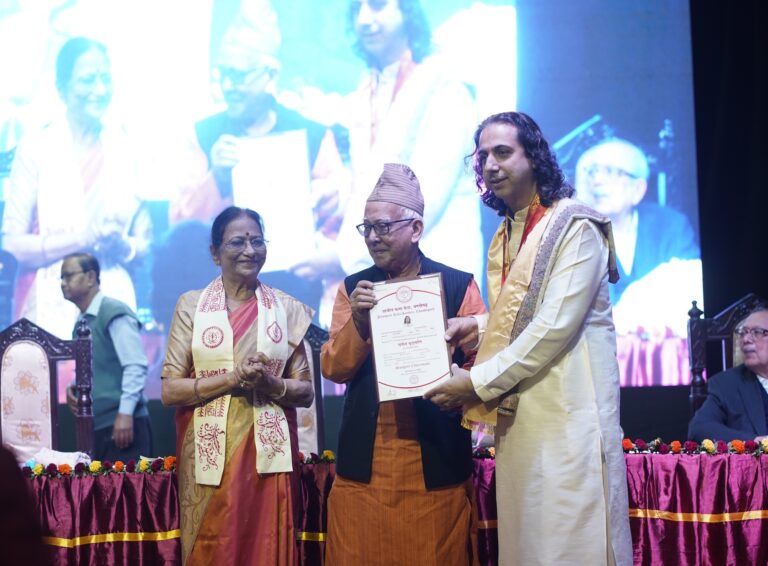
Kolkata, Jan 19: Internationally acclaimed Santoor Maestro and Music Composer Pandit Abhay Rustum Sopori, the present custodian of India’s ancient Santoor tradition, has been honoured with the prestigious Sangeet Churamani award, the Doctorate of Philosophy (Ph.D) in Music by Pracheen Kala Kendra. The honour was conferred for his research thesis titled “Redefining Kashmiri Music & Santoor.” The presentation of the Ph.D award took place during the 49th Annual Convocation of Pracheen Kala Kendra at the iconic Rathindra Mancha, Kolkata.
Pracheen Kala Kendra acknowledged Pt. Abhay Sopori’s research as a milestone that redefines the indigenous music and cultural heritage of Kashmir, establishing its ancient roots in Kashmir itself. The research also traces the antiquity of the Santoor, the Shatatantri Veena of Kashmir, highlighting its thousands-year-old legacy in the region with Shaivite cultural origins in Kashmir, rather than a foreign adaptation, and establishing it as a precursor to similar instruments. The research was acclaimed as a ‘Granth’, which shall serve as an important reference for future students of music and culture. Pt. Abhay Sopori expressed his gratitude to Pracheen Kala Kendra for facilitating his research work and thanked Dr. Shobha Koser and Shri Sajal Koser for their support. He dedicated his research to his father and Guru, the legendary Saint Musician Pandit Bhajan Sopori, to the santoor and the music of Kashmir, and to the people of Kashmir for preserving and safeguarding the rich musical and cultural heritage of Kashmir for thousands of years.
Pt. Abhay Sopori has served as Visiting Faculty at the University of Massachusetts, USA, and as Guest Professor at the Central Conservatory of Music, Beijing, China. Regarded as a cultural icon of Jammu and Kashmir, he has played a pivotal role in the introduction of Cultural Policy, the inclusion of music as an academic subject in colleges of Jammu and Kashmir, and the creation of new academic streams in colleges and universities thereby generating new employment opportunities for the youth. He has also been instrumental in paving the way for the introduction of the Postgraduate Programme in Hindustani Music in Kashmir.
The award ceremony was followed by a Santoor recital by Pt. Abhay Sopori in Raga Kaushik Ranjani, presented in the distinctive Sopori Baaj, a style created by his father and guru, Pandit Bhajan Sopori, and was received with resounding applause from the audience.
Srinagar, Jan 19: The body of Showkat Ahmad Sheikh, one of the victims of the 2024 Gandbal boat tragedy, was recovered from the Jhelum river on Monday, ending the prolonged search operation, officials and locals said.
Sheikh had remained missing since the incident, which claimed eight lives, including children, in one of the deadliest recent accidents in Srinagar.
Elite divers from MARCOS and the Quick Response Team (QRT) of the State Disaster Response Force had earlier conducted extensive underwater searches, but the body was not located during those operations.
It was eventually retrieved by residents from a stretch of the river near the site of the accident, they said.
Authorities said the recovery marks the conclusion of efforts to trace all missing persons from the Gandbal tragedy.(KNS).
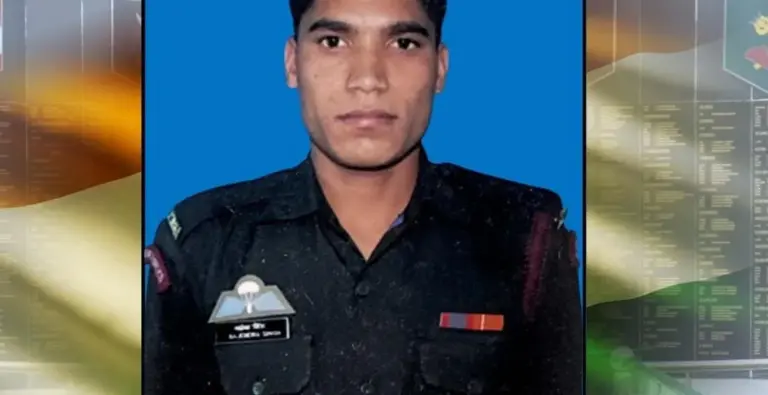
Srinagar, Jan 19: An Indian Army Special Forces soldier was killed during a counter-terrorism operation in Jammu and Kashmir, the Army said on Monday.
Havildar Gajendra Singh laid down his life while executing an operation in the Singpura area during the ongoing Operation TRASHI-I on the night of January 19, officials said.
Paying tribute, the White Knight Corps said the General Officer Commanding (GOC) and all ranks honoured the soldier’s courage and sacrifice. The Army said Singh displayed valour and selfless devotion to duty while carrying out the operation.
“The White Knight Corps stands firmly with the bereaved family in this hour of profound grief,” the Army said in a statement.
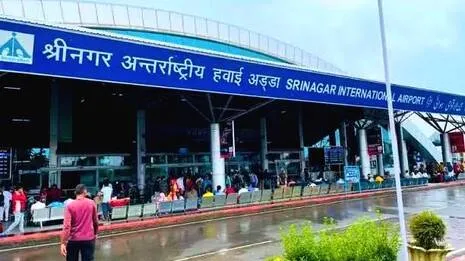
Srinagar, Jan 19: Three flights have been cancelled at the Srinagar International Airport on Monday following the closure of the airspace in Delhi for Republic Day rehearsals and related security measures, officials said.
An airport official told, that three flights scheduled for today were cancelled due to airspace closure in Delhi, while rest of the flight are as per schedule.
Earlier, the Srinagar Airport authorities issued an advisory, informing travellers that some flights to and from Delhi had been cancelled by respective airlines, advising them to check the latest flight status before proceeding to the airport.
They said that normal flight operations are continuing smoothly apart from the few cancellations linked to the temporary restrictions at the Delhi Airport.
Airspace in Delhi will remain shut daily from 10:20 AM to 12:45 PM for a period of six days, according to a government Notice to Airmen (NOTAM)—(KNO)
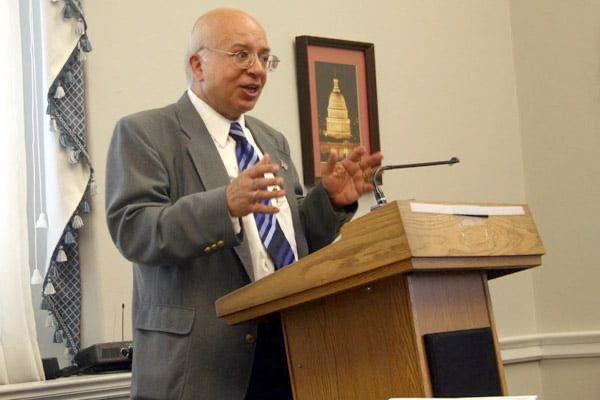
Following is the text of Dr. Vijay Sazawal’s video speech on 19th January 2020 at a meeting organized by the Indo-European Kashmir Forum (IEKF), in U.K. marking the 30th anniversary of the forced exile/Exodus of the Pandit minority from their ancestral homeland, Kashmir. In attendance was the Rt. Hon. Marcus Jones, MP. Mr. Jones was the Assistant Whip of then ruling Conservative Party in the U.K. Parliament headed by the Prime Minister Mr. Boris Johnson.
Thank you for giving me an opportunity to speak at this solemn event marking the 30 year anniversary of a dastardly night in what was once the beautiful vale of Kashmir. That night, and in the days to follow, Kashmiri Pandits, the aboriginal natives of Kashmir, faced fire, fury and worse from their neighbors forcing the minority Pandit community to flee from their ancestors lands, uprooting their lives and making them refugees in their own country. Their only crime was that they were of Hindu faith and their tormentors saw them as “infidels.” An ancient land that for thousands of years had nurtured Pandits suddenly turned hostile to the very people who gave this land its culture, language and customs.
Dr. Vijay Sazawal addressing Parliamentarians in the U.S. Congress
While the ferocity of the night of 19th January 1990 was unlike anything that Pandits had experienced or faced in the past, the signs of fear, violence, and killings were mounting even before that day. In fact, the turning point came in February 1986, when communal riots were triggered by a political party in the Southern district of Anantnag in Kashmir, resulting in wanton destruction of many Hindu temples. Nearly 300 homes of Pandits were burnt down. The agitating political party got its wish and the State Government fell, yet no one in the Government (neither in Srinagar nor in New Delhi) pursued an investigation of how and why Pandits were targeted as a punching bag for political expediency. In fact, I wrote to the New York Times at that time and received the following response from Steven Wiseman, the NYT Bureau Chief in New Delhi. In a letter dated 15 April 1986, he wrote to me that, “I have a written a couple of stories about Hindu-Muslim problems in Kashmir. As you know, protesting Muslims attacked temples, homes and stores of Kashmiri Pundits.”
By 1986, Kashmir was changing as a whole. As disclosed by one of the founders of a terrorist organization called the Jammu Kashmir Liberation Front (JKLF), the first batch of trained Kashmiri terrorists returned from Pakistan with arms and money in 1986 to pursue Jihad in Kashmir. The killings of Pandits began soon thereafter.
After the tragedy in Anantnag in 1986, the first marked assassinations of Pandits took place in 1987, but it was the assassination of two prominent Pandits in 1989, one a political leader and the other a retired judge that gave the minority community a sense that their homeland was not a safe place any more.
The insurgency in the valley turned up a few notches with the kidnapping of the daughter of a local politician (who was then the serving Union Home Minister in New Delhi) on 8th December 1989. JKLF terrorists demanded the release of five of their imprisoned cohorts and when the government capitulated and released jailed terrorists five days later, Kashmir was ablaze with Islamic fervor and Jihadi slogans.
Suddenly posters started appearing on streets with threatening messages to all Kashmiris. One such poster screamed, “If you have to live in Kashmir, you must abide by the Sharia law” (this is a translation of an actual poster in Urdu). Other posters were even more explicit. These demanded anyone living in Kashmir to harshly follow Islamic rules, which included abidance by the Islamic dress code, men growing beards, a prohibition of alcohol, cinemas, video parlors, and strict restrictions on social interactions involving men and women. Office buildings, shops and various establishments were repainted green as a sign of Islamist rule. JKLF divided Kashmir into geographical zones and “assigned Zonal Commanders” to administer diktats of the insurgents. Kalashnikov wielding terrorists started collecting “jizya” (protection money) from Pandit business families and forced people to reset their wrist watches to Pakistan Standard Time.
The state security personnel were nowhere to be seen. The State Government, then led by Dr. Farooq Abdullah, was paralyzed and non-existent. Not only did the menacing posters stay put, but gangs of armed men roamed around Srinagar and other big towns shutting (and in some cases burning) alcohol shops, cinema halls, beauty parlors, and selective shops owned by Hindus. Most of the minority population dreaded going out on to streets and were living a life in fear and shock. Daily reports were pouring in from relatives and friends about growing violence involving plunder, rape, and killings of Pandit men and women. It is estimated that between 1986 and 1989, nearly 300 Kashmiri Pandits perished in the turmoil.
Just when the minorities hoped that they had seen the worse, the situation turned even more grave causing their fear and insecurities to reach alarming proportions. New terrorist organizations were mushrooming overnight with strange names and threatening slogans. One new terrorist outfit named “Allah Tigers” put threatening posters on the doors of Pandit homes asking occupants to leave Kashmir immediately. One such poster stated (literal translation), “All infidels vanish, Jihad is approaching.” As if that was not clear, on 4th January 1990, the Daily Aftab, an Urdu newspaper published from Srinagar, was forced to print the headline proclaiming, “The aim of present struggle is the supremacy of Islam in Kashmir, in all walks of life and nothing else. Anyone who puts hurdle in our way will be annihilated.” It was a press release from a new terror group called Hizbul Mujahideen (HM) that also urged young people to wage a Jihad for secession from India and accession to Pakistan. The press release also ordered Pandits to leave the valley.
Some Kashmiri Pandits did just that and started leaving the valley in ones and twos. Some veterans among the community recalled similar episodes going as far back as 1931 when Pandits became sacrificial lambs between rebellious Muslims and the Maharaja of Jammu and Kashmir in the British India Raj. Recalling such past events, many Pandits initially refused to accept that growing violence was specifically targeting them. They did not want to believe that Kashmiri Muslims would ever turn on their Pandit brethren. These Pandits saw killings of their fellow community members as “collateral damage” between warring Islamic insurgents and Government security forces.
But if there was any room for confusion, all those doubts vanished during the night of January 19, 1990. On the cold, dark, wintry night of that Friday, the worst nightmares of Kashmiri Pandits were realized. Thousands of loudspeakers hoisted on as many mosques through the length and breadth of the valley boomed “Freedom” slogans and war cries in native Kashmiri language, exhorting the faithful to come out of their homes and march to Srinagar to capture power in the valley. They were urged to cleanse the land from infidels.
It was obvious that such a coordinated verbal abuse could not have been done without prior planning. Even to the most progressive Pandit tolerant of diversity and plurality, the message was clear; it was “them versus us.” Overnight friendly neighbors turned hostile denouncing peace loving Pandits as Kafirs and accused them of being hostile to Islam.
But on January 19, 1990 the verbal abuse did not end with loudspeaker blasts only. In the darkness past midnight, Muslims came out on streets in neighborhoods were Pandits lived and threatened their lives by raising incendiary slogans. Two slogans shouted in native Kashmiri language were particularly terrifying:
“What do we want?”: “Pakistan without Pandit men and with Pandit women”
“Either Convert to Islam, or leave the land, or be ready to die”
Even today when I imagine that scene in my mind, I can sense the fright, the anxiety, and the pain that those gentle people must have felt watching from behind their shut doors and drawn curtains. This is a night that will live in infamy forever. After all these mobs were not foreign mercenaries or Punjabi cut-throats from Pakistan. These were local Kashmiri people, some even neighbors, who had lived side by side with Pandits peacefully for generations. The shock and the horror of that night is indelible.
The very next day saw the first wave of Pandits leaving in a rush trying to find any available transportation vehicle to ferry them out of the valley. The exodus had begun. Every bus, truck or car available to Pandits was put to use. Rumors of Pandit massacre gave further impetus to the urgency and desire to leave their homes at the earliest. Some fled with just the clothes on their back. Most left all their possessions behind, be it their valuables, their homes, or their personal possessions.
The night of 19 January 1990 is the one that no Kashmiri Pandit survivor who lived through the ordeal wishes to recall because of haunting bad memories. And this is a day that no Kashmiri Pandit expatriate living wherever they do will ever forget. High crimes were committed against a peaceful community and there are many guilty parties, though none have been charged so far. The blame lies squarely on the nation of Pakistan for diverting battle-hardened Mujahideen from the Afghan war to Kashmir, and for supplying arms and materiel to Kashmiri terrorists. But Pakistan is not the only guilty party. The Muslim majority community in Kashmir must also be faulted for turning a blind eye towards the harsh treatment of minorities thereby becoming enablers of jihad in Kashmir. And finally the local government of the State must be called out for abusing minorities by denying them even the basic human rights including security and justice that is enshrined in the Constitution of India.
The flood gates that opened after January 19, 1990, swept away most but not all Kashmiri Pandits from the valley. Those remaining hoped that the worst may be over. Unfortunately, the government’s inability to exercise law, order and security only further encouraged terrorists. On January 25, 1990 terrorists belonging to JKLF tried to gun down a large group of Air Force personnel in Srinagar, killing 4 and injuring 40. These killings further encouraged terrorists who now turned their wrath on the remaining Pandits still living in the valley. Terrorists used the Urdu daily Alsafa as its mouthpiece, and the headline on April 14, 1990 in the newspaper stated that “Kashmiri Pandits responsible for duress against Muslims should leave the valley within two days.” A fresh wave of exodus followed that announcement which included my aging retired parents as well.
The population of Pandits living in the valley began to thin out, but for many the worst was still to come. Isolated killings of Pandits continued. There were mass assassinations as well. A massacre of Pandits occurred on 21 March 1997, when 7 local Pandits were taken by terrorists from Sangrampora village in Budgam district and gunned down in a nearby field. On 25 January 1998 all but one Pandit living in the hamlet of Wandhama in Ganderbal district, 23 in all, were killed. The lone survivor was a 14-year old boy. On 23 March 2003, 24 Pandits from ages of 65 to 2 years old which included 11 men, 11 women, and 2 children, fell to bullets fired by terrorists wearing army uniforms, in the village of Nadimarg in Pulwama district.
The killings of Pandits in Kashmir have not stopped. The list of victims appears endless, and to be honest, is too painful for me to recall. We have recorded details of nearly 750 victims, though the actual number of Pandits killed exceeds 1,000 and possibly close to 1,500. This is a large number of victims when you compare it to the peak total population of Pandits in the valley of under 400,000.
Repeated efforts by Pandits to return to their homeland have been thwarted by ruling local political parties until now. Terrorists are equally firm in their opposition. I recall a published statement by Hizbul Mujahideen in 1992 in which the organization warned Pandits that they will not be allowed back as “they have received arms training “which was obviously a blatant lie. Following the recent reorganization of Jammu and Kashmir State into a union territory, there are high hopes that Pandits may be able to return to their homeland in not too distant future.
Ladies and gentleman, this solemn remembrance is for Kashmiri Pandits who were not only ethnically cleansed from the valley but also subject to Genocide. Indeed, the National Human Rights Commission (NHRC) of India ruled in 1999 that conditions faced by Kashmiri Pandits during the turmoil were “akin to Genocide”. Yet this tragedy is hardly known in the Western world. It is an untold story that we have pledged to highlight over and over again. Let me repeat – Pandits will never forget what happened to them in Kashmir while the world remained silent. The story of what happened to Kashmiri Pandits is a lesson for all peace loving and tolerant people around the globe. It is a fragile world and there are evil people who see a hand of friendship or an abiding faith in pluralism and tolerance as a sign of weakness. Eventually, such people will torment you and drive you out. Kashmiri Pandits trusted their neighbors who unfortunately proved unworthy of that trust.
Thirty years have gone by since that fateful night of 19 January 1990. Two generations have passed by. While those painful memories will not die, we hope that Pandits will eventually return some day to their beloved homeland with security, dignity and honor
(Dr. Vijay Sazawal, a Srinagar born and raised native, is an eminent nuclear policy analyst living in Washington who advised the U.S. Government on the Indo-U.S. Civil Nuclear Agreement. Diplomatic cables made public by Wikileaks, have disclosed that he was also an advisor to the U.S. Government on the Kashmir issue. He is author of the book, “The Kashmir Chronicles (1986-2023): Neoteric Analyses of a Rapidly Changing Landscape.”)
Discusses Tourism Infrastructure, Monastery Development and Major Cultural Events
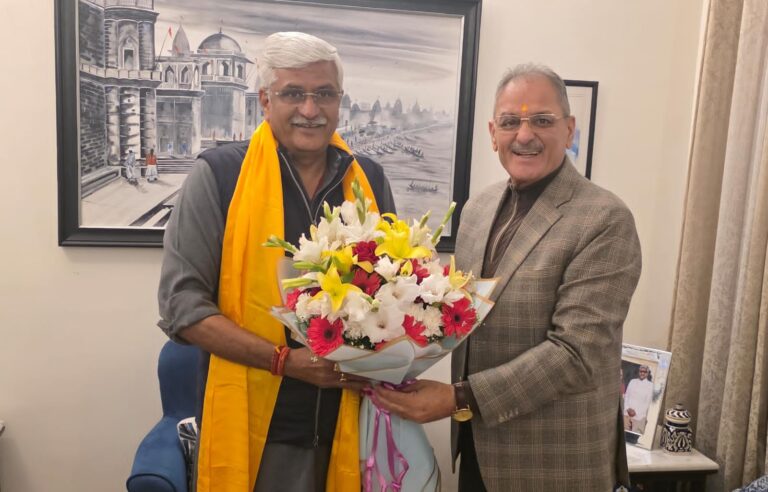
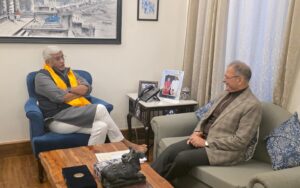
New Delhi, January 18: The Hon’ble Lieutenant Governor of Ladakh, Shri Kavinder Gupta, today met Union Minister for Tourism and Culture, Shri Gajendra Singh Shekhawat, in New Delhi and discussed strengthening tourism infrastructure, promotion of cultural and spiritual tourism, development of monasteries, and forthcoming major tourism and cultural events in the Union Territory of Ladakh.
During the meeting, the Hon’ble Lt Governor highlighted Ladakh’s unique cultural, spiritual and geographical identity and emphasized the need for focused support to position the region as a leading destination for sustainable and heritage tourism. He underlined the importance of improving tourism-related infrastructure and visitor facilities, keeping in view Ladakh’s difficult terrain and extreme climatic conditions.
The Lt Governor apprised the Union Minister of the proposal to organise the 30th Sindhu Darshan Festival in 2026 as the “First Sindhu Mahakumbh.” He stated that the proposed mega event aims to showcase India’s ancient civilisational heritage and the historic and cultural significance of the Indus River through spiritual and cultural activities, including ceremonial rituals on the riverbanks. He informed that a detailed proposal would be submitted separately and sought the Ministry’s guidance and support for the successful conduct of the event.
He also laid stressed upon upcoming major Buddhist events, including the display of sacred relics of Lord Buddha on the occasion of Buddha Purnima 2026. He emphaised that brining of sacred relics of Lord Buddha in Ladakh would significantly boost spiritual tourism, promote peace and harmony.
The Hon’ble Lt Governor also underscored the need for comprehensive development, conservation and upgradation of Ladakh’s ancient monasteries, seeking special financial and technical assistance for structural conservation, infrastructure improvement and visitor amenities.
Shri Kavinder Gupta further highlighted the importance of regular cultural festivals and events to promote local artists, strengthen cultural tourism and enhance Ladakh’s national and international visibility.
The Union Minister, Shri Gajendra Singh Shekhawat appreciated the initiatives and assured that the proposals would be examined sympathetically, with a view to supporting sustainable tourism development and preservation of Ladakh’s unique cultural and spiritual heritage.
VINOD BHAT
NEW DELHI, Jan 18: New Jalpaiguri railway station, one of the most vital transport hubs in eastern India, is set to undergo a major transformation as part of the ambitious Amrit Bharat Station Scheme, with plans to convert it into a world-class, airport-style facility equipped with state-of-the-art passenger amenities.
Strategically located in Siliguri, New Jalpaiguri serves as the primary rail gateway to North Bengal, Sikkim, the entire Northeast region, and neighboring countries such as Nepal and Bhutan. Given its geographical and economic significance, the station has been selected as the first railway station in West Bengal to be redeveloped under the Amrit Bharat Station Scheme.
The Ministry of Railways has approved a revised outlay of ₹500 crore for the comprehensive redevelopment project, which aims to drastically modernize the station’s infrastructure while enhancing passenger convenience and accessibility. One of the most notable features of the upgrade is the expansion of the main station building from the existing 4,800 square metres to a sprawling 19,800 square metres.
In a move inspired by modern airports, the redeveloped station will have separate buildings for arrivals and departures, a first-of-its-kind feature in the region. This segregation is expected to streamline passenger movement, reduce congestion, and improve overall travel experience for lakhs of commuters and tourists passing through the station every day.
Providing details of the project, Anoop Singh, Senior Divisional Commercial Manager (DCM) of New Jalpaiguri, said the redevelopment covers an area of more than 1,00,000 square metres. The upgraded station will feature 11 platforms and five foot overbridges to ensure smooth inter-platform connectivity. To ease vertical movement, especially for elderly passengers and those with special needs, the station will be equipped with 24 lifts and 21 escalators.
Parking facilities are also being significantly enhanced, with a double-level parking area spanning 23,430 square metres, aimed at addressing the growing influx of private vehicles and taxis. Special emphasis has been laid on inclusivity, with improved facilities for persons with disabilities, including 13 dedicated toilets.
Sanitation infrastructure has been substantially upgraded as well. The total number of washroom facilities will rise to 66 urinals and 105 latrines, while modern water treatment and sewage treatment plants are being installed to ensure hygiene and environmental sustainability.
At present, New Jalpaiguri station handles nearly 60,000 passengers daily. Once the redevelopment is completed, the station’s capacity is expected to double, enabling it to comfortably cater to around 1.2 lakh passengers per day. Railway officials say this expansion is crucial to meet the rapidly increasing travel demand driven by tourism, trade, and economic activity in the region.
The Union Minister for Railways recently inspected the ongoing construction work and reviewed the progress of the project. According to railway authorities, the redevelopment is progressing steadily and is scheduled to be completed by February 2027, after which New Jalpaiguri is expected to emerge as a modern rail hub matching international standards.