spot_imgspot_img
spot_img
Home Blog Page 159

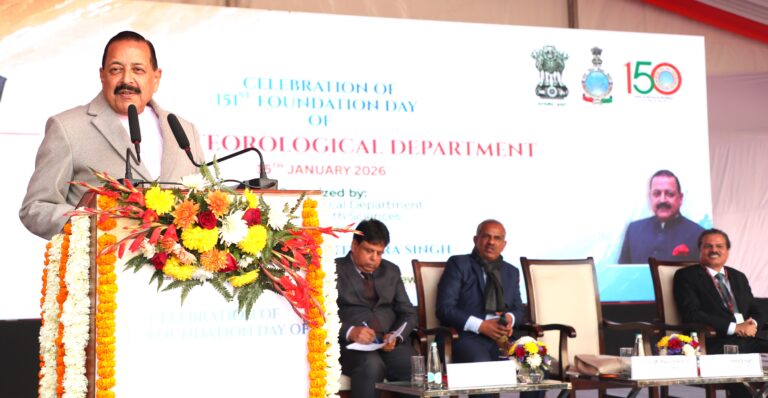
Union Minister Dr Jitendra Singh announces major expansion of Automatic Weather Stations; India Meteorological Department (IMD) to install 50 AWS each in Delhi, Mumbai, Chennai, and Pune in 2026

0

VINOD BHAT
Delhi, JAN 14:
Union Minister of State (Independent Charge) for Science & Technology, Earth Sciences and MoS PMO, Personnel, Public Grievances, Pensions, Atomic Energy and Space, Dr Jitendra Singh today announced a significant expansion of India’s urban weather observation infrastructure, with the deployment of 200 Automatic Weather Stations across four major metropolitan cities.

Addressing senior officers, meteorology experts and stakeholders, the Minister said that 50 Automatic Weather Stations each will be installed in Delhi, Mumbai, Chennai, and Pune during the year 2026, marking a decisive step towards strengthening hyper-local, real-time weather forecasting and disaster preparedness, particularly in densely populated urban regions.

Dr Jitendra Singh said that a dense network of Automatic Weather Stations will provide granular and high-resolution spatial data, enabling more accurate prediction of sudden downpours, thunderstorms, extreme heat events, and rapid pressure changes. He emphasised that such data-driven forecasting is critical not only for disaster risk reduction but also for informed decision-making in sectors such as agriculture, aviation, urban planning, and public safety.

The announcement was made during the 151st Foundation Day celebrations of the India Meteorological Department (IMD), a landmark occasion marking over one and a half centuries of the organisation’s dedicated service to the nation. Reflecting on the significance of the occasion, the Minister recalled that on the same date last year, IMD had celebrated its 150th anniversary in the presence of the Prime Minister at Bharat Mandapam. He said the encouragement and appreciation extended by the Prime Minister at that event acted as a major morale booster for the organisation, doubling both the energy and pace of IMD’s work, as reflected in the numerous new initiatives and technological advancements undertaken over the past year.

Dr Jitendra Singh said that IMD’s journey is uniquely aligned with the historical and administrative evolution of India itself, spanning the pre-Independence era to modern times. From its early beginnings in the Northeast to Kolkata, then Shimla, Pune and finally New Delhi, the organisation has continuously adapted to the changing needs of the nation while embracing emerging technologies and scientific capabilities.

Highlighting the transformation in India’s weather forecasting capabilities, the Minister said forecast accuracy has improved by more than 40 to 50 per cent compared to earlier decades. Cyclone track prediction accuracy has increased by nearly 35 to 40 per cent, while errors in monthly and seasonal forecasts have reduced sharply from around 7.5 per cent to nearly 2.5 per cent. He attributed these improvements to sustained investment, technological freedom, and institutional support over the last decade.

Dr Jitendra Singh said that the launch of Mission Mausam by the Prime Minister Narendra Modi represents a clear declaration of intent and priority by the Government towards advanced meteorological science and climate services. He added that when the Prime Minister articulates such initiatives from major national platforms, it sends a strong signal about the government’s long-term commitment to scientific capacity building and public welfare.

The Minister also highlighted India’s growing role as a regional leader in meteorological services, noting that India now provides disaster-related weather information and satellite-based support to neighbouring countries such as Bangladesh, Nepal, Bhutan, and Sri Lanka. He said that these efforts have strengthened regional cooperation and underscored India’s responsibility as a trusted partner in disaster management across South Asia.

Detailing IMD’s infrastructure expansion, Dr Jitendra Singh said the number of weather radars has nearly tripled over the past decade, now covering close to 87 per cent of the country’s geographical area. He pointed to the expansion of Doppler Weather Radars, solar radiation monitoring networks, aerosol monitoring systems, micro radiometers, and rainfall monitoring schemes that now extend down to the district and block levels. He also highlighted the development of highly localised forecasts, including ultra-short-range predictions that allow citizens to make informed decisions within timeframes as precise as three hours.

The Minister emphasised that IMD’s increasing credibility and public trust are reflected in the unprecedented demand for its services. Recalling a recent instance when heavy public traffic temporarily overwhelmed IMD’s digital platforms following a seismic event, he said the episode, while challenging, was also a testament to the confidence people place in IMD. He added that steps are already underway to further upgrade digital infrastructure to meet growing public expectations.

Dr Jitendra Singh also highlighted IMD’s alignment with the government’s green energy priorities, noting that the department’s headquarters was among the first to transition fully to solar energy following the launch of national electricity schemes. This transition, he said, has resulted in substantial savings in electricity expenditure while also contributing surplus power back to the national grid.

The 151st Foundation Day event was attended by Secretary, Ministry of Earth Sciences, Dr M Ravichandran, Director General of Meteorology, IMD, Dr Mrutyunjay Mohapatra, along with senior officials, scientists, and members of the IMD family. The Minister congratulated award recipients and commended the leadership for ensuring inclusive recognition across all sections of the organisation, fostering a culture of excellence and dedication.

As part of the programme, Dr Jitendra Singh inaugurated multiple key facilities at the IMD campus, including a Model Observatory, a 3D-Printed Automatic Weather Station, and an Agro-Automatic Weather Station. These facilities reflect India’s growing emphasis on indigenously developed, cost-effective and modular meteorological technologies designed to enhance data quality and operational efficiency.

The Minister also inspected various advanced meteorological instruments and automated monitoring systems installed across the IMD campus. Scientists briefed him on the functioning of radiation monitoring equipment, portable observation systems and sensor-based installations that collectively contribute to real-time data acquisition for forecasting, climate research, and disaster management. Dr Jitendra Singh appreciated the technical depth and practical relevance of these systems, noting their critical role in strengthening India’s climate resilience.

Concluding his address, the Minister said the government is actively working on proposals to establish Centres of Excellence and additional Regional Meteorological Centres across the country to further expand IMD’s reach and capacity. He expressed confidence that as IMD moves into its 152nd year, its credibility, accuracy, and public trust will continue to grow, reinforcing its position as a cornerstone of India’s disaster preparedness and climate service framework.

Lady SPO Injured In Accidental Fire In Baramulla

0

Srinagar, January 15: A lady special police officer (SPO) was injured after Accidental fire was discharged from the 12 Bore rifle of a security guard.

Officials told GNS that today a lady SPO recieved bullet wound in her ear after a gunfire was accidentally discharged from a SBI guard.

The injured SPO has been identified as Mehmooda Begum and she has been referred to GMC Baramulla for further treatment.

Meanwhile, police have taken cognizance of the incident.(GNS)

Union Home Secretary Holds Meeting With J-K LG On Security Situation

0

Jammu, Jan 15: Union Home Secretary Govind Mohan on Thursday held a meeting with Lieutenant Governor Manoj Sinha here and discussed the security situation, ongoing anti-terror operations and the operational preparedness of the security setup in the Union territory, officials said.

Mohan, who is on a two-day visit to Jammu, on Thursday also chaired another high-level meeting to review the heightened operational security up in hilly areas, the overall security situation, and to assess ongoing anti-terror operations and drone incursions along the borders.

The home secretary called on the LG at the Lok Bhawan this morning and held discussions on wide-ranging security, operations and development-related issues in Jammu and Kashmir, they said.

They discussed and reviewed the current security situation in the twin regions of Kashmir and Jammu, the ongoing anti-terror operations in the Valley and the hilly areas of the Jammu region, and the operational preparedness of the joint security setup, they said.
Inter-agency coordination among the police, paramilitary forces, the Army and intelligence agencies was also discussed, officials said.

Issues related to enhanced security measures in the hilly areas of Jammu in view of recent activities were also reviewed, they added.

Mohan continued his meetings for the second consecutive day at the convention centre in Jammu, where top security officials of various forces, police and intelligence agencies took part, they said.

The meeting reviewed border security management, security enhancement in the hills of Jammu, inter-agency coordination, and assessed ongoing anti-terror operations and drone incursions along the borders.
This comes a week after Union Home Minister Amit Shah, on January 8, directed security forces to continue operations targeting terrorist infrastructure and terror financing in a “mission mode”.

Accompanied by a central team of officers, Mohan reached Jammu on Wednesday afternoon on a two-day visit and straightaway headed to the convention centre to chair the high-level meeting, officials said.

It was attended by Intelligence Bureau Director Tapan Deka, BSF Director General Praveen Kumar, CRPF chief G P Singh, Jammu and Kashmir DGP Nalin Prabhat, and senior military, police, civil and intelligence officers.

Security forces are engaged in massive anti-terror operations, especially in high-altitude areas and forest belts across Jammu, where nearly three dozen terrorists, including Pakistani nationals, are believed to be hiding after infiltrating into the region more than two years ago.

There has also been a spurt in drone activity along the International Border and the Line of Control, with intelligence reports suggesting the presence of terrorists waiting to infiltrate under the cover of dense fog, officials said. (AGENCIES)

Cop dies of cardiac arrest at PCR Srinagar

0

Srinagar, Jan 15 : A police personnel died due of a suspected cardiac arrest at Police Control Room (PCR) Srinagar on Thursday, officials said.

An official told that the cop posted with IR 6th Battalion at PCR Srinagar was found unconscious in his room.

He said he was immediately shifted to PCR hospital where doctors declared him dead on arrival. “The preliminary cause of death appears to be a cardiac arrest”.

He has been identified as Mohammad Barri son of Biru Gujjar of Doda and his body has been kept at the PCR mortuary for medico-legal formalities—(KNO)

Pulwama Hospital Scripts Medical First with Advanced Pain Procedure

0

SHOWKAT DAR

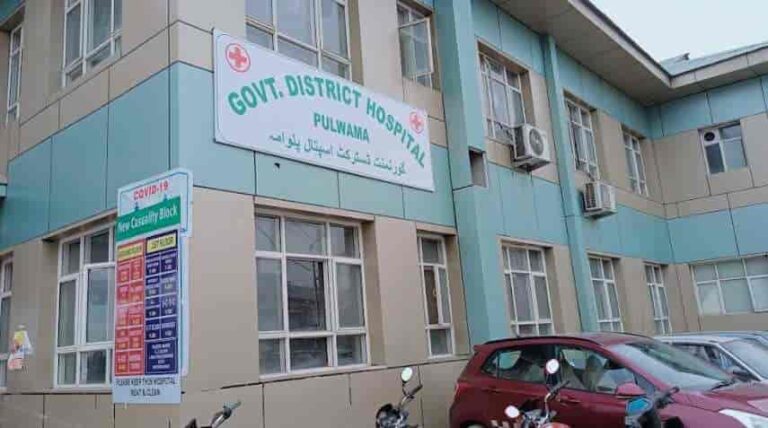
PULWAMA, Jan 14: In a major boost to public healthcare services in Jammu and Kashmir, District Hospital (DH) Pulwama has successfully performed its first-ever advanced interventional pain management procedure, marking a significant milestone in the district’s medical capabilities.
The procedure was carried out on a 70-year-old patient who presented at the hospital’s Outpatient Department (OPD) with a long-standing history of chronic low back pain, compounded by severe neurogenic claudication—a condition that causes pain and weakness in the legs due to nerve compression. Given the patient’s advanced age and the presence of multiple comorbidities, a thorough medical evaluation was conducted, which revealed that the patient was unfit to undergo conventional surgical intervention.
After a detailed clinical assessment and careful consideration of alternative treatment options, the medical team decided to proceed with a Parasagittal Interlaminar Lumbar Epidural Steroid Injection (PILESI)—a minimally invasive and highly specialized pain management technique aimed at reducing inflammation and relieving nerve-related pain.
The landmark procedure was successfully performed by a skilled team of specialists, including Dr. M. Yousuf Tak and Dr. Abedullah Bhat, both Consultants, assisted by Dr. Shaiq Wani, DNB Scholar. Their expertise and meticulous planning ensured the safe and effective execution of the intervention, resulting in significant pain relief for the patient.
The procedure was further supported by a well-coordinated scrub team comprising Mr. Shaban, Ms. Mehnaaz, Mr. Basit, and Mr. Zahoor Ahmad (Radiographer), whose precision and teamwork played a crucial role in maintaining patient safety and procedural accuracy.
Crucial logistical and administrative backing was provided by Dr. A. G. Dar, Medical Superintendent of DH Pulwama, whose support facilitated the availability of necessary infrastructure and resources required for carrying out this advanced medical intervention.
Health officials and medical professionals have hailed the achievement as a transformative step toward strengthening secondary-level healthcare in the district. The introduction of interventional pain management services at DH Pulwama is expected to greatly benefit patients suffering from chronic pain conditions, particularly those who are not suitable candidates for surgery.
This pioneering effort underscores the hospital’s commitment to adopting modern, minimally invasive treatment modalities and reflects the growing capacity of district-level health institutions in Jammu and Kashmir to deliver specialized and advanced medical care closer to patients’ homes.

Praveen Kumar Appointed BSF DG; Shatrujeet Kapoor to Lead ITBP

0

VINOD BHAT
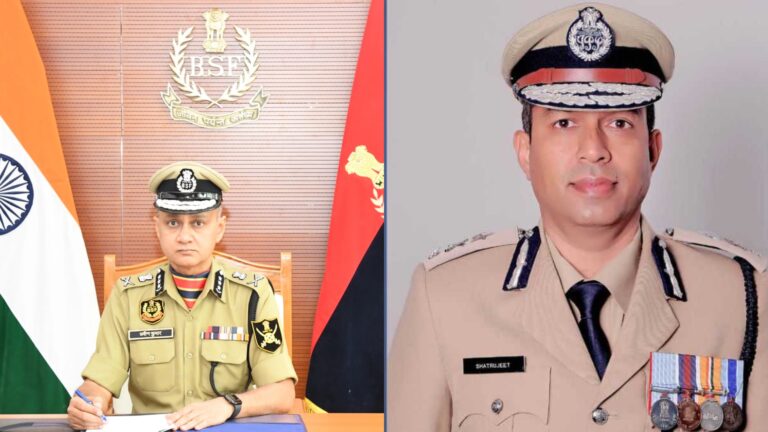
NEW DELHI, Jan 14: The Appointments Committee of the Cabinet (ACC) has approved key top-level appointments in India’s border guarding forces, with senior IPS officers Praveen Kumar and Shatrujeet Singh Kapoor being appointed as Director Generals of the Border Security Force (BSF) and Indo-Tibetan Border Police (ITBP), respectively.
According to an official order issued by the Department of Personnel and Training (DoPT), Ministry of Personnel, Public Grievances and Pensions, the ACC cleared the proposal of the Ministry of Home Affairs for these appointments on January 14, 2026.
Shri Praveen Kumar, a 1993-batch IPS officer of the West Bengal cadre, has been appointed as the Director General of the Border Security Force. He is presently serving as Director General of the Indo-Tibetan Border Police. His appointment to the BSF post will be in Level-16 of the pay matrix and will take effect from the date he assumes charge. He will hold the position until September 30, 2030, the date of his superannuation, or until further orders, whichever is earlier.
The BSF, India’s largest border guarding force, is responsible for guarding the country’s borders with Pakistan and Bangladesh, as well as performing key internal security duties. Praveen Kumar’s appointment comes at a time when the force continues to face complex challenges related to border management, cross-border infiltration, smuggling, and internal security operations.
Simultaneously, the ACC has approved the appointment of Shri Shatrujeet Singh Kapoor, a 1990-batch IPS officer of the Haryana cadre, as the Director General of the Indo-Tibetan Border Police. Kapoor, who is presently working in cadre, will take over the ITBP leadership in Level-17 of the pay matrix. His tenure will extend until October 31, 2026, the date of his superannuation, or until further orders, whichever is earlier.
Shatrujeet Singh Kapoor will succeed Praveen Kumar as the ITBP chief. The ITBP is tasked with guarding the India-China border across difficult Himalayan terrain and also plays a crucial role in internal security, disaster response, and UN peacekeeping missions.
The appointments underline the government’s focus on experienced leadership at the helm of key central armed police forces, particularly at a time of evolving border security challenges and heightened strategic significance along India’s frontiers.
The order has been communicated to the Ministry of Home Affairs, the Prime Minister’s Office, and other concerned authorities for necessary action.

Chinar Corps Honours Veterans, Salutes Lifelong Service

0

KD NEWS SERVICE
SRINAGAR, Jan 14: Defence Forces Veterans’ Day was observed across the country on Tuesday, January 14, to honour the invaluable service, sacrifices and unwavering commitment of India’s military veterans. The day commemorates the superannuation of Field Marshal K.M. Cariappa, OBE, the first Commander-in-Chief of the Indian Armed Forces, and is dedicated to recognising the indomitable spirit of soldiers who have served the nation with pride and distinction.
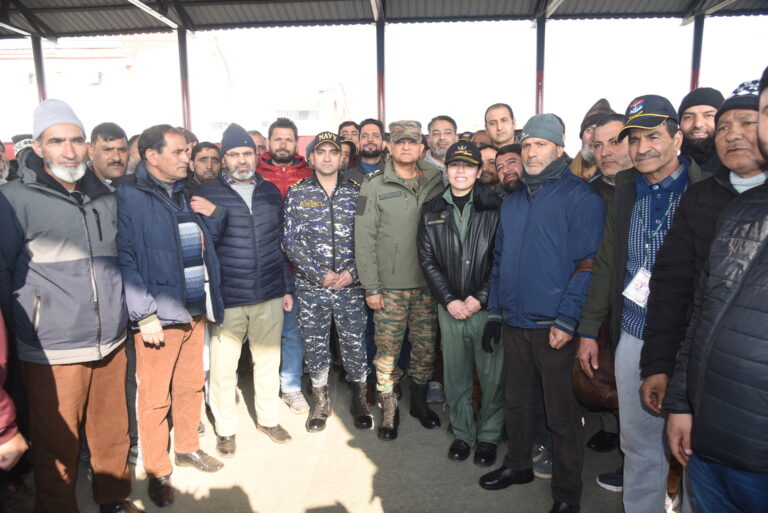
According to a statement issued by the Public Relations Officer (PRO), Defence, Srinagar, the Defence Forces Veterans’ Day function in Jammu and Kashmir was organised under the aegis of the Chinar Corps at the Jammu and Kashmir Light Infantry (JKLI) Regimental Centre in Srinagar. The event witnessed the participation of the General Officer Commanding (GOC) Chinar Corps, senior Army officials, defence veterans, Veer Matas, Veer Naris and gallantry awardees.
The PRO Defence statement said that despite the severe winter chill in the Kashmir Valley, the enthusiasm and warmth displayed by the veterans remained unmistakable, reflecting their enduring bond with the Armed Forces. The programme was organised not only to honour their dedicated service to the nation but also to provide them with first-hand information about various welfare schemes and initiatives being implemented by the Central Government and the Jammu and Kashmir Union Territory administration for the benefit of ex-servicemen and their families.
As per the PRO Defence, Srinagar, the Chinar Corps Commander felicitated the distinguished veterans and gallantry awardees on the occasion and expressed deep gratitude for their service and sacrifices made in the line of duty. He assured the veterans of continuous assistance and support from both the Army and the civil administration, reiterating the commitment to safeguarding their welfare and addressing their concerns.
The event reaffirmed the Army’s enduring respect for its veterans and underscored the strong emotional and institutional bond between serving soldiers and those who have laid the foundation of the Armed Forces through decades of dedicated service, the PRO Defence, Srinagar, added.

Rakesh Aggarwal Takes Over as NIA Chief

0

VINOD BHAT
SRINAGAR, Jan 14:
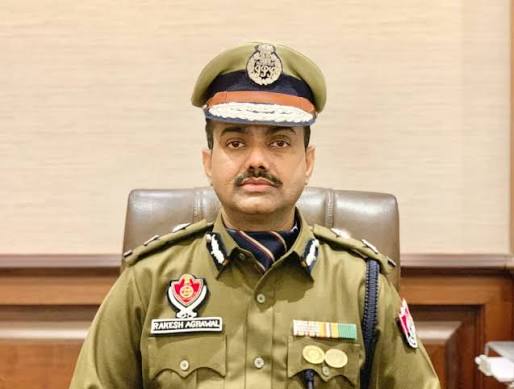
The Appointments Committee of the Cabinet (ACC), the apex body responsible for approving senior bureaucratic appointments in the country, has accorded its approval for the appointment of senior Indian Police Service (IPS) officer Shri Rakesh Aggarwal as the Director General of the National Investigation Agency (NIA).
The appointment was confirmed through an official order issued on Wednesday by the Department of Personnel and Training (DoPT), Government of India, which stated that Shri Aggarwal, a 1994-batch IPS officer of the Himachal Pradesh cadre, will assume charge of the country’s premier counter-terrorism investigation agency.
At present, Shri Aggarwal is serving as Special Director General (SDG) in the NIA, a position in which he has been closely associated with several high-profile investigations related to terrorism, radicalisation, organised crime and threats to national security. His elevation to the top post is seen as a move aimed at ensuring continuity and stability in the leadership of the agency.
According to the DoPT order, the ACC has approved his appointment to the post of Director General, NIA, in Level-16 of the Pay Matrix, which is among the highest pay scales in the central government hierarchy. His tenure as Director General will commence from the date he formally assumes charge and will continue up to August 31, 2028, the date on which he is due to attain superannuation, or until further orders, whichever is earlier.
The order further clarified that the appointment was made following a formal proposal forwarded by the Ministry of Home Affairs (MHA) and has been duly communicated by the Secretariat of the Appointments Committee of the Cabinet.
The National Investigation Agency, functioning under the Ministry of Home Affairs, plays a crucial role in investigating and prosecuting offences related to terrorism and other acts that pose a threat to the sovereignty, security and integrity of the country. With his extensive policing experience and long association with the agency, Shri Aggarwal is expected to steer the NIA through complex internal security challenges in the coming years.

Winter, Youth and the Silent Crisis of Inactivity

0

As winter tightens its grip over Kashmir, life across the Valley slows down dramatically. Long nights, freezing temperatures, curtailed outdoor movement and prolonged indoor confinement become a routine reality for months. While winter in Kashmir has its own charm, it also brings with it an often-ignored public health and social challenge: a sedentary lifestyle, especially among the youth. This seasonal inactivity is quietly turning into a serious concern, one that demands immediate and thoughtful intervention from the Government of Jammu and Kashmir.
For a large section of Kashmir’s population, winter virtually shuts down open spaces. Parks fall silent, playgrounds disappear under snow or slush, and sports fields become unusable. In rural and semi-urban areas, the situation is even more stark. With limited recreational options, young people are left confined to their homes, glued to mobile phones, television screens and social media. The result is reduced physical activity, rising screen addiction, mental stress, obesity, lifestyle diseases and a growing sense of aimlessness among the youth during the harsh winter months.
This is precisely where indoor stadiums, sports complexes, community halls and multipurpose recreational facilities can play a transformative role. Unfortunately, many such facilities across towns, urban centres and semi-urban areas of Jammu and Kashmir remain either underutilised, poorly maintained or functionally dormant. Several indoor stadiums, built at considerable public expense, come alive only during occasional tournaments or official events, while remaining largely inaccessible to ordinary youth for most of the year.
The government must recognise that sports and recreation are not luxuries; they are essential components of physical health, mental well-being and social cohesion. In a region like Kashmir, where winter enforces prolonged isolation and inactivity, vibrant indoor recreational infrastructure becomes not just desirable but necessary.
Reviving and energising indoor stadiums should be made a winter-centric policy priority. These facilities must be opened daily for youth, school students and local sports clubs with affordable or free access. Structured winter sports programmes—covering badminton, table tennis, basketball, volleyball, martial arts, indoor football, gym training and fitness activities—should be launched across districts. Coaches and physical instructors can be engaged seasonally to guide and motivate young participants, turning idle winter months into periods of skill-building and discipline.
Equally important is inclusivity. Facilities should cater not only to professional athletes but also to ordinary youth, girls, children and working young adults. Special timings for women, school students and beginners can ensure wider participation. In towns and semi-urban areas, where recreational avenues are extremely limited, such spaces can become hubs of positive engagement, steering youth away from unhealthy habits.
Beyond physical health, active indoor spaces can significantly contribute to mental well-being. Winters in Kashmir are often associated with seasonal depression, anxiety and social withdrawal. Regular physical activity is a proven antidote to such challenges. A lively indoor stadium buzzing with youthful energy offers far more than sports—it provides social interaction, a sense of purpose and emotional resilience.
The economic dimension must also be considered. Activating indoor facilities creates opportunities for local employment—coaches, trainers, maintenance staff and event organisers. Local sports leagues, winter tournaments and inter-town competitions can further energise communities while nurturing sporting talent at the grassroots level.
What is needed is not massive new infrastructure, but efficient utilisation of what already exists. A coordinated approach involving the Youth Services and Sports Department, local administrations, municipalities and educational institutions can breathe life into dormant facilities. Public awareness campaigns should encourage parents to enrol their children in winter sports activities, dispelling the notion that winter is a time only for inactivity and hibernation.
Kashmir’s youth are its greatest asset. Allowing them to drift into months of inactivity every winter is a disservice to their health, potential and future. By making indoor stadiums and recreational facilities vibrant, accessible and youth-friendly, the government can turn winter from a season of stagnation into a season of strength, fitness and hope.
The choice is clear: either allow winter to continue pushing Kashmir’s youth into sedentary isolation, or reclaim the season by transforming indoor spaces into centres of energy, discipline and positive recreation. The government must act—decisively and urgently—for the well-being of the present generation and the promise of a healthier Kashmir.

From 20 Sheep to 500: Bandipora Woman Redefines Success

0

From skepticism to success, Mumtaza creates jobs, breaks barriers

TAUSEEF AHMAD

SRINAGAR, Jan 14: At a time when thousands of educated and uneducated youth across Kashmir spend years waiting in long queues for government jobs or short-term contractual employment, a 35-year-old woman from north Kashmir’s Bandipora district has quietly scripted an inspiring success story rooted in self-reliance, hard work, and resilience.
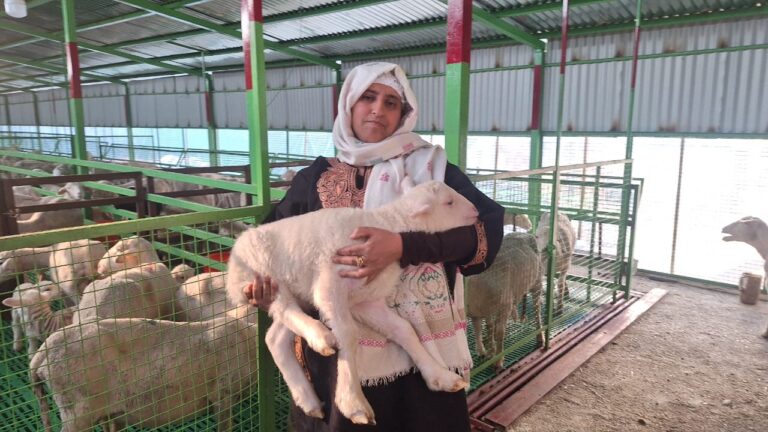
Mumtaza Begum, a resident of Watrina village in Bandipora, has transformed a modest sheep-rearing initiative into a flourishing livestock enterprise, proving that determination and entrepreneurship can offer a sustainable alternative to joblessness. What began five years ago with just 20 sheep has today grown into a thriving farm housing over 500 sheep, making it one of the notable private livestock ventures in the district.

Beyond earning her own livelihood, Mumtaza has emerged as a job creator in a region grappling with high unemployment. Her farm currently provides regular employment to several local men, including shepherds from different parts of Jammu and Kashmir, who earn daily wages along with food and basic facilities. In a district where stable income sources are limited, her initiative has become a crucial support system for multiple families.

Mumtaza’s journey, however, was far from easy. In a society where agriculture-related and livestock work is traditionally viewed as male-dominated, her decision to enter sheep farming was initially met with skepticism, ridicule, and social resistance.
“People questioned why a woman would choose this kind of work. Some even mocked me and doubted whether I could survive in this field,” Mumtaza recalled while speaking to Kashmir Despatch.

With no formal training in sheep husbandry, she relied entirely on hands-on experience. She spent long hours tending to the animals, learning about breeding, feeding, disease management, and seasonal migration, often working in harsh weather conditions.

“I learned everything on my own through experience. It was physically demanding and mentally exhausting, but I never gave up,” she said.
Her persistence eventually bore fruit when the Sheep Husbandry Department extended support to her under a government-sponsored scheme. The assistance helped her expand her livestock unit, improve infrastructure, and gradually scale up operations.

Over the years, Mumtaza’s small venture evolved into a full-fledged enterprise. Today, her farm not only contributes to the local economy but also stands as a symbol of women’s growing participation in sectors once considered off-limits to them.

“I always believed that hard work would bring results. Today, I am grateful that I can take care of my family and also help others earn their livelihood,” she said.

Encouraging unemployed youth to follow a similar path, Mumtaza emphasized the importance of entrepreneurship and utilizing government welfare schemes.

“The government has several schemes from which unemployed youth can benefit and start their own units. Instead of waiting endlessly for jobs, youths should take advantage of these schemes. There is nothing better than being the owner of your own business rather than working from 10 to 4 for someone else,” she said.

Her success has significantly altered perceptions within her community. Once questioned for stepping into a male-dominated profession, Mumtaza is now widely respected and regarded as a role model, particularly for women and young people in north Kashmir. Aspiring farmers, especially women, frequently visit her farm to seek guidance, motivation, and practical insights into livestock farming.
One of the workers employed at Mumtaza’s farm, a laborer from Rajouri, said that several workers are engaged at the farm in rotational shifts.

“We are earning a good income here. Earlier, I was working as a daily laborer, but for the past two years I have been working on this farm and I am satisfied. Such units do not only benefit the owner but also provide livelihood opportunities to many unemployed youths,” he said.
Confirming the growing participation of women in sheep farming, District Sheep Husbandry Officer Bandipora, Peer Irshad, told Kashmir Despatch that the district currently has around 20 successful women sheep farmers. He added that nearly 248 farmers benefited from government schemes last year alone.

“We have several schemes under which we provide units of 10, 50, 100, and even 200 sheep on a 50 percent subsidy for eligible farmers. Youth participation is increasing, and we have many success stories where not only the beneficiaries but also several others are earning their livelihood,” he said.

He further noted that although sheep farming was traditionally a male-dominated field, the trend is changing rapidly, with women and young entrepreneurs increasingly taking the lead.

Mumtaza Begum’s journey from a small flock of 20 sheep to a herd of over 500 stands as a powerful example of how courage, perseverance, and institutional support can transform lives—offering a roadmap for sustainable livelihoods in Kashmir’s rural economy.