spot_imgspot_img
spot_img
Home Blog Page 158

Bandipora residents protest repeated power dues despite clearing bills

0

Consumers question who will bear penalties, seek probe; authorities call issue serious, promise action

TAUSEEF AHMAD
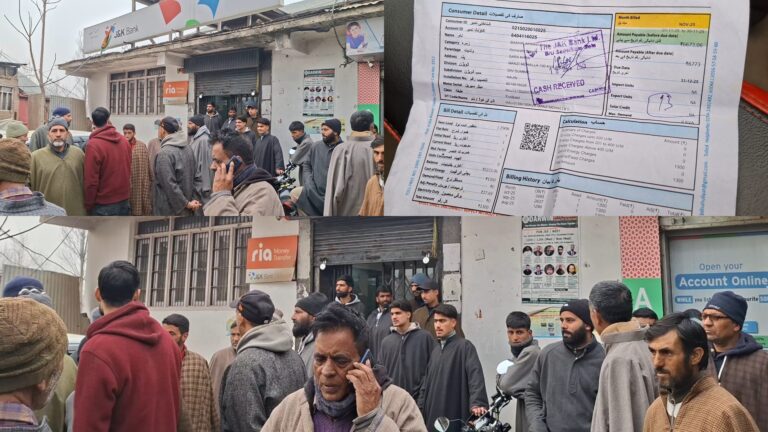
BANDIPORA, Jan 16: Electricity consumers in Saderkoot Bala area of north Kashmir’s Bandipora district have expressed grave concern over what they allege are serious irregularities in the deposit and reflection of electricity bill payments, after repeated dues continued to appear on their bills despite timely payments over the past three months.
Aggrieved residents told Kashmir Despatch that they have been regularly depositing their monthly electricity bills at the local branch of J&K Bank, yet the Power Development Department (PDD) continues to show the same amounts as unpaid in subsequent bills. The issue, they said, has not only caused confusion and financial stress but has also triggered fear of power disconnections due to being wrongly labelled as defaulters.
According to the residents, every new bill issued by the PDD continues to carry previous dues, even though receipts are available as proof of payment. “We have paid our bills month after month without delay, but the dues keep reappearing. It feels like our payments have vanished,” said a local shopkeeper, adding that the threat of electricity disconnection looms large despite consumers having fulfilled their obligations.
Several affected consumers echoed similar concerns, stating that repeated visits to both the bank and the PDD offices have yielded no relief so far. “The system keeps showing us as defaulters. This is mentally disturbing and financially draining, especially for daily wage earners and small traders,” another resident said.
Locals have alleged that the amount collected at the bank was not properly transferred to the PDD, raising suspicions about the handling of public money. Some residents went a step further, accusing a bank staff member of misappropriating the deposited funds, and demanded that transaction records, receipts, and remittance details of the past three months be thoroughly audited to trace where the payments actually went.
The residents have sought clarity on who will be held accountable for any late payment penalties, surcharge amounts, or potential disconnections arising out of what they term as “administrative or institutional failure.”
When contacted, the Branch Manager of J&K Bank, Saderkoot Bala, declined to comment, stating that he was not authorised to brief the media on the matter.
However, J&K Bank’s Public Relations Officer, Naseer Javaid, acknowledged the seriousness of the issue. He assured that the matter would be resolved within half an hour and said that strict action would be taken against anyone found responsible after verification.
The incident has raised serious questions about the reliability and transparency of bill collection and remittance mechanisms at the grassroots level. Residents have urged the authorities to conduct a time-bound and impartial inquiry, immediately update the electricity billing database by adjusting all cleared payments, and ensure that consumers are not harassed or penalised for lapses beyond their control.
They have also demanded stronger checks and accountability mechanisms to prevent the recurrence of such incidents, warning that public trust in essential service delivery systems is at stake if the issue is not addressed promptly and transparently.
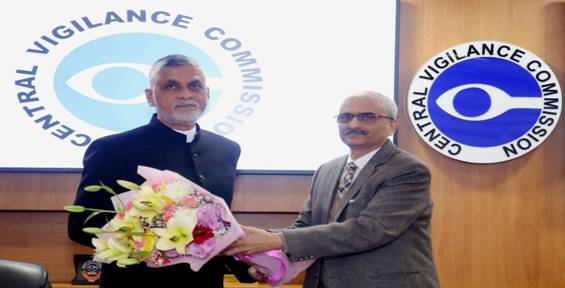
Praveen Vashista appointed as Vigilance Commissioner in the Central Vigilance Commission

0

VINOD BHAT
Delhi, JAN 15:
The Hon’ble President of India vide warrant dated December 12, 2025 and by virtue of the power vested under Section 4 (1) of the Central Vigilance Commission Act, 2003 has appointed Shri Praveen Vashista as Vigilance Commissioner in the Central Vigilance Commission.

Shri Praveen Vashista made and subscribed oath on 16th January 2026 as Vigilance Commissioner before the Central Vigilance Commissioner, who was authorized by the President of India in pursuance of the provision contained in Section 5 (3) of the CVC Act 2003.

Shri Praveen Vashista is an Indian Police Service officer of the Bihar Cadre of 1991 batch. He has a distinguished career spanning over three decades, serving in diverse and important areas such as law enforcement, crisis response, security and management.

Shri Praveen Vashista has worked as IG of the Economic Offences Wing and Criminal Investigation Department of Bihar. As Superintendent of Police, he maintained law and order in critical Districts like Ranchi, Dumka and Garhwa. He has also served as SP and DIG in CBI.

On central deputation Shri Praveen Vashista has held critical portfolios in Ministry of Home Affairs as Joint Secretary, Additional Secretary, OSD and Special Secretary (Internal Security).

The swearing-in ceremony was attended by senior officers of the Department of Personnel and Training (DoPT), Central Bureau of Investigation (CBI), Enforcement Directorate (ED) and the Central Vigilance Commission.

The Central Vigilance Commission Act, 2003, provides for the appointment of a Central Vigilance Commissioner and two Vigilance Commissioners. The tenure of the Vigilance Commissioner is of four years or till the incumbent attains the age of 65 years.

PM Modi to visit Assam on 17-18 January

0

VINOD BHAT

Delhi, JAN 16:
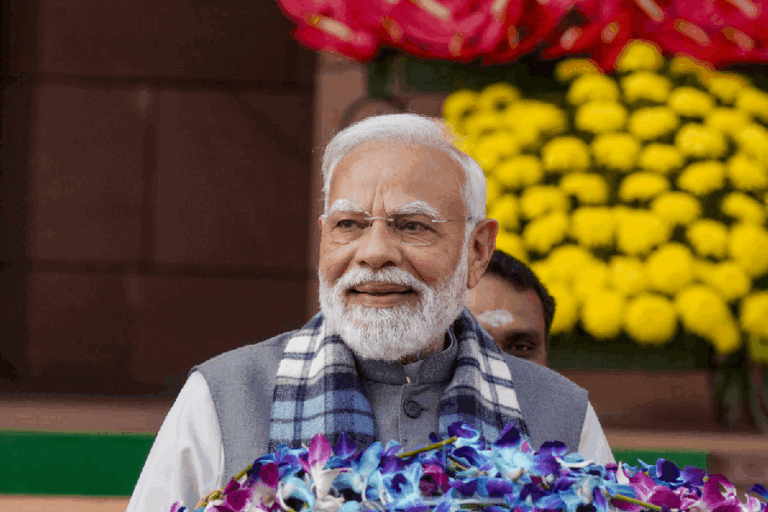
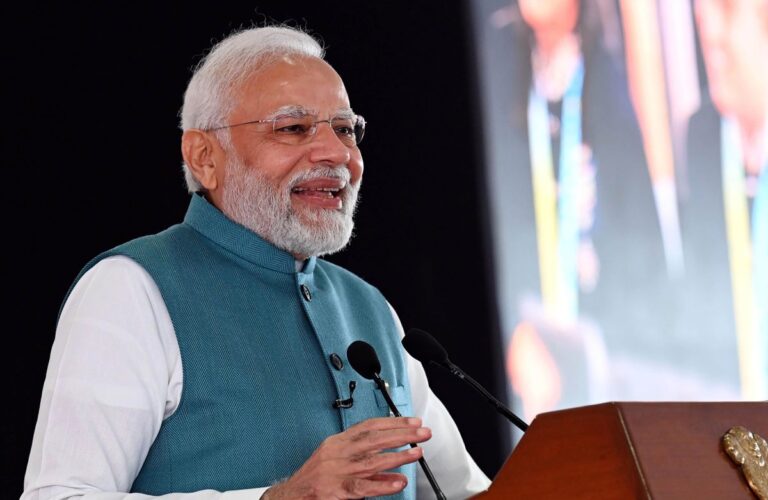
Prime Minister Shri Narendra Modi will visit Assam on 17-18 January, 2026.

On 17th January, at around 6 PM, Prime Minister will participate in the Traditional Bodo Cultural Programme at Sarusajai Stadium, Guwahati.

On 18th January, at around 11 AM, Prime Minister will perform Bhoomi Pujan for the Kaziranga Elevated Corridor Project, worth over ₹6,950 crore and will flag off 2 new Amrit Bharat Express trains at Kaliabor, Nagaon district.

PM in Guwahati

Prime Minister will participate in “Bagurumba Dwhou 2026”, a historic cultural event celebrating the rich heritage of the Bodo community at Sarusajai stadium, Guwahati.

On this occasion, more than 10,000 artists from the Bodo community will perform Bagurumba dance in a single, synchronised presentation. Artists from 81 Legislative Assembly Constituencies from across 23 districts of the state will take part in the event

Bagurumba is one of the folk dances of the Bodo community, deeply inspired by nature. The dance symbolises blooming flowers and reflects harmony between human life and the natural world. Traditionally performed by young Bodo women, with men accompanying as musicians, the dance features gentle, flowing movements that imitate butterflies, birds, leaves and flowers. Performances are usually organised in groups, forming circles or lines that enhance its visual elegance.

Bagurumba dance holds deep cultural significance for the Bodo people. It represents peace, fertility, joy and collective harmony, and is closely associated with festivals such as Bwisagu, the Bodo New Year, and Domasi.

PM in Kaliabor

Prime Minister will perform Bhoomi Pujan of the Kaziranga Elevated Corridor Project (4-Laning of Kaliabor-Numaligarh section of NH-715), worth over ₹6,950 Crore.

The 86 km long Kaziranga Elevated Corridor project is an environmentally conscious National Highway project. It will feature 35 km of Elevated Wildlife Corridor that will pass through Kaziranga National Park, 21 km Bypass section and 30 km widening of the existing highway section of NH-715 from two to four lanes. The project aims to improve regional connectivity while ensuring protection of the park’s rich biodiversity.

The project will pass through Nagaon, Karbi Anglong and Golaghat districts and will significantly improve connectivity to Upper Assam, particularly Dibrugarh and Tinsukia. The elevated wildlife corridor will ensure uninterrupted movement of animals, reduce human-wildlife conflict. It will also enhance road safety, reduce travel time and accident rates, and support growing passenger and freight traffic. As part of the project, Bypasses will be developed at Jakhalabandha and Bokakhat that will help to decongest towns, improve urban mobility and enhance the quality of life for local residents.

During the programme, Prime Minister will also flag off 2 New Amrit Bharat Express trains – Guwahati (Kamakhya)-Rohtak Amrit Bharat Express and Dibrugarh-Lucknow (Gomti Nagar) Amrit Bharat Express. These new train services will strengthen rail connectivity between the Northeast and Northern India, enabling safer and more convenient travel for the people.

PM to visit West Bengal on 17-18 January

0

VINOD BHAT

PM to dedicate and lay foundation stone for various rail and road projects worth over ₹3,250 crore in Malda on 17th January

PM to flag off India’s first Vande Bharat Sleeper Train between Howrah and Guwahati (Kamakhya)

Delhi, JAN 16:
Prime Minister Shri Narendra Modi will visit West Bengal on 17-18 January, 2026.

On 17th January, at around 12:45 PM, Prime Minister will visit Malda and flag off India’s first Vande Bharat Sleeper Train between Howrah and Guwahati (Kamakhya) at Malda Town Railway Station. Thereafter, at around 1:45 PM, Prime Minister will dedicate to the Nation and lay the foundation stone of multiple rail and road infrastructure projects worth more than ₹3,250 crore in a public function at Malda.

On 18th January, at around 3 PM, Prime Minister will inaugurate, lay the foundation stone and flag off various development projects worth around ₹830 crore at Singur in Hooghly district.

PM in Malda

Prime Minister will visit Malda and dedicate to the nation, and lay the foundation stone of multiple rail and road infrastructure projects worth ₹3,250 crore, aimed at strengthening connectivity and accelerating development in West Bengal and the North-Eastern region.

Prime Minister will visit Malda Town Railway Station, where he will flag off India’s first Vande Bharat Sleeper Train between Howrah and Guwahati (Kamakhya). He will also virtually flag off the Guwahati (Kamakhya)–Howrah Vande Bharat Sleeper Train. Developed to meet the growing transportation needs of modern India, the fully air-conditioned Vande Bharat Sleeper train is set to offer passengers an airline-like travel experience at economical fares. It will make long-distance journeys faster, safer, and more convenient. By significantly reducing travel time by around 2.5 hours on the Howrah–Guwahati (Kamakhya) route, the train will also give a major boost to religious travel and tourism.

Prime Minister will lay the foundation stone of four major railway projects in West Bengal, including the new rail line between Balurghat and Hili, next-generation freight maintenance facilities at New Jalpaiguri, upgradation of the Siliguri Loco Shed, and modernization of Vande Bharat train maintenance facilities in Jalpaiguri district. These projects will strengthen passenger and freight operations, improve logistics efficiency in North Bengal, and generate employment opportunities in the region.

Prime Minister will dedicate to the Nation the electrification of rail lines between New Coochbehar–Bamanhat and New Coochbehar–Boxirhat, enabling faster, cleaner and more energy-efficient train operations.

Prime Minister will further virtually flag off 4 New Amrit Bharat Express trains – New Jalpaiguri- Nagercoil Amrit Bharat Express; New Jalpaiguri- Tiruchirappalli Amrit Bharat Express; Alipurduar – SMVT Bengaluru Amrit Bharat Express; Alipurduar – Mumbai (Panvel) Amrit Bharat Express. This will enhance affordable and reliable long-distance rail connectivity. These services will support the mobility needs of common citizens, students, migrant workers and traders, while strengthening inter-state economic and social linkages.

Prime Minister will also flag off two new train services equipped with LHB coaches – Radhikapur – SMVT Bengaluru Express; Balurghat – SMVT Bengaluru Express. These trains will provide the region’s youth, students, and IT professionals with direct, safe, and comfortable travel connectivity to major IT and employment hubs such as Bengaluru.

Prime Minister will lay the foundation stone for the rehabilitation and four-laning of the Dhupguri–Falakata section of National Highway-31D, a key road project that will improve regional road connectivity and facilitate smoother movement of passengers and goods in North Bengal.

These projects will play a vital role in building modern infrastructure creation and improved connectivity, strengthening the Eastern and North-Eastern regions as key growth engines of the Nation.

PM in Hooghly

Prime Minister will inaugurate, lay the foundation stone of and flag off various development projects worth more than ₹830 crore at Singur, Hooghly.

Prime Minister will lay the foundation stone of the Extended Port Gate System at Balagarh, including an Inland Water Transport (IWT) terminal and a Road Over Bridge

Spanning an area of approximately 900 acres, Balagarh is being developed as a modern cargo handling terminal with an envisaged capacity of about 2.7 million tonnes per annum (MTPA). The project includes the construction of two dedicated cargo handling jetties, one for containerised cargo and one for dry bulk cargo.

The Balagarh project aims to significantly improve cargo evacuation efficiency by diverting heavy cargo movement away from congested urban corridors. This will enhance road safety, reduce vehicular congestion and pollution in Kolkata city, and contribute to an improved quality of life for residents. Improved multimodal connectivity and logistics efficiency will also provide cost-effective market access to regional industries, MSMEs, and agricultural producers. The project is expected to generate substantial direct and indirect employment, benefiting local communities through job creation in logistics, terminal operations, transport services, maintenance, and allied activities.

Prime Minister will also launch a state-of-the-art Electric Catamaran in Kolkata. This is one of the 6 Electric Catamarans indigenously built for inland water transport by Cochin Shipyard Ltd. The 50-passenger hybrid electric aluminium catamaran, equipped with advanced electric propulsion systems and lithium-titanate battery technology, is capable of operating in fully electric zero-emission mode as well as in hybrid mode for extended endurance. The vessel will support urban river mobility, eco-tourism and last-mile passenger connectivity along the Hooghly River.

Prime Minister will also inaugurate the Jayrambati–Barogopinathpur–Maynapur new rail line. This line is an important part of the Tarkeshwar–Bishnupur new rail line project. Along with the new rail line, a new train service between Maynapur and Jayrambati, with a halt at Barogopinathpur, will also be flagged off. It will provide direct rail connectivity to the residents of Bankura district, making travel more affordable and convenient for daily commuters, students and pilgrims.

Prime Minister will flag off three Amrit Bharat Express trains : Kolkata (Howrah) – Anand Vihar Terminal Amrit Bharat Express; Kolkata (Sealdah) – Banaras Amrit Bharat Express; Kolkata (Santragachi) – Tambaram Amrit Bharat Express.

Ashtalakshmi of Bharat’s North-East: Powered by Kamakhya-Rohtak Amrit Bharat Express

0

VINOD BHAT

ASSAM, JAN 15: Kamakhya, a spiritual hub in Assam, now connects seamlessly to Rohtak in Haryana via the new Amrit Bharat Express. This weekly service will strengthen long-distance rail links across Assam, West Bengal, Bihar, Uttar Pradesh, Delhi, and Haryana, offering affordable and comfortable travel.

The train will depart from Kamakhya at 10:00 PM on Fridays, arriving Rohtak at 2:45 PM on Sundays. The return journey will be from Rohtak at 10:10 PM on Sundays, reaching Kamakhya at 12:15 PM on Tuesdays.

The Guwahati (Kamakhya)-Rohtak Amrit Bharat Express will serve district including Kamrup, Barpeta, Bongaigaon and Kokrajhar in Assam, Cooch Behar and Jalpaiguri in West Bengal, Kishanganj, Katihar, Bhagalpur, Khagaria, Saran, Begusarai and Vaishali in Bihar, Ballia, Ghazipur, Varanasi, Bhadohi, Prayagraj, Kanpur Nagar, Firozabad and Ghaziabad in Uttar Pradesh, and Jhajjar and Rohtak in Haryana.

The route unlocks iconic tourist destinations, from the sacred Kamakhya Temple near the origin, to Varanasi’s timeless Ganga ghats and Kashi Vishwanath Temple, Prayagraj’s Sangam confluence during Kumbh Mela, and New Jalpaiguri’s gateway to Darjeeling’s tea hills and wildlife sanctuaries. It also passes near Bihar’s cultural hubs like Katihar and historic sites along the River Ganga.

This Amrit Bharat Express will enhance accessibility, boost regional ties, and blend pilgrimage, heritage, and modern comfort for passengers.

Markhor Controversy Exposes Deep Fault Lines in J&K Wildlife Governance

0

FIRDOUS AHMAD
SRINAGAR, Jan 16: The alleged poaching of a Markhor in Jammu and Kashmir has triggered a sharp backlash from conservation and civil rights groups, bringing renewed focus on what they describe as the monopolisation of wildlife conservation by a select group of non-governmental organisations and a troubling nexus between these bodies and officials of the Wildlife Department.
In a strongly worded joint statement signed by Dr Sheikh Ghulam Rasool, five organisations—Pir Panjal Conservation Foundation, J&K RTI Movement, Forest Rights Coalition–Jammu & Kashmir, Gujjar-Bakerwal Youth Welfare Conference and Nature Conservancy Alliance (NCA)—accused a handful of NGOs of repeatedly cornering conservation projects, funding and policy influence without competitive procedures, transparency or meaningful public scrutiny. According to the groups, this concentration of power has gradually converted conservation from a public responsibility into what they termed a “funding industry”.
The statement alleges that the same organisations continue to receive projects and donor support while independent wildlife experts, grassroots conservationists and local communities are systematically pushed to the margins. It further claims that dissenting voices and critical evaluations are routinely suppressed, creating an environment in which inflated claims and glossy reports replace rigorous ecological assessment and accountability.
Referring to the recent Markhor incident, the organisations said wildlife crises are frequently invoked to justify expanded funding and fresh interventions without any credible audit of past programmes. Alleged threats to wildlife, the statement noted, are amplified to attract more resources, while actual conservation outcomes remain largely unexamined, weakening ecological integrity and public trust alike.
Seeking accountability, the groups have demanded a time-bound independent inquiry or the constitution of a Special Investigation Team to probe the alleged Markhor poaching case. They said the inquiry must go beyond the immediate incident and examine the role of Wildlife Department officials, NGO partners and operatives associated with community-based conservation programmes.
They have also called for a comprehensive financial audit followed by a social audit of all funds spent on Markhor conservation and recovery initiatives. According to the statement, independent statutory auditors along with credible civil society actors and ecological experts should assess NGO partnerships, consultancies, donor-funded interventions and the disparity between claims made and outcomes achieved on the ground.
Raising serious concerns over the use of public money, the organisations have sought strict legal action against individuals and institutions found guilty of misuse, wastage or diversion of funds, including recovery of money and criminal prosecution wherever warranted. Without accountability, they warned, conservation governance will continue to operate with impunity.
The statement further questioned the existing composition of the Wildlife Board in Jammu and Kashmir, alleging that it has been reduced to a body dominated by politically convenient appointees lacking scientific and ecological expertise. The groups demanded its reconstitution through transparent criteria, with the inclusion of independent wildlife scientists, ecologists, grassroots conservationists and genuine community representatives.
Calling for an end to the monopoly of select NGOs, the organisations urged the government to introduce open, competitive and transparent processes for conservation projects, backed by mandatory public disclosure under Section 4 of the RTI Act. They maintained that conservation initiatives, particularly those funded through public resources and international donors, must be subject to democratic oversight.
Emphasising a rights-based approach, the statement stressed that wildlife protection must be aligned with the Forest Rights Act and respect the livelihoods and traditional knowledge of indigenous and pastoral communities, particularly the Gujjar-Bakerwals. Criminalising communities that have historically coexisted with wildlife, it said, would only deepen conflict and undermine conservation goals.
Describing the death of the Markhor as more than a single wildlife loss, the organisations said it symbolises a deeper institutional failure and moral crisis within conservation governance. They warned that unless decisive corrective measures are taken, public trust in wildlife institutions in Jammu and Kashmir could collapse irreversibly.
The collective announced that it would pursue the matter through RTI interventions, legal action, public consultations and sustained civic engagement until transparency, accountability and justice are ensured, asserting that wildlife conservation cannot be allowed to become a shield for corruption or compromised institutions.

Sharada Script 1; The Forgotten Light of Kashmir’s Civilizational Leap

0

DANIYAL KHAN

SRINAGAR, Jan 15: There exist civilizations whose magnificence is measured not solely in monuments or conquests but in the delicate contours of a script. The strokes that bear thought across centuries. For Kashmir, that script was Sharada. To invoke Sharada is to invoke a civilization that elevated knowledge above dominion, wisdom above riches and learning above all worldly pursuits.

It is to conceive Kashmir not merely as a valley of splendor but as a forge of ideas, a sanctuary of philosophy and a lighthouse of intellectual ascendancy. Sharada arose when Kashmir was already cultivating a distinctive civilizational consciousness anchored in inquiry and erudition.

The script became simultaneously a mirror and an engine of this intellectual renaissance, enabling ideas to traverse generations with exactitude and profundity. In an epoch when oral traditions frequently dissolved with time, Sharada guaranteed continuity, precision and permanence.

Sharada, christened after the goddess of learning Mata Saraswati, emerged in the 7th–8th centuries CE from the Brahmic lineage of scripts. It thrived throughout Kashmir, Punjab, Himachal and even Afghanistan, becoming the conduit through which Sanskrit hymns, Kashmiri annals, copperplate inscriptions and birch bark manuscripts were safeguarded. Its adaptability was extraordinary.

The sophistication of Sharada resided in its architecture, which permitted elaborate philosophical arguments and intricate poetic forms to be articulated without compromising subtlety. This rendered it especially suited for advanced disciplines including metaphysics, linguistics and ritual sciences. Through Sharada, Kashmir did not simply absorb knowledge but generated it, perfected it and disseminated it outward.

From sovereign proclamations to horoscopes, from philosophical discourses to translations of hallowed texts, Sharada conveyed the complete spectrum of human intellect. Unlike scripts confined to ceremonial use, Sharada was a vital organism, engraved on currency, carved into stone, woven into the very essence of quotidian existence.

Its manifestation in administrative documents and personal correspondence signals a society where literacy flourished and learning transcended secluded elites. The script functioned as a conduit between the sacred and the profane, fusing governance, spirituality and culture into a unified civilizational architecture.

Indeed Kashmir was once renowned as Sharada Desh, the realm of Sharada. At its nucleus stood the Sharada Peeth temple-university, a bastion of learning that rivalled Nalanda and Takshashila. Here, scholars debated the Vedas, honed grammar, investigated astronomy and authored treatises on aesthetics and philosophy.

Sharada Peeth embodied the supremacy of knowledge in Kashmir, where intellectual distinction frequently determined standing. Pilgrims and scholars journeyed immense distances to challenge their learning within its chambers, reinforcing Kashmir’s stature as a epicenter of exacting thought and scholarly preeminence.

Abhinavagupta, the polymath of the 10th–11th centuries, inscribed his profound works on rasa theory and tantra in Sharada. Kalhana’s Rajatarangini, the magnificent chronicle of Kashmir’s monarchs, coursed through its characters. The Nilamata Purana, narrating myths and rituals of the valley, was likewise preserved in its script.

Through these compositions, Sharada became the repository of Kashmir’s communal memory, documenting not merely occurrences but interpretations, sentiments and philosophical meditations that shaped the region’s consciousness.

Sharada was not simply an instrument of inscription but the essence of Kashmir’s intellectual heritage. It enabled the blossoming of Kashmir Shaivism, a philosophy of non-dualism that perceived the cosmos as a manifestation of consciousness.

It perpetuated the disputations of scholars who pursued liberation not through domination but through understanding. In its strokes, one discovers the civilizational ascent that established Kashmir as a beacon of wisdom throughout South Asia.

What renders Sharada exceptional is not solely its antiquity but its capacity to preserve knowledge across epochs. Thousands of manuscripts remain undeciphered, imprisoned in Sharada’s script, harboring secrets of dynasties, philosophies, sciences and rituals. To resurrect Sharada is to liberate these treasures, to reclaim a civilizational memory that has been obscured by invasions, migrations and neglect.

The recession of Sharada did not signify the forfeiture of relevance but the disruption of a legacy. Its persistence in fragments and manuscripts stands as mute testament to an intellectual tradition awaiting resurrection.

Kashmir’s preeminence in knowledge was not fortuitous but was nurtured through Sharada. The script allowed the valley to become a nexus of intellectual exchange, shaping Buddhism, Hinduism and even Sufi traditions.

It was through Sharada that Kashmir’s scholars contributed to the wider currents of Indian and Central Asian thought. In its resilience amid invasions and upheavals, Sharada preserved traditions that might otherwise have vanished.

(Part 2 shall follow)

WMDA urges public cooperation to keep Manasbal clean

0

Advises use of designated dustbins, collection points to avoid spread of waste
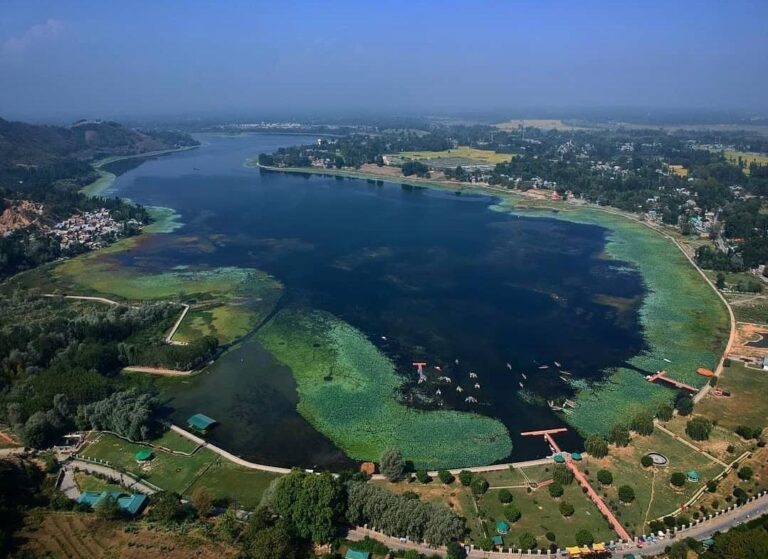
GANDERBAL, JANUARY 15: In a significant step aimed to safeguard the fragile ecosystem and enhance cleanliness in Manasbal area, the Wullar-Manasbal Development Authority (MDA) has appealed people living in catchment areas and stakeholders besides tourists to ensure scientific waste management, prevent littering and promote a clean, hygienic and environmentally sustainable Manasbal.
As per a notification of WMDA, households, commercial establishments and institutions have been directed to hand over their waste only to the designated sanitation staff of WMDA or collection vehicles of the Rural Development Department, Block Safapora, at the notified time and place.
The public has been strictly advised to segregate waste at source, separating wet/ biodegradable waste such as kitchen and food waste from dry/ non-biodegradable waste including plastic, paper, glass and metal. Mixing of wet and dry waste has been prohibited.
The Authority has also imposed a complete ban on dumping of garbage, plastic waste or construction debris on roads, open spaces, water bodies, drains and other public places. Burning of waste in open areas has likewise been prohibited. Citizens have been urged to use designated dustbins and collection points and avoid dumping waste at unauthorized locations.
Further, the Authority has cautioned that any violation of these directions shall invite penal action under the J&K Development Act, Solid Waste Management Rules, 2016 and other relevant regulations, including the imposition of fines and other legal proceedings.
Seeking active public participation, the Manasbal Development Authority appealed to residents, traders, visitors and institutions to cooperate in making Manasbal a litter-free, clean and plastic-free destination.

IndiaAI Mission, MeitY & Government of Madhya Pradesh Conclude the Madhya Pradesh Regional AI Impact Conference 2026 in Bhopal

0

VINOD BHAT
Delhi, JAN 15:
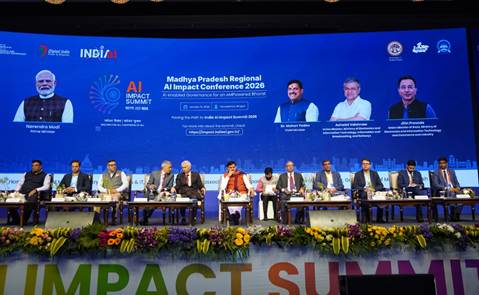
The Madhya Pradesh Regional AI Impact Conference 2026, organised by IndiaAI Mission, Ministry of Electronics and Information Technology (MeitY) and the Government of Madhya Pradesh, concluded today in Bhopal. The event showcased cutting-edge AI use cases and best practices in governance and public service delivery, successfully aligning state-level initiatives with the IndiaAI Mission’s national ambitions.

The Conference is part of the eight Regional AI Impact Conferences being organised across the country as precursors to the India AI Impact Summit 2026, set to take place from 16-20 February, 2026 in New Delhi.

The Government of Madhya Pradesh and IndiaAI Mission also signed an MoU to expand access to high-quality AI education and skilling across the State. Under the collaboration, IndiaAI Mission, in partnership with the Department of Technical Education, Skill Development and Employment, Government of Madhya Pradesh, will support the establishment of 30 Data and AI Labs across Madhya Pradesh as part of the national initiative to set up 570 such labs in Tier-2 and Tier-3 cities.

The event witnessed a series of major launches and announcements, including the unveiling of four citizen-centric digital portals, and the announcement of MoUs with Youngovator, CEEW, Google, nasscom, AISECT and BHASHINI. The launch of the Madhya Pradesh SpaceTech Policy 2026, inaugurated by Chief Minister Shri Dr. Mohan Yadav, marked another highlight of the conference. The policy promotes satellite manufacturing, geospatial analysis, and downstream applications in agriculture, disaster management, and urban planning. This initiative complements AI-driven governance by integrating space technologies for enhanced public service delivery and economic growth, further positioning Madhya Pradesh as a hub for space-grade manufacturing and innovation.

In his special address, Shri Dr. Mohan Yadav, Chief Minister, Government of Madhya Pradesh, said “The Madhya Pradesh government believes that AI can benefit its administration, the public, and industries. Therefore, the state will ensure policy support to the AI ecosystem to maximise efficiency across sectors like mining, health, and across every other key sector in our state. We are already growing across them, and with this event, we will move even further. We are committed to India’s AI-led growth”.

Delivering the opening remarks, Shri Abhishek Singh, Additional Secretary, MeitY and CEO, IndiaAI Mission, stated, “As far as technology is concerned, India has established itself as a key global stakeholder. Our engineers, our youth, our technology companies are instrumental in creating some of the best IT solutions in the world. Through Aadhar, UPI, and India Stack we have shown the world how governance can be improved through technology. Building on these foundations, IndiaAI is committed to advancing India’s leadership in shaping the global AI ecosystem and ensuring that the transformative impact of AI reaches all.”

In his State Address, Shri Anurag Jain, Chief Secretary, Government of Madhya Pradesh, emphasised that, “With the India AI Impact Summit scheduled to take place in the coming month, Madhya Pradesh’s AI priorities are aligned with the Indian Government’s priorities. We have startup pitches running here today, along with the exhibitions. They will give you an idea of where Madhya Pradesh is headed with regards to AI. AI is not only a matter of governance, but it is also very crucial for our prosperity.”

The event further saw the announcement of winners of the MP Innotech Contest and the Ujjain Mahakumbh Hackathon, highlighting the State’s focus on innovation, startups and talent development. A presentation on “AI for People, Planet and Progress: Madhya Pradesh’s Roadmap to Impact” followed, outlining the State’s approach to AI-driven governance aligned with national priorities.

The Conference also featured detailed presentations on the IndiaAI Mission and its core pillars, delivered by Smt. Shikha Dahiya, Joint Director, Ministry of Electronics and Information Technology (MeitY), and Shri Kartik Suri, GM FutureSkills, IndiaAI Mission. The session provided an overview of the IndiaAI Mission’s strategic objectives and implementation framework, highlighting its key pillars focused on compute capacity, data platforms, application development, skilling and capacity building, startup and innovation support, and responsible AI.

Sessions during the Conference focused on “Technology-Led Governance for All”, “Al for Economic Growth & Social Good”, and “Resilience, Innovation & Efficiency”. Senior officials from the Government of India and State Governments, along with representatives from industry and academia, shared best practices and scalable AI use cases across public service delivery, agriculture, education, skilling and digital governance.

Perspectives emerging from the Madhya Pradesh Regional AI Impact Conference will help set the stage and agenda for national-level discussions at the upcoming India AI Impact Summit 2026.

Reviving Kashmir’s Sufi Syncretic Soul

0

As January 2026 unfolds, Central Kashmir is witnessing the annual Urs Mubarak of the revered Sufi saint Sheikh Jamal u Din (RA), being observed on Monday, January 19, at his native village Sehipora in the Wayil area of Ganderbal district. The Urs, marked by prayers, remembrance and gatherings of devotees, is far more than a ritual observance. It is a profound reminder of Kashmir’s deeply rooted Sufi and syncretic spiritual tradition—one that nurtured harmony, tolerance and coexistence for centuries and shaped the Valley’s collective conscience.
Sheikh Jamal u Din (RA) belongs to that illustrious lineage of Kashmiri Sufi saints whose lives were devoted to spiritual purification, social ethics and service to humanity. His message, like that of other saints of the Valley, emphasised humility over pride, compassion over confrontation and love over division. The Urs at Sehipora continues to attract people cutting across religious and social lines, reaffirming that the spiritual legacy of Kashmir has always been inclusive in character and universal in appeal.
The cultural identity of Kashmir, often described as Kashmiriyat, is inseparable from the Sufi–Rishi tradition. Saints such as Sheikh Noor-ud-Din Noorani (Nund Rishi), Lal Ded, Sheikh Jamal u Din (RA) and many others created a spiritual environment where faith was not a tool of exclusion but a bridge between communities. Their teachings blended Islamic mysticism with local spiritual wisdom, producing a syncretic culture where shrines, mosques and temples coexisted, and where poetry, music and moral conduct were central to social life. This tradition acted as a civilisational glue, binding diverse communities together through shared values rather than rigid identities.
Over time, however, this legacy has weakened. Decades of conflict, political uncertainty and social disruption have strained Kashmir’s traditional spiritual fabric. The erosion of Sufi syncretism has coincided with the rise of rigid ideologies and a growing disconnect between younger generations and their cultural roots. When spirituality is stripped of compassion and reduced to narrow interpretations, society risks losing its moral balance. The consequences are visible in shrinking spaces for dialogue, increasing mistrust and a gradual departure from the Valley’s historically pluralistic ethos.
The revival of Kashmir’s Sufi syncretic culture, therefore, is not an exercise in nostalgia but an urgent social necessity. Sufism offers an indigenous framework for healing, one that prioritises inner reform over outward hostility and dialogue over dogma. In a region that has endured prolonged suffering, the teachings of saints like Sheikh Jamal u Din (RA) provide a moral vocabulary for reconciliation, patience and coexistence.
Shrines across Kashmir must once again be seen as centres of ethical reflection and cultural engagement, not merely as sites of ritual. Urs gatherings should serve as occasions to revive collective memory, reinforce shared values and reconnect the youth with a tradition that rejects extremism in all its forms. Education, cultural institutions and the media have a crucial role to play in this process by highlighting Kashmir’s spiritual heritage and presenting it as a living, relevant force rather than a relic of the past.
Religious leadership, too, carries a significant responsibility. By foregrounding the inclusive teachings of Kashmiri Sufi saints, clerics and scholars can counter divisive narratives and restore the emphasis on compassion and humanity that lies at the heart of faith. At the same time, the administration must ensure the preservation of Sufi shrines, manuscripts and cultural sites, recognising them as vital symbols of Kashmir’s civilisational identity.
As devotees gather in Sehipora this January to commemorate the Urs of Sheikh Jamal u Din (RA), Kashmir must pause and reflect. His life and message remind us that spirituality devoid of humanity is hollow, and that faith attains its highest expression when it unites rather than divides. Reviving the Sufi syncretic culture of Kashmir does not weaken religious belief; it strengthens it by rooting it in ethics, empathy and wisdom.
Enduring peace in Kashmir cannot be achieved through political processes alone. It will take shape when society reconnects with its spiritual conscience and reclaims the values preached by its saints—values of tolerance, coexistence and mutual respect. The revival of Sufi syncretism is thus not merely about preserving heritage; it is about charting a humane and harmonious future for Kashmir.