spot_imgspot_img
spot_img
Home Blog Page 157

PM Modi inaugurates, lays foundation stone of multiple rail and road infrastructure projects worth more than ₹3,250 crore at Malda, West Bengal

0

VINOD BHAT

Delhi, JAN 16:
Prime Minister Narendra Modi inaugurated and laid the foundation stone of multiple rail and road infrastructure projects worth ₹3,250 crore at Malda, West Bengal. It is aimed at strengthening connectivity and accelerating development in West Bengal and the North-Eastern region. Addressing the gathering on the occasion, Shri Modi remarked that from Malda today, the campaign to accelerate the progress of West Bengal has gained further momentum. He highlighted that a number of projects related to the development of West Bengal have just been inaugurated and dedicated. The Prime Minister stated that new rail services have been introduced for West Bengal, noting that these projects will make travel easier for the people and also facilitate trade and commerce. He emphasized that the new train maintenance facilities established here will provide fresh opportunities for the youth of Bengal.

Underlining that from the sacred land of Bengal, another major step has been taken towards the modernization of Indian Railways, Shri Modi highlighted that from today, Vande Bharat sleeper trains are being introduced in India. He stated that this new Vande Bharat sleeper train will make long journeys for citizens more comfortable and splendid. He emphasized that the vision of how trains in a developed India should be is clearly reflected in this Vande Bharat sleeper train. The Prime Minister mentioned that a short while ago he interacted with some passengers at Malda station, and everyone expressed that traveling in this train was an extraordinary experience. He recalled that earlier people used to look at pictures of foreign trains and wish such trains existed in India, and today that dream is being realized. Shri Modi added that in the recent days, foreign tourists are making videos of how the Indian Railways is being revolutionised. He underlined that this Vande Bharat train is Made in India, built with the hard work and dedication of Indians. Shri Modi noted that the country’s first Vande Bharat sleeper train is connecting the land of Maa Kali with the land of Maa Kamakhya. He further stated that in the coming time, this modern train will expand across the nation and congratulated Bengal, Assam, and the entire country for this modern sleeper train.

Prime Minister Shri Narendra Modi remarked that Indian Railways is undergoing a transformation, with electrification of railway lines and modernization of stations. He highlighted that today, including West Bengal, more than 150 Vande Bharat trains are running across the country. The Prime Minister stated that along with this, a complete network of modern and high-speed trains is being developed, which is greatly benefiting poor and middle-class families in Bengal. He announced that Bengal has received four more modern Amrit Bharat Express trains—New Jalpaiguri–Nagercoil Amrit Bharat Express, New Jalpaiguri–Tiruchirappalli Amrit Bharat Express, Alipurduar–Bengaluru Amrit Bharat Express, and Alipurduar–Mumbai Amrit Bharat Express. He emphasized that these trains will strengthen connectivity between Bengal, especially North Bengal, and South and Western India. The Prime Minister noted that these Amrit Bharat Express trains will make travel easier for pilgrims visiting Gangasagar, Dakshineswar, and Kalighat, as well as for those traveling to Tamil Nadu and Maharashtra.

“Indian Railways is becoming not only modern but also self-reliant”, emphasised Shri Modi highlighting that India’s rail engines, coaches, and metro coaches are emerging as symbols of India’s technology. The Prime Minister stated that today India manufactures more locomotives than America and Europe and exports passenger train and metro train coaches to many countries, which greatly benefits the nation’s economy and provides employment opportunities for the youth. Shri Modi concluded by emphasizing that connecting India is a priority and reducing distances is a mission, which is clearly reflected in today’s program.

Governor of West Bengal, Shri C V Ananda Bose, Union Ministers, Shri Ashwini Vaishnav, Shri Shantanu Thakur, Shri Sukanta Majumdar were present among other dignitaries at the event.

Background

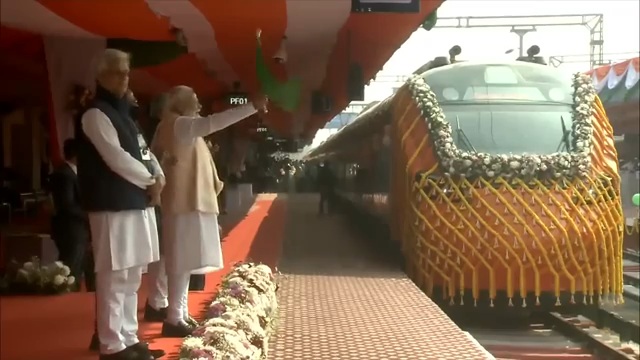
Prime Minister visited Malda Town Railway Station, where he flagged off India’s first Vande Bharat Sleeper Train between Howrah and Guwahati (Kamakhya). He also virtually flagged off the Guwahati (Kamakhya)–Howrah Vande Bharat Sleeper Train. Developed to meet the growing transportation needs of modern India, the fully air-conditioned Vande Bharat Sleeper train is set to offer passengers an airline-like travel experience at economical fares. It will make long-distance journeys faster, safer, and more convenient. By significantly reducing travel time by around 2.5 hours on the Howrah–Guwahati (Kamakhya) route, the train will also give a major boost to religious travel and tourism.

Prime Minister laid the foundation stone of four major railway projects in West Bengal, including the new rail line between Balurghat and Hili, next-generation freight maintenance facilities at New Jalpaiguri, upgradation of the Siliguri Loco Shed, and modernization of Vande Bharat train maintenance facilities in Jalpaiguri district. These projects will strengthen passenger and freight operations, improve logistics efficiency in North Bengal, and generate employment opportunities in the region.

Prime Minister dedicated to the Nation the electrification of rail lines between New Coochbehar–Bamanhat and New Coochbehar–Boxirhat, enabling faster, cleaner and more energy-efficient train operations.

Prime Minister further virtually flagged off 4 New Amrit Bharat Express trains – New Jalpaiguri- Nagercoil Amrit Bharat Express; New Jalpaiguri- Tiruchirappalli Amrit Bharat Express; Alipurduar – SMVT Bengaluru Amrit Bharat Express; Alipurduar – Mumbai (Panvel) Amrit Bharat Express. This will enhance affordable and reliable long-distance rail connectivity. These services will support the mobility needs of common citizens, students, migrant workers and traders, while strengthening inter-state economic and social linkages.

Prime Minister also flagged off two new train services equipped with LHB coaches – Radhikapur – SMVT Bengaluru Express; Balurghat – SMVT Bengaluru Express. These trains will provide the region’s youth, students, and IT professionals with direct, safe, and comfortable travel connectivity to major IT and employment hubs such as Bengaluru.

Prime Minister laid the foundation stone for the rehabilitation and four-laning of the Dhupguri–Falakata section of National Highway-31D, a key road project that will improve regional road connectivity and facilitate smoother movement of passengers and goods in North Bengal.

These projects will play a vital role in building modern infrastructure creation and improved connectivity, strengthening the Eastern and North-Eastern regions as key growth engines of the Nation.

Dr Ishfaq Abidi Honoured by ICAR for Transforming KVK Ganderbal

0

VINOD BHAT
LUDHIANA, Jan 17: In a significant recognition of scientific leadership and grassroots agricultural transformation, the Indian Council of Agricultural Research–Agricultural Technology Application Research Institute (ICAR–ATARI), Zone-I, Ludhiana, has honoured Prof. (Dr.) Ishfaq Abidi, Chief Scientist and Head of Krishi Vigyan Kendra (KVK) Ganderbal, with a prestigious citation for his outstanding contributions to agricultural extension, research and institutional development.
The citation, awarded on January 11, 2026, acknowledges Dr Abidi’s visionary leadership that has transformed KVK Ganderbal into a nationally recognised model KVK and the leading extension centre in Jammu and Kashmir. Since assuming charge in May 2022, Dr Abidi has spearheaded a comprehensive institutional turnaround, positioning the KVK as a centre of excellence in climate-resilient agriculture, high-tech horticulture, digital farming, mechanisation and agri-entrepreneurship.
KVKs are frontline agricultural extension institutions of ICAR, mandated to bridge the gap between research laboratories and farmers’ fields. Operating under diverse agro-climatic conditions, they play a crucial role in technology assessment, refinement and dissemination. Under Dr Abidi’s stewardship, KVK Ganderbal has not only fulfilled this mandate but has significantly exceeded national benchmarks in innovation, outreach and impact.
One of the landmark achievements highlighted in the citation is the conversion of nearly 35 acres of degraded and unproductive land into fertile farmland, demonstrating sustainable land-use practices at a time when soil degradation and shrinking cultivable land pose major challenges across the Himalayan region. The establishment of drone-based precision farming and advanced mechanisation systems has introduced farmers to cutting-edge technologies, improving efficiency, reducing input costs and enhancing productivity.
Dr Abidi also led the development of the country’s first public-sector Oats Silage Unit, a pioneering initiative that has strengthened fodder availability and livestock nutrition in Kashmir, where feed shortages often affect dairy productivity. The establishment of a Farm Machinery Custom Hiring Centre has further enabled small and marginal farmers to access modern equipment at affordable rates, while the setting up of a Molecular Laboratory has strengthened scientific research, quality control and plant health diagnostics.
In horticulture, a backbone of Kashmir’s rural economy, KVK Ganderbal under Dr Abidi’s leadership has promoted high-density orchards and established clonal rootstock mother banks, helping farmers shift towards modern orchard systems with higher yields, better quality produce and improved resistance to pests and diseases. The centre has also focused on quality seed and planting material production, addressing a long-standing bottleneck in agricultural productivity.
A major boost came through the large-scale implementation of the National Oilseed Mission. Covering nearly 7,000 kanals across 35 villages, the initiative resulted in remarkable productivity gains of 25–35 quintals per acre, significantly enhancing farmers’ incomes and reducing dependence on imported edible oils. This intervention aligns with the national goal of achieving self-reliance in oilseed production.
The citation also notes the impressive financial turnaround of KVK Ganderbal. Through diversification of integrated farming systems, strengthening of apiculture, and promotion of climate-smart technologies, the KVK’s annual revenue increased from ₹3–4 lakh to an estimated ₹20–22 lakh. This financial sustainability has enabled reinvestment in infrastructure, training programmes and farmer-centric innovations.
Beyond technology and infrastructure, Dr Abidi has placed strong emphasis on human capital development. He has led extensive farmer outreach programmes, skill development initiatives, MSME promotion and HADP-linked activities, while ensuring meaningful participation of women through empowerment programmes. These efforts have played a vital role in enhancing rural livelihoods, encouraging agri-entrepreneurship and promoting inclusive development in Ganderbal and adjoining districts.
Recognising his scientific excellence, unwavering commitment to farmer-centric development and contribution to sustainable agriculture, ICAR–ATARI Zone-I conferred the honour for Dr Abidi’s outstanding service at KVK Ganderbal during the period 2022–2025. The citation was signed by ICAR–ATARI Director Parvender Sheoran.
Agricultural experts view this recognition as a testament to how strong leadership, scientific innovation and community engagement can transform extension institutions into engines of rural growth. At a time when Kashmir’s agriculture faces the twin challenges of climate change and market volatility, KVK Ganderbal’s success under Dr Ishfaq Abidi offers a replicable model for sustainable and resilient farming across the region and beyond.

Suspected Wild Boar Attack Leaves 4 Injured in South Kashmir’s Tral

0

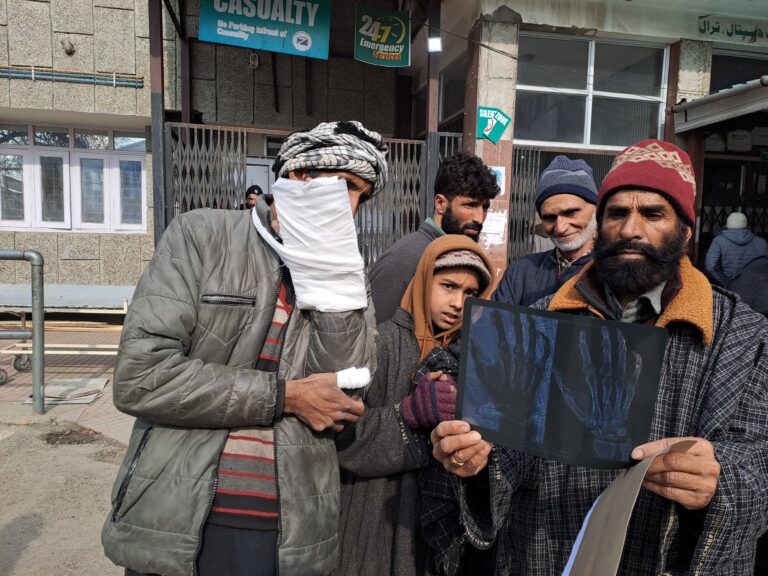
Tral, Jan 17: At least four civilians were injured on Saturday after a wild animal, suspected to be a wild boar, attacked pedestrians at Tral market area in south Kashmir’s Pulwama district, officials said.

The incident triggered panic among locals as the animal reportedly entered the busy market area and attacked people at random. Officials said four persons sustained injuries in the attack.

All injured individuals were promptly evacuated to a nearby hospital, where they are undergoing medical treatment. Their condition was stated to be stable.

Authorities said the situation was swiftly brought under control with the intervention of concerned teams.

Officials urged locals to remain cautious and avoid unnecessary movement in the area until the situation is fully secured. [KNT]

Gurez Higher Secondary records Zero pass percentage in Science stream in Class 12th examination

0

Out of 44 students, only 13 manage to clear Class 12 exams

TAUSEEF AHMAD
SRINAGAR, Jan 17: While Kashmir is awash with celebratory headlines showcasing board toppers and students scoring a perfect 500/500 in the recently declared Class 10 and Class 12 examinations, a disturbing and largely ignored reality has emerged from the far-flung Gurez valley, where government schools continue to reel under acute staff shortages and infrastructural neglect.
At the Government Higher Secondary School (HSS) Purana Tualail (PTL) in Gurez, the results have laid bare the grim state of public education in remote areas. In a startling outcome, the school recorded a zero pass percentage in the Science stream of Class 12, with not a single student clearing all subjects.
According to official data accessed by Kashmir Despatch, the overall performance of the institution paints a worrying picture. In Class 10, a total of 22 students appeared, out of which only 10 passed, while 12 failed. The situation worsened at the higher secondary level. In Class 12, 44 students appeared, but merely 13 students managed to clear the examination, leaving 31 students unsuccessful, making Govt HSS PTL one of the poorest-performing schools in the region this year.
Teachers at the school said the Science stream bore the brunt of systemic failures, particularly due to prolonged vacancies in key teaching posts. Most Science students reportedly failed in Physics, a subject that requires continuous academic guidance.
The Principal of Govt HSS PTL, speaking to Kashmir Despatch, candidly acknowledged that staff shortages were the primary reason behind the dismal results.
“The post of Zoology lecturer remained vacant for several months. The lecturer joined barely two months before the examinations, which severely hampered syllabus completion and student preparation. In the Science stream, the majority of students have failed in Physics,” the Principal said.
Students, meanwhile, expressed deep frustration and despair over the unequal academic battlefield they are forced to compete on. A local student from Gurez said that lecturer posts in core subjects remain vacant for months in most schools of the valley, directly impacting students’ futures.
“We are competing with students who spend lakhs on coaching centres and have access to experienced faculty. Here in Gurez, we have neither. I want to become a doctor, but my father cannot afford expensive coaching. When there are no teachers in school, our dreams are crushed even before we get a chance,” the student said, his voice heavy with disappointment.
“How can the son of a poor labourer manage tuition fees or online batches?” he asked.
In contrast, Higher Secondary School Baduab, another institution in the area, showed relatively better performance. In Class 10, 11 out of 14 students passed, while 4 failed. In Class 12, 33 out of 38 students cleared the examination, with 5 failures, highlighting how availability of academic support can significantly influence outcomes.
Local activists argue that these contrasting figures underline the immense pressure faced by rural schools lacking teachers, academic resources, and monitoring. They say students in remote areas are being systematically left behind despite being evaluated through the same examination standards as their urban counterparts.
Parents have also raised serious concerns over the state of education in Gurez.
“The absence of qualified lecturers is destroying our children’s future. How can they compete when there are no teachers for months?” asked a parent of a PTL student.
Another parent lamented that while television channels glorify toppers, schools like theirs remain invisible.
“We hear about merit and excellence, but nobody speaks about schools where students fail because there are no proper Science teachers,” he said.
He further alleged that even teachers appointed to serve Gurez are often reluctant to teach there.
“Those who get jobs to serve our people manage postings of their choice elsewhere. The government supports this, and our children suffer. This injustice is killing the future of poor students,” he added.
Responding to the criticism, the Principal said corrective steps have finally been initiated.
“This year, the authorities have provided local contractual lecturers, and the school now has teachers for almost every subject. We are hopeful that the results will improve next year,” he said.
Meanwhile, district-wide figures released by Chief Education Officer (CEO) Bandipora, G.M. Pujju, present a contrasting macro picture. In Class 10, a total of 3,034 students appeared, including 1,481 boys and 1,553 girls. Of them, 2,269 students passed, while 765 failed, registering an overall pass percentage of 79 percent.
In Class 12, around 2,624 students appeared, out of which 2,114 students passed—including 1,040 boys and 1,074 girls—while 510 students failed, taking the overall pass percentage to nearly 80 percent.
However, educationists argue that these aggregate numbers mask the harsh realities faced by students in remote pockets like Gurez, where lack of teachers, resources, and accountability continues to undermine the promise of equal education for all.

Sharada Script The Forgotten Light of Kashmir’s Civilizational Leap (Part-II)

0

By Daniyal Khan

Like many civilizational treasures, Sharada did not disappear abruptly. It faded. By the thirteenth century, as Kashmiri phonetics evolved and Perso Arabic scripts came to dominate, Sharada slowly retreated from everyday life.

It survived within ritual and ceremonial spaces among Kashmiri Pandits, yet its grand manuscripts fell silent, their wisdom locked away from the living world. The exodus of Kashmiri Pandits in the nineteen nineties, followed by decades of neglect and disconnect, pushed Sharada further into obscurity. What had once been the lifeblood of a civilization was reduced to scattered remnants, remembered faintly and unevenly.

This was not merely a linguistic decline. It was a civilizational rupture. To lose Sharada was to lose direct access to Kashmir’s intellectual authority, to sever the intimate link between memory and identity. It was a form of collective forgetting, an erosion of awareness about who we were and what we had achieved.

Today, the revival of Sharada is far more than an academic pursuit. It stands as a conscious resistance for keeping the history alive. Workshops at the University of Kashmir, exhibitions such as the Chinar Book Festival and digital initiatives like shardalipi.com are restoring vitality to the script. Its inclusion in Unicode in 2012 and the addition of Kashmiri vowels in 2025 have enabled a digital rebirth.

Learning tools like Aprant Sharada are allowing younger generations to engage with its form and rhythm. Scholars continue to document inscriptions across regions such as Lolab and Baramulla, uncovering epigraphs that bear witness to Kashmir’s dynasties and cultural memory.

In the period following the abrogation of Article 370, a renewed urgency has emerged to restore Sharada within education, public signage and cultural expression. This effort is not driven by nostalgia. It is an act of reclamation. It seeks to reconnect Kashmir with a civilizational ascent that once placed it at the forefront of intellectual life. It insists that Kashmir’s identity be shaped not by conflict but by knowledge to which all its natives including Muslims, Hindus and Sikhs alike are natural heirs.

The revival of Sharada unlocks access to thousands of manuscripts and inscriptions that chronicle Kashmir’s dynasties, philosophies and scientific traditions. It protects these records from decay, vandalism and oblivion. It reconnects displaced communities, particularly Kashmiri Pandits, with their ancestral inheritance.

It also restores Kashmir’s place within the broader linguistic and intellectual civilization of India.

Sharada holds a singular significance because it embodies continuity, depth and scale. It is not merely a script. It is a civilizational key. Through its revival, Kashmir’s historic stature as a center of learning is illuminated once more. The valley emerges not only as a landscape of beauty but as a realm of scholarship, a Bhuswarga where wisdom was revered and cultivated.

When I reflect upon Sharada, I do not see letters alone. I see scholars bending over birch bark manuscripts beneath the shade of ancient chinar trees. I see coins engraved with Sharada characters circulating through successive dynasties. I see Sharada Peeth as a temple of learning where seekers from across the subcontinent gathered to debate the enduring questions of existence.

To revive Sharada is to restore this vision. It is to bring light to manuscripts long hidden, to give renewed voice to thinkers such as Abhinavagupta and to remind ourselves that Kashmir’s legacy is rooted in knowledge rather than conflict. It is a reclaiming of a civilizational leap that once made this valley the envy of the world.

Sharada is not just a script. It is Kashmir’s voice, waiting to be heard again. Its revival safeguards civilizational memory, affirms the primacy of knowledge and ensures that the land once known as Sharada Desh continues to inspire future generations.

In its renaissance lies not only the restoration of letters but the awakening of a consciousness that once made Kashmir radiant, a beacon whose light may have dimmed but was never extinguished.

New Jalpaiguri-Tiruchchirappalli Amrit Bharat Express: From Darjeeling Foothills to Education Hub

0

VINOD BHAT

Tamil Nadu, Jan 16:
From the land of tea, timber and tourism to the education centre of Tamil Nadu, the New Jalpaiguri-Tiruchchirappalli Amrit Bharat Express will create a vital rail corridor across eastern and southern India. Beginning from New Jalpaiguri, the gateway to the Northeast and a strategically important region close to international borders with Bhutan and Bangladesh, the train will link this border-sensitive zone with the historic temple cities and educational hubs of Tamil Nadu. The service will strengthen long-distance connectivity while reinforcing the strategic and economic integration of the Northeast with the rest of the country.

The New Jalpaiguri-Tiruchchirappalli Amrit Bharat Express will depart from New Jalpaiguri at 4:45 PM (Friday) and will reach Tiruchchirappalli at 4:15 PM on Sunday. The Tiruchchirappalli-New Jalpaiguri Amrit Bharat Express, will depart from Tiruchchirappalli at 5:45 AM (Wednesday) and will arrive at New Jalpaiguri at 5:00 AM (Friday).

The Amrit Bharat Express will benefit a large number of districts across six states. In West Bengal, it will serve Medinipur West, Howrah, Hooghly, Birbhum, Maldah and Jalpaiguri. In Bihar, Katihar and Kishanganj will gain improved access. In Uttar Pradesh, the train will connect Agra and Prayagraj. In Odisha, districts such as Ganjam, Khordha, Cuttack, Jajpur and Bhadrak will be covered. In Andhra Pradesh, it will serve Srikakulam, Vizianagaram, Visakhapatnam, East Godavari, West Godavari, Prakasam and SPSR Nellore. In Tamil Nadu, the route will connect Tiruchchirappalli, Thanjavur, Mayiladuthurai, Cuddalore, Villupuram, Kanchipuram and Chennai.

The journey passes through several famous tourist destinations, making it attractive for travellers. These include the tea gardens and Himalayan foothills around New Jalpaiguri, the heritage cities of Agra and Prayagraj, the temple city of Bhubaneswar, the Cauvery delta region, and the iconic temples of Thanjavur and Tiruchchirappalli, along with Chennai’s cultural and coastal attractions.

Overall, the New Jalpaiguri-Tiruchchirappalli Amrit Bharat Express will boost local economies by improving access to markets, tourism centres, educational institutions and employment hubs. It will support small businesses, hospitality and trade along the route, enhance mobility for border and interior districts, and contribute to more balanced regional development across eastern and southern India.

IndiaAI, MeitY, and IIT Hyderabad Host Inclusion for Social Empowerment Working Group Meeting

0

VINOD BHAT
Delhi,JAN 16:
The IndiaAI Mission, MeitY in collaboration with IIT Hyderabad today hosted the Working Group Meeting on Inclusion for Social Empowerment at the IIT Hyderabad campus. The meeting convened senior policymakers, academic leaders, industry experts and researchers to advance national deliberations on inclusive AI development, societal adoption of AI and equitable access to AI-driven opportunities.

The Meeting is a precursor to the India AI Impact Summit 2026, scheduled to be held in New Delhi from 16–20 February 2026, and is part of the series of Working Group consultations being organised across the country to inform the Summit’s thematic agenda and outcomes.

The inaugural session featured addresses by the Indian chair of the Working Group, Shri Rajesh Aggarwal, Chief Secretary, Government of Maharashtra; Ambassador Thomas Schneider, Director, Federal Office for Communications, Switzerland; Prof. B.S. Murty, Director, IIT Hyderabad; Dr. Nalin Kumar Srivastava, Additional Director, AI & ET Division, MeitY; and Shri Ch. Bharath Reddy, Joint Director (e-Governance), Government of Telangana. The speakers emphasised the importance of embedding inclusion, trust and societal context at the core of India’s AI journey.

Welcoming the participants, Prof. B.S. Murty, Director, IIT Hyderabad, highlighted, “If India truly aspires to lead in AI, we must take bold steps. AI has to be interdisciplinary, bringing together engineering, materials science, liberal arts, and beyond. From strong fundamentals to real-world applications, our focus must be on improving lives, while also addressing the challenges of responsible and acceptable AI.”

Setting the context for the Working Group, Shri Dr. Nalin Kumar Srivastava, Additional Director, AI & ET Division, MeitY, said, “This gathering brings together ignited minds to address critical issues of inclusion, access, responsibility, and equity in AI. This is not just about technology, it is about social empowerment, with people at the centre. AI is not a technological choice, it is our moral duty.”

In his plenary address, Shri Rajesh Aggarwal, Chief Secretary, Government of Maharashtra, emphasised, “India’s work on AI is structured around seven verticals, one of which focuses on social empowerment, with active participation from several countries and international organisations. While AI is enabling advances in science, materials, healthcare, and discovery, it must ultimately serve people from very different social and economic backgrounds. India has built strong digital public infrastructure, and the next step is to add an AI layer to these systems. As AI grows, it must work for everyone, address bias in data and language, and ensure that technology does not increase inequalities but helps all sections of society.”

Shri Ch. Bharath Reddy, Joint Director (e-Governance), Government of Telangana, spoke about the Telangana Government’s focus on innovation and said “Our focus has always been on growth, and the adoption of new technologies is central to that objective. I represent the Government of Telangana, and these efforts reflect our commitment to building a strong, future-ready innovation ecosystem. At the upcoming India AI Impact Summit in Delhi, these themes will be taken forward through focused breakout sessions, enabling deeper discussions and collaboration across stakeholders.”

Delivering the high-level keynote address, Ambassador Thomas Schneider, Director, Federal Office for Communications, Switzerland, highlighted, “AI should be used in a sustainable way so that we can keep our planet in a condition that will continue to serve as our home for generations to come. AI should be used for progress, including economic and social development, and the opportunities offered by AI and data must be seized to overcome challenges people face today. This progress must be not just for a few, but for everyone, in a way that respects people’s dignity, fundamental rights, and autonomy, ensuring that no one is left behind. When responsibly designed and deployed, AI can be a powerful force for good, but we must remain vigilant against bias, inequality, and exclusion. Inclusive, multilateral, and multi-stakeholder cooperation is essential to ensure AI serves the common good. In this spirit, the Alliance for advancing inclusion through AI reflects a shared commitment to make AI an opportunity for all, not the privilege of a few.”

The program transitioned into a technical keynote titled “Reimagine Bharat with AI,” by Prof Shailesh Kumar, Chief Data Scientist, Reliance Jio, which examined the role of innovation in scaling national development. This was followed by the first panel discussion on “Promoting Inclusive AI Development,” with participation from Prof. Sumohana Channappayya (IITH); Mr. Romi Shrivastav, Honeywell, Mr. Swarup Shanti Medasani (Mathworks); Mr. Ramia Kannan Babu (Intel) and Prof. Chakravarthy Bhagavati (University of Hyderabad). The experts explored how inclusivity can be embedded across the full AI lifecycle, from initial data collection and design to deployment and governance. Drawing on research and industry experience, the panelists discussed practical strategies to mitigate bias, expand access, and fulfill the shared responsibility of building AI systems that advance social and economic inclusion.

The second panel, “Societal Adoption of AI: Opportunities and Challenges,” was kicked off by Shri Rajesh Aggarwal and featured a discussion between industry representatives, researchers, and civil society experts from Avartan Labs, LV Prasad Eye Hospital, 1*Works and Conch DeepTech Venture Studio and the REAN Foundation. This session focused on the transformative opportunities and real-world challenges of AI adoption in critical sectors such as healthcare and public services. Participants explored the themes of trust, accountability, and readiness, drawing on frontline deployment experiences to demonstrate how collaboration between developers and communities can ensure AI delivers meaningful societal benefits.

The event also included startup pitch sessions, student perspectives across education levels, and structured networking discussions, enabling engagement between innovators, researchers and policymakers. The day concluded with a closed-door hybrid meeting of the Inclusion for Social Empowerment Working Group, focused on consolidating insights and recommendations.

The deliberations from the Conclave on Inclusion for Social Empowerment Working Group Meeting at IIT Hyderabad will contribute to national-level discussions at the India AI Impact Summit 2026, reinforcing the Government of India’s commitment to building inclusive, responsible and human-centric AI ecosystems under the IndiaAI Mission, aligned with the vision of Viksit Bharat 2047.

JK Sees Record 80 percent Surge in Doctor Registrations

0

Srinagar, Jan 16 : The Jammu & Kashmir Medical Council (JKMC) has written a historic chapter by achieving its highest annual performance on record, granting 2,381 permanent registrations in 2025. This figure represents an increase of approximately 80 percent over the 1,324 registrations processed in 2024.

This unprecedented rise is seen as a testament to the Council’s enhanced regulatory efficiency and its pivotal role in expanding the healthcare workforce across the Union Territory.

Official statistics reveal that the JKMC granted 939 permanent registrations to Foreign Medical Graduates (FMGs) in 2025—more than double the 584 provided last year. A further 1,252 permanent registrations were issued to graduates of medical colleges within Jammu & Kashmir, reflecting increased local output. The Council also processed 190 permanent reciprocal registrations, a mandatory requirement for doctors arriving from other states to offer services or pursue advanced educational programs, such as PG NEET or DNB courses, in the region’s medical colleges.

In addition to permanent registrations, the Council processed 1,045 other registrations, indicating rising professional mobility.

It also issued 783 No-Objection Certificates (NOCs) and 231 Good Standing Certificates, while facilitating the accreditation of 125 Continuing Medical Education (CME) credits—steps that reinforce professional competence and ethical practice.

Between 2021 and 2025, the JKMC handled a total of 6,082 permanent registrations. The 2025 tally alone constitutes nearly 40 percent of this five-year aggregate, underscoring both institutional streamlining and growing demand for medical professionals in the region. This performance was bolstered by coordinated operations between the Council’s offices in Jammu and Srinagar.

Officials attribute the Council’s record achievements to strong leadership and administrative reforms under the guidance of Prof. (Dr.) S. Muhammad Salim Khan, who chairs the JKMC. During his tenure, the registration mechanism has been streamlined, transparency enhanced, and strict ethical and regulatory standards upheld—significantly improving service delivery for medical professionals across Jammu & Kashmir. (KNS)

Homes in Rubble, Bills Keep Coming

0

Destroyed in shelling, yet billed for power: Uri residents allege PDD negligence

TAUSEEF AHMAD
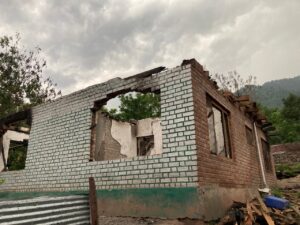
SRINAGAR, Jan 16: Months after cross-border shelling reduced dozens of houses to rubble in Salamabad village of north Kashmir’s Uri subdivision, several affected families have alleged that the Power Development Department (PDD) continues to issue electricity bills against their destroyed homes, compounding the misery of already displaced residents.
The shelling, which followed Operation Sindoor in May last year, left many residential structures completely damaged or uninhabitable. Since then, affected families say they have been forced to abandon their homes and take shelter in government quarters, relatives’ houses, or makeshift accommodations. Despite this, they allege that electricity connections linked to the destroyed houses were neither disconnected nor officially suspended, resulting in the generation of monthly power bills.
Speaking to Kashmir Despatch, several residents said that even though no one has lived in their damaged homes for nearly eight months, electricity bills continue to be issued in their names. In many cases, the cumulative amount has reportedly reached between ₹20,000 and ₹30,000, pushing families already struggling with displacement and reconstruction costs into deeper financial distress.
Saima, a resident of Salamabad whose house was flattened during the shelling, said the continued billing reflects administrative insensitivity. “Our house was destroyed in May. We have not stayed there since then. Still, electricity bills keep coming every month. We are already homeless and trying to rebuild our lives—how can we be expected to pay for power we never used?” she asked.
Another affected resident echoed similar concerns, questioning the logic behind billing non-existent households. “If our homes no longer exist and no electricity is being consumed, why are we being charged? The authorities should have disconnected these connections immediately after the damage assessment,” he said, adding that many families fear penalties or legal action if the dues remain unpaid.
Social activist Ishtiaq Ahmad, who recently visited the shelling-affected area, blamed administrative lapses for the situation. He said the failure to promptly disconnect electricity connections or conduct a proper post-shelling survey has placed an unfair burden on vulnerable families. “When houses are damaged and unoccupied, billing should automatically stop. The government must clarify who will bear this financial burden and why timely action was not taken by the department,” he said.
Residents have also accused the local administration of failing to carry out a comprehensive assessment of damaged properties to ensure that basic relief measures—such as suspension of utility charges—were implemented. They have urged the MLA Uri and senior district officials to intervene, waive the accumulated bills, and ensure that no further charges are imposed until homes are reconstructed and families return.
Responding to the allegations, Assistant Engineer (AE), PDD Uri, Imran Ahmad, said that the department has already taken steps to reduce the financial burden on the affected families. “We have stopped regular electricity assessment for such houses and reduced billing to minimum charges only,” he said, adding that the minimum demand being charged is around ₹50 to ₹60.
He clarified that the high amounts reflected in some bills are largely due to previous outstanding arrears, not fresh electricity consumption after the shelling. “The bills people are seeing are mostly old dues. There is no regular assessment being done now,” he said.
The AE further assured that regular billing would remain suspended until reconstruction is completed. “If anyone is still being billed incorrectly, we will ensure their billing is restricted to minimum charges of ₹60 until their houses are rebuilt. However, old arrears will have to be cleared as per rules,” he added.
Despite the clarification, residents insist that all pending charges should be waived, arguing that displacement due to shelling is an extraordinary situation requiring humanitarian consideration rather than routine administrative procedures.


Reviving Kashmir’s Sufi Legacy Through Education

0

Kashmir has long been known not only for its natural beauty but for a spiritual ethos that shaped its collective conscience for centuries. At the heart of this ethos lies Sufism, a tradition that softened religious boundaries, nurtured coexistence and infused everyday life with compassion, humility and introspection. The gradual erosion of this spiritual heritage has coincided with social fragmentation, moral uncertainty and cultural disorientation, particularly among the younger generation. If Kashmir is to reclaim its historical temperament of tolerance and balance, the revival of Sufi traditions must begin where minds and values are shaped most decisively: in schools and higher secondary institutions.
Sufism in Kashmir was never confined to shrines or religious gatherings; it was a lived philosophy that informed social relations, art, poetry, language and even modes of resistance against injustice. Saints like Sheikh Noor-ud-Din Wali, popularly known as Nund Rishi, and Lal Ded articulated a spiritual worldview that emphasized inner purification over outward ritual, love over hatred, and unity over division. Their verses resonated equally with Muslims and Hindus, creating what later came to be known as Kashmiriyat—a syncretic culture rooted in spiritual humanism. This heritage acted as a moral anchor for society, ensuring that faith served as a bridge rather than a barrier.
Over time, however, this deeply rooted tradition has been pushed to the margins. Political conflict, social upheaval and the influx of rigid ideologies have weakened the cultural transmission of Sufi values. Today’s students often grow up disconnected from the spiritual and intellectual inheritance of their land. While they study global histories and modern sciences, they remain largely unaware of the philosophical depth and ethical richness embedded in Kashmiri Sufi thought. This disconnect has created an identity vacuum, making young minds vulnerable to alienation, intolerance and cultural amnesia.
Incorporating Sufi traditions comprehensively into the school and higher secondary syllabus is therefore not a nostalgic exercise but a forward-looking educational reform. Education must do more than impart technical knowledge; it must cultivate character, empathy and critical thinking. Introducing students to Sufi philosophy, literature and history in an age-appropriate and academic manner would provide them with moral clarity and cultural grounding. When children encounter stories of saints who preached compassion, equality and self-restraint, they internalize values that no textbook on ethics can teach in isolation.
At the primary level, Sufi teachings can be woven naturally into language, moral science and local history through storytelling and poetry. Young learners can grow up hearing verses that speak of kindness, simplicity and respect for all living beings, allowing these values to take root subconsciously. As students advance to middle and secondary classes, Sufism can be presented as a historical and cultural movement that shaped Kashmir’s society, art and collective psyche. Studying the lives and works of Sufi saints would enable students to understand how spirituality once acted as a force of social cohesion rather than division.
At the higher secondary level, the engagement must become deeper and more analytical. Students should be encouraged to explore Sufi philosophy, symbolism and metaphysical concepts in relation to ethics, literature and comparative religion. Kashmiri, Persian and Urdu Sufi poetry can be studied not merely as literary texts but as reflections of a worldview that challenges materialism and extremism alike. Such exposure would sharpen intellectual curiosity while fostering emotional maturity. It would also help students appreciate pluralism, as Sufism inherently recognizes the unity of humanity beyond religious and cultural boundaries.
Importantly, integrating Sufi traditions into the curriculum would also reconnect education with lived culture. Field visits to historical shrines, interactions with scholars of Kashmiri spirituality, and cultural programs centered on Sufi music and poetry would transform learning from rote memorization into meaningful experience. Teachers, too, must be sensitized and trained to approach Sufi studies academically, ensuring that classrooms remain spaces of inquiry rather than indoctrination.
In a region that has witnessed prolonged conflict and psychological stress, the relevance of Sufi education extends beyond cultural preservation. Sufism offers tools for inner resilience, dialogue and reconciliation. Its emphasis on self-reflection and restraint counters the culture of anger and absolutism. By introducing these principles in educational institutions, society invests in peacebuilding at the most fundamental level. A generation educated in the spirit of Sufi humanism is more likely to resolve differences through understanding rather than confrontation.
Reviving Sufi traditions through education also safeguards Kashmir’s intangible heritage from extinction. Oral traditions, poetry and local practices risk disappearing if they are not documented and taught systematically. Schools and colleges can become centers for cultural preservation, encouraging students to research, record and reinterpret their spiritual heritage for contemporary times. This not only strengthens cultural identity but instills pride rooted in knowledge rather than sentiment.
Ultimately, the question is not whether Sufism belongs in modern education, but whether Kashmir can afford an education system divorced from its own civilizational values. The neglect of Sufi traditions has already cost society a moral compass that once guided coexistence and moderation. Restoring this legacy through structured, thoughtful and inclusive education is an investment in Kashmir’s intellectual, cultural and emotional future.
Reviving Sufi traditions in the classroom is, in essence, an act of healing. It reconnects the past with the present and equips future generations with wisdom that transcends textbooks. In nurturing minds through the light of Sufi thought, Kashmir may yet rediscover the harmony that once defined its soul.