TAUSEEF AHMAD
BANDIPORA, Jan 13:
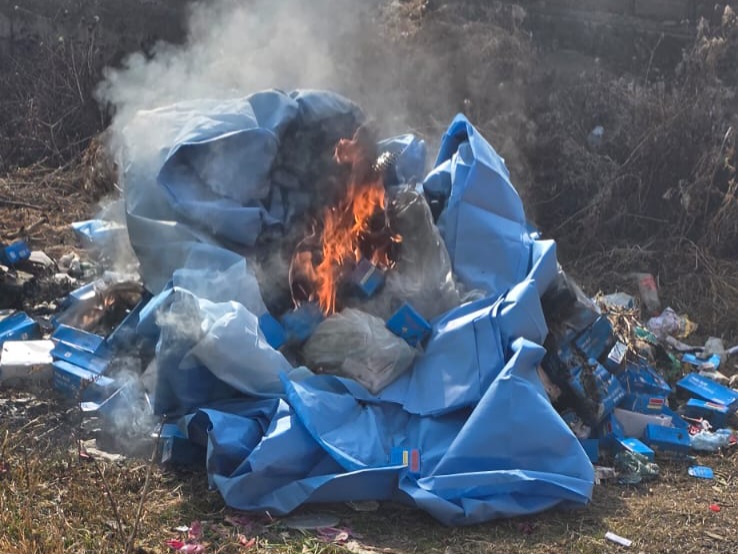
A serious controversy has erupted at the District Hospital Bandipora after bundles of allegedly expired medicines were found being openly burned inside the hospital premises, raising alarming questions about biomedical waste management and public safety. The incident came to light after a video showing the burning of large quantities of medicines went viral on social media on Tuesday, triggering widespread concern among residents, health activists, and environmental experts.
The video, accessed by Kashmir Despatch, shows packets and cartons of medicines engulfed in flames in an open area located behind the hospital’s oxygen plant. The footage clearly captures smoke billowing into the air as strips and boxes of medicines are destroyed within the hospital compound itself—an act that experts say violates established biomedical waste disposal norms.
Locals and hospital visitors expressed shock over the visuals, terming the act both dangerous and irresponsible. “Burning medicines in the open, especially within a district hospital, is extremely hazardous. The smoke released from pharmaceutical waste contains toxic chemicals that can seriously harm patients, hospital staff, and people living nearby,” a local resident said. He further alleged that this was not the first such incident and that similar practices had been followed earlier as well.
Although Kashmir Despatch could not independently verify whether the medicines seen in the video were indeed expired, the manner in which they were destroyed has sparked outrage. Under the Biomedical Waste Management Rules, 2016, expired or unused medicines must be handed over to authorised biomedical waste handlers or disposed of through scientifically approved incineration facilities. Open-air burning of pharmaceutical waste is strictly prohibited due to the risk of environmental pollution, toxic emissions, and possible misuse of medicines that may still be in circulation.
Sources revealed that the burning took place on Tuesday and that after the video went viral, hospital authorities hurriedly tried to destroy the remaining stock by spraying sanitizer over the medicines, allegedly to prevent further scrutiny. According to these sources, a larger quantity of medicines was originally meant to be destroyed, but once the incident became public, the remaining stock was allegedly concealed.
Repeated attempts to seek an explanation from the Medical Superintendent of District Hospital Bandipora were unsuccessful, as he declined to comment on the matter. However, Chief Medical Officer (CMO) Bandipora, Dr Ishtiyaq, confirmed that disciplinary action has been initiated against the concerned storekeeper. “Action has been taken against the storekeeper responsible for this lapse,” he said, without elaborating further.
Deputy Commissioner Bandipora, Indu Kanwal Chib, also acknowledged the seriousness of the issue and said she would look into the matter.
In response to the public outrage following the viral video, the Office of the Medical Superintendent has constituted a seven-member inquiry committee to conduct a detailed probe into the incident. As per an official order issued on January 13, 2026, the committee has been tasked with examining all records related to the procurement, storage, condemnation, and disposal of medicines at the hospital. It will also verify whether the procedures followed were in accordance with the General Financial Rules and the Biomedical Waste Management Rules, 2016.
The committee has further been directed to fix responsibility for any violations or lapses and to submit its report within seven days.
The incident has once again highlighted serious gaps in biomedical waste management in public health institutions, underscoring the urgent need for stricter monitoring, accountability, and adherence to environmental and public health safety norms in Jammu and Kashmir’s healthcare system.
Bundles of Expired Medicines Burned Inside Bandipora Hospital Compound, Probe Ordered After Video Goes Viral
Digital India Ask Our Experts Highlights India AI Impact Summit 2026 as a Defining Moment for India’s AI Journey
VINOD BHAT
Delhi, JAN 13:
The 38th episode of Digital India Ask Our Experts, held on January 9, 2026, spotlighted the upcoming India AI Impact Summit 2026, positioning it as a landmark global event that will shape the future of responsible and inclusive Artificial Intelligence.
Officials from IndiaAI and the Ministry of Electronics & IT (MeitY), viz. Shikha Dahiya, Joint Director- Emerging Technology, MeitY; Kartik Shobhan Suri, General Manager- Future Skills, IndiaAI; Swadeep Singh, General Manager- Data Science, IndiaAI; and Anshul Singhal, General Manager- Startups, IndiaAI, responded directly to citizens, startups, students and professionals, answering key questions on India’s AI roadmap.
During the episode, experts explained how the Summit is built around the three guiding pillars or ‘Sutras’ of People, Planet and Progress, with focused working groups or ‘Chakras’. The discussions and outcomes from these groups are expected to influence AI policy, skilling strategies and implementation across India and the Global South.
The episode also highlighted opportunities for youth, startups, women innovators and learners from Tier-2 and Tier-3 cities, including AI & Data Labs, global challenges, pitch fests and the YUVAI Global Youth Challenge. Viewers were informed about the India AI Impact Expo 2026, to be held at Bharat Mandapam from February 16–20, which will demonstrate how AI solutions are transforming sectors such as education, healthcare, agriculture and governance.
Citizens raised questions on AI infrastructure, open data access, healthcare datasets, startup participation, governance, inclusion of non-tech users, and online participation. Experts assured that IndiaAI is working towards open, secure and inclusive platforms that enable participation from individuals, small teams and public sector organisations.
The episode concluded with a call for citizens to take their first step by registering, participating and contributing to become active partners in India’s growing AI ecosystem on the Summit’s website https://impact.indiaai.gov.in/.
Digital India – Ask Our Experts continues to enable direct dialogue between citizens and domain experts, encouraging informed participation and responsible use of digital technologies. The live session witnessed active engagement from viewers across the country, who appreciated the clear and accessible explanations shared by the experts. The full recording of Episode 38 is available at: https://youtube.com/live/qV5BZ7O5AAI?feature=share.
Digital India – Ask Our Experts is a flagship interactive initiative under the Digital India programme, connecting citizens with government specialists through live discussions to help them understand and use digital public services with ease and confidence. The series is streamed live on the Digital India YouTube channel: https://www.youtube.com/@DigitalIndiaofficial. For updates on upcoming episodes and Digital India initiatives, visit www.digitalindia.gov.in and www.negd.gov.in.
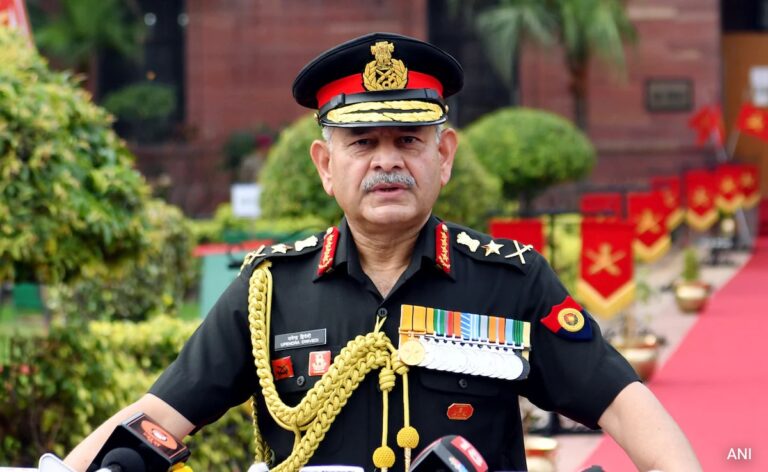
Terror recruitment nearly wiped out in J&K, says Army Chief; active local militants in single digits
VINOD BHAT
NEW DELHI, Jan 13: The security situation along India’s western front and in Jammu and Kashmir remains sensitive but is firmly under control, with terrorism witnessing a sharp decline and local recruitment almost coming to a halt, Army Chief General Upendra Dwivedi said on Monday.
Addressing a press conference in the national capital, the Army Chief said that since May 10 this year, the overall security environment in Jammu and Kashmir has been effectively managed due to strong coordination among the armed forces, intelligence agencies and civil administration. He underlined that sustained vigilance and a unified security approach have significantly weakened the terror ecosystem in the region.
Providing detailed figures, General Dwivedi said that 31 terrorists were killed in Jammu and Kashmir in 2025, and nearly 65 per cent of them were of Pakistani origin, indicating the continued role of cross-border infiltration in fueling terrorism. He also confirmed that the three terrorists involved in the Pahalgam attack were successfully neutralised in a targeted counter-terror operation, codenamed Operation Mahadev.
Highlighting the collapse of local militant networks, the Army Chief said the number of active local terrorists in Jammu and Kashmir has now dropped to single digits. More significantly, terror recruitment has become “almost non-existent,” with only two new cases reported in the entire year so far.
“These are very clear indicators of a positive and irreversible change taking place in Jammu and Kashmir,” General Dwivedi said, adding that the improving security situation has created a conducive environment for development, economic activity and public life to return to normal.
He pointed out that this change is visible on the ground through the revival of tourism, smooth functioning of daily life and the peaceful conduct of major religious events. Referring to the annual Shri Amarnath Yatra, he said the pilgrimage witnessed participation of over four lakh devotees this year, which is higher than the five-year average. “This shows that people from across the country have renewed confidence in the security situation of the region. The transition from terrorism to tourism is gradually becoming a reality,” he said.
The Army Chief also spoke about ongoing military operations and preparedness. He cited Operation Sindoor as a strong example of effective coordination between the three services — the Army, Navy and Air Force — under clear political guidance. “Operation Sindoor demonstrated what tri-service synergy can achieve when there is a clear political directive and full freedom to act and respond,” he said.
He added that the operation is still ongoing and warned that any future attempt to disturb peace will be dealt with firmly. “Any future misadventure will be met with a resolute and appropriate response,” he asserted.
General Dwivedi also acknowledged the collective efforts of various institutions in stabilising Jammu and Kashmir. He said close cooperation between the armed forces, Central Armed Police Forces, intelligence agencies, the state administration and civic bodies has played a crucial role in maintaining peace.
“I must acknowledge the proactive and coordinated role of all stakeholders at the national level, including CAPFs, intelligence agencies, civic bodies, the state administration and ministries such as the Ministry of Home Affairs and Railways,” he said, adding that this multi-layered coordination will continue to be the backbone of the security framework in the region.
The Army Chief concluded by saying that sustained vigilance, strong inter-agency coordination and public support would remain vital to ensuring lasting peace and stability in Jammu and Kashmir.
Snowfall likely in Kashmir plains between Jan 18 and 21
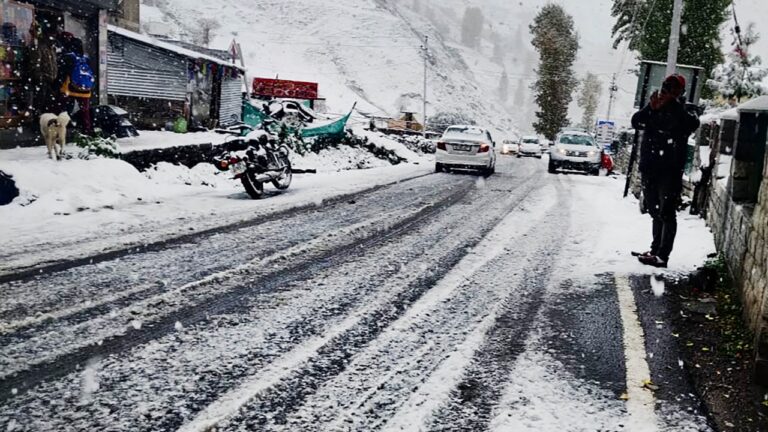
Srinagar, Jan 13: Snowfall is likely to occur in the plains of Kashmir between January 18 and January 21, according to prevailing weather indications, raising the possibility of a fresh winter spell across the Valley.
Officials said the anticipated snowfall period may bring a change in weather conditions, with temperatures expected to drop further during and after the precipitation. While higher reaches routinely receive snow during winter, snowfall in the plains could impact daily life, transport and power supply if the spell turns intense.
The possible snowfall is being closely watched by authorities, particularly in view of its potential impact on road connectivity, including national highways and internal routes. Winter preparedness measures, officials said, remain in place to respond to any weather related disruptions.
Locals and travellers have been advised to stay alert to official weather advisories and plan their movements accordingly during the expected period. [KNT]
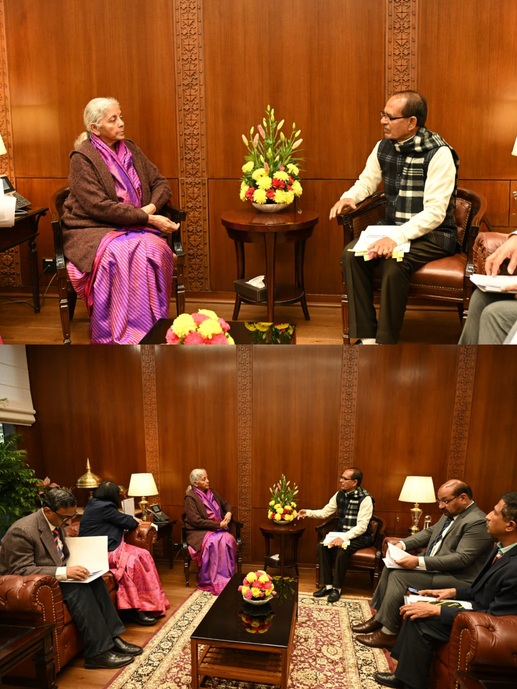
Union Minister Shivraj Singh Chouhan meets Union Finance Minister Nirmala Sitharaman in Delhi
VINOD BHAT
Delhi, JAN 12:
Union Minister of Agriculture and Farmers’ Welfare, and Rural Development, Shri Shivraj Singh met Union Finance Minister Smt. Nirmala Sitharaman in Delhi today. In recent weeks, Shri Chouhan has visited various states across the country and, apart from the states, has also held wide-ranging interactions in Delhi with progressive farmers, agricultural experts, Self-Help Groups, cooperative institutions, rural industries, and senior representatives of national-level institutions related to both the ministries. The ideas and suggestions emerging from these discussions were compiled into a comprehensive set of recommendations on agriculture and rural development, which he submitted to the Finance Minister.
The Union Minister stated that under the leadership of Prime Minister Shri Narendra Modi, the Central Government is continuously working to make rural India self-reliant and prosperous. Shri Shivraj Singh Chouhan said that under the Prime Minister’s capable and visionary leadership, the upcoming Union Budget will be encouraging for farmers and rural communities. He expressed confidence that the Budget for Financial Year 2026–27 will prove to be a milestone in realising the Prime Minister’s resolve of ‘Prosperous Farmers, Empowered Villages’.
J&K Govt Rejigs Panel to Pick JKBOSE, JKSCERT Heads
KD NEWS SERVICE
SRINAGAR, Jan 12: The Jammu and Kashmir government has reconstituted the Search Committee responsible for recommending panels for the appointment of the Chairperson of the Jammu and Kashmir Board of School Education (JKBOSE) and the Director of the Jammu and Kashmir State Council of Educational Research and Training (JKSCERT).
According to Government Order No. 45-JK(GAD) of 2026, issued by the General Administration Department, the newly constituted committee will be chaired by the Administrative Secretary, Planning, Development and Monitoring Department.
The committee will comprise the Administrative Secretaries of the Agriculture Production, General Administration, Higher Education and School Education Departments as its members. In a significant inclusion, the Vice-Chancellors of the University of Jammu and the University of Kashmir have also been nominated as members of the panel.
The government order stated that the fresh reconstitution has been carried out by superseding the earlier order issued in January 2025, signalling a renewed push to fast-track the selection process for the two key education bodies.
The School Education Department will provide secretarial and logistical support to the committee, which has been instructed to submit its recommendations within a stipulated timeframe.
The move is aimed at ensuring a transparent, credible and efficient process for appointing the top leadership of JKBOSE and JKSCERT—two pivotal institutions that shape school education, examinations, and academic standards across Jammu and Kashmir.
Govt Appoints Interim Chairman JKBOSE, Assigns Additional Charge in JKSCERT
KD NEWS SERVICE
JAMMU, Jan 12: In an administrative move aimed at streamlining the functioning of key education bodies, the Jammu and Kashmir government on Monday issued two separate orders assigning additional charges to senior officers to head the Union Territory’s premier school education institutions.
As per Government Order No. 44-JK(GAD) of 2026, Mr. Naseem Javaid Chowdhary, JKAS, who is currently serving as Director, School Education, Jammu, has been entrusted with the additional charge of Director, Jammu and Kashmir State Council of Educational Research and Training (JKSCERT). He will hold this charge in addition to his own duties until further orders, the General Administration Department (GAD) stated.
The order, issued in the “interest of administration”, is aimed at ensuring smooth functioning of JKSCERT, the apex academic body responsible for curriculum development, teacher training and academic reforms in the school education sector of Jammu and Kashmir.
In another important notification issued the same day, the government appointed Mr. Ghulam Hassan Sheikh, JKAS, presently Secretary, J&K Board of School Education (JKBOSE), to also function as the Chairman of JKBOSE on an interim basis. The appointment was made under S.O. 08, in exercise of the powers conferred by Section 12 of the Jammu and Kashmir Board of School Education Act, 1975.
The notification clarified that Mr. Sheikh will discharge the functions of Chairman in addition to his own duties as Secretary, as an interim arrangement till further orders.
The twin appointments effectively place the two most important institutions governing school education in Jammu and Kashmir—JKBOSE, which conducts examinations and certifies students, and JKSCERT, which frames academic and pedagogical policies—under the leadership of senior serving officers, ensuring administrative continuity at a time when the sector is undergoing major reforms.
Both orders were issued by the General Administration Department and signed by M. Raju, IAS, Commissioner/Secretary to the Government, and copies have been circulated to all key constitutional, administrative and security authorities, including the Chief Minister’s Office, Lieutenant Governor’s Secretariat, Chief Electoral Officer, and the Ministry of Home Affairs.
The move is being seen as part of the government’s effort to bring stability, efficiency and accountability in the school education system, which has been facing challenges ranging from curriculum updates to examination reforms and institutional coordination.
With these interim arrangements now in place, all eyes will be on how JKBOSE and JKSCERT perform under their new leadership in the coming months, especially as the Union Territory prepares for academic restructuring and improved learning outcomes across Jammu and Kashmir.
Forest fire triggers landmine blasts along LoC in Poonch
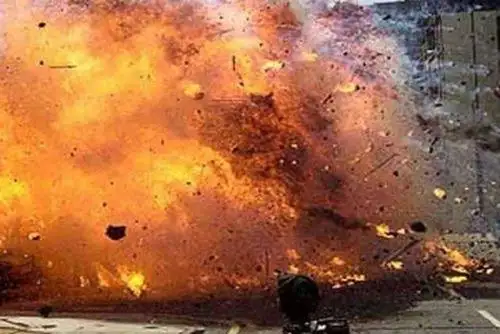
JAMMU — A forest fire on Monday detonated multiple landmines along the Line of Control (LoC) in Poonch district of Jammu and Kashmir, officials said.
They said there is no report of any casualty in the blasts and efforts are on to douse the flames.
The fire broke out in the Basooni forward area in Balakote sector around 1.50 pm, causing five landmines to explode, the officials said.
The forward areas along the LoC are dotted with landmines as part of an anti-infiltration obstacle system to prevent terrorists from intruding into Indian territory from across the border.
According to the officials, the Army has intensified vigil as the fire is still raging. — (PTI)
Recognising the Backbone of Grassroots Healthcare

A Just Demand of ASHA and Anganwadi Workers
In the vast and often challenging terrain of Jammu and Kashmir, where healthcare access remains uneven and social vulnerabilities run deep, two groups of women silently carry the weight of public health and child welfare on their shoulders — Anganwadi workers and Accredited Social Health Activists (ASHAs). These frontline warriors, largely drawn from local communities, are the true pillars of the government’s health and nutrition delivery system. Yet, despite their indispensable contribution, they continue to suffer from neglect, insecurity and painfully inadequate wages.
From remote hamlets in Kupwara to the far-flung villages of Doda, from flood-prone belts of South Kashmir to snow-bound areas of Gurez, ASHA and Anganwadi workers walk miles daily, often in harsh weather, to ensure pregnant women receive antenatal care, children get vaccinated, malnutrition is detected early, and families are educated about hygiene, nutrition and disease prevention. They serve as health educators, counsellors, surveyors, vaccinators, nutrition facilitators and emergency responders — all rolled into one. Without them, the public health machinery of Jammu and Kashmir would simply collapse at the grassroots.
Yet, ironically, these workers are still treated as “volunteers” rather than full-fledged employees. Most Anganwadi and ASHA workers receive honorariums that are far below even the minimum wage standards, making it extremely difficult for them to sustain their families in today’s inflationary economy. Many of them have devoted 10, 15 or even 20 years of their lives to this service, but remain without job security, pension benefits, health insurance or regular salary increments. This is not just unjust — it is morally indefensible.
The COVID-19 pandemic exposed, more than ever before, how critical these workers are. When fear and uncertainty gripped society, ASHA and Anganwadi workers continued going door to door, tracking infections, arranging testing, monitoring quarantines, distributing medicines and ensuring vaccination. They put their own lives at risk to protect the public, often without adequate protective gear or compensation. If such sacrifice does not deserve regularisation and dignified wages, what does?
Jammu and Kashmir has its own unique challenges — difficult geography, scattered populations, limited health infrastructure and a history of disruptions. In such conditions, local community-based workers become even more crucial. ASHA and Anganwadi workers are not outsiders; they understand local dialects, customs and sensitivities, allowing them to effectively communicate with families who might otherwise mistrust formal institutions. This social capital cannot be bought or replaced, yet it continues to be undervalued.
The government of Jammu and Kashmir must now move beyond token acknowledgements and symbolic praise. What is urgently needed is a comprehensive policy to enhance wages and ensure regularisation of these workers. They should be brought under a proper service structure with fixed monthly salaries, retirement benefits, medical coverage and timely payments. Their honorarium must be revised to reflect their workload, responsibilities and years of service.
Other states in India have taken steps to improve the status and pay of Anganwadi and ASHA workers. Jammu and Kashmir cannot afford to lag behind when it comes to protecting the rights of those who safeguard its mothers and children. A government that claims to prioritise healthcare and social welfare must begin by securing the welfare of those who deliver these services on the ground.
Investing in Anganwadi and ASHA workers is not a financial burden — it is a long-term investment in public health, nutrition, women empowerment and human development. When these workers are paid fairly and treated with dignity, they become more motivated, more efficient and more committed, ultimately improving outcomes for the entire society.
The demand for wage enhancement and regularisation is not a demand for charity. It is a demand for justice. It is time the government of Jammu and Kashmir recognises these women not as expendable volunteers but as permanent partners in development. Their tireless service has strengthened the very foundation of our healthcare system. Now, it is the government’s turn to stand by them.
J&K Assembly’s Budget Session to Begin on February 2
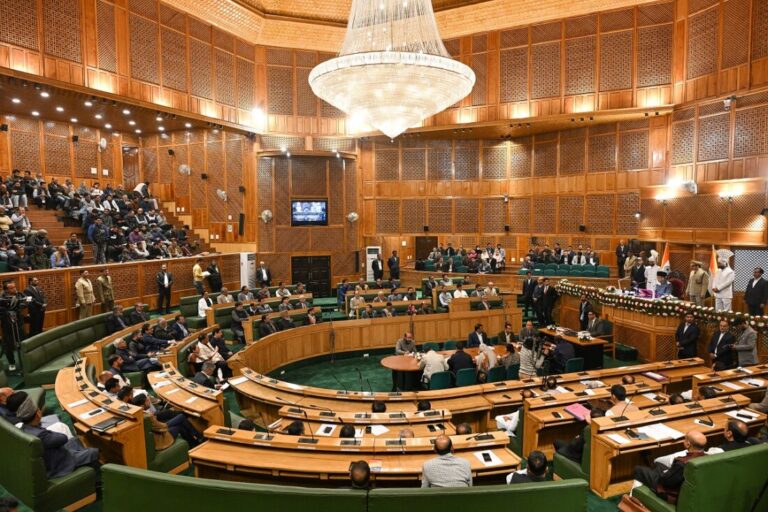
Budget on Feb 6; Grants and Bills Lined Up Till April 4
FIRDOUS AHMAD
SRINAGAR, Jan 12: The Jammu and Kashmir Legislative Assembly will begin its fifth session on February 2, 2026, marking the start of an important Budget Session that will continue in different phases until April 4. As per the provisional calendar issued by the Legislative Assembly Secretariat, the session will open with the Lieutenant Governor’s address to the House, a key constitutional formality that outlines the government’s broad policy direction for the year ahead.
The address will be followed by three days of debate on the Motion of Thanks, beginning on February 3 and concluding on February 5, when the government will reply to the issues raised by members. These discussions are expected to set the political tone for the session, with legislators likely to raise concerns relating to governance, development, public services and the overall political situation in the Union Territory.
The most awaited event of the session, the presentation of the Budget, is scheduled for February 6. On this day, the government will place before the House the Annual Financial Statement of Expenditure for 2026–27 along with the Supplementary Statement of Expenditure for 2025–26. The Budget will provide a comprehensive picture of the government’s fiscal strategy, including its priorities for development, welfare spending and infrastructure at a time when economic revival and employment generation remain key public concerns.
Following the presentation of the Budget, the Assembly will take up a general discussion on the financial proposals from February 7, with further deliberations on February 9 and February 10, when the government will give its formal reply. These debates traditionally see intense exchanges between the treasury benches and the opposition, as members scrutinise the government’s spending plans and highlight the needs of their respective constituencies.
The House will then move to the detailed examination of departmental allocations through Demands for Grants from February 11 to February 13. After an off day on February 14 and a holiday on February 15, the process will resume from February 16 and continue until February 19. This stage is crucial as it determines how funds are distributed across departments such as health, education, public works, agriculture and social welfare, effectively shaping the delivery of government services for the coming year.
After a short break, the Assembly will reconvene in the last week of March to complete the financial business. On March 27, Appropriation Bills will be taken up, a mandatory step that gives legal backing to government expenditure. The following day, March 28, has been reserved for government business, while March 29 will be a holiday.
The session will also provide space for private members to raise legislative and policy issues. Private Members’ Bills are scheduled for March 30 and April 1, while Private Members’ Resolutions will be taken up on March 31 and April 2. April 3 has been declared a holiday on account of Good Friday, and the session will conclude with government business on April 4.
The provisional calendar has been issued by Speaker Abdul Rahim Rather and circulated to all members of the Legislative Assembly and senior officials. With the Budget, voting on departmental grants and several legislative days earmarked for both government and private members’ business, the forthcoming session is expected to be a defining one for Jammu and Kashmir, laying down the financial and legislative roadmap for the Union Territory in 2026–27.