spot_imgspot_img
spot_img
Home Blog Page 26

Operation Sindoor reflected India’s resolve against terrorism: PM Modi

0

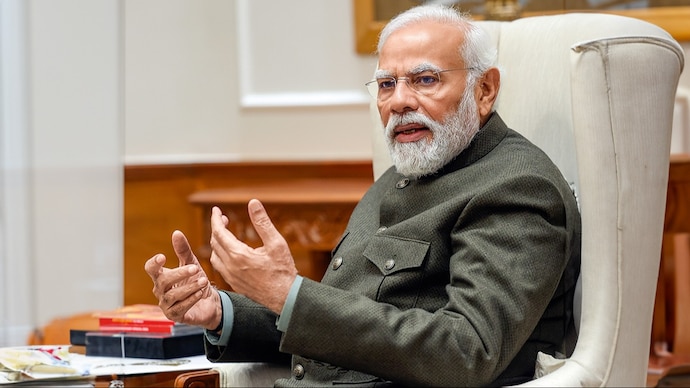
New Delhi, May 7: Prime Minister Narendra Modi on Thursday said Operation Sindoor reflected India’s firm response against terrorism and reaffirmed the country’s commitment to safeguarding national security.

Marking the anniversary of the operation, Modi said the armed forces had displayed “unparalleled courage, precision and resolve” and gave a “fitting response” to those who attacked innocent Indians in Pahalgam.

“A year ago, our armed forces displayed unparalleled courage, precision and resolve during Operation Sindoor. They gave a fitting response to those who dared to attack innocent Indians at Pahalgam. The entire nation salutes our forces for their valour,” the prime minister said in a post on X.

Modi said the operation highlighted the professionalism, preparedness and coordinated strength of the armed forces.
He said it also showcased growing jointness among the services and demonstrated the benefits of India’s push for self-reliance in the defence sector.

“At the same time, it showcased the growing jointness among our forces and underlined the strength that India’s quest for self-reliance in the defence sector has brought to our national security,” he said.

The prime minister said India remained steadfast in its resolve to defeat terrorism and dismantle the ecosystem supporting it.
“Today, a year later, we remain as steadfast as ever in our resolve to defeat terrorism and destroy its enabling ecosystem,” Modi added.

“Operation Sindoor Showed Unmatched Precision, Jointness of Armed Forces”: Rajnath Singh

0

Defence Minister Pays Tribute to Armed Forces on Operation Sindoor Anniversary; Says Operation Reflected National Resolve, Military Preparedness and India’s Growing Self-Reliance

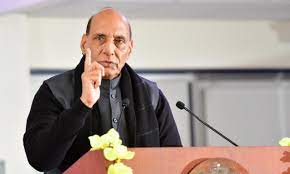
Srinagar, May 7: Defence Minister Rajnath Singh on Thursday paid tribute to the Indian Armed Forces on the anniversary of Operation Sindoor, praising their courage, sacrifices and coordinated military strength displayed during the operation.

In a post on X along with a video message, as per news agency JKNS, Singh wrote, “On the anniversary of Operation Sindoor, we salute the valour and sacrifices of our armed forces, whose courage and dedication continue to safeguard the nation.”

He said the actions carried out during the operation reflected “unmatched precision, seamless jointness and deep synergy across services,” which, according to him, set a benchmark for modern military operations.

The Defence Minister said Operation Sindoor stands as a strong symbol of national resolve and preparedness, demonstrating that the Indian Armed Forces are always ready to act decisively whenever required.

Singh further stated that the operation also reflects India’s steady progress towards achieving “Atmanirbharta” in the defence sector, enhancing operational capability while strengthening national resilience.

“It also stands testament to India’s steady advance towards achieving #Atmanirbharta, enhancing capability while reinforcing resilience,” he wrote.

Zero Miles Drives Into Shopian With 9th Outlet, Eyes Valley-Wide Expansion

0

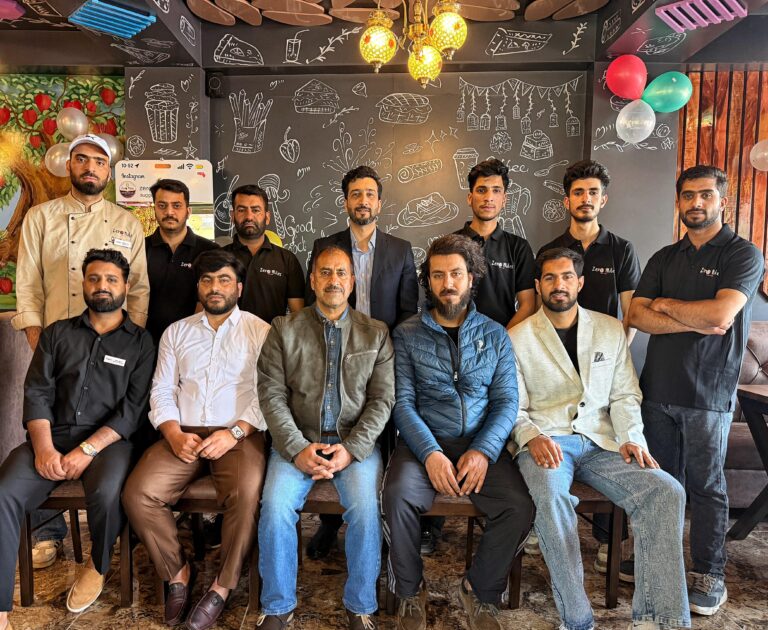
SRINAGAR, MAY 6 : Zero Miles – Grill & Cafe, one of Kashmir’s fastest-rising food and hospitality chains, on Wednesday launched its ninth outlet in Shopian district, marking a significant push into south Kashmir’s commercial hub.

The new franchise is located on the first floor of Alai Kocha, opposite Jamia Masjid in the main market. The outlet will be operated by local franchise partners Syed Saqib Yousuf and Gazenfar Bashir, signalling the brand’s deepening bet on local entrepreneurship.

Inaugurating the facility, Zero Miles founder and CEO Jibran Khan, accompanied by co-founder Javid Ahmad Mahroo, underlined the brand’s twin focus on quality control and community hiring.

“Each new outlet is a step forward in our journey of growth and trust. Shopian holds great potential, and we are confident this outlet will become a preferred destination for food lovers,” Javid Mahroo told the gathering.

Jibran Khan, addressing franchise partners and customers, reiterated the brand’s commitment to consistency, innovation, and generating local employment — a recurring promise as Zero Miles competes with both national fast-food chains and traditional street vendors in a price-sensitive market.

The Shopian franchise is expected to generate direct and indirect employment for local youth, a metric the founders said would be tracked closely. “Every outlet must earn its place — not just in revenue, but in how it serves the community,” Jibran Khan added.

With nine outlets now operational across the valley, Zero Miles — known for its grill platters, cafe-style beverages, and quick-service model — is positioning itself as a homegrown alternative to larger franchises, banking on hyperlocal tastes and community trust.

Shri Shashi Shekhar Vempati Appointed as Chairperson of Central Board of Film Certification (CBFC)

0

Vinod Bhat

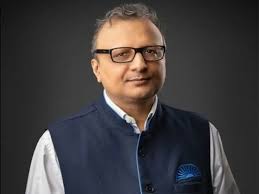
New Delhi: The Government of India, through a notification issued by the Ministry of Information and Broadcasting dated May 6, 2026, has appointed Shri Shashi Shekhar Vempati as the Chairperson of the Central Board of Film Certification (CBFC). He shall hold office for a period of three years from the date of joining.

Consequent upon the elevation of Shri Prasoon Joshi as Chairman of Prasar Bharati, he has stepped down from the position of Chairperson, Central Board of Film Certification (CBFC), leading to the present appointment.

Shri Shashi Shekhar Vempati brings with him extensive experience in media, broadcasting, and public communication. His appointment is expected to further strengthen the functioning of the CBFC.

WAVES Doc Bazaar 2026 to Introduce Immersive Market for Next-Gen Storytelling

0

Vinod Bhat

Mumbai: The 2nd edition of WAVES Doc Bazaar will return from June 16 to 18, 2026, alongside the 19th Mumbai International Film Festival (MIFF), at the NFDC Complex, Mumbai.

WAVES Doc Bazaar is a premier one-stop platform designed to nurture and accelerate the journey of documentary, animation and short filmmakers by creating opportunities for collaboration, mentorship, market access and global visibility. Returning with its second edition, the platform aims to bring together established professionals and emerging talent from across the audiovisual industry. Further, the Bazaar will serve as a vibrant hub for creators, producers, distributors, broadcasters, funders and technology partners, supporting various stages of production and distribution while empowering exceptional storytelling and helping filmmakers reach global audiences. Participants will gain valuable insights into current industry trends, market demands, distribution strategies and audience preferences through direct engagement with experts and experienced practitioners.

Among the key segments of WAVES Doc Bazaar is the Viewing Room (VR), where documentary, short and animation films that are recently completed or in post-production will be showcased to a curated audience of registered delegates. Designed as a secure platform accessible only to selected buyers, programmers, distributors and investors, it offers filmmakers opportunities to secure distribution deals, connect with co-producers and world sales agents, explore film festival prospects, and access finishing funds. Through a specially designed system, buyers can browse films based on language, duration, stage of completion and other details, while selected titles will also be featured in the Viewing Room catalogue to be shared with all registered delegates and made available online ahead of the event.

The Work-In-Progress Lab (WIP) is specially designed for documentary and animation films in the rough-cut stage. Conducted in a closed-door setting, the lab enables selected participants to receive valuable feedback, guidance and mentorship from experienced filmmakers, editors and international mentors, helping them refine their projects for wider audiences.

Immersive Market to Premiere at WAVES Doc Bazaar with Focus on VR, AR and XR

For the first time, WAVES Doc Bazaar will also introduce the Immersive Market, a dedicated platform for immersive content creators, producers and technology partners. Focused on VR, AR, XR and interactive experiences, the market will provide a space to showcase innovative projects, explore new storytelling formats and foster meaningful collaborations.

With its dynamic programming and industry-focused initiatives, WAVES Doc Bazaar stands poised to strengthen the ecosystem for documentaries, animation and short films, while opening new pathways for creative excellence and international outreach.

Entries Open for Viewing Room and WIP Lab at WAVES Doc Bazaar 2026

Entries are now open for the Viewing Room and Work-in-Progress (WIP) Lab at WAVES Doc Bazaar 2026, a global platform that connects documentary and animation filmmakers with leading industry professionals. Interested participants may submit their applications until May 15, 2026, by 11:59 PM IST.

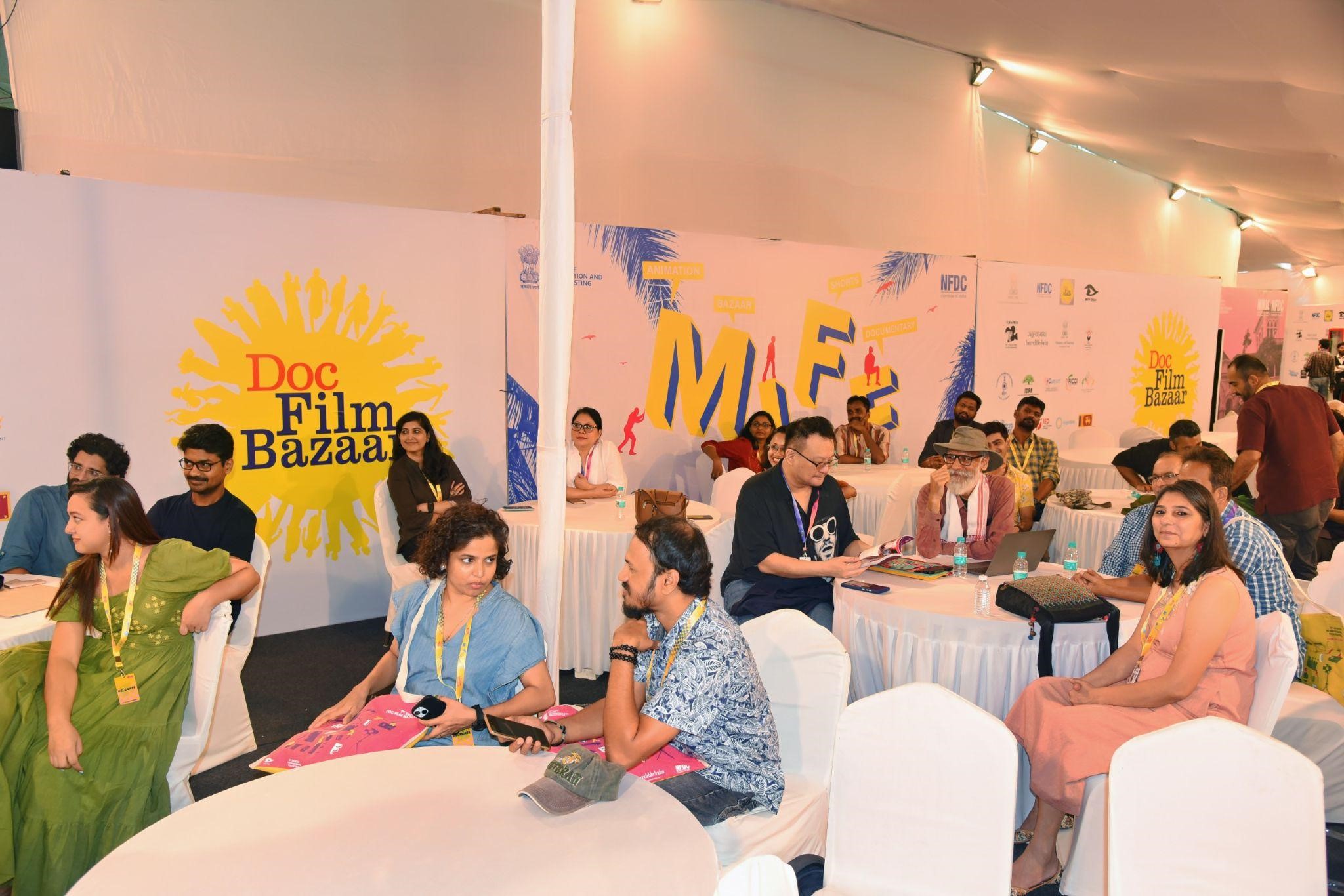
PIB File Photos of the inaugural edition of Doc Film Bazaar held in 2024.

Eligibility
The program is open to documentary and animation films from across the globe. Short, mid-length, and feature-length films are eligible to be showcased in the WAVES Doc Bazaar 2026. Films must be completed or in post-production, with most of the shooting already finished. Projects in development or pre-production are not eligible. Filmmakers with projects seeking festivals, sales, distribution, or finishing funds are especially encouraged to apply. Films with limited or no international exposure are welcome.

Submission Process

In the first stage, applicants must submit a password protected screener link of the full film or a rough cut for review. If selected, filmmakers must submit at least 10 minutes of footage for the Viewing Room. Submitting the full film is strongly encouraged. Final files will be securely uploaded and made accessible only to authorized participants.

Filmmakers are invited to take advantage of this opportunity to showcase their work on an international stage and connect with key decision-makers in the documentary and animation industry.

India Boosts R&D Push with PSA–FICCI MoU to Bridge Industry-Academia Gap

0

Vinod Bhat

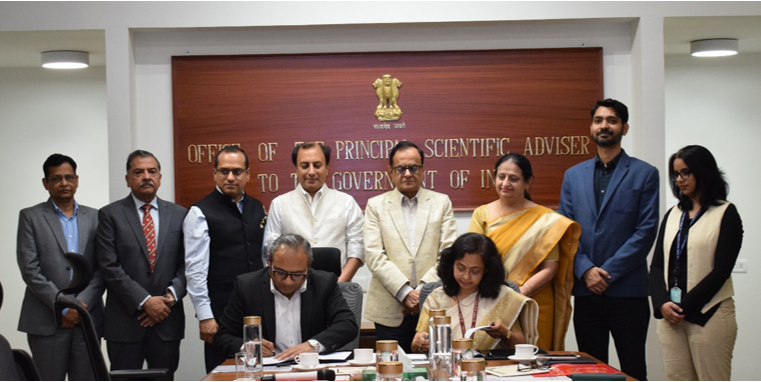
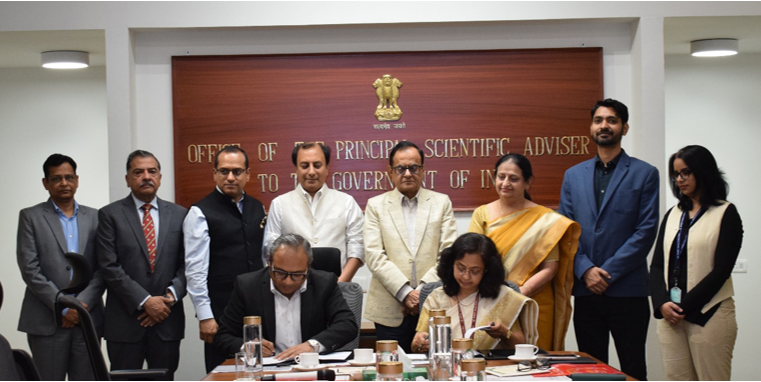
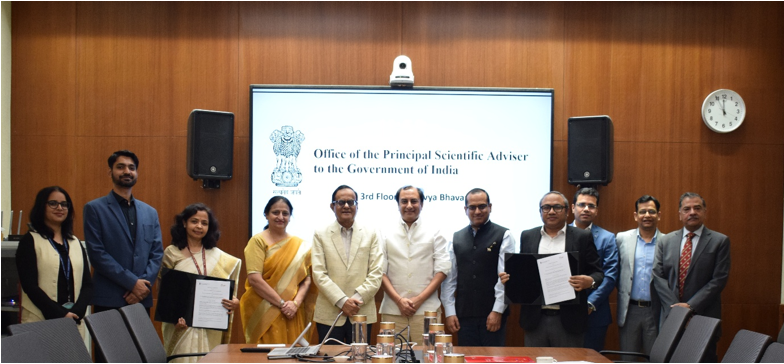
New Delhi: The Office of the Principal Scientific Adviser to the Government of India signed a Memorandum of Understanding with Federation of Indian Chambers of Commerce and Industry (FICCI) on 6 May 2026 at Kartavya Bhavan, New Delhi. The partnership aims to foster a robust ecosystem for R&D by bridging the gap between industry, academia, and research institutions; promote research, its translation, and commercialization; foster strategic partnerships, and support policy dialogue.

In his opening remarks, Mr. Puneet Dalmia, Vice President, FICCI & Managing Director, Dalmia Bharat Group emphasised on how this MoU will act as a mindset shift with a focus on transiting from academia to applications, silos to systems and translational to transformational; thereby, leapfrogging across sectors. India should be a co-creator of solutions globally, with the solutions being outcome driven and having a measurable impact.

In her remarks, Dr (Mrs.) Parvinder Maini, Scientific Secretary, Office of PSA spoke about the consistent efforts of the government and the Office of PSA towards having a sustained R&D ecosystem through its schemes such as Anusandhan National Research Foundation (ANRF), Research, Development, and Innovation (RDI) Fund, and the recently announced Fund of Funds. She emphasised the need to bring industries together and involve MSMEs, leading to improved contribution of industries in R&D. These efforts will eventually reflect in the Gross Expenditure on Research and Development (GERD).

This was followed by remarks from Mr Shaurya Doval, Director, Sangam Foundation who highlighted the need for international participation in R&D and strengthening scalability and resilience of indigenous products and services such as in energy dependency.

In his remarks, Prof. Ajay Kumar Sood, Principal Scientific Adviser to the Government of India highlighted the need for technology diffusion to generate new ideas, products, or processes across sectors. There is also a need to scale high tech priority areas such as solar energy and green batteries. As the government enabled RDI fund supports industries and startups, therefore, this is a unique opportunity for industries to carry out deep tech R&D. This MoU between O/o PSA and FICCI will bring structured engagement, enabling industry–academia linkages and connecting all stakeholders across India’s R&D ecosystem to deliver tangible results.

Mr Anant Swarup, Secretary General, FICCI, in his closing remarks, spoke on navigating through challenges of commercialization and scalability and focusing on agility of organisations. Mr. Alok Sriram, Senior Managing Director, DCM Sriram and Mr. Agam Khare, Founder & CEO, Absolute highlighted the commitment of industrial R&D in diverse sectors including energy solutions, pharma sector and agricultural biotechnology.

This was followed by the signing and exchange of MoU which indicated a collaboration that will aim to foster an enabling ecosystem for Research and Development. It was signed by Dr Preeti Banzal, Scientist-G/Adviser on behalf of Office of PSA and Shri Sumeet Gupta, Deputy Secretary General on behalf of FICCI.

The ceremony was also joined by Mr. Anoop AN, Dalmia Bharat Group; Dr Barada Prasad, Director & Head / R&D and Innovation / Startup; Mr. Amit Mishra, Deputy Director; Ms. Divya Chhabra, Senior Assistant Director from FICCI; and Dr Divya Vashisth, OSD, OPSA.

Reform Linked MoUs signed with Mizoram and Ladakh under Jal Jeevan Mission 2.0

0

New Delhi: Continuing the nationwide rollout of reform linked implementation under Jal Jeevan Mission 2.0; Mizoram and Ladakh signed MoUs with the Union Government today, committing to a structured reform framework for sustainable, transparent and community-led rural drinking water service delivery.

The reform‑linked MoU mandates a Gram Panchayat‑led, service‑based and community‑centred model of rural water governance, aligned with the objectives of Jal Jeevan Mission 2.0.

The reform‑linked MoU seeks to ensure that every rural household has access to drinking water supply in adequate quantity and of prescribed quality on a regular basis, through strengthened community participation (Jan Bhagidari) and bringing in structural reforms for sustainable operation and maintenance of rural water supply systems, thereby enhancing the living standards of rural communities contributing to long‑term water security aligned with the national vision of Viksit Bharat @2047.

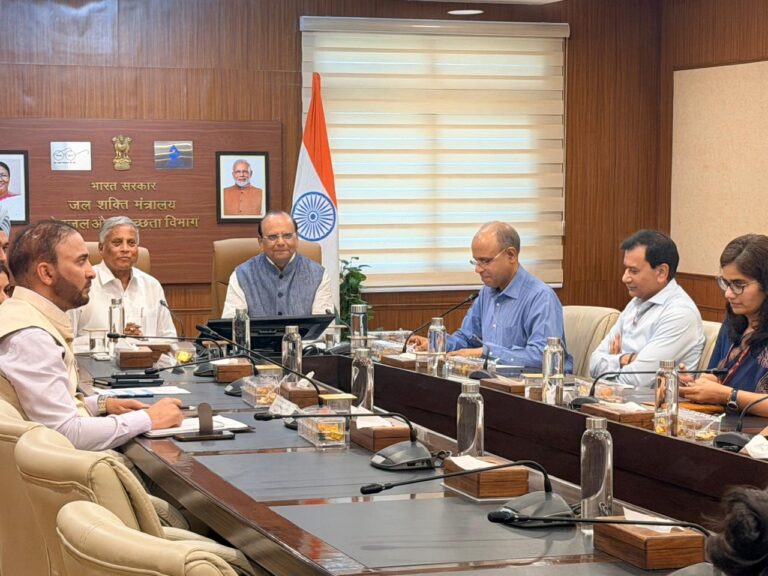
The MoUs were signed in the virtual presence of the Union Minister of Jal Shakti, Shri C. R. Patil. Minister of State for Jal Shakti Shri V. Somanna was also present during the MoU signing at the DDWS office.

Senior officials from the Department of Drinking Water and Sanitation (DDWS), including Shri Ashok K. K. Meena, Secretary, DDWS, Shri Kamal Kishore Soan, Additional Secretary & Mission Director, National Jal Jeevan Mission (NJJM) were also present during the MoU signing.

The MoU with Mizoram signed in the presence of the Chief Minister of Mizoram, Shri Lalduhoma who joined the event virtually along with senior officials from the state.

The MoU was signed and exchanged between Smt. Swati Meena Naik, Joint Secretary (Water), DDWS, and Smt. Zodingpuii- Secretary PHED, Government of Mizoram & MD JJM, Mizoram.

Marking a key step in Centre-UT collaboration, the MoU with Ladakh was formally signed on the presence of Lieutenant Governor of Ladakh, Shri Vinai Kumar Saxena; Smt. Shashanka Ala, IAS, Secretary, UT, Ladakh; Dr. Mohammad Usman Khan, JKAS, Add. Secretary, PHE/I&FC department, Ladakh and other senior officials from the State.

The MoU was signed and exchanged between Smt. Swati Meena Naik, Joint Secretary (Water), DDWS, and Shri Shurbir Singh, IAS, Commissioner/Secretary, PHE/I&FC Department, UT, Ladakh.

Addressing the gathering, Union Minister of Jal Shakti, Shri C. R. Patil highlighted that the reform-linked MoUs mark a pivotal step in achieving ‘Har Ghar Jal’ for all rural households by 2028. He commended Mizoram’s near-100% reported physical progress under JJM and urged timely reforms in operation, maintenance, and community participation to ensure and claim Har Ghar Jal (HGJ) certified status. The Minister assured full central support, including expedited fund releases, to maintain implementation momentum for the state.

In his address Ladakh, Shri C. R. Patil congratulated Shri Vinai Kumar Saxena for his commendable efforts in ensuring 98.18% FHTC in the UT. He also urged for a rapid execution of the mission as per the JJM 2.0 guidelines to get a 100% HGJ certified UT.

He also stated that JJM 2.0, under the leadership of Prime Minister Shri Narendra Modi, focuses on accountability, water quality, and long-term sustainability. In order to fulfill this, he urged the officials to conduct District Water and Sanitation Mission (DWSM) meetings on timely basis and adhere to the MoU. He also urged both Mizoram and Ladakh to prioritize Jal Sanchay Jan Bhagidari through convergence with schemes like MGNREGA to ensure the long-term viability of the water supply systems.

Shri Patil informed that in September 2025, the Secretary of the Department of Drinking Water and Sanitation (DDWS) wrote a D.O. letter to the Secretary of the Ministry of Home Affairs (MHA) regarding issues related to Operation & Maintenance (O&M) in the Union Territories. In this regard he requested Lieutenant Governor of Ladakh to coordinate with MHA and work for O&M.

He also mentioned the suggestions given by the Additional Secretary & Mission Director (AS&MD), NJJM after discussion with the Chief Secretary of Ladakh during his visit to the UT in September 2025 and asked to take actions in this regard.

Chief Minister of Mizoram, Shri Lalduhawma, in his address termed the MoU a potential game changer for the State and highlighted Mizoram’s strong performance under JJM. He informed that 1,33,060 rural households in the State have been provided with FHTCs, with 99% physical progress achieved across sanctioned schemes. He further noted that all rural schools and Anganwadi centers have been covered with tap water supply.

The Chief Minister also highlighted the State’s emphasis on water quality, with 28 water testing laboratories established, including NABL-accredited facilities. He underlined the role of community participation through constitution of VWSCs in all villages and the formation of district technical teams to ensure sustainability of water supply systems. He also mentioned that the state has planned Comprehensive Implementation and Reform Plan (CIRP) and will be uploading it on Jal Jeevan Mission-Integrated Management Information System (JJM-IMIS).

While appreciating the continued support of the Union Government, he emphasised the importance of timely financial support for sustaining implementation momentum and reaffirmed the State government’s commitment to successful execution of the mission.

In his address, the Lieutenant Governor of Ladakh, Shri Vinai Kumar Saxena highlighted the significance of Jal Jeevan Mission in ensuring access to safe drinking water in the challenging terrain of Ladakh. He termed the signing of MoU as a historic occasion.

He pointed out that substantial progress has been achieved, with works completed in a significant number of villages, and emphasized that JJM is translating the vision of providing tap water to every household into reality. He highlighted the unique feature of JJM as it has community-led verification, wherein local villagers certify the functionality and delivery of water supply systems, thereby ensuring accountability and effectiveness on the ground. Aligning to the mission’s key points, Shri Saxena expressed confidence that the reform-linked framework will further strengthen implementation and assured full cooperation of the UT administration in achieving the objectives of Jal Jeevan Mission.

In his opening remarks, Shri Ashok K. K. Meena, Secretary, DDWS underscored that the MoU prioritises not just infrastructure setup of pipelines, but sustainable services managed at the grassroots level. He emphasised on decentralization and community ownership, with Gram Panchayats and Village Water & Sanitation Committees (VWSCs) being empowered to manage and operate in-village water supply systems. While stating the importance of the MoU signing with the state and UT, Shri Meena highlighted that the MoU is a shared commitment between the State/UT which ensures the upholding of JJM 2.0 guidelines in order to provide safe, secure and sustainable drinking water to the rural households. He also mentioned that this step is an initiative which aligns with the fulfillment of Prime Minister Shri Narendra Modi’s Har Ghar Jal vision.
IIMC releases special issue of ‘Sanchar Madhyam’ marking 200 years of Hindi journalism

0

Vinod Bhat

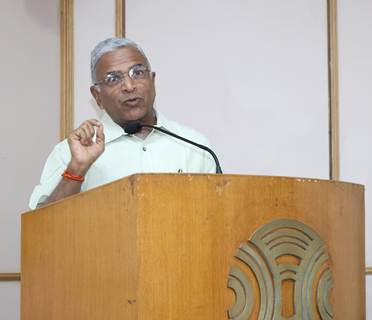
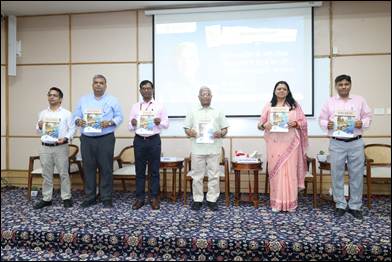
New Delhi: Shri Harivansh, Hon’ble Deputy Chairman of the Rajya Sabha, on 5th May addressed the gathering at the release of a special commemorative issue of ‘Sanchar Madhyam’, the flagship research journal of the Indian Institute of Mass Communication (IIMC), marking the 200-year journey of Hindi journalism in India. The event was graced by the presence of Vice Chancellor of IIMC, Dr. Pragya Paliwal Gaur and Joint Secretary, Ministry of Information & Broadcasting, Dr. K.K. Nirala.

Highlighting the rich legacy and evolving role of Hindi journalism in nation-building Shri Harivansh  said that In an era marked by rapid transformation, the very definition of literate and illiterate has evolved beyond the traditional boundaries of reading and writing. Continuous learning and the ability to adapt to emerging knowledge systems have become indispensable. Technologies that once took centuries to evolve are now transforming within years and even months.

Against this backdrop, he urged  individuals especially the young communicators to envision meaningful dreams within this changing landscape and pursue them with unwavering commitment. “Only then,” he noted, “can one leave a lasting imprint, much like the Udant Martand, the first Hindi newspaper published from Calcutta in 1826.”

Highlighting the vision of ‘Viksit Bharat 2047’, Shri Harivansh emphasised the critical role of communication, research, and innovation in shaping India’s future. He described the present as a “skill-driven era,” where the acquisition and application of skills have the power to transform lives. Stressing the centrality of economic transformation, he observed that it often sets the trajectory for broader societal change. In this regard, he pointed to India’s recent strides in infrastructure development, including high-speed rail, modern ports, and other key sectors.

He mentioned that in this age of information revolution, shaping both personal and national futures requires innovation and the courage to move beyond conventional paths. Shri Harivansh added that journalism must ensure that even the smallest pieces of information reach the masses, enabling informed public discourse and consensus on issues of national importance. He emphasized that communicators must fully recognise their responsibility towards the nation.

Vice Chancellor of IIMC Dr. Pragya Paliwal Gaur noted that the special issue of ‘Sanchar Madhyam’ brings together contributions from leading academics and media professionals, reflecting on key milestones in the evolution of Hindi journalism over the past two centuries. She added that while the journal consistently tracks emerging trends in journalism, it also plays a vital role in revisiting the elements of India’s rich knowledge traditions within a contemporary framework.

Cabinet approves “Mission for Cotton Productivity” with Rs.5659.22 crore Outlay for Self-Sufficiency in Cotton and Competitiveness in Global Textile Markets by 2030-31

0

Vinod Bhat

New Delhi: The Union Cabinet chaired by the Prime Minister Shri Narendra Modi has approved Rs.5659.22 crore for Mission for Cotton Productivity (2026–27 to 2030–31) to address bottlenecks, declining growth, and quality concerns in India’s cotton sector.

The mission aligns with the 5F vision (Farm to Fibre to Factory to Fashion to Foreign) of Government of India. The Mission focuses on enhancing cotton productivity through development of High yielding variety (HYV) seeds resistant to disease and pests, scaling up of existing and latest crop production technologies through states governments, Krishi Vigyan Kendras, and State Agricultural Universities (SAUs) through large-scale promotion and adoption of latest crop production technologies, ensures least contaminant cotton supply to industry, and promote high-quality cotton exports with focus on the following major aspects:

  • Development of High-yielding, climate resilient, pest-resistant seeds, and other production/protection technologies
  • Upscaling improved cotton production technologies like High Density Planting System (HDPS), Closer Spacing (CS), Integrated Cotton Management, and promotion of Extra Long Staple (ELS) Cotton
  • Augmenting quality of cotton through capacity building and promoting modernization of ginning and processing factories, including adoption of best processing practices.
  • Strengthening cotton testing infrastructure across the country with modern, standardized, and accredited facilities to ensure reliable quality assessment and global benchmarking.
  • Robust branding and traceability initiatives under Kasturi Cotton Bharat to position Indian cotton as a premium, sustainable, and globally trusted product.
  • Empowering farmers through digital integration of market yards (mandis), enabling transparent price discovery, direct market access, and improved realization through e-platforms
  • Promotion of cotton waste recycling and circular economy practices to enhance resource efficiency, reduce environmental footprint, and generate additional value streams for the industry
  • Diversification of India’s fibre base by including natural fibres like flax, ramie, sisal, milkweed, bamboo and banana and advancement of environmentally sustainable textile production and innovations. Its strategic integration and promotion to complement cotton and align India’s textile sector with evolving global demand patterns.

The Mission will be implemented by the Ministry of Agriculture and Farmers Welfare and Ministry of Textiles, involving 10 institutes of Indian Council of Agricultural Research (ICAR), one institute of Council for Scientific and Industrial Research (CSIR), and 10 centres of All India Coordinated Research Project (AICRPs) on Cotton operating in different State Agricultural Universities (SAUs) of major cotton growing states.  Initially, 140 districts will be focussed in 14 States through State Department of Agriculture and ICAR for upscaling the technologies and 2000 ginning/ processing factories. Development of high-yielding climate resistant and pest-resistant seeds, deploy modern farming technologies, farmer training, quality improvement, traceability, and strengthening infrastructure by promoting sustainable fibres and innovation across the cotton value chain.

The Mission envisages to accomplish the production of 498 lakh bales (170 kg lint each) of cotton by enhancing lint productivity from 440 kg/ha to 755 kg/ha by 2031. Approximately 32 lakh farmers will be benefitted leading to self-reliance. Promotion of Kasturi Cotton Bharat for traceability and certification, targeting trash reduction <2% and promotion of natural fibres like flax, ramie, sisal, milkweed, bamboo and banana. This is a milestone in making the country self-reliant in Cotton Sector.

Cabinet approves Fair and Remunerative Price of Rs.365/qtl for Sugarcane Farmers for season 2026-27

0

Vinod Bhat

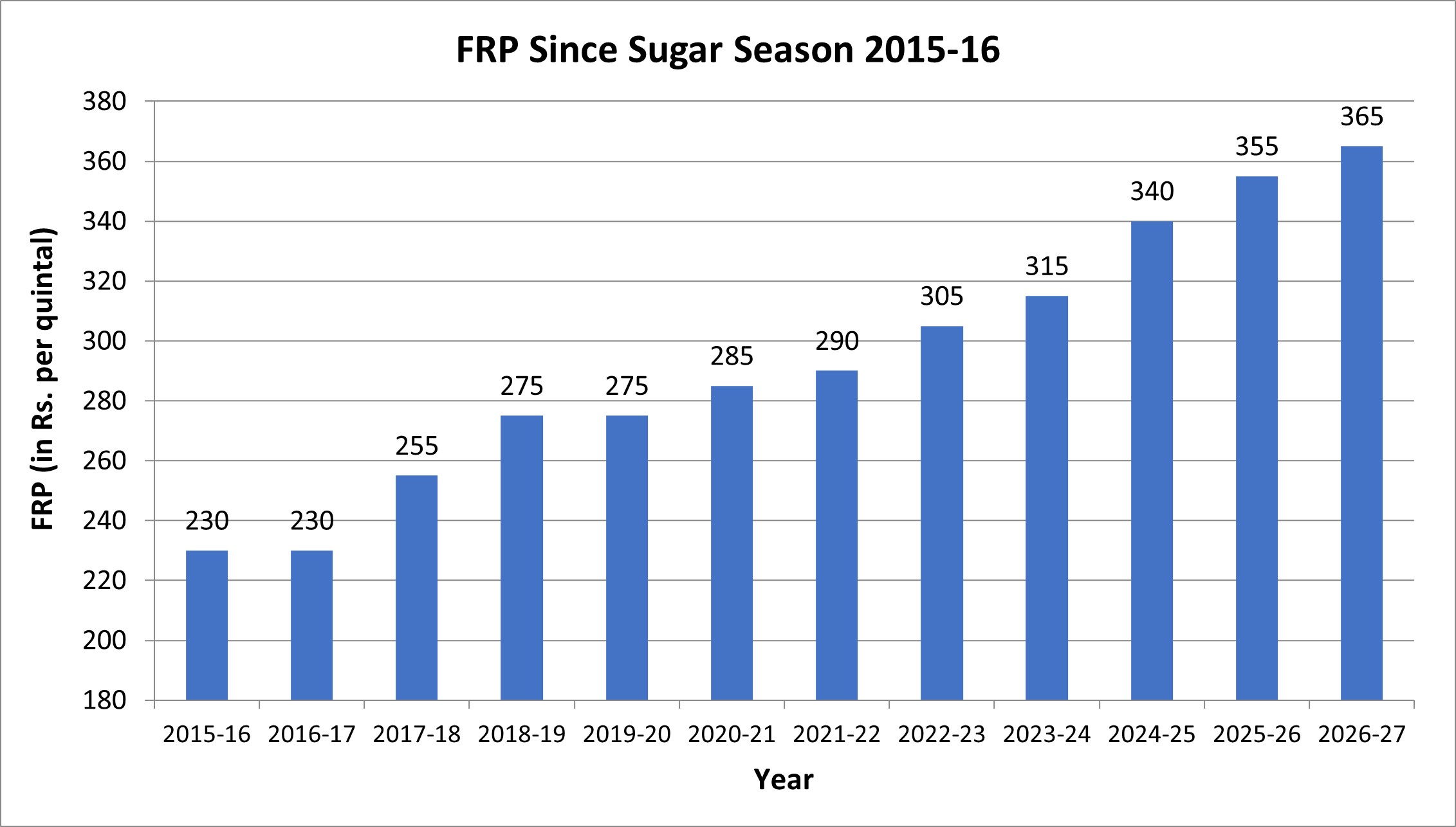
New Delhi: Keeping in view interest of sugarcane farmers (Ganna Kisan), the Cabinet Committee on Economic Affairs chaired by the Prime Minister Shri Narendra Modi has approved Fair and Remunerative Price (FRP) of sugarcane for Sugar Season 2026-27 (October – September) at Rs.365/qtl for a basic recovery rate of 10.25%, providing a premium of Rs.3.56/qtl for each 0.1% increase in recovery over and above 10.25%, & reduction in FRP by Rs.3.56/qtl for each 0.1% decrease in recovery.

The Government with a view to protect interest of sugarcane farmers has also decided that there shall not be any deduction in case of sugar mills where recovery is below 9.5%. Such farmers will get Rs.338.3/qtl for sugarcane in ensuing sugar season 2026-27.

The cost of production (A2 +FL) of sugarcane for the Sugar Season 2026-27 is Rs.182/qtl. This FRP of Rs.365/qtl at a recovery rate of 10.25% is higher by 100.5% over production cost. The FRP for Sugar Season 2026-27 is 2.81% higher than current Sugar Season 2025-26.

The FRP approved shall be applicable for purchase of sugarcane from the farmers in the Sugar Season 2026-27 (starting w.e.f. 1st October, 2026) by sugar mills. The sugar sector is an important agro-based sector that impacts the livelihood of about 5 crore sugarcane farmers and their dependents and around 5 lakh workers directly employed in sugar mills, apart from those employed in various ancillary activities including farm labour and transportation.

Background:

The FRP has been determined on the basis of recommendations of Commission for Agricultural Costs and Prices (CACP) and after consultation with State Governments and other stake-holders.

In the previous Sugar Season 2024-25, out of cane dues payable of Rs.1,02,687 crore about Rs.1,02,209 crore cane dues have been paid to farmers, as on 20.04.2026; thus, about 99.5% cane dues have been cleared. In the current Sugar Season 2025-26, out of cane dues payable of Rs.1,12,740 crore about Rs.99,961 crore cane dues have been paid to farmers, as on 20.04.2026; thus, about 88.6% cane dues have been cleared.