spot_imgspot_img
spot_img
Home Blog Page 51

Silent Epidemic: Landmark Study Finds 44 Million Indian Women Living with PCOS, Kashmir at the Epicentre

0

KD NEWS SERVICE

SRINAGAR, April 18:A silent, insidious health crisis is tightening its grip on millions of women across India, cutting across geography, class, and age. Polycystic Ovary Syndrome (PCOS)—long underdiagnosed and often misunderstood—has now emerged as one of the most pressing public health challenges of the 21st century. A landmark study published in the prestigious Journal of the American Medical Association has revealed that nearly one in five young women in India—19.3 percent—are affected, translating into a staggering 44 million lives shaped by the disorder.
The study, conducted under the Indian Council of Medical Research Task Force and coordinated nationally by Prof. M. Ashraf Ganie, is being hailed as the largest of its kind globally, placing India at the forefront of scientific inquiry into PCOS. Beyond the numbers, it tells a deeper story—of a condition that is as much social and psychological as it is clinical.

Yet, within this national crisis lies a more troubling reality. In Kashmir, the burden is disproportionately heavier.
At the 6th Annual International Conference of the M.P-PCOS Society held at the Sher-i-Kashmir Institute of Medical Sciences, experts sounded an unmistakable alarm: nearly 30 percent of women in the region are affected by PCOS. The Valley, already grappling with a complex health landscape, is now confronting what many described as a “hotspot within a hotspot.”
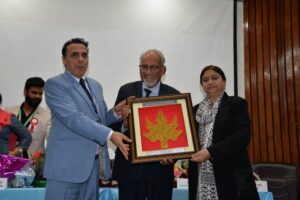
“Such figures are not just statistics—they are a call to conscience,” said Dr. Yoginder Gupta, addressing a gathering of national and international experts. His voice carried both urgency and restraint as he underscored that PCOS can no longer be treated as an isolated medical condition. “It demands a collective, multi-sectoral response—from clinicians, researchers, educators, and policymakers alike.”

What makes PCOS particularly challenging is its multifaceted nature. It is a hormonal disorder, a metabolic condition, and increasingly, a social stigma. Women living with PCOS often navigate a complex web of symptoms—irregular menstrual cycles, infertility, weight gain, and psychological distress—frequently compounded by silence and societal pressure.

Much of the global understanding of this complexity has been shaped by the work emerging from SKIMS. Over the years, Prof. Ganie and his team have built an extensive body of research that goes beyond clinical diagnosis to explore the lived realities of patients. Their work has illuminated how lifestyle, environment, genetics, and cultural perceptions intersect to influence both the prevalence and experience of PCOS.
This depth of research has, in turn, enabled the ICMR to initiate multifactorial studies, expanding the lens from biology to society. The aim is no longer just to treat PCOS—but to understand it in its entirety.

The conference itself reflected this broadened perspective. Over two days, the SKIMS auditorium became a crucible of ideas, bringing together leading voices in endocrinology to deliberate on the rising tide of non-communicable diseases (NCDs)—a category increasingly described as a global epidemic in slow motion.

Among the distinguished speakers was Dr. Manilka Sumanatilleke, Chair-Elect of the International Diabetes Federation (South East Asia Region). She described PCOS as a “neglected crisis” in many parts of the world, where awareness lags far behind prevalence. Reflecting on the scientific sessions, she noted that the insights gained in Srinagar would inform healthcare strategies far beyond India’s borders.

In his presidential address, Prof. Ganie spoke not just as a clinician, but as a custodian of a growing body of knowledge. He highlighted the urgent need for evidence-based policymaking, warning that without systemic intervention, the burden of PCOS—and related metabolic disorders—will continue to rise unchecked. At the same time, he pointed to SKIMS’ expanding academic footprint as a sign that solutions, too, are within reach.
The gathering drew an eminent audience, including Prof. Nilofar Khan, alongside senior faculty, researchers, and students—each contributing to a dialogue that was as inclusive as it was urgent.

International perspectives added further depth. Experts like Dr. Faria Afsana and Dr. Robin Maskey brought insights from Bangladesh and Nepal, underscoring that while the manifestations of PCOS may vary, its impact is universally profound.
As the conference concluded with the recognition of outstanding research through poster and oral presentation awards, there was a palpable sense that the conversations initiated here would ripple far beyond the auditorium walls.

For in the end, this is not merely a story about a medical condition. It is a story about millions of women whose health, aspirations, and identities are shaped by a disorder that too often goes unseen.

And as the data grows clearer and the voices grow louder, one message emerges with undeniable force:

PCOS is no longer a hidden disorder—it is a public health imperative.

CBI Unveils AI Tool ‘Abhay’ to Counter Digital Arrest Scams

0

New chatbot to help citizens verify authenticity of notices; CJI to launch initiative at memorial lecture

New Delhi, Apr 19: In a significant step to combat rising cases of digital arrest frauds, the Central Bureau of Investigation (CBI) is set to introduce an AI-powered chatbot aimed at enabling people to verify the authenticity of notices issued in the agency’s name.

The chatbot named ‘Abhay’ will be formally launched on Monday by Chief Justice of India Surya Kant during the 22nd D P Kohli Memorial Lecture organised by the CBI.

Officials said the chatbot will allow citizens to check whether a notice claiming to be from the CBI is genuine, providing a crucial safeguard against fraudsters who impersonate agency officials. The initiative comes amid increasing instances where scammers use fake notices to intimidate victims under the guise of “digital arrest” and extort large sums of money.

“The AI-powered notice verification chatbot, ABHAY, will allow the public to verify the genuineness of a notice purportedly issued by the CBI. In the context of digital arrest frauds, this provides a much-needed tool for citizens,” a CBI spokesperson said.

The development follows concerns raised over large-scale cyber frauds, with authorities highlighting how criminals have exploited fear tactics by presenting forged documents in non-existent cases.

The Chief Justice of India will also deliver a lecture on “Challenges of Cyber Crime – Role for Police and Judiciary” and confer 24 Medals for Meritorious Service during the event.

Organised annually since 2000, the D P Kohli Memorial Lecture commemorates the founding director of the CBI and serves as a platform for discussion on evolving challenges in law enforcement and criminal justice.

Railway Minister Reviews Bhubaneswar Station Redevelopment with Focus on Timely Completion and Enhanced Passenger Comfort

0

Vinod Bhat

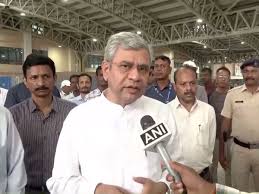
New Delhi: During the groundbreaking ceremony of India’s first advanced 3D glass semiconductor packaging unit in Bhubaneswar, Union Minister Ashwini Vaishnaw underlined the rapid transformation of railway infrastructure in Odisha, emphasizing the government’s strong focus on connectivity and capacity enhancement across the state.

₹90,000 Crore Worth Railway Projects Under Execution

Shri Vaishnaw informed that railway projects worth over ₹90,000 crore are currently under execution in Odisha, marking an unprecedented expansion of the rail network.

He highlighted that this scale of investment reflects the Centre’s commitment to strengthening both passenger and freight infrastructure in the state.

https://www.instagram.com/reel/DXTqK8GEmib/

During his visit to Odisha, Union Minister Ashwini Vaishnaw inspected the ongoing redevelopment of Bhubaneswar Railway Station, underscoring the importance of timely completion and high-quality execution. He emphasised that the upgraded station will deliver enhanced passenger comfort with modern amenities, reflecting Indian Railways’ commitment to transforming stations into world-class infrastructure hubs aligned with evolving passenger expectations.

Record Budget Allocation and Station Redevelopment Drive

The Minister stated that Odisha has received a record railway budget allocation of ₹10,928 crore, significantly higher than past allocations, enabling faster execution of projects. He further noted that 59 railway stations are being redeveloped under the Amrit Bharat Station Scheme, aimed at transforming stations into modern, passenger-friendly hubs with enhanced amenities.

Expanding Rail Connectivity Across All Districts

Highlighting connectivity goals, Shri Vaishnaw said that all 30 districts of Odisha are being brought under rail connectivity through planned interventions. He emphasized that this will ensure inclusive development and better integration of remote and interior regions with the mainstream rail network.

Key Projects to Strengthen Coastal and Regional Links

The Minister also pointed to major infrastructure initiatives such as the proposed four-line coastal rail corridor from Balasore to Berhampur, which will significantly enhance capacity along the coastal belt. He noted that such projects will improve regional mobility, reduce congestion, and boost economic activity across Odisha.

Railways Driving Growth and Connectivity

Shri Vaishnaw concluded that these transformative railway initiatives will strengthen regional connectivity, support economic growth, and integrate Odisha more closely with national freight and passenger networks. The ongoing investments and policy push are set to position Odisha as a key beneficiary of India’s expanding railway infrastructure.

Parents Resent Sudden Change in Uniform at RP School Kawoosa Narbal

0

KD NEWS SERVICE

SRINAGAR, April 19: A wave of resentment has surfaced among parents of students studying at RP School Kawoosa Narbal over the sudden change in the school uniform, with many terming the decision as unfair, unnecessary, and an added financial burden in the prevailing economic circumstances.

Several parents while talking to Kashmir Despatch expressed strong displeasure, stating that they had already purchased uniforms last year at considerable expense, and the abrupt decision to replace them has caused hardship to families. They alleged that forcing parents to buy a completely new uniform without any valid reason amounts to “extortion and unfair practice.”

“We bought uniforms only last year, and they are still in good condition. Suddenly changing the dress code is nothing but an unnecessary burden on parents,” said one parent.

Another parent remarked that there was nothing wrong with the existing uniform and no visible reason to alter it. “The previous uniform was decent, practical, and well accepted. Now those uniforms will go to waste, while parents are being compelled to spend again,” the parent said.

Many parents pointed out that numerous reputed schools continue with the same uniform pattern for decades and see no need for frequent changes. “Most schools maintain the same uniform for years together. Why this sudden change, especially when families are already struggling with rising expenses?” questioned another aggrieved parent.

Parents said that in the present economic scenario, where common households are already facing financial strain, such decisions should be avoided and greater sensitivity shown towards families.

They have appealed to the government, Private Schools Association, and other authorised authorities to intervene in the matter and direct the school administration to revoke its decision in the larger interest of students and parents.

The protesting parents urged that educational institutions should focus on quality education rather than imposing avoidable expenses on families.

Indian Railways Earns ₹6813.86 Crore from Scrap Sales in FY 2025–26 Surpassing the Target of ₹6000 Crore by Using or Selling Idle Assets

0

Vinod Bhat

New Delhi: Indian Railways is strengthening its financial resilience while enhancing passenger experience through sustained earnings from scrap monetisation and a steady rise in non-fare revenue streams, without increasing passenger ticket fares. By unlocking value from idle assets and expanding innovative revenue avenues beyond fares, the Railways is ensuring that improvements in station amenities, cleanliness, digital services, and passenger facilities are achieved in a financially sustainable manner. This balanced approach reflects a strategic focus on efficient asset management, customer-centric investments, and environmentally sustainable practices, reinforcing the Railways’ commitment to delivering a more comfortable, modern, and reliable travel experience.

Indian Railways Unlocks the Scrap Monetisation Potential

Indian Railways has achieved a significant milestone in scrap disposal, registering robust performance in the financial year 2025-26. Against a target of ₹6000 crore, the Railways recorded scrap sales amounting to ₹6813.86 crore, surpassing the set benchmark with notable efficiency.

This achievement builds on the strong performance of the previous financial year 2024-25, wherein Indian Railways exceeded its target of ₹5400 crore by achieving scrap sales worth ₹6641.78 crore.

The sustained momentum in scrap monetisation reflects Indian Railways’ focused approach towards efficient asset management and transparent disposal mechanisms. By systematically clearing unserviceable materials, the organisation is not only unlocking value from idle assets but also freeing up critical space across depots, yards, and workshops.

The initiative contributes significantly to environmental sustainability by promoting recycling and reducing waste accumulation.

Non-Fare Revenue Strengthening Railways and Enhancing Passenger Experience

Non-Fare Revenue (NFR) has emerged as an important pillar in strengthening the financial sustainability of Indian Railways, directly benefiting passengers across the network. By generating revenue through avenues such as station redevelopment, advertising, commercial utilization of railway assets, and other innovative initiatives, NFR reduces excessive dependence on passenger fares and freight earnings. This additional income enables Indian Railways to reinvest in modern infrastructure, upgrade station amenities, enhance cleanliness and passenger facilities, improve digital services, and introduce better trains and safety systems. This ultimately delivers a more comfortable, convenient, and reliable travel experience for passengers.

The steady growth in NFR earnings—from approximately ₹290 crore in FY 2021–22 to ₹777.76 crore in FY 2025–26—reflects a robust upward trajectory, registering an overall increase of about 168% over five years. For FY 2025–26, the estimated NFR target was ₹720.85 crore, which has already been surpassed with actual earnings reaching ₹777.76 crore, translating to an achievement of about 107.9%. In comparison, NFR earnings in FY 2024–25 stood at ₹686.86 crore. This trend underscores the growing importance of strategic monetization initiatives in strengthening the financial position of Indian Railways.

In this connection, following initiatives have been taken:

Premium Brand Outlets

Guidelines have been issued to Zonal Railways to award contracts for setting up of company owned single brand premium outlets, to boost NFR. Railways have opened some innovative branded outlets under this policy and other branded stores will also be opened on similar lines to enhance passenger experience. 22 Premium brands are allotted through NFR across all Indian Railways.

Opening of Pradhan Mantri Bhartiya Janaushadhi Kendra (PMBJKs)

In the pursuit to enhance wellness and welfare of passengers passing through railway stations, Indian Railways had conceptualized and implemented a policy framework to establish 50 Pradhan Mantri Bhartiya Janaushadhi Kendras (PMBJKs) in railway stations premises. The PMBJK stalls function as per the guidelines issued by Pharmaceuticals and Medical Devices Bureau of India. On 12th of March 2024, all 50 PMBJKs were inaugurated by Hon’ble Prime Minister. Further, based on the success of the initiative and to further expand the welfare scheme, instructions have been issued to set up additional 100 PMBJKs over Indian Railways. Out of these additional 100 PMBJKs, 18 PMBJKs were inaugurated by the Hon’ble Prime Minister on 13th of November 2024. Till date, 120 PMBJKs out of 150 have been opened over Indian Railways. Authority for further expansion of Pradhan Mantri Bhartiya Janaushadhi Kendra (PMBJK) outlets on Indian Railways has been delegated to General Managers at Zonal Railways to speed up proliferation of the PMBJK scheme, generating more revenue as well as ensuring passenger benefit.

Notable initiatives by Zonal Railways

Railways have consistently made efforts to enhance passenger experience and boost Non-Fare Revenue (NFR) through innovative ideas and their effective implementation.

Some of the notable initiatives undertaken include:  Multi Level Car parking, Medical Care Centre, Nursing pods, Wagon Cleaning contracts, Facility for E- wheel chair as paid service, Health Kiosk, Gaming Zone, Plastic Bottle Crushing Machine, Platform Branding,  Utilization of Vacant Space for Passenger amenity and public facility, etc.

A new innovation of Premium Co-working Space/Digital Lounge has been designed by Western Railway to enhance passenger amenities by offering high-speed Wi-Fi, workstations, charging points, conference facilities, and comfortable seating. Additional services include printing, scanning, refreshments, and flexible usage plans such as hourly workspace access and bundled packages. This initiative marks a significant step towards providing a modern, comfortable and productive waiting experience at railway stations. To proliferate such good ideas over other Railways, necessary directions were given to other Zonal Railways.

Iran Ambassador summoned; India conveys deep concern over shooting incident involving Indian-flagged ships in Strait of Hormuz

0

Vinod Bhat

New Delhi: Amid the evolving geo-political situation in West Asia, the Government of India remains actively engaged in ensuring preparedness and continuity across key sectors through coordinated response measures. The following update outlines the steps being taken with regard to energy supply, maritime operations, and support to Indian nationals in the region:

Energy Supply and Fuel Availability

The Ministry of Petroleum and Natural Gas is taking  steps to ensure uninterrupted availability of petroleum products and LPG across the country, in the context of the ongoing situation involving the Strait of Hormuz. As per Ministry:

Public Advisory and Citizen Awareness

  • Citizens are advised to avoid panic purchase of petrol, diesel and LPG as the Govt is making all efforts to ensure availability of petrol, diesel and LPG.
  • Beware of rumours and rely on official sources for correct information.
  • LPG consumers are requested to use digital booking platforms and avoid visiting distributors.
  • Citizens are encouraged to use alternate fuels such as PNG and electric or induction cooktops.
  • All citizens are requested to make necessary efforts to conserve energy in their daily use during the current situation.

Government Preparedness and Supply Management Measures

  • Despite the ongoing geopolitical situation, the Government has ensured that 100% supply is being made to Domestic LPG, Domestic PNG and CNG (Transport).
  • For commercial LPG, priority has been given to hospitals, educational institutions. Besides this, priority has also been given to pharma, steel, automobile, seed, agriculture, etc. In addition to this, supply of 5 Kg FTL to migrant labour is also doubled based on avg. daily supply on 2nd and 3rd March 2026.
  • The Government has already implemented several rationalisation measures on both the supply and demand side, including enhancing refinery production, increasing the booking interval from 21 to 25 days in urban areas and up to 45 days in rural areas and prioritising sectors for supply.
  • Alternate fuels such as kerosene and coal have been made available to ease pressure on LPG demand.
  • The Ministry of Coal has directed Coal India and Singareni Collieries to allot additional coal to States for distribution to small and medium consumers.
  • States have been advised to facilitate new PNG connections for domestic and commercial consumers.

Coordinated Efforts with States/UTs and Institutional Mechanisms

  • State Governments are empowered under the Essential Commodities Act, 1955 and LPG Control Order, 2000 to monitor supply and act against hoarding and black marketing.
  • Govt. of States/UTs have to play a primary role in monitoring and regulating supply situation of essential commodities including Petrol, Diesel and LPG. Govt. of India has reiterated the same via multiple letters and VCs to all States/UTs.
  • The Government of India vide letters dated 27.03.2026 and 02.04.2026 have stressed the need for proactive public communication to reassure citizens regarding adequate fuel availability. Regular review meetings are being held with States/UTs. In this context, meetings were convened on 02.04.2026 (Chaired by Secretary, MoPNG) and on 06.04.2026 (Chaired bySecretary, MoPNG along with Secretaries of I&B and Consumer Affairs), wherein the following was emphasized:
    • To issue daily press briefings and issue regular public advisories.
    • To actively monitor and counter fake news / misinformation on social media.
    • To intensify daily enforcement drives by District admin and to continue raids and inspections in coordination with OMCs
    • To issue Commercial LPG allocation orders within their States/UTs
    • To issue SKO allocation orders for additional SKO allotted to the States/UTs.
    • To promote PNG adoptions and alternate fuels.
    • To prioritize LPG supply, especially for domestic needs, and adopt targeted distribution of 5 kg FTL cylinders to ensure supply stability.
  • All States/UTs have established control rooms and district monitoring committees to curb hoarding and black marketing.
  • Many states/UTs are issuing/carrying out press briefs.

Enforcement and Monitoring Actions

  • Enforcement actions continue across the country to curb hoarding and black marketing of LPG. On 18.04.2026, more than 2400 raids were conducted across the country.
  • PSU Oil Marketing Companies have strengthened surprise inspections and imposed penalties on 264 LPG distributorships and suspended 67 LPG distributorships till yesterday.

LPG Supply

Domestic LPG Supply Status:

  • LPG supply continues to be affected by the prevailing geopolitical situation.
  • Supply of LPG to domestic households has been prioritized.
  • No dry-outs have been reported at LPG distributorships.
  • Online LPG bookings have increased to about 98% across the industry yesterday.
  • Delivery Authentication Code (DAC) based deliveries have increased to more than 93% to prevent diversion. DAC is received on the registered mobile number of the consumer.
  • Domestic LPG cylinder deliveries remain normal against bookings.
  • On 18.04.26, more than 53.5 lakh domestic LPG cylinders were delivered.

Commercial LPG Supply and Allocation Measures:

  • Total commercial LPG allocation has been increased to about 70% of pre-crisis levels, including 10% reform-linked allocation.
  • The Government of India vide letter dated 06.04.2026 has conveyed that daily quantity of 5 Kg FTL cylinders in each State available for disbursal to migrant labourers is being doubled based on the average daily supply (Number of cylinders) to migrant labourers during 2nd-3rd March 2026 beyond the limit of 20% mentioned in letter dated 21.03.2026. These 5 Kg FTL cylinders are at disposal of the State Government for supplying only to migrant labourers in their State with assistance of Oil Marketing Companies (OMCs).
  • Since 3rd April 2026, PSU OMCs have organized more than 6700 awareness camps for 5 Kg FTL Cylinders, wherein more than 96,000 – 5Kg FTL cylinders were also sold. Yesterday, 5233 – 5 Kg FTLs were sold through more than 230 camps.
  • Recently, at one of the 5 kg FTL awareness camps organised by BPCL at MIDC, Rabale (Thane) on 18th April 2026, a good response was observed and more than 300 – 5 Kg FTL cylinders were sold in the camp.
  • Since 23rd March 2026, more than 18.33 Lakh – 5 Kg FTL cylinders have been sold.
  • A three-member committee of Executive Directors from IOCL, HPCL and BPCL is coordinating with State authorities and industry bodies to plan commercial LPG distribution in the States/UTs.
  • On 18.04.2026, 9192 MT of Commercial LPG (Equivalent to more than 4.83 Lakh – 19 Kg cylinders) were sold.
  • A total of 1,67,775 MT (Equivalent to more than 88.3 Lakh of 19 Kg LPG Cylinders) of Commercial LPG has been sold since 14th March 2026. This includes more than 9600 MT of Auto LPG.
  • Avg. Auto LPG sale by PSU OMCs in the month of April-26 (till 17.04.26) is around 305 MT/day against the avg. of 177 MT/day during Feb-26.
  • Auto LPG Sales was observed to have shifted from Private to PSU OMCs. To meet the rising demand, the sale of auto LPG by the PSU OMCs has increased by 72%. The major increase has been observed in the States like Karnataka, Tamil Nadu, Telangana, Rajasthan, West Bengal etc.

Natural Gas Supply and PNG Expansion Initiatives

  • Consumers have been prioritised with 100% supplies to D-PNG and CNG-Transport.

The overall gas allocation to fertilizer plants has been enhanced to approximately 95% of their six-month average consumption.


  • Additionally, gas supply to other industrial and commercial sectors, including supplies through CGD networks, is enhanced up to 80%.
  • CGD entities have been advised to prioritize PNG connections for commercial establishments such as hotels, restaurants and canteens across all their GAs, to address concerns regarding the availability of commercial LPG.
  • CGD companies including IGL, MGL, GAIL Gas and BPCL are offering incentives for domestic and commercial PNG connections.
  • States/UTs and Central Ministries have been requested to expedite approvals required for expansion of CGD networks.
  • The Government of India vide letter dated 18.03.2026 has offered all States/UTs additional 10% allocation of commercial LPG to States provided they can help in long term transition from LPG to PNG.
  • 22 States/UTs are receiving additional commercial LPG allocation linked to PNG expansion reforms.
  • The Ministry of Road Transport & Highways vide letter dated 24.03.26 has adopted an ‘Accelerated Approval Framework for CGD infrastructure with reduced timelines’ as a special for 3 months to process applications pertaining to CGD infrastructure on priority.
  • The Government of India vide Gazette dated 24.03.2026 has notified the Natural Gas and Petroleum Products Distribution (Through Laying, Building, Operation and Expansion of Pipelines and Other Facilities) Order, 2026 under the Essential Commodities Act, 1955. The Order provides a streamlined and time-bound framework for laying and expanding pipelines across the country, addressing delays in approvals and access to land, and enabling faster development of natural gas infrastructure, including in residential areas. It is expected to accelerate PNG network growth, enhance last-mile connectivity, and support the transition to cleaner fuels, thereby strengthening energy security and advancing India’s gas-based economy.
  • PNGRB has directed CGD entities to expedite D-PNG connections. Also, the National PNG Drive 2.0 has been extended till 30.06.2026 to sustain momentum in PNG expansion.
  • To encourage a cleaner, more secure and self-reliant energy future, the Government of India has developed a model draft State CBG Policy. The model policy is intended to serve as a comprehensive flexible guiding framework to enable States to create their own investor-friendly and implementation-oriented ecosystem for CBG development. Those States which opt for this, will be prioritized for the next tranche of additional allocation of commercial LPG.
  • MoEFCC vide order dated 07.04.2026 has directed CPCB to issue necessary directions to SPCB/PCCs for granting consent to establish or consent to operate within 15 days for CGD network/infrastructure.
  • As per the directions of CPCB, some of the Oil & gas transportation pipelines have been classified under “Green” Category.
  • MoEFCC has already classified the “Fuel dispensing units without automobile servicing repairing and painting” as “White” category and are exempted from Consent to establish or consent to operate under relevant Acts.
  • Since March 2026, more than 4.85 Lakh PNG connections have been gasified. Further, more than 5.43 Lakh customers have been registered for new connections.
  • Till 18.04.2026, more than 39,000 PNG consumers have surrendered their LPG connections via MYPNGD.in website.


Crude Position and Refinery Operations

  • All refineries are operating at high capacity with adequate crude inventories, while sufficient stocks of petrol and diesel are being maintained.
  • Domestic LPG production from refineries has been increased to support domestic consumption.
  • An inter-ministerial Joint Working Group (JWG) has been set up to ensure availability of petrochemical feedstock supply for the domestic market. Subsequently, Govt. of India vide order dated 01.04.2026 has permitted Oil Refinery companies including Petrochemical Complexes to make certain minimum quantities of C3 & C4 streams available for critical sectors as determined by Centre for High Technology (CHT).
  • Based on the requests received from the Department of Pharmaceuticals, Department of Chemicals & Petro Chemicals (DCPC), Dept. for Promotion of Industry and internal trade (DPIIT), the provision for 1000 MT/day, from LPG pool, has been made for Pharma and Chemical sector companies.
  • Since 9th April 2026, around 3700 MT of propylene has been sold.


Retail Fuel Availability and pricing Measures

  • Retail outlets across the country are operating normally.
  • The Middle East crisis has led to an abnormal increase in crude prices; however, to protect consumers, the Government of India has reduced excise duty on petrol and diesel by ₹10 per litre.
  • Govt. of India vide Gazette notification dated 11.04.2026 has increased the export levy on diesel to Rs. 55.50 per litre and on ATF to Rs. 42 per litre, to ensure availability of these products in the domestic market.
  • Regular Retail Prices for Petrol and Diesel are unchanged and there is no price increase at PSU OMCs Retail Outlets.


Kerosene Availability and Distribution Measures

  • An additional allocation of 48,000 KL of kerosene has been provided to States/UTs over and above regular allocation.
  • 18 States/UTs have issued SKO allocation orders, while Himachal Pradesh and Ladakh have indicated no requirement.


Maritime Safety and Shipping Operations

The Ministry of Ports, Shipping and Waterways continues to coordinate with the Ministry of External Affairs, Indian Missions and maritime stakeholders to ensure seafarer welfare and uninterrupted maritime operations. The Ministry stated that:

  • Indian-flagged crude oil tanker Desh Garima safely crossed the Strait of Hormuz on 18 April 2026. The vessel, with 31 Indian seafarers onboard, is expected to arrive at Mumbai on 22 April 2026.
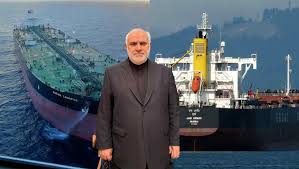
  • In the past 24 hours, two Indian vessels, VLCC Samnar Herad and Bulk Carrier Jag Arnav, reported a firing incident while transiting the Strait of Hormuz, following which they returned to the Persian Gulf. There has been no injury to any crew reported.
  • The Ambassador of the Islamic Republic of Iran in New Delhi was called in yesterday by the Ministry of External Affairs for a meeting with Foreign Secretary. During the meeting, Foreign Secretary conveyed India’s deep concern at the shooting incident earlier yesterday involving two Indian-flagged ships in the Strait of Hormuz. He noted the importance that India attached to the safety of merchant shipping and mariners.
  • Reiterating his concern at this serious incident of firing on merchant ships, Foreign Secretary urged the Ambassador to convey India’s views to the authorities in Iran and resume at the earliest the process of facilitating India-bound ships across the Strait.
  • All Indian seafarers are safe. The situation continues to be closely monitored in coordination with the Ministry of External Affairs and relevant stakeholders.
  • DG Shipping Control Room Update: The Control Room has handled 6,893 calls and more than 14,470 emails since activation. In the past 24 hours, 66 calls and 204 emails have been received.
  • The Ministry, through the Directorate General of Shipping (DG Shipping), has facilitated the safe repatriation of more than 2,538 Indian seafarers so far, including 51 in the last 24 hours from various locations across the Gulf region.
  • Port operations across India remain normal, with no congestion reported.


Safety of Indian Nationals in the Region

The Ministry of External Affairs continues to monitor developments in the Gulf and West Asia region, with focussed efforts on ensuring safety, security and welfare of the Indian community in the region. It was informed that:

  • The Ministry of External Affairs is in regular contact with the state governments and union territories for information sharing and better alignment of efforts.
  • Indian Missions and Posts continue to operate round-the-clock helplines and are proactively assisting Indian nationals. They remain in close contact with the local Governments.
  • Updated advisories are being issued regularly, including information on local government guidelines, flight and travel situations and consular services and various welfare measures being undertaken to support our community.
  • Indian Missions remain actively engaged with the Indian community including the various associations, organizations, professional groups, Indian companies and other stakeholders in the region.
  • Our Missions are extending all assistance to the Indian crew members on vessels in the region including coordination with the local authorities and agencies, extending consular assistance and assisting for requests to return to India.
  • Flights continue to operate from countries where airspace remains open. Since 28 February, around 10,97,000 passengers have travelled from the region to India.
  • In the UAE, airlines continue to operate limited non-scheduled commercial flights between the UAE and India based on operational and safety considerations, with around 110 flights expected today between UAE and India.
  • Flights continue to operate from various airports in Saudi Arabia and Oman to destinations in India.
  • With Qatar airspace partially open, Qatar Airways is expected to operate around 10 to 11 flights to India today.
  • Kuwait airspace remains closed. Jazeera Airways of Kuwait and Kuwait Airways are operating non-scheduled commercial flights from Dammam Airport in Saudi Arabia to India.
  • Bahrain airspace is open. Gulf Air of Bahrain is planning limited flight operations from Bahrain to India and is currently operating non-scheduled commercial flights from Dammam Airport in Saudi Arabia to various destinations in India.
  • Iraq airspace is open with limited flight operations to destinations in the region, which can be used for onward travel to India.
  • Iranian air space remains partially open for cargo and chartered flights. The Indian Embassy in Tehran has so far facilitated the movement of 2,378 Indian nationals from Iran to Armenia and Azerbaijan for onward travel to India, including 1,046 Indian students and 657 Indian fishermen.
  • Israel airspace is open and limited flight operations have resumed to destinations in the region, which can be used for onward travel to India. Travel of Indian nationals continues to be facilitated through Jordan and Egypt to India.

J&K Teachers Association (JKTA) Baramulla Strengthens Organisational Structure, Announces New District Team

0

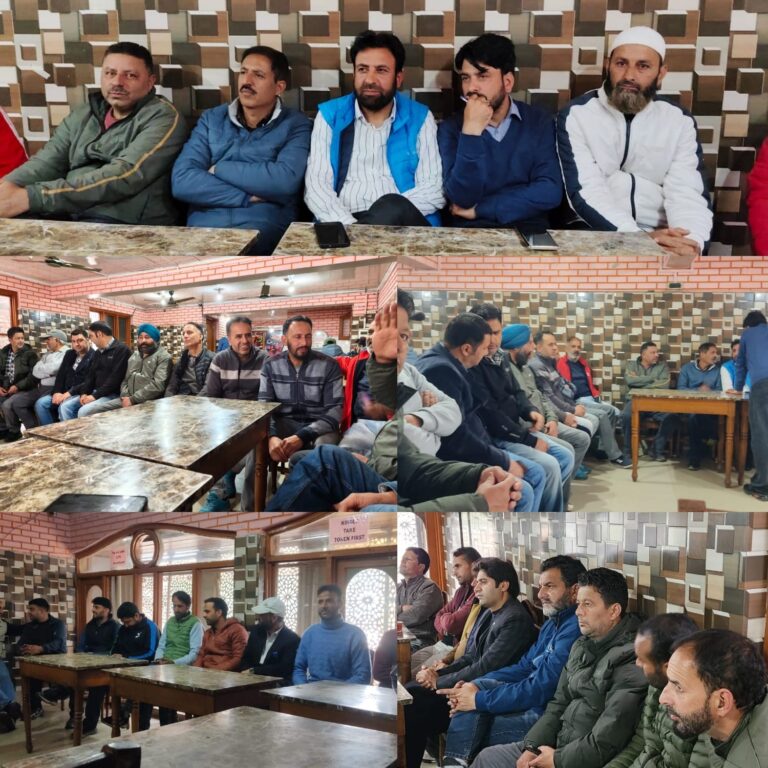
Baramulla 19 April; A meeting of the District cadre of JK Teachers Association Baramulla was held today at District headquarter to deliberate on important organisational matters and to chart out a roadmap for strengthening the Association at all levels. The meeting witnessed enthusiastic participation from Zonal Presidents and senior members of the Association.

During the deliberations, detailed discussions were held on reinforcing the organisational structure, improving coordination among zones, and enhancing the role of teachers in addressing academic and service-related issues. The members unanimously stressed the need for unity, discipline, and collective responsibility to make the Association more vibrant and effective.

On the occasion, the District Body of JKTA Baramulla was also revamped to ensure better representation, accountability, and smooth functioning of the Association. Various responsibilities were reassigned with the aim of energising the cadre and making the organisation more responsive to the concerns of the teaching community.

The speakers highlighted that a strong and united organisation is essential for safeguarding the dignity, rights, and professional interests of teachers. They reiterated their commitment to work collectively for the welfare of the teaching fraternity and the betterment of the education system in the district.

The meeting concluded with a pledge to further strengthen the organisational base of JKTA and to work with renewed dedication and unity.
The new list of office bearers is as under:

1. Mr Mushtaq Ahmad Bhat (District President)
2. Mr Javid Iqbal Najar (Patron)
3. Mr Mohd Maqbool Khan (Convenor)
4. Mr Sajad Ahmad Bhat (V President)
5. Mr Nazir Ahmad Dar(V President)
6. Mr Samir Ali Khan (G Secratary)
7. Mr Ashwani Bhamu (Add Secretary)
8. Mr Mohd Akbar Lone (J.Secratary)
9. Mr Avtar Kishan (Chief Spokesperson)
10. Mr Shabir Ah Lone (Chief Advisor)
11. Mr Imtiyaz Hussain Rather Wagoora (Treasurer)
12. Mr Ab Rasheed Dar (Organiser)
13. Mr Bilal Ahmad Lone (Organiser)
14. Mr Showkat Ahmad Sood (Discipline coordinator )
15. Mr Zeeshan Pervaz (Media Advisor)
16. Mr Mukhtar Ah Qureshi (Boniyar) (Publicity Secretary)
17. Mr Liyakat Ahmad Tantray Uri(Advisor)
18. Mr Imtiyaz Ahmad Lone Nehalpora (Chief Coordinator)
19. Mr Ab Rehman Lone Baramulla (Media Cell)
20. Mr Nazir Ahmad Guroo (Media Coordinator)
21. Mr Mohd Imran Khan Dangerpora (Legal Advisor)
22. Mr Fayaz Ahmad Malik (Coordinator)
23. Mr Nisar Ah Khan Jhulla (Deputy Organiser)
24. Mr Ab Razak Lone (Auditor)
25. Mr Gh Nabi Najar Khanpora (Auditor2)
27. Mr Shabir Ahmad Malik (Pattan) Deputy Coordinator
28. Mr Peerzada Tariq Ah (Dangiwacha) Deputy Organiser
29. Mr Tasleem Ahmad Khan (Incharge Programs)

Sikh Minority cell:
29. Mr Jatinder Pal Singh
30.Mr Balvinder Singh
31. Mr Jagjeet Singh

ST cell:
32. Mr Chowdhary Mohd Saleem
33. Mr Chowdhary Munaver Hussain
34. Mr Mohd Amir

PM Package Employees Cell:
35. Mr Opindher Kholi
36. Mr Ashwani Bhatt
37. Mr Pawan Kumar

Jammu Based Reserved category Cell:
38. Mr Ram Krishan Salgotra
39 Mr Suresh Kumar
40. Mr Vipon Verma
41. Mr Kuldeep

Women’s wing
41.Mtr Shabana Gul

Groundbreaking of India’s First Advanced 3D Semiconductor Packaging Unit in Odisha; Major Boost to AI, 5G and Defence Tech

0

Vinod Bhat

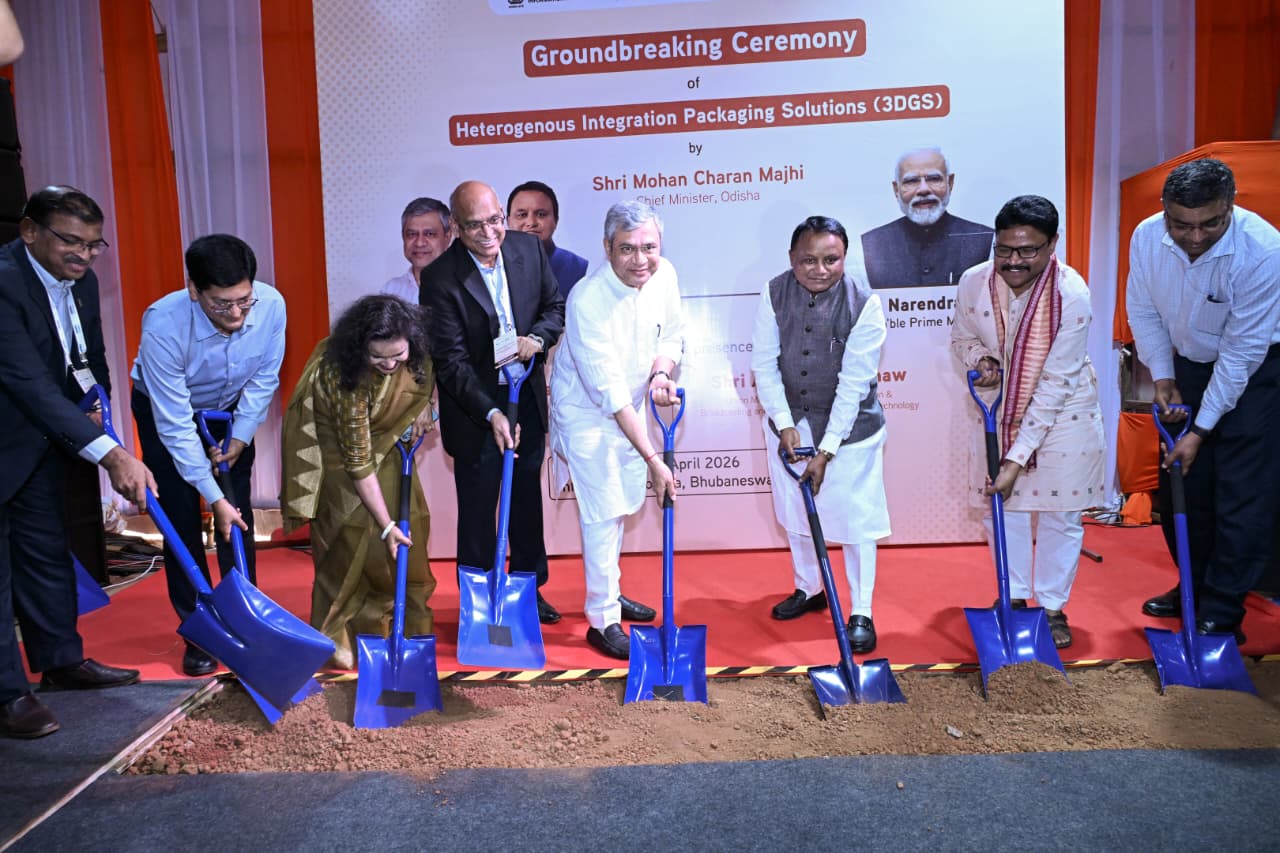
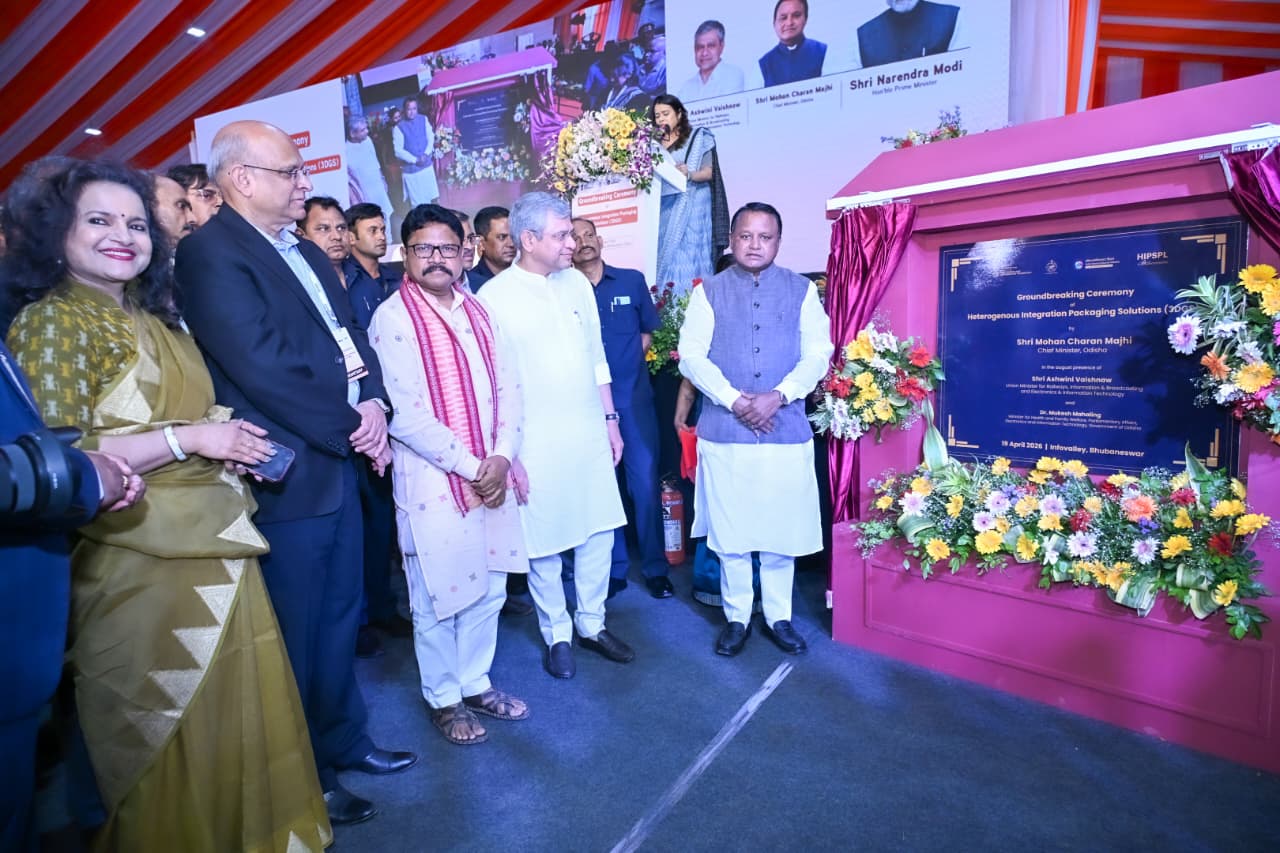
New Delhi: In a defining moment for India’s semiconductor ambitions and Odisha’s emergence as a future-ready technology destination, the foundation stone for the country’s first advanced 3D chip packaging unit was laid today at Info Valley, Bhubaneswar. The project marks a significant step towards strengthening India’s domestic semiconductor ecosystem and advancing the vision of Atmanirbhar Bharat in high-end electronics manufacturing.

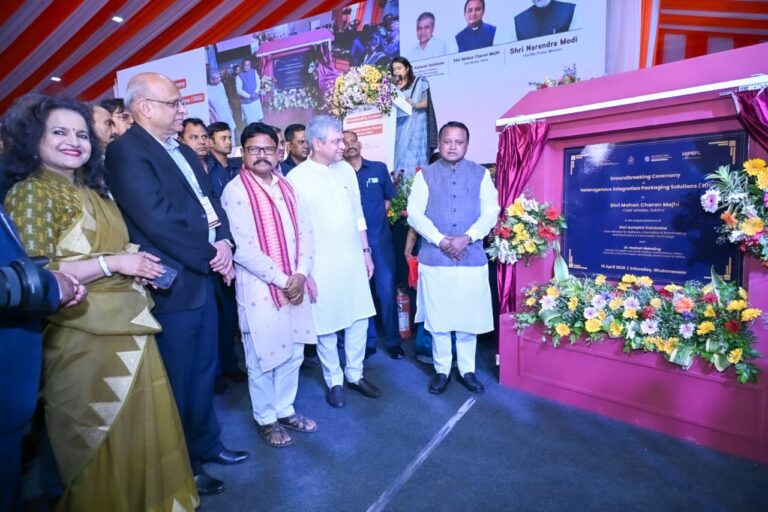
The foundation stone of the Heterogeneous Integration Packaging Solutions project, promoted by 3D Glass Solutions, was laid in the presence of Chief Minister Shri Mohan Charan Majhi and Union Minister for Railways, Electronics & Information Technology, and Information & Broadcasting Shri Ashwini Vaishnaw. With the launch of this project, Odisha is poised to become home to one of the world’s most sophisticated chip packaging technologies.

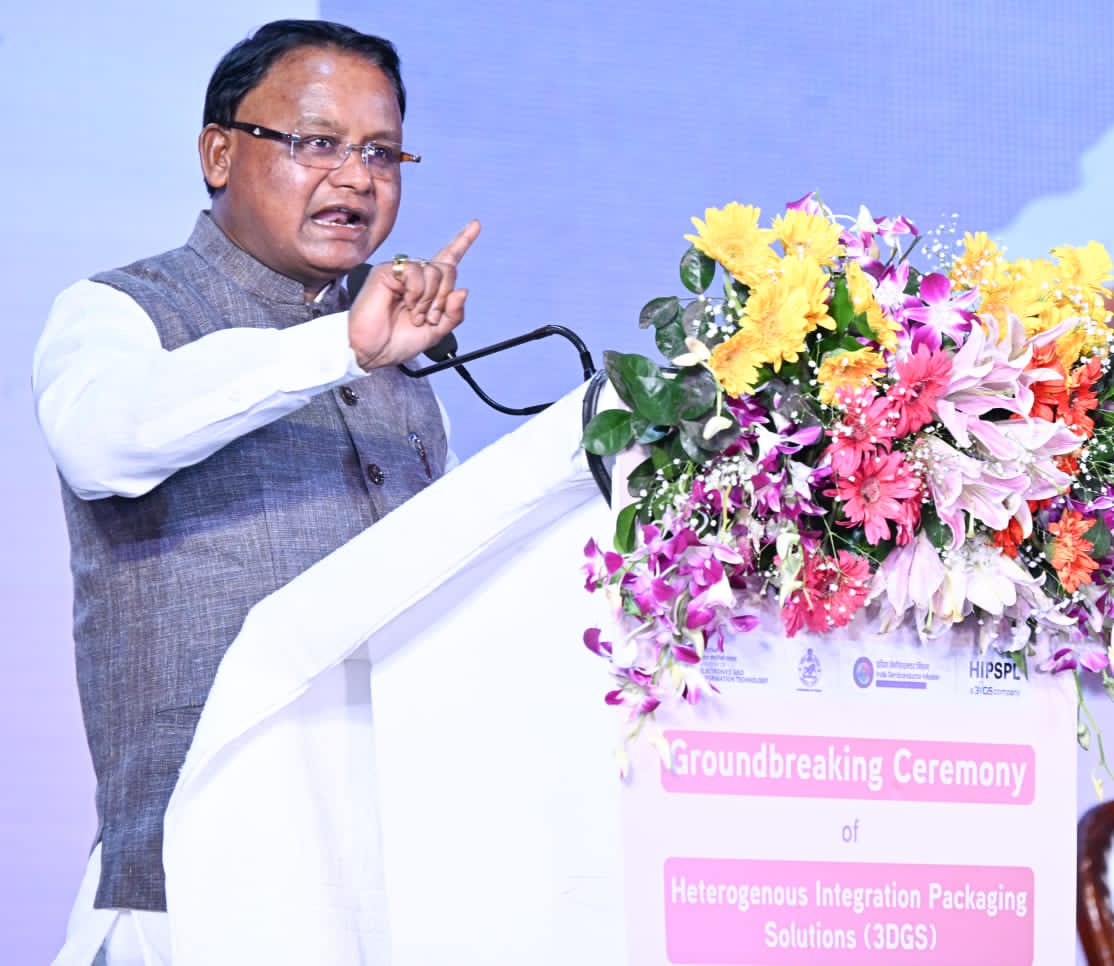
Addressing the gathering, Chief Minister Shri Mohan Charan Majhi described the project as a historic milestone for Odisha and the nation. He said that for the first time in India, an advanced 3D Glass Solutions semiconductor project is being established, bringing immense pride to the state. He noted that global technology leaders such as Intel, Lockheed Martin, and Applied Materials are associated with cutting-edge packaging technologies, and their interest in Odisha reflects the state’s growing industrial strength.

The Chief Minister flagged that the products manufactured in the state will support next-generation sectors such as Artificial Intelligence, high-performance computing, defence electronics, telecommunications, and advanced digital systems. “Odisha is ready to play a pivotal role in realising Prime Minister Shri Narendra Modi’s vision of making India self-reliant in semiconductor and electronics manufacturing,” he added.

Shri Majhi informed that the company is investing nearly ₹2,000 crore in the project and the facility is expected to produce 70,000 glass panels annually, along with 50 million assembled units and around 13,000 advanced 3DHI modules. He added that Odisha has emerged as the only state in the country where both India’s first compound semiconductor fabrication unit and first 3D glass substrate packaging facility are being established.

He further said the growing semiconductor ecosystem in Odisha will open large-scale employment opportunities for engineering graduates, diploma holders, and ITI students, helping transform the state from a resource-based economy into a technology-led growth centre.

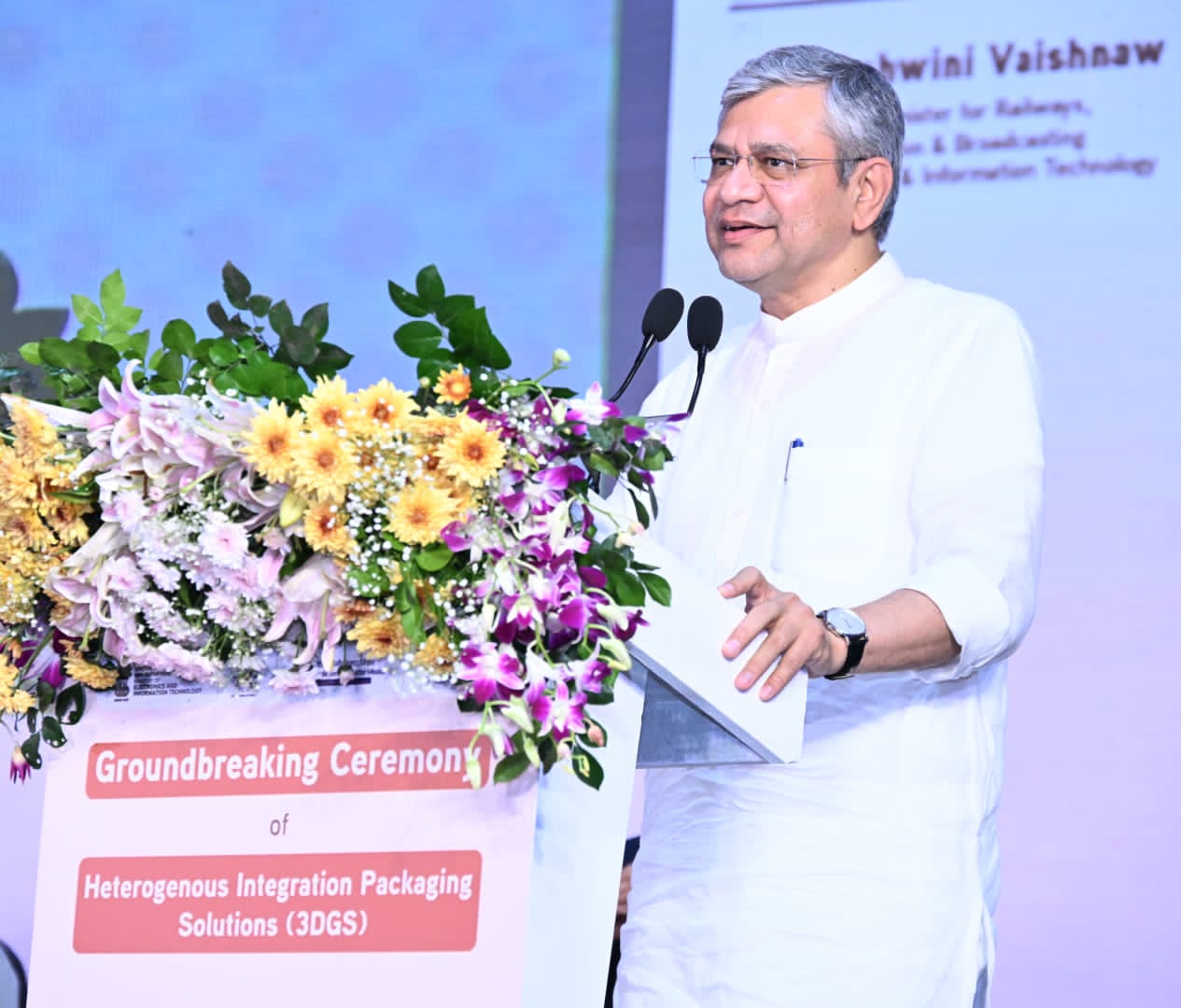
Addessing the gathering, Union Minister Shri Ashwini Vaishnaw congratulated the people of Odisha on the landmark initiative and appreciated the support extended by the State Government. He said, under the visionary leadership of Prime Minister Shri Narendra Modi, India’s semiconductor sector is witnessing rapid growth, with Odisha emerging as an important contributor to this transformation.


Shri Vaishnaw said, Odisha, traditionally known for its strengths in minerals, metals and energy, is now steadily establishing itself in advanced sectors such as electronics, IT and semiconductors. Describing the project as one of the most advanced manufacturing initiatives of its kind, he said it would significantly strengthen India’s semiconductor value chain.


Highlighting the country’s progress in electronics manufacturing, Shri Vaishnaw said production in the sector has grown six-fold over the past 12 years. “India has now become the world’s second-largest mobile phone manufacturer and emerged as the leading exporter of mobile phones in 2025”, he added.


He further informed that two semiconductor projects have already been approved for Odisha under the India Semiconductor Mission, while three more electronics and semiconductor-related proposals are in the pipeline. “Discussions are also underway with major global companies, including Intel for future investments in the state,” he mentioned.


Speaking on railway infrastructure, Shri Vaishnaw said, projects worth over ₹90,000 crore are currently under execution in Odisha, reflecting an unprecedented expansion of rail connectivity. He added that the state has received a record railway budget allocation of ₹10,928 crore, while 59 stations are being redeveloped under the Amrit Bharat Station Scheme. He further said that all 30 districts of Odisha are being brought under rail connectivity through planned interventions, alongside key projects such as the proposed four-line coastal rail corridor from Balasore to Berhampur. Shri Vaishnaw emphasized that these transformative initiatives will strengthen regional connectivity, support economic growth, and integrate Odisha more closely with national freight and passenger networks.

Reiterating the Government’s vision, he affirmed that railway infrastructure across Odisha will continue to be upgraded with a focus on speed, safety, and passenger comfort, ensuring balanced and inclusive development across all regions of the state.


State Minister for Electronics & IT, Dr. Mukesh Mahaling, said Odisha is fast emerging as a semiconductor hub, with two approved projects under the India Semiconductor Mission, including the advanced 3D Glass unit inaugurated today. He said the State Government’s IT, AI, GCC and Semiconductor Policies 2025 will drive innovation and attract investments. Emphasising skill development, he said stipend support for engineering students is being provided to build an industry-ready workforce. He added that initiatives like the Blackswan Summit 2026 and growing AI investments will create jobs and strengthen Odisha’s leadership in future technologies.


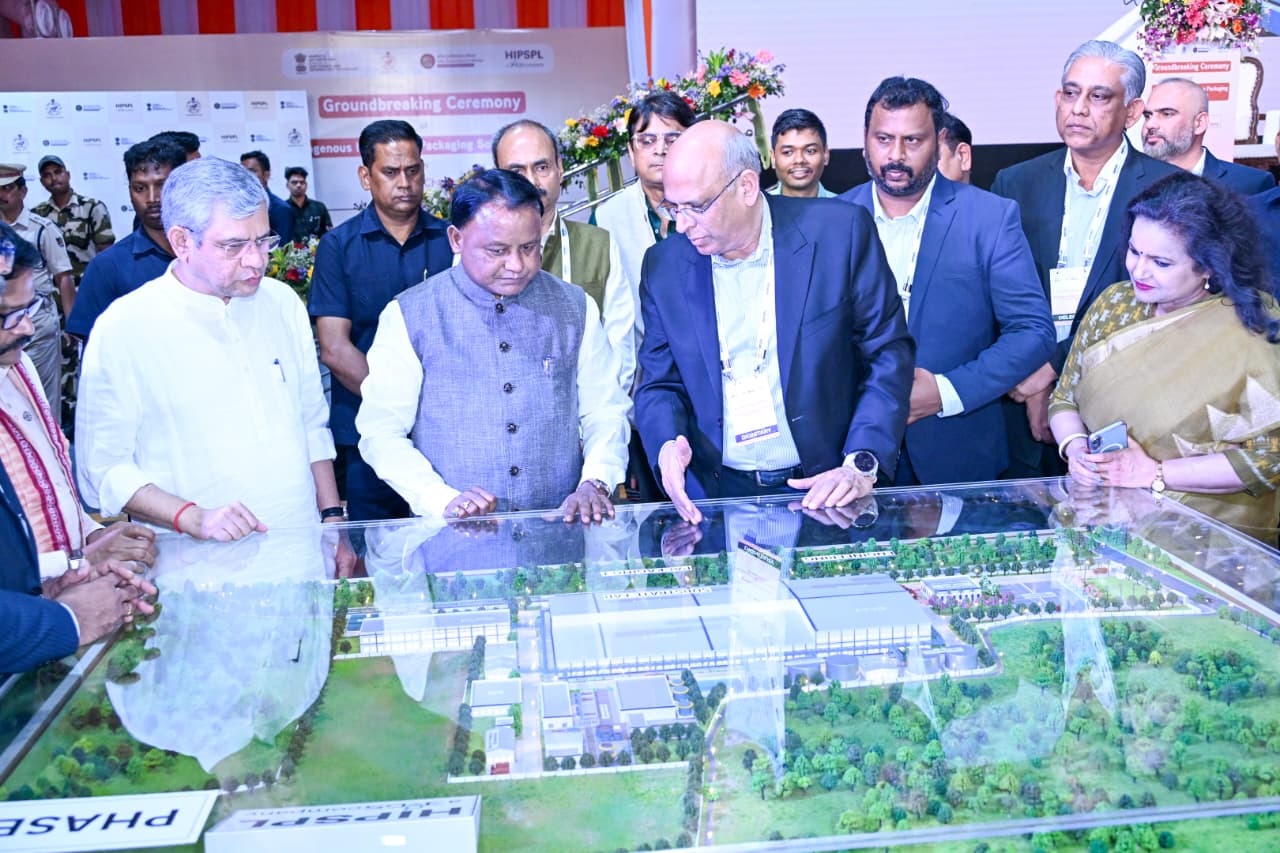
The project is being implemented by 3D Glass Solutions Inc. (3DGS), USA, through its wholly owned Indian subsidiary Heterogeneous Integration Packaging Solutions Pvt. Ltd. (HIPSPL) at Info Valley in Khordha district. It is a greenfield, vertically integrated advanced packaging and embedded glass substrate ATMP facility.


The total investment in the project is ₹1,943.53 crore, including approved Central fiscal support of ₹799 crore and additional State support of approximately ₹399.5 crore.


The facility will cater to high-growth sectors such as data centres, Artificial Intelligence, machine learning, 5G/6G communications, automotive radar, defence electronics, aerospace applications, and photonics. Commercial production is expected to begin by August 2028, while full-scale volume production is targeted by August 2030.


The event was attended by several distinguished dignitaries, including Shri S. Krishnan Secretary, Ministry of Electronics & IT, Government of India, Smt. Anu Garg Chief Secretary of Odisha, Shri Hemant Sharma Additional Chief Secretary, Industries Department, Shri Vishal Kumar Dev Additional Chief Secretary, Electronics & IT Department and Shri Babu Mandava Chairman & CEO of 3D Glass Solutions.

PSAJK Budgam Elects Shahnawaz Quraishi as District President

0

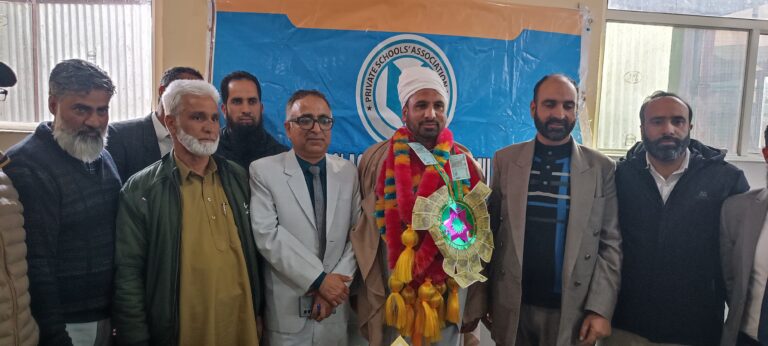
Budgam, April 18: In a significant development for the private education sector, Mr. Shahnawaz Qurashi, Chairman of Springbuds Educational Institution Ompora, has been elected as the District President of Private Schools Association Jammu & Kashmir (PSAJK) Budgam.

The election witnessed active participation from a large number of school leaders across the district, who expressed strong confidence in Mr. Quraishi’s leadership and vision for strengthening the educational ecosystem in Budgam.

Speaking on the occasion, PSAJK State President, Baba Nazrul Islam, appreciated the Budgam team for their extensive outreach and successful conduct of elections. He highlighted the challenges posed by poor connectivity in the district and stressed the need for zonal heads to work collectively with both government and private stakeholders to ensure quality education.

The Election Commission, headed by noted environmental lawyer Advocate Nadeem Qadri, conducted the proceedings. While addressing the gathering, he lauded the environmental initiative of MEERC PSAJK led by Manzoor Wangnoo, particularly the impactful slogan “One Admission, One Tree.”

Reaffirming the association’s commitment to environmental sustainability, Baba Nazrul Islam announced that PSAJK has pledged to plant 10,000 trees across schools in Jammu & Kashmir on the eve of Earth Day.
The election process was observed by several prominent members including:Mr. Waseem Hanief, District President PulwamaMr. Fayaz Ahmad, District President Bandipora
Mr. Tahir Wagay, District President SrinagarFounding members Mr. Tariq Bali and Mr. Majid Bhat
Mr. Mubashir Waffai
A large number of media representatives were also present, reflecting transparency and reinforcing confidence in the democratic framework of the Association.

The successful conduct of elections marks another step forward in strengthening institutional leadership within PSAJK and fostering collaborative growth in the education sector of Jammu & Kashmir.

Cabinet approves two multitracking projects covering 15 Districts across the states of Uttar Pradesh and Andhra Pradesh

0

Vinod Bhat

New Delhi: The Cabinet Committee on Economic Affairs, chaired by the Prime Minister Shri Narendra Modi, today has approved 02 (Two) projects of Ministry of Railways with total cost of Rs. 24,815 crore (approx.). These projects include:


Name of Project Route Length (in km) Track Length (in km) Completion Cost (Rs. in Cr.)
Ghaziabad – Sitapur 3rd and 4th Line 403 859 14,926
Rajahmundry (Nidadavolu) – Visakhapatnam (Duvvada) 3rd and 4th Line  

198


458


9,889

Total 601 1,317 24,815


The increased line capacity will significantly enhance mobility, resulting in improved operational efficiency and service reliability for Indian Railways. These multi-tracking proposals are poised to streamline operations and alleviate congestion. The projects are in line with the  Prime Minister Shri Narendra Modiji’s Vision of a New India which will make people of the region “Atmanirbhar” by way of comprehensive development in the area which will enhance their employment/ self-employment opportunities.

The projects are planned on PM-Gati Shakti National Master Plan with focus on enhancing multi-modal connectivity & logistic efficiency through integrated planning and stakeholder consultations. These projects will provide seamless connectivity for movement of people, goods, and services.

The 02 (Two) projects covering 15 Districts across the states of Uttar Pradesh and Andhra Pradesh will increase the existing network of Indian Railways by about 601 Kms.

The proposed capacity enhancement will improve rail connectivity to several prominent tourist destinations across the country, including Dudheshwarnath Temple, Garhmukteshwar Ganga Ghat, Dargah Shah Wilayat Jama Masjid (Amroha), Naimisharanya (Sitapur), Annavaram, Antarvedi, Draksharamam, etc.

The proposed projects are essential routes for transportation of commodities such as coal, foodgrains, cement, POL, iron and steel, container, fertilizers, sugar, chemical salts, limestone, etc. The Railways being environment friendly and energy efficient mode of transportation, will help both in achieving climate goals and minimizing logistics cost of the country lowering CO2 emissions (180.31Crore Kg) which is equivalent to plantation of 7.33 Crore trees.


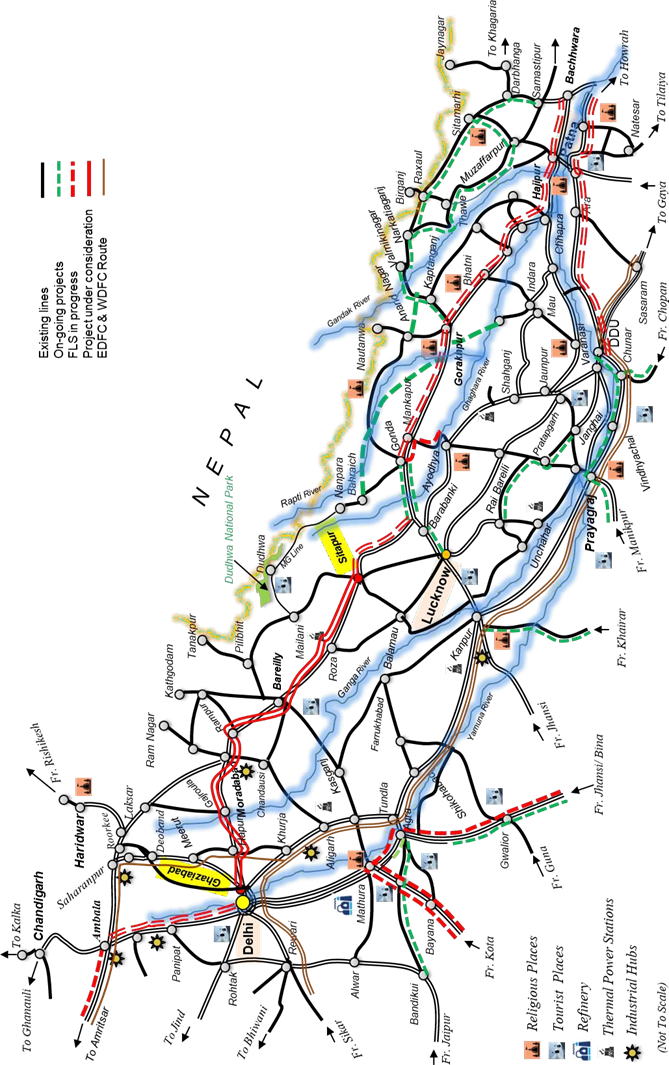
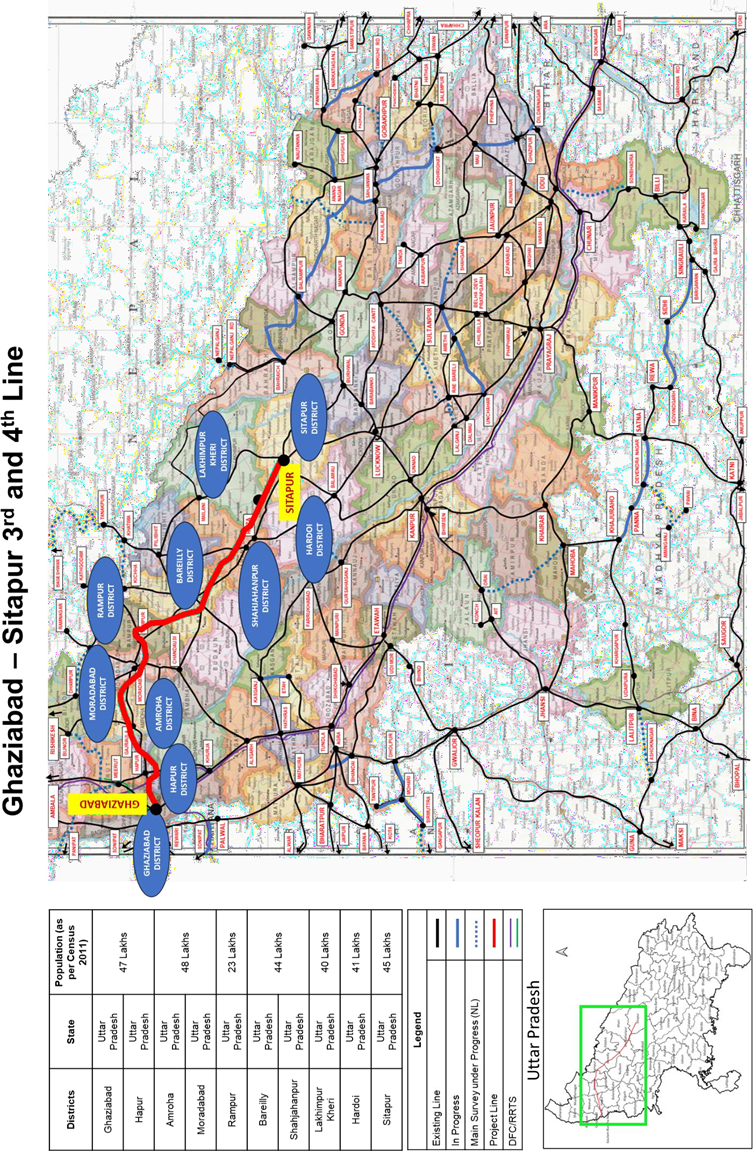
Ghaziabad – Sitapur 3rd and 4th Line (403 Km)

  • Ghaziabad – Sitapur is an existing double line section forming a key part of Delhi- Guwahati High Density Network (HDN 4).
  • The project is crucial for improving connectivity between the Northern and Eastern region of the country.
  • The existing line capacity utilization of the section is up to 168% and is projected to be up to 207% in case the project is not taken up.
  • Transverses through Ghaziabad, Hapur, Amroha, Moradabad, Rampur, Bareilly, Sahjahanpur, Lakhimpur Kheri and Sitapur districts of Uttar Pradesh.
  • The project route passes through major industrial centres – Ghaziabad (machinery, electronics, pharmaceuticals), Moradabad (brassware and handicrafts), Bareilly (furniture, textiles, engineering), Shahjahanpur (carpets and cement-related industries), and Roza (thermal power plant).
  • For seamless transportation, the project alignment is planned to bypass congested stations of Hapur, Simbhaoli, Moradabad, Rampur, Bareilly, Shahjahanpur, and Sitapur and accordingly, six new stations are proposed on the bypassing sections.
  • Key tourist/religious places along/near to the project section are Dudheshwarnath Temple, Garhmukteshwar Ganga Ghat, Dargah Shah Wilayat Jama Masjid (Amroha), and Naimisharanya (Sitapur) among others.
  • Anticipated additional freight traffic of 35.72 MTPA consisting of Coal, Foodgrains, Chemical Manures, Finished Steel, etc.
  • Estimated Cost: Rs.14,926 crore (approx.)
  • Employment generation: 274 lakh human-days.
  • CO2 emissions saved: About 128.77 crore Kg CO2 equivalent to 5.15 Cr trees.
  • Logistic cost saving: Rs. 2,877.46 crore every year vis-a vis road transportation.


Ghaziabad – Sitapur 3rd and 4th Line (403 Km)

Rajahmundry (Nidadavolu) – Visakhapatnam (Duvvada) 3rd and 4th Line (198 Km)

  • Rajahmundry (Nidadavolu) – Visakhapatnam (Duvvada) section forms part of the Howrah – Chennai High Density Network (HDN).
  • The proposed project is part of quadrupling initiative of Howrah – Chennai High Density Network (HDN) route.
  • The project traverses through East Godavari, Konaseema, Kakinada, Anakapalle and Vishakapatnam districts of Andhra Pradesh.
  • Visakhapatnam is identified as an Aspirational District in the Aspirational Districts Programme.
  • It provides connectivity to major ports along the East Coast such as Visakhapatnam, Gangavaram, Machilipatnam and Kakinada.
  • The project route runs along the eastern coastline and is among the busiest, predominantly freight-oriented sections of the East Coast Rail Corridor.
  • The line capacity utilization of the section has already reached up to 130%, leading to frequent congestion and operational delays. The line capacity is expected to increase further due to proposed expansion of ports and industries in the region.
  • Project section includes 4.3 km rail bridge over Godavari River, 2.67 km viaduct, 3 bypasses and the new alignment is around 8 km shorter than the existing route, improving connectivity and operational efficiency.
  • The proposed section will also boost tourism by improving access to key destinations such as Annavaram, Antarvedi and Draksharamam etc.
  • Anticipated additional freight traffic of 29.04 MTPA consisting of Coal, Cement, Chemical Manures, Iron and Steel, Foodgrains, Containers, Bauxite, Gypsum, Limestone, etc.
  • Estimated Cost: Rs.9,889 crore (approx.)
  • Employment generation: 135 lakh human-days.
  • CO2 emissions saved: About 51.49 crore Kg CO2 equivalent to 2.06 Cr trees.
  • Logistic cost saving: Rs. 1,150.56 crore every year vis-a vis road transportation.