spot_imgspot_img
spot_img
Home Blog Page 61

Mass Fish Deaths Reported in Beehama Spring, Raise Environmental Concerns

0

Touseef Wani

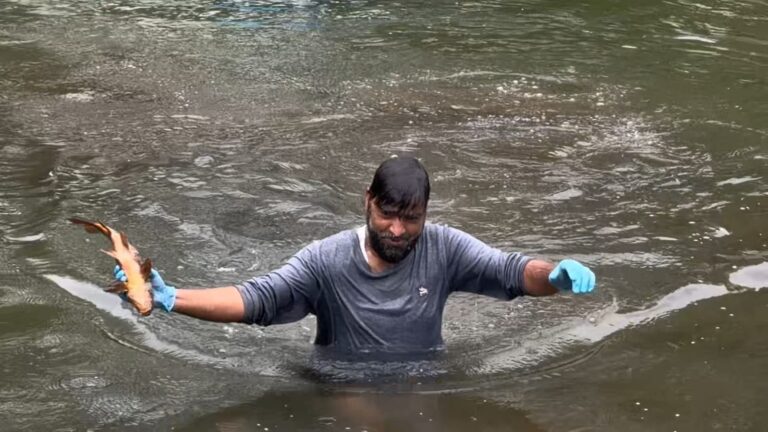
Ganderbal, Apr 8 : A large number of dead fish were found in a spring at Beehama area of central Kashmir’s Ganderbal district, triggering concern among locals and environmental observers.

Residents as per news Kashmir Despatch reported that fish were seen floating lifeless in the water, raising fears of possible contamination or pollution of the spring.

The incident has sparked serious concerns about the condition of the water source, which is widely used by nearby communities for daily needs.

Locals have urged the authorities to take immediate steps, conduct a thorough investigation and ascertain the exact cause behind the mass fish deaths.

They also demanded urgent testing of water quality to rule out any potential threat to public health and the surrounding ecosystem.

Social activist Bilal Bhat appealed to the concerned departments to visit the site at the earliest and carry out a detailed inquiry into the incident.

Officials are yet to issue any formal statement in this regard.

2 Govt employees sacked in J&K over terror links

0

Srinagar, Apr 8: Jammu and Kashmir Lieutenant Governor Manoj Sinha has terminated the services of two government employees for their alleged links with terrorist outfits, officials said on Wednesday.

The dismissals were carried out under Article 311(2)(c) of the Constitution, which allows termination of employees in the interest of state security without an inquiry.

According to officials, one of the dismissed employees has been identified as Farhat Ali Khanday, a Class-IV employee in the education department in Ramban. Investigations have alleged that he was associated with the terrorist outfit Hizbul Mujahideen and was involved in facilitating terror-related activities.

They said Khanday first came under the radar of security agencies in 2011 during investigations into a hawala network linked to militant funding. He was later arrested and subsequently released on bail, following which he allegedly continued his activities. A chargesheet in the case was filed in 2022, officials said, adding that he remained in contact with militant networks.

The second dismissed employee, Mohammad Shafi Dar from Bandipora, was working as a Class-IV employee in the rural development department. Officials said he was linked to the militant outfit Lashkar-e-Taiba and was providing logistical support to terrorist.

According to investigators, Dar was involved in arranging shelter, facilitating movement of terrorists and sharing information related to deployment of security forces. He was arrested in April 2025 during a joint naka checking, during which an AK-56 rifle, a grenade and ammunition were recovered, officials said.

They added that investigations indicated Dar had become an active operative and was allegedly involved in planning attacks on security forces.

Officials said the administration has dismissed more than 90 employees so far over alleged links with terrorist groups as part of its policy of zero tolerance towards terrorism.

The Lieutenant Governor has reiterated that action will continue against those found involved in activities prejudicial to the security of the state, they added.(KNS).

Civil Aviation Ministry adopts multi-layered approach to maintain stability of aviation sector during ongoing disruptions

0

New Delhi: In continuation of its regular engagement with the media on the evolving situation in West Asia, the Government of India held a briefing at the National Media Centre today. Representatives from the Ministries of Petroleum and Natural Gas, Ports, Shipping and Waterways, and External Affairs, shared updates on fuel availability, maritime operations, and assistance to Indian nationals in the region, along with measures being taken to ensure stability across sectors. The Ministry of Civil Aviation also provided updates related to the aviation sector.

Aviation Sector Updates

The Ministry of Civil Aviation highlighted measures being taken to ensure continuity of services, facilitate passenger travel, and maintain coordination with airlines and relevant authorities. As per Ministry:

· The Indian aviation sector is currently navigating a serious operational and financial situation triggered by the conflict in West Asia that began in late February. The Ministry of Civil Aviation has implemented a multi-layered response to ensure passenger safety and convenience while working on keeping the industry stable.

· The Ministry of Civil Aviation is closely and continuously monitoring the evolving situation arising out of the ongoing conflict in the Western Asia region. Several countries, including Iran, Iraq, Israel, Jordan, Lebanon, Kuwait, Qatar, Bahrain, and the UAE, have imposed airspace closures or severe restrictions, leading to unprecedented disruption in global aviation networks and international connectivity.

· Despite these challenging and constrained conditions, Indian carriers have demonstrated exceptional resilience and operational agility in maintaining services from this region, which underscores the robustness and responsiveness of the aviation sector.

· However, due to the airspace restrictions, flights to Europe and North America by Indian carriers have to take longer routes, which has increased travel time.

· ATF pricing: Due to timely intervention by the Government on the pricing of Aviation Turbine Fuel (ATF), which constitutes around 40% of operational costs of airlines, domestic airfares have remained stable.

· Moreover, the Ministry, in coordination with other stakeholders, is actively engaged in working on other significant measures to support the industry.

· Operational relaxations have also been extended. Especially to manage the strain of longer routes, the Directorate General of Civil Aviation (DGCA) has temporarily relaxed pilot flight duty time limitations to prevent acute crew shortages.

· To maintain essential supply chains, foreign carriers such as Emirates, Kuwait Airways and Jazeera Airways have been granted special dispensation to operate passenger aircraft for all-cargo services. This has ensured seamless continuity of critical cargo movement despite the ongoing disruptions.

· While the situation remains dynamic, the Government remains firmly committed to ensuring passenger safety and convenience, uninterrupted cargo movement, and overall sectoral stability. The Ministry of Civil Aviation continues to work in close and continuous coordination with all stakeholders to ensure an effective, balanced and responsive approach during this period.

Energy Supply and Fuel Availability

The Ministry of Petroleum and Natural Gas shared an update on the current fuel supply situation, outlining measures being undertaken to ensure uninterrupted availability of petroleum products and LPG amid the ongoing developments affecting the Strait of Hormuz. It was noted that:

Public Advisory and Citizen Awareness

· Citizens are advised to avoid panic purchase of petrol, diesel and LPG and rely only on official sources for information.

· LPG consumers are requested to use digital booking platforms and avoid visiting distributors.

· Citizens are encouraged to use alternate fuels such as PNG and electric or induction cooktops.

· All citizens are urged to conserve energy during the current situation.

Government Preparedness and Supply Management Measures

· Despite the ongoing geopolitical situation, the Government has prioritised domestic LPG and PNG supply, particularly for hospitals and educational institutions.

· The Government has already implemented several rationalisation measures on both the supply and demand side, including enhancing refinery production, increasing the booking interval from 21 to 25 days in urban areas and up to 45 days in rural areas and prioritising sectors for supply.

· Alternate fuels such as kerosene and coal have been made available to ease pressure on LPG demand.

· The Ministry of Coal has directed Coal India and Singareni Collieries to supply additional coal to States for distribution to small and medium consumers.

· States have been advised to facilitate new PNG connections for domestic and commercial consumers.

Coordinated Efforts with States/UTs and Institutional Mechanisms

· State Governments are empowered under the Essential Commodities Act, 1955 and LPG Control Order, 2000 to monitor supply and act against hoarding and black marketing of petroleum products.

· The Government of India vide letters dated 27.03.2026 and 02.04.2026 have stressed the need for proactive public communication to reassure citizens regarding adequate fuel availability. Regular review meetings are being held with States/UTs. In this context, meetings were convened on 02.04.2026 (Chaired by Secretary, MoPNG) and on 06.04.2026 (Chaired by Secretary, MoPNG along with Secretaries of I&B and Consumer Affairs), wherein the following was emphasized:

Ø To issue daily press briefings and issue regular public advisories.

Ø To actively monitor and counter fake news / misinformation on social media.

Ø To intensify daily enforcement drives by District admin and to continue raids and inspections in coordination with OMCs

Ø To issue Commercial LPG allocation orders within their States/UTs

Ø To issue SKO allocation orders for additional SKO allotted to the States/UTs.

Ø To promote PNG adoptions and alternate fuels.

Ø To prioritise LPG supply, especially for domestic needs, and adopt targeted distribution of 5 kg FTL cylinders to ensure supply stability.

· All States/UTs have established control rooms and district monitoring committees to curb hoarding and black marketing.

· Currently, 24 States/UTs are issuing regular press briefings.

Enforcement and Monitoring Actions

· Enforcement actions continue across the country to curb hoarding and black marketing of LPG. Yesterday, more than 4300 raids were conducted, and more than 1200 cylinders were seized across the country.

· PSU Oil Marketing Companies have strengthened surprise inspections and issued over 1700 show-cause notices, imposed penalties on 168 LPG distributorships and suspended 45 distributorships.

LPG Supply

Domestic LPG Supply Status:

· LPG supply continues to be affected by the prevailing geopolitical situation.

· No dry-outs have been reported at LPG distributorships.

· Online LPG bookings have increased to about 96% across the industry.

· Delivery Authentication Code (DAC) based deliveries have increased to around 90% to prevent diversion.

· Domestic LPG cylinder deliveries remain normal.

Commercial LPG Supply and Allocation Measures:

· The Government of India vide order dated 01.04.2026 has permitted Refining companies including Petrochemical Complexes in India to make available certain minimum quantities of C3 & C4 streams for critical sectors like Department of Pharmaceuticals, Department of Food & Public Distribution, Department of Chemicals & Petro Chemicals etc. based on specific quantity and refinery source as determined by the Centre for High Technology (CHT).

· Total commercial LPG allocation has been increased to about 70% of pre-crisis levels, including 10% reform-linked allocation.

· The Government of India vide letter dated 06.04.2026 has conveyed that daily quantity of 5 Kg FTL cylinders in each State available for disbursal to migrant labourers is being doubled based on the average daily supply (Number of cylinders) to migrant labourers during 2nd-3rd March 2026 beyond the limit of 20% mentioned in letter dated 21.03.2026. These 5 Kg FTL cylinders will be at disposal of the State Government for supplying only to migrant labourers in their State with assistance of Oil Marketing Companies (OMCs).

· Since 23 March 2026, about 7.8 lakh 5-kg Free Trade LPG cylinders have been sold.

· PSU OMCs have organised around 1300 awareness camps for 5 Kg FTL Cylinders during last 4 days, wherein More than 10,000 – 5Kg FTL cylinders were also sold.

· On 06.04.2026, more than 1.06 Lakh 5 Kg FTL Cylinders were sold across the country against a daily average of 77000 in the month of Feb-26.

· A three-member committee of Executive Directors from IOCL, HPCL and BPCL is coordinating with State authorities and industry bodies to plan commercial LPG distribution.

· About 86,439 MT of commercial LPG (equivalent to over 45.5 lakh 19-kg cylinders) has been sold since 14 March 2026. Yesterday, 6530 MT of Commercial LPG (Equivalent to more than 3.4 Lakh – 19 Kg cylinders) was sold.

Natural Gas Supply and PNG Expansion Initiatives

· Priority sectors continue to receive protected supplies, including 100% supply to domestic PNG and CNG transport.

· Gas supply to operating urea plants is currently around 80 percent of their six-month average consumption, following enhancement of overall allocation to fertilizer plants to about 90 percent of their six-month average consumption from 6 April 2026.

· Gas supply to other industrial and commercial sectors, including City Gas Distribution (CGD) networks, has also been enhanced by a further 10%, effective 06.04.2026.

· CGD entities have been advised to prioritise PNG connections for commercial establishments such as hotels, restaurants and canteens.

· CGD companies including IGL, MGL, GAIL Gas and BPCL are offering incentives for domestic and commercial PNG connections.

· States/UTs and Central Ministries have been requested to expedite approvals required for expansion of CGD networks.

· The Government of India vide letter dated 18.03.2026 has offered all States/UTs additional 10% allocation of commercial LPG to States provided they can help in long term transition from LPG to PNG.

· 18 States/UTs are already receiving additional commercial LPG allocation linked to PNG expansion reforms.

· PNGRB has directed CGD entities to connect institutions such as schools, hostels, community kitchens and anganwadi kitchens through PNG within five days where pipelines are available.

· The Ministry of Road Transport & Highways has adopted an Accelerated Approval Framework for CGD infrastructure for three months to process applications on priority.

· The Government of India vide Gazette dated 24.03.2026 has notified the Natural Gas and Petroleum Products Distribution (Through Laying, Building, Operation and Expansion of Pipelines and Other Facilities) Order, 2026 under the Essential Commodities Act, 1955. The Order provides a streamlined and time-bound framework for laying and expanding pipelines across the country, addressing delays in approvals and access to land, and enabling faster development of natural gas infrastructure, including in residential areas. It is expected to accelerate PNG network growth, enhance last-mile connectivity, and support the transition to cleaner fuels, thereby strengthening energy security and advancing India’s gas-based economy.

· The Ministry of Defence has issued a short-term policy modification till 30 June 2026 to expedite PNG infrastructure installation in defence residential areas.

· PNGRB has extended the National PNG Drive 2.0 till 30 June 2026 to sustain momentum in PNG expansion.

· To encourage cleaner, more secure and self-reliant energy future, the Government of India has developed a model draft State CBG Policy. The model policy is intended to serve as a comprehensive flexible guiding framework to enable States to create their own investor-friendly and implementation-oriented ecosystem for CBG development. Those States which opt for this, will be prioritized for the next tranche of additional allocation of commercial LPG.

· Since March 2026, about 3.76 lakh PNG connections have been gasified and about 4.1 lakh additional customers have registered for new connections.

  • More than 16,500 PNG consumers have surrendered their LPG connections via MYPNGD.in website.

Crude Position and Refinery Operations

· All refineries are operating at high capacity with adequate crude inventories, while sufficient stocks of petrol and diesel are being maintained.

· Domestic LPG production from refineries has been increased to support domestic consumption.

Retail Fuel Availability and pricing Measures

· Retail outlets across the country are operating normally.

· The Middle East crisis has led to an abnormal increase in crude prices; however, to protect consumers, the Government of India has reduced excise duty on petrol and diesel by ₹10 per litre.

· Export levy has been imposed at ₹21.5 per litre on diesel and ₹29.5 per litre on Aviation Turbine Fuel (ATF) to ensure adequate domestic availability.

· Retail prices of petrol and diesel remain unchanged with no increase at retail outlets.

· The Government has advised citizens not to believe rumours and requested State Governments to disseminate accurate information through press briefings.

Kerosene Availability and Distribution Measures

· An additional allocation of 48,000 KL of kerosene has been provided to States/UTs over and above regular allocation.

· The Government of India vide Gazette notification dated 29.03.2026 has facilitated distribution of PDS Superior Kerosene Oil (SKO) in PDS SKO Free States/UTs for cooking and lighting purpose only –

Ø A maximum of two PSU OMC service stations per district (preferably Company Owned Company Operated) are permitted to store up to 5,000 litres of PDS SKO.

Ø These PSU OMC service stations shall be designated by the State Government or UT administration in each district.

· 18 States/UTs have issued SKO allocation orders, while Himachal Pradesh and Ladakh have indicated no requirement.

Maritime Safety and Shipping Operations

The current maritime situation in the Persian Gulf, along with measures being undertaken to safeguard Indian vessels and crew, was also briefed. It was stated that:

· All Indian seafarers in the region are safe and no incident involving Indian-flagged vessels has been reported in the past 24 hours.

· At present, 16 Indian-flagged vessels with 433 Indian seafarers remain in the western Persian Gulf region. The Directorate General of Shipping (DG Shipping), in coordination with ship owners, RPSL agencies and Indian Missions, continues to closely monitor the situation.

· The DG Shipping Control Room remains operational 24×7 and has handled 5,342 calls and 11,053 emails since activation, including 229 calls and 406 emails in the past 24 hours.

· DG Shipping has facilitated the safe repatriation of over 1,691 Indian seafarers so far, including 92 in the last 24 hours from airports and various regional locations across the Gulf.

· Port operations across India continue normally with no congestion reported. State Maritime Boards of Gujarat, Maharashtra, Goa, Keralam, Andhra Pradesh and Puducherry have confirmed smooth functioning.

· The Ministry continues to coordinate with the Ministry of External Affairs, Indian Missions and maritime stakeholders to ensure the welfare of Indian seafarers and uninterrupted maritime operations.

Safety of Indian Nationals in the Region

Recent developments in the region, including assistance through Indian Missions, were shared during the briefing. It was informed that:

· The Ministry of External Affairs continues to closely monitor developments in the Gulf and West Asia region, with the safety, security and welfare of the Indian community remaining the highest priority.

· The Ministry remains in close coordination with State Governments and Union Territories for dissemination of advisories and coordination with Indian Missions and Consulates.

· A dedicated MEA Special Control Room continues to operate in coordination with Missions and Posts across the region to assist Indian nationals.

· Missions and Posts are maintaining 24×7 helplines and responding to queries through email and social media channels. They are issuing regular advisories with updated information on safety, local government guidelines, flight and travel status and consular services.

· Indian ambassadors are regularly engaging with Indian community associations, professional groups and Indian companies to address their concerns. Missions are facilitating visas, transit through neighbouring countries where airspace restrictions apply and providing logistical support as required.

· Welfare of Indian students in Gulf countries remains a priority, with Missions coordinating with local authorities, Indian schools, educational boards and the National Testing Agency to address academic concerns.

· Missions are also providing support to Indian seafarers in the region, including coordination with local authorities, consular assistance and facilitating requests for return to India.

· Since 28 February, around 7,60,000 passengers have travelled from the region to India.

· In the UAE, airlines continue to operate limited non-scheduled commercial flights based on operational and safety considerations, with around 90 flights expected to operate today to India.

· Flights continue to operate from various airports in Saudi Arabia and Oman to destinations in India.

· Qatar airspace remains partially open, with Qatar Airways expected to operate around 8–10 flights to India today.

· Kuwait airspace remains closed, with Jazeera Airways and Kuwait Airways operating non-scheduled flights from Dammam Airport in Saudi Arabia to India.

· Bahrain airspace remains closed, with Gulf Air operating non-scheduled flights from Dammam Airport in Saudi Arabia to India.

· The Embassy of India in Tehran has facilitated the movement of 1,862 Indian nationals from Iran to Armenia and Azerbaijan for onward travel to India, including 935 Indian students and 472 Indian fishermen.
Indian Railways Boosts Digital, Telecom Infrastructure to Enhance Safety and Efficiency

0

Vinod Bhat

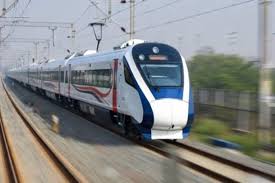
New Delhi: Indian Railways has made significant strides in strengthening its telecom and digital infrastructure during the year 2025-26, with a focused approach towards enhancing safety, improving operational efficiency, and delivering a better travel experience to passengers. It has played a pivotal role in driving modernization through the adoption of advanced technologies, robust communication systems, and innovative passenger-centric solutions.

Enhancement of Unified Telecom Backbone Infrastructure

A major achievement during the year has been the enhancement of the Unified Telecom Backbone Infrastructure through Internet Protocol Multi-Protocol Label Switching (IP MPLS) technology. This high-capacity network is being developed to meet present and future bandwidth requirements of mission-critical railway applications. The system enables centralized accessibility of video surveillance and will support core railway systems such as Mobile Train Radio Communication (MTRC), Passenger Reservation System (PRS), Unreserved Ticketing System (UTS), Freight Operations Information System (FOIS), Supervisory Control and Data Acquisition (SCADA), video conferencing, and other operational applications. So far, IP MPLS has been successfully commissioned at 1,396 railway stations, marking a significant step towards a digitally integrated railway ecosystem.

AI-Enabled Video Surveillance for Passenger Safety

In the area of passenger safety and security, Indian Railways has expanded its Video Surveillance System (VSS) across 1,874 railway stations. The system is equipped with advanced AI-based Video Analytics for automated detection of events such as intrusion and loitering, along with Facial Recognition Software for real-time identification and monitoring. Highlighting the importance of this technological advancement, the Union Railway Minister, who had earlier stated that “the cameras will be the eyes of the system, and AI will be its brain”, emphasized the transformative role of artificial intelligence in strengthening railway security.

Upgradation of Passenger Information Systems with Real-Time Announcements

Passenger information systems have also witnessed major upgrades with the expansion of the Integrated Passenger Information System (IPIS). Equipped with Electronic Train Indicator Boards, Coach Guidance Systems, and Public Address Systems, IPIS ensures timely dissemination of train-related information. The integration of IPIS with the National Train Enquiry System (NTES) enables automatic, real-time announcements at stations. To date, this integration has been achieved at 1,405 stations across Indian Railways.

Tunnel Communication Systems for Seamless Connectivity

Further enhancing communication capabilities, the provision of Tunnel Communication Systems has been undertaken across various railway zones, including the strategically significant Udhampur-Srinagar-Baramulla Rail Link (USBRL) project. This system ensures uninterrupted radio communication between personnel inside tunnels to headquarters and operation control centers, thereby improving safety and coordination in challenging terrains.

Iran forms human chains to protect power plants as Trump’s strike deadline looms

0

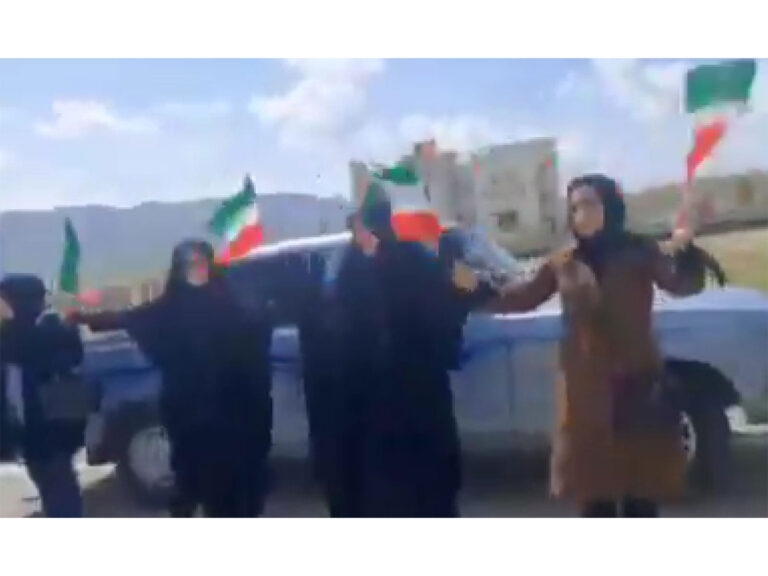
Ilam [Iran]: Citizens in the city of Ilam formed a human chain on Tuesday to demonstrate their defiance against recent threats from US President Donald Trump. According to the Iranian news agency, Tasnim, the public gathering was organised specifically to condemn the American administration’s warnings of potential strikes on Iran’s critical infrastructure, including bridges and power plants.

Visuals from the scene show a diverse group of residents, including men, women, and children, lining the roadside to create a symbolic barrier. Participants were seen holding Iranian flags and placards featuring the images of national leaders, while many joined hands to form a continuous line along a main thoroughfare.

The demonstration served as a direct response to the escalating rhetoric from Washington. The people of Ilam used the human chain to voice their opposition to any planned military action targeting the country’s civilian and logistical facilities. Large banners were also displayed by the protesters, with many individuals chanting patriotic slogans to signify national unity.

This grassroots mobilisation aligns with a broader national effort to shield strategic assets. Amid escalating tensions and direct threats from the US to target civilian infrastructure, Iran’s Deputy Sports Minister, Alireza Rahimi, has called on the nation’s athletes and artists to form “human chains” around power plants. This is seen as a symbolic and physical attempt to deter potential airstrikes following a series of specific ultimatums from the US administration.

In a video message, Rahimi invited all youth, athletes, artists, students and faculty on Tuesday at 2 PM local time to gather near power plants. “These are our wealth and belongings,” he stated, urging the public to protect the nation’s resources as the deadline set by the White House approaches.

These local and official mobilisations have become a focal point for domestic resistance as US President Donald Trump continues to issue provocative statements suggesting a monumental shift in the geopolitical landscape. Taking to his Truth Social platform, Trump warned of the potential for unprecedented destruction while simultaneously hinting at a transition of power within Iran.

“A whole civilisation will die tonight, never to be brought back again. I don’t want that to happen, but it probably will,” Trump wrote, reflecting the gravity of the ongoing military standoff. The statement comes amidst reports of US strikes on Kharg Island and other strategic Iranian infrastructure.

Despite the ominous warning, the President suggested that a new political reality might be emerging in Tehran. He claimed that “now that we have Complete and Total Regime Change, where different, smarter, and less radicalised minds prevail, maybe something revolutionarily wonderful can happen, WHO KNOWS?”

Trump framed the current escalation as the culmination of a decades-long period of hostility, stating that “47 years of extortion, corruption, and death will finally end.” He ended his message with a note of support for the Iranian populace, writing, “God Bless the Great People of Iran!” as the world awaits the outcome of the 8:00 PM Eastern Time deadline.

This rhetoric underscores the ultimatum for Iran to reopen the Strait of Hormuz. Trump has warned that failure to comply will result in a simultaneous, massive bombing campaign aimed at “each and every one” of Iran’s electric generating plants and bridges. He stated on Monday that the goal would be to leave these facilities “burning, exploding, and never to be used again” within a four-hour window, adding, “The entire country could be taken out in one night.”

Emphasising that this is a “critical period,” Trump noted that Washington provided Tehran with a 10-day window to reach an agreement to end the war. “They have till tomorrow. Now we will see what happens… After that, they are going to have no bridges. They are going to have no power plants. Stone ages,” he said, reiterating that the ultimatum marks a final opportunity for Tehran to avoid total infrastructure collapse. (ANI)

ACB nabs two PWD officials in Baramulla for taking Rs 13,000 bribe

0

Srinagar, Apr 07: The Anti-Corruption Bureau (ACB) on Tuesday said they have caught two officials of the PWD (R&B) Mechanical Division, North Kashmir, Baramulla, red-handed while accepting a Rs 13,000 bribe allegedly demanded to release a pending payment.

In a statement issued, a spokesperson said an information was received telephonically at Anti-Corruption Bureau, J&K on 06.04.2026 through ACB Helpline No. 9419678060 from a complainant, who disclosed that he is working as Manager for a private firm duly registered on the GeM Portal.

He said, it was further stated that the said firm had participated in a tender floated by PWD (R&B) Mechanical Division, North Kashmir, Baramulla for supply of a customised vehicle for live fish transportation, wherein the firm was declared L1 and the vehicle was subsequently delivered to the Department of Fisheries, Bandipora.

“It was further revealed that the firm had raised the bill on the GeM Portal and also submitted hard copies before the concerned department, whereupon the bill was processed and forwarded to the Accounts Section for release of payment. However, despite completion of all formalities, the payment was deliberately withheld for several days for want of bribe,” said the spokesperson.

He said, the complainant approached ACB and requested legal action against Mushtaq Ahmad (Sr. Assistant) and Farooq Ahmad (Jr. Assistant) of PWD (R&B) Mechanical Division, North Kashmir, Baramulla for demanding bribe of ₹13,000/-from him for release of payment.

“Upon receipt of the complaint and after conducting discreet verification, the allegations were found prima facie substantiated. Accordingly, a case FIR No. 01/2026 under Section 7 of the Prevention of Corruption Act, 1988 (as amended in 2018) read with Section 61 of the Bharatiya Nyaya Sanhita, 2023 was registered at Police Station ACB Baramulla and investigation was set into motion.”

The spokesperson added, During the course of investigation, a team of ACB laid a successful trap and apprehended both the accused public servants for demanding and accepting bribe from the complainant. The accused were taken into custody on the spot after completing necessary legal formalities.

“Further investigation in the case is going on. Taking and giving bribe is a crime, if any government employee demands bribe for any official work in Jammu & Kashmir , Citizens can reach the Anti-Corruption Bureau (ACB) through the toll-free helpline 1800-180-7152 or the WhatsApp number 9419678060. Complaints and grievances may also be submitted via the Satark Nagrik Mobile App or by email [email protected],” said the spokesperson further.—(KNO)

NGTs constituted team from MoEF, CPCB visit Earth Mining sites

0

DCs of Pulwama and Budgam also accompanied the team

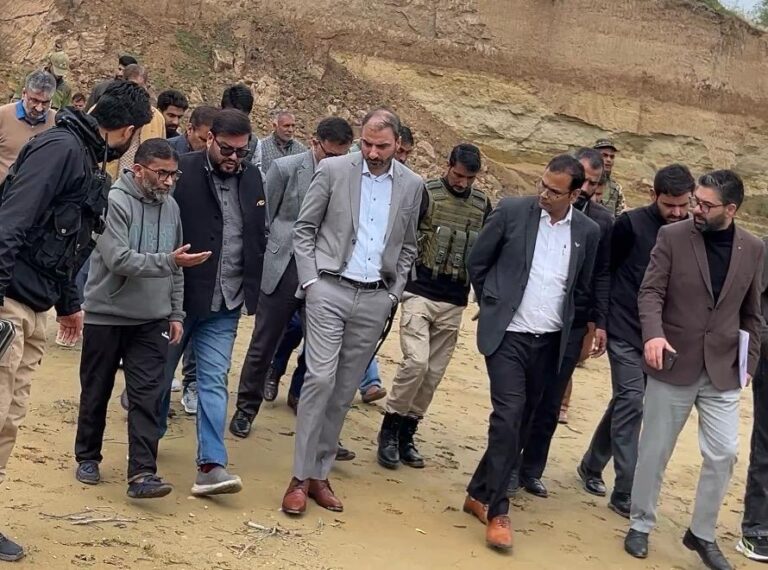
Srinagar April 7: A joint team constituted by National Green Tribunal-NGT comprising of senior officials of Ministry of Environment Forest and Climate Change MoEF and Central Pollution Control Board-CPCB along with Deputy Commissioners of Pulwama and Budgam on Tuesday visited Zadoora Pulwama and Rangeen Kultreh villages in Chadoora Budgam to make assessment of illegal Earth Mining in these areas.

The team had come on the orders of NGT where a petition was moved by Environmental Activist Dr Raja Muzaffar Bhat early this year. The joint team met the local aggrieved orchardists of Zadoora Pulwama , Rangeen Kultreh, Gowherpora ,local villagers and the petitioner Dr Raja Muzaffar Bhat. The officials of Revenue, Mining , Pollution Control Committee, Police were present on the occasion . Locals demanded action to be taken against the illegal mafia especially the NKC Projects Pvt Ltd who looted these areas for the last 2 to 3 years . The locals also demanded compensation payment to local panchayats and restoration of damaged sites with proper landscaping. DC Pulwama Dr Basharat Qayoom who has been designated as the coordinating officer by NGT in this case also agreed in person that damaged sites in Zadoora would be restored and affected people , orchardists adequately compensated. After visiting Zadoora Pulwama the team visited Rangeen Kultreh and Gowherpora villages in Chadoora Budgam. Deputy Commissioner Budgam Athar Amir Khan, SDM Chadoora , DMO Budgam and other senior officers were also present on the site. DC Budgam assured that mining sites would be restored and affected people compensated. He directed the DMO Budgam to stop giving any kind of permissions for earth mining.


Taking serious note of a petition highlighting extensive earth extraction across the plateau-like Karewas, the Principal Bench of the National Green Tribunal on February 6th this year had ordered officials from the Ministry of Environment, Forest and Climate Change (MoEFCC), the Central Pollution Control Board (CPCB), and district administrations of Pulwama and Budgam to conduct a detailed site inspection and submit a report within ten weeks.

The case was heard on February 6 by a bench led by NGT Chairperson Justice Prakash Srivastava and Expert Member A Senthil Vel. The tribunal observed that the allegations pointed to serious environmental violations and warranted immediate on-ground verification.

According to submissions made before the tribunal, illegal mining operations in villages including Zadoora and Rangeen Kultreh in Pulwama, and areas of Chadoora in Budgam, have allegedly damaged nearly 1,000 kanals of Karewa and orchard land. Counsel for the applicant presented geotagged photographs, lists of affected farmers, and official documents obtained through the Right to Information Act to demonstrate the scale of extraction.

It was argued that heavy machinery such as hydraulic excavators and JCBs were deployed to extract clay, sand and bajri without mandatory environmental clearances, consent to operate, or legally sanctioned mining leases. The petition also cited violations of the Jammu and Kashmir Minor Minerals Concession Rules, 2016, and the Sustainable Sand Mining Guidelines.

The tribunal, while issuing notices to the respondents, directed the joint committee to determine the extent of illegal mining, quantify the material extracted, identify those responsible, review the status of environmental clearances, and recommend remedial and punitive measures.

The bench also referred to the Supreme Court’s ruling in Deepak Kumar versus State of Haryana, which mandates environmental clearance even for minor mineral leases below five hectares, emphasising that unregulated sand mining can destabilise soil, damage biodiversity and cause long-term ecological harm.The case is listed for further hearing on May 18, 2026.

MVD conducts major enforcement drive across Kashmir Division

0

SRINAGAR, APRIL 06: Motor Vehicles Department (MVD) today
carried out a comprehensive enforcement in all districts of Kashmir Division to ensure strict compliance with traffic regulations and enhance road safety.

The drive was conducted at multiple strategic locations, including
high-traffic zones and accident-prone areas, under the supervision of
Regional Transport Officer (RTO), Kashmir with over monitoring of
Transport Commissioner J&K of the department.

Special teams were deployed to check violations such as driving without valid licenses, overloading, non-use of seat belts and helmets, use of mobile phones while driving, and non-compliance with emission norms.

During the enforcement drive significant number of vehicles were
inspected, and 822 violators were issued challans,124 vehicles were
blacklisted on spot ,196 DLs were recommended for suspension and
revenue of Rs 18.56 lakh was realised from challans as per the provisions of
the Motor Vehicles Act.

Officials stated that the initiative aims to instill a sense of responsibility among motorists and reduce the incidence of road accidents.

The department has also urged citizens to cooperate with
enforcement agencies and strictly follow traffic rules for their own safety and that of others.

Further drives are planned in the coming weeks as part of an
ongoing campaign to promote safer roads across the whole kashmir
division.

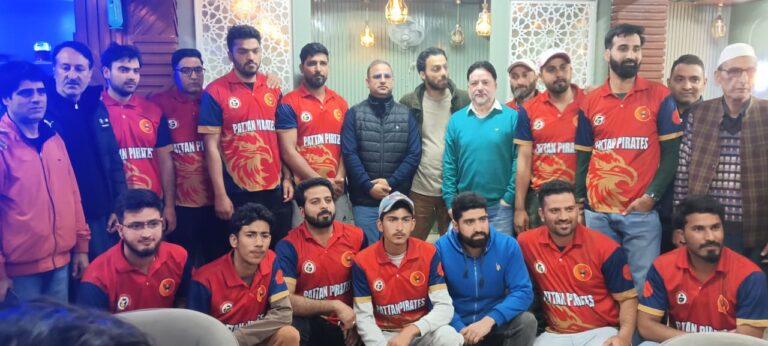
Pattan Pirates Cricket Club Unveils New Uniform in Grand Ceremony at Hatrick Restaurant Pattan

0

Pattan ‘: In a vibrant and celebratory event, the Pattan Pirates Cricket Club officially unveiled its new team uniform at Hatrick Restaurant, Pattan. The event marked an important milestone for the club as it gears up for upcoming cricket engagements.

The ceremony was organized and hosted by the management body of the Pattan Pirates Cricket Club, drawing the presence of players, supporters, and members of the local community. The newly launched uniform reflects the team’s identity, spirit, and aspirations for excellence in the sport.

The event was sponsored by Global Diagnostic Centre Baramulla, whose support was acknowledged by the organizers for promoting local sports and youth engagement.

The chief guest on the occasion, Yawar Mir, Spokesperson and former MLA Rafiabad, lauded the efforts of the club in nurturing cricketing talent at the grassroots level. He emphasized the importance of sports in youth development and encouraged the team to strive for discipline, teamwork, and success.

Speaking at the event, members of the club expressed gratitude to sponsors and supporters, while reiterating their commitment to representing Pattan with pride in forthcoming tournaments.
Event was organised by Mohammad Lateef

The ceremony concluded with a formal unveiling of the uniforms, followed by interactions and a shared sense of enthusiasm among attendees for the club’s future journey.

Railways Drive Kashmir’s Tourism and Trade Boom

0
The steady transformation of railway infrastructure in Jammu and Kashmir stands as one of the most consequential developmental milestones in the region’s modern history. The concerted efforts of the Ministry of Railways and the Government of India, executed through the vast network of Indian Railways, deserve deep appreciation for ushering in a new era of connectivity, economic vitality, and tourism growth in this picturesque yet historically underserved region.
For decades, Jammu and Kashmir’s challenging terrain and climatic conditions posed formidable barriers to seamless connectivity. The Valley, despite its immense natural beauty, often remained isolated—especially during harsh winters when road access via the Jammu-Srinagar highway would be disrupted. This isolation not only affected daily life but also limited the full potential of tourism, trade, and socio-economic development. The expansion and modernization of railway infrastructure have now begun to decisively overcome these long-standing hurdles.
The ongoing development of the Udhampur-Srinagar-Baramulla Rail Link (USBRL) project is nothing short of an engineering marvel. Tunnels piercing through the mighty Himalayas, bridges spanning deep gorges, and tracks laid across difficult terrains symbolize not just technical excellence but also a strong political will to integrate Jammu and Kashmir more closely with the rest of the country. These efforts reflect a vision that goes beyond connectivity—it is about inclusion, accessibility, and opportunity.
From a tourism perspective, the impact is already becoming visible. Railways offer a safe, affordable, and comfortable mode of travel, which is particularly appealing to domestic tourists. With improved connectivity, travelers from across India can now plan visits to Kashmir with greater ease and predictability. This is crucial for a region where tourism forms the backbone of the economy. Enhanced rail access reduces travel fatigue, lowers costs, and opens the doors for a wider segment of society to experience the Valley’s unparalleled beauty.
Moreover, railway connectivity brings stability to the tourism sector. Unlike road travel, which is often subject to weather-related disruptions, railways provide a more reliable alternative. This reliability encourages consistent tourist inflow, enabling local businesses—hotels, houseboats, transport operators, artisans, and small vendors—to thrive. The ripple effect of this economic activity extends to employment generation, improved livelihoods, and overall regional prosperity.
A particularly transformative impact is being witnessed in Kashmir’s horticulture sector, which forms the backbone of the rural economy. The Valley’s world-renowned produce—apples, cherries, pears, walnuts, almonds, and saffron—has long suffered from logistical bottlenecks due to overdependence on road transport. Delays, high freight costs, and spoilage during transit often eroded farmers’ profits. The expansion of railway connectivity offers a game-changing alternative. Faster and more efficient transport ensures that perishable goods reach distant markets in better condition, preserving quality and enhancing value realization.
Railways also enable bulk transportation at relatively lower costs, making it viable for small and marginal farmers to access national markets. With improved cold chain linkages and cargo handling facilities at railway stations, the horticulture industry stands to gain immensely. Reduced transit time not only minimizes post-harvest losses but also strengthens Kashmir’s competitiveness in domestic and even export markets. This, in turn, can significantly boost farmers’ incomes and encourage greater investment in high-value crops.
The benefits extend further into the supply chain. Better connectivity facilitates timely availability of fertilizers, pesticides, and modern equipment, thereby improving overall productivity. It also opens avenues for agro-processing industries to flourish, creating additional employment opportunities and value addition within the region. In essence, the railways are not merely transporting goods—they are carrying the promise of economic stability and growth for thousands of farming families.
Equally important is the social dimension of this development. Enhanced connectivity fosters greater cultural exchange and national integration. It allows students, patients, and professionals easier access to opportunities and services across the country. In many ways, the railway lines are not just physical tracks—they are lifelines connecting aspirations with opportunities.
It is also worth acknowledging the immense challenges that have been overcome to make this progress possible. The region’s fragile ecology, seismic sensitivity, and extreme weather conditions required meticulous planning and execution. The successful advancement of railway projects in such an environment speaks volumes about the dedication and expertise of engineers, workers, and planners involved.
As Jammu and Kashmir witnesses this infrastructural transformation, the strengthening of railway networks stands out as a defining catalyst—revitalizing tourism, empowering the horticulture sector, and setting the stage for sustained economic progress across the region.