spot_imgspot_img
spot_img
Home Blog Page 71

PM Gati Shakti Boosts Rail Expansion, 300 Projects Approved Across India

0

Vinod Bhat

New Delhi: The PM Gati Shakti National Master Plan (NMP) was launched in October, 2021 to bring a transformative change in the approach towards planning and execution of infrastructural projects pertaining to the transportation sector. The NMP, spanning across the entire country has brought in synergy between the infrastructural sectors such as railways, shipping, roadways, telecommunications, pipelines, etc. through collaboration amongst concerned Ministries/State Governments/Departments, speeding up the clearances needed for the project completion as well as planning at a faster pace.

Indian Railways has immediately imbibed the principles of Gati Shakti in its project planning process, expediting appraisal, sanction and execution of projects. On ground survey, route alignment, deciding alternative route to avoid passing through forest and wildlife areas, connectivity to ports, mines, collieries is done through PM Gati Shakti Institutional mechanism developed by BISAG-N. This has led to enhancement in the quality of preparation of Detailed Project Report and reduction in project cost.

Now survey of all New Line, Gauge Conversion and Doubling projects are taken up under PM Gati Shakti Institutional mechanism developed by BISAG-N for the development of multimodal connectivity infrastructure to various Economic Zones with an objective to have integrated planning, enhanced logistics efficiency, first and last mile connectivity, throughput enhancement  and remove gaps for seamless movement of people, goods/ commodities i.e. agricultural products, fertilizers, coal, iron ore, steel, cement, limestone etc.

During last three years i.e. FY 2022-23, 2023-24, 2024-25 and the current FY 2025-26, 300 projects (51 New Line, 17 Gauge Conversion and 232 Doubling) of total length 13,808 Km have been sanctioned across Indian Railways under PM Gatishakti National Master Plan.

Some of the major projects sanctioned are as follows:

SN Project Name Cost

(₹ in Crore)

1 Chopan – Chunar doubling (102 Km) 1,553
2 Guntur – Bibinagar doubling (239 Km) 3,238
3 Mudkhed – Medchal & Mahbubnagar – Dhone doubling (418 Km) 5,655
4 Samakhiali – Gandhidham Quadrupling (53 Km) 1,571
5 Merta City – Ras & Bypass at Merta Road new line (56 Km) 1,038
6 Lumding – Furkating doubling (140 Km) 2,334
7 Ajmer – Chanderiya doubling (178 Km) 1,813
8 Motumari – Vishnupuram with RoR doubling (100 Km) 1,746
9 Bikramshila – Katareah new line with new bridge on river ganga (26 Km) 2,549
10 Gunupur – Therubali new line (74 Km) 1,326
11 Malkangiri – Pandurangapuram new line (174 Km) 4,109
12 Badampahar – Kendujhargarh new line (82 Km) 2,106
13 Junagarh – Nabarangpur new line (116 Km) 3,274
14 Buramara – Chakulia new line (60 Km) 1,639
15 Jalna – Jalgaon new line (174 Km) 7,105
16 Bangriposi – Gorumahisani new line (86 Km) 2,549
17 Chandil – Anara – Damodar 3rd line (121 Km) 2,170
18 Bargarh Road – Nawapara Road new line (138 Km) 2,926
19 Sardega – Bhalumuda new double line (37 Km) 1,360
20 Varanasi – Pt. Deen Dayal Upadhyaya Multitracking with rail cum road bridge on

river ganga (15 Km)

2,642
21 Jalgaon – Manmad 4th line (160 Km) 2,773
22 Bhusawal – Khandwa 3rd & 4th line (131 Km) 3,514
23 Sambalpur – Jarapada 3rd & 4th line (127 Km) 3,916
24 Jharsuguda – Sason 3rd & 4th line (35 Km) 1,181
25 Gondia – Ballarshah doubling (240 Km) 4,819
26 Kharsia – Naya Raipur – Parmalkasa 5th & 6th line (278 Km) 8,741
27 Wardha – Balharshah Quadrupling (135 Km) 2,381
28 Ballari – Chikjajur doubling (185 Km) 3,342
29 Koderma – Barkakana doubling (133 Km) 3,063
30 Itarsi – Nagpur 4th line (297 Km) 5,451
31 Dangoaposi – Jaroli 3rd & 4th line (43 Km) 1,752
32 Secunderabad – Wadi 3rd & 4th line (173 Km) 5,012
33 Furkating – New Tinsukia doubling (194 Km) 3,634
34 Bakhtiyarpur – Rajgir – Tilaiya doubling (104 Km) 2,192
35 Gondia – Dongargarh 4th line (84 Km) 2,223
36 Wardha – Bhusawal 3rd & 4th line (314 Km) 9,197
37 Hosapete – Bellary quadrupling (65 Km) 2,372
38 Kasara – Manmad 3rd & 4th line (131 Km) 10,154
39 Punarakh – Kiul 3rd & 4th line (50 Km) 2,668
40 Gamharia – Chandil 3rd & 4th line (55 Km) 1,168
41 Sainthia- Pakhur 4th Line (81 Km) 1,569
42 Santragachi- Kharagpur 4th line (111 Km) 2,905
43 Nergundi – Barang &Khurda Road – Vizianagaram 3rd line (385 Km) 5,618
44 Son Nagar – Andal 3rd and 4th Line (375 Km) 13,606
45 Gorakhpur Cantt – Valmiki Nagar doubling (96 Km) 1,270
46 Jaipur – Sawai Madhopur doubling (131 Km) 1,269
47 Luni – Samdari – Bhildi doubling (272 Km) 3,531
48 Narkatiaganj – Raxaul – Sitamarhi – Darbhanga & Sitamarhi – Muzaffarpur

doubling (256 Km)

4,553
49 Prayagraj (Iradatganj) – Manikpur 3rd line (84 Km) 1,640
50 Tirupati – Pakala – Katpadi doubling (104 Km) 1,332
51 Ratlam – Nagda 3rd and 4th line (41 Km) 1,018
52 Aluabari Road – New Jalpaiguri 3rd & 4th line (57 Km) 1,786
53 Aurangabad (Chhatrapati Sambhajinagar) – Parbhani (177 Km) 2,179
54 Bhagalpur – Dumka – Rampurhat doubling (177 Km) 3,169
55 Itarsi – Bina 4th line (237 Km) 4,329
56 Vadodara – Ratlam 3rd & 4th line (259 Km) 8,885
57 Devbhumi Dwarka (Okha) – Kanalus doubling (141 Km) 1,457
58 Badlapur – Karjat 3rd and 4th line (32 Km) 1,324
59 Delhi – Ambala Cantt 3rd & 4th line (194 Km) 5,983
60 Gondia – Jabalpur doubling (231 Km) 5,236
61 Manmad – Indore new line (360 Km) 18,529
62 Errupelam – Amaravati – Nambur new line (57 Km) 2,245
63 Vadhavan Port and New Palghar station new double line (22 Km) 1,507
64 Deshalpar – Hajipir – Luna and Vayor – Lakhpat new line (145 Km) 2,526

Some of the Projects recently completed are as follows:

S.

No.

Name of project Length

(in Kms)

1 Udhampur- Srinagar- Baramulla new line 272
2 Bhairabi – Sairang New Line 51
3 Deoband – Roorkee New Line 27
4 Churu – Ratangarh Doubling 43
5 Tori-Shivpur 3rd Line 44
6 Araria – Galgalia New Line 110
7 Himmatnagar – Khedbrahma Guage Conversion 55
8 Bahraich- Nanpara -Nepalganj Guage Conversion 56
9 Domingarh- Gorakhpur -Kusumi 3rd Line & Gorakhpur -Nakaha Doubling 21
10 Vijapur – Ambaliyasan Guage Conversion 43
11 Pune- Miraj -Londa Doubling 467
12 Manmad – Jalgaon 3rd Line 160
13 Phephna –Indara- Mau -Shahganj Doubling 150
14 Adraj -Moti -Vijapur Guage Conversion 40
15 Katni -Bina 3rd Line 279
16 Gandhidham- Adipur Quadrupling 21
17 Khatuwas – Narnaul Doubling 24
18 Penukonda- Dharmavaram Doubling 42


During last three years i.e. FY 2022-23, 2023-24, 2024-25 and the current FY 2025-26, 982 no. Surveys (295 New line, 13 Gauge Conversion and 674 Doubling) of total length 67,010 Km have been sanctioned across Indian Railways under PM Gati Shakti National Master Plan.

Sanction of any railway project depends upon many parameters/factors which include the following:

  • Anticipated traffic projections and Remunerativeness of the proposed route
  • First and last mile connectivity provided by the project
  • Connection of missing links and providing additional route
  • Augmentation of congested/saturated lines
  • Demands raised by State Governments/Central Ministries/Public representatives,
  • Railway’s own operational requirements
  • Socio-economic considerations
  • Overall availability of funds

Railway Infrastructure projects enable socio-economic development of the region including:

  • Better connectivity of the region with other parts of the country
  • Faster movement of goods and services
  • Improving logistics efficiency and reduction in transportation cost.
  • Enhance line capacity
  • Increase in direct and indirect employment opportunities for the people of the region
  • Reduced operational bottlenecks
  • Development of tourism industry and increase in industrial activities in the region.

Completion of Railway project/s depends on various factors which include the following:

  • Land acquisition by State Government
  • Forest clearance
  • Shifting of infringing utilities
  • Statutory clearances from various authorities
  • Geological and topographical conditions of area
  • Law and order situation in the area of project site
  • Number of working months in a year for particular project site etc.

All these factors affect the completion time and cost of the project/s.

Various steps taken by the Government for effective and speedy implementation of rail projects include:

  • Substantial increase in allocation of funds.
  • Delegation of powers at field level.
  • Close monitoring of progress of project at various levels.
  • Regular follow up with State Governments and concerned authorities for expeditious land acquisition, forestry and Wildlife clearances and for resolving other issues pertaining to projects.

AIMTC Bolsters J&K Chapter: S. Umar Bhat Joins as Coordinator

0

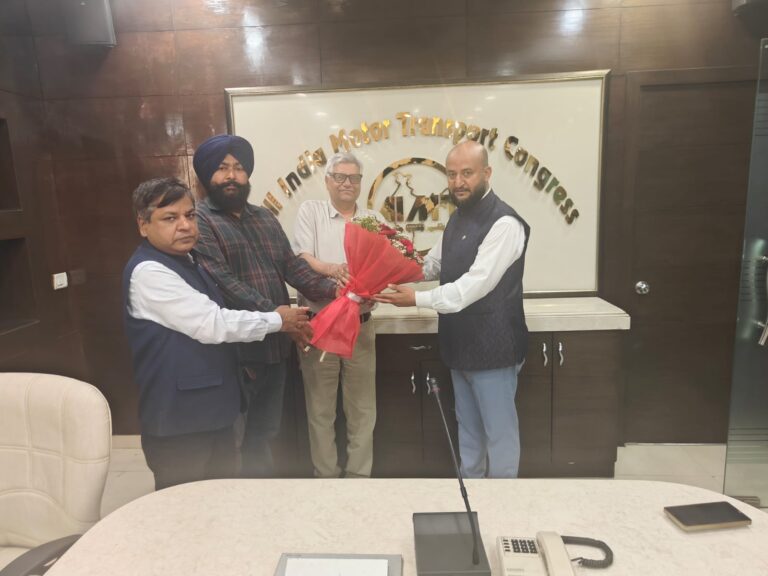
New Delhi | March 27: A strategic meeting was convened today at the All India Motor Transport Congress (AIMTC) Headquarters to reinforce the organization’s footprint in Northern India. The core committee formally welcomed S-Umar Bhat, a distinguished mobility expert and social reformer, into the fold with his appointment as the Co-ordinator for Jammu & Kashmir.

The session, characterized by a shared vision for industrial growth, was presided over by Secretary General Naveen Kumar Gupta. Alongside him, Sardar Amreek Singh, Chairman of the All India Driver Welfare Committee, and former Deputy Commisioner Transport Delhi Er. Anil Chhikara, Transport Expert Advisor (AIMTC) provided expert insights into the unique logistical challenges and opportunities within the region.

The leadership underscored the importance of Bhat’s dual expertise in technical mobility and social advocacy to bridge the gap between policy and grassroots implementation. By integrating Bhat’s localized knowledge and *success mantra in the realm of road safety and drivers welfare.* AIMTC aims to streamline transport operations and enhance driver welfare across the Union Territory.

*The crusade for Drivers Welfare and their Social Security remain at the forefront of AIMTC Agenda at the National Level.*

The committee concluded the meeting by assuring the J&K chapter of unwavering support, pledging technical resources and administrative backing to ensure the region’s transport sector becomes a benchmark for efficiency.

PM Modi chairs meeting with CMs on West Asia crisis

0

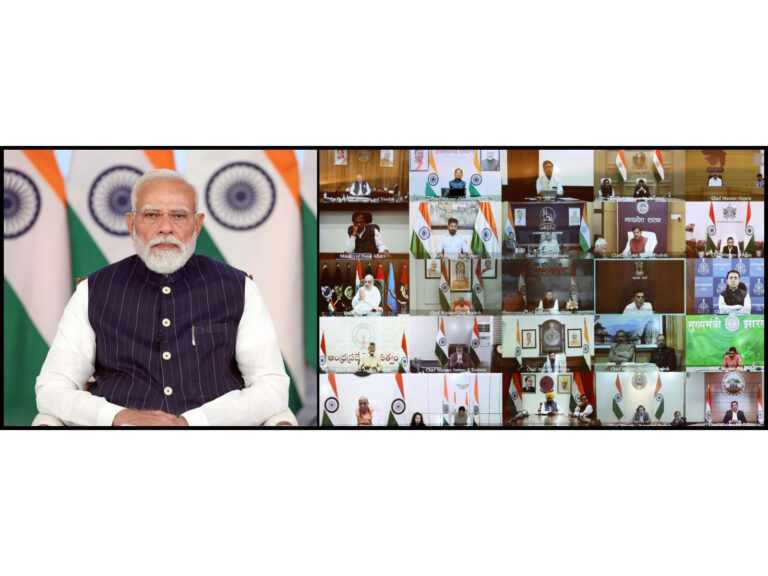
New Delhi: Prime Minister Narendra Modi is chairing a meeting with Chief Ministers through video conferencing on the West Asia conflict to review state preparedness and plans.

Chief Ministers of poll-bound states are not attending the meeting. The Model Code of Conduct is in force in these states.

The government had convened an all-party meeting on the West Asia crisis earlier this week. PM Modi also made a statement on the West Asia crisis in the two Houses of Parliament.

The conflict in West Asia between Israel-US and Iran started on February 28 and has caused energy supply disruptions.

Ministry of Petroleum and Natural Gas said on Thursday that India’s petroleum and LPG supply situation is fully secure and under control and all retail fuel outlets have enough supplies.

It said there is no shortage of petrol, diesel, or LPG anywhere in the country.

The Ministry called upon citizens not to be misled by “a deliberately mischievous, coordinated campaign of misinformation that is being carried out to spread unjustified panic’.

Answering queries during a media interaction here on Friday, Ministry of External Affairs Spokesperson Randhir Jaiswal said India is in touch with all concerned countries for safe transit of its ships to meet energy requirements.

He said India’s energy sourcing is based on the imperative to secure the needs of 1.4 billion people, the dynamics of the market and the global situation.

“We have kept you informed about the Indian ships that have so far crossed the Strait of Hormuz. 4 ships laden with LPG have arrived in India after crossing the Strait safely… We continue to be in touch with all concerned countries for the safe transit of our ships to meet our energy requirements,” Jaiswal said.

“You are well aware of a broad approach to sourcing energy needs. It is based on our imperative to secure the needs of 1.4 billion people, the dynamics of the market and the global situation. These 3 issues are vital for our decision-making,” he added. (ANI)

No Shortage of Petrol, Diesel: Govt Urges Public Not to Believe Rumours

0

Vinod Bhat

New Delhi: Continuing its outreach to keep the media informed on the evolving situation in West Asia, the Government of India held its regular interaction at the National Media Centre today. During the interaction, representatives from the Ministries of Petroleum and Natural Gas, Ports, Shipping and Waterways, External Affairs, and Information and Broadcasting shared updates on fuel availability, maritime operations, assistance to Indian nationals in the region, and steps being taken to ensure stability across these sectors. Senior Officers from the Central Board of Indirect Taxes and Customs (CBIC) also participated and provided updates on recent decisions relating to excise duty.

Tax and Duty-Related Updates

Recent tax and duty measures were highlighted, aimed at supporting supply stability. It was stated that:

· The ongoing crisis in West Asia has implications for the Indian economy, particularly due to disruptions in supplies of petroleum products.

· Following the crisis, there has been a significant surge in international crude oil prices. International prices of petrol, diesel and aviation turbine fuel (ATF) have also increased sharply.

· The prevailing market situation creates incentives for refineries to export petroleum products at higher international prices.

· The Government has responded with calibrated measures to address the situation.

· Export duties have been imposed in the form of Special Additional Excise Duty (SAED) and/or Road and Infrastructure Cess. These duties have been imposed on the export of diesel and aviation turbine fuel (ATF) produced in India.

· As per the notified rates:

Ø Export duty on diesel: Rs 21.50 per litre

Ø Export duty on ATF: Rs 29.50 per litre

Ø Export duty on petrol is nil at present based on prevailing crack margins.

· The rates will be reviewed on a fortnightly basis.

· These measures aim to prioritize domestic availability of diesel and ATF.

· The steps are also intended to ensure energy security for the country amid global uncertainty. These uncertainties have been exacerbated by disruptions in supply chains and volatility in international markets in terms of both availability and price.

· Apart from export-related measures, changes have also been made in excise duties on petrol and diesel for domestic consumption.

· The changes involve a reduction of Rs 10 per litre in the domestic special additional excise duty component on both petrol and diesel.

· These steps are intended to ensure that there is no increase in retail prices of petrol and diesel for consumers during the ongoing crisis.

· The situation is being closely monitored. The department will review developments periodically and take further measures as necessary.

Energy Supply and Fuel Availability

An update on the prevailing fuel supply situation was shared, highlighting the steps being taken to ensure uninterrupted availability of petroleum products and LPG in the context of the Strait of Hormuz closure. It was noted that:

Crude and Refineries

· All refineries are operating at high capacity with adequate crude inventories, and sufficient stocks of petrol and diesel are being maintained.

· Domestic LPG production from refineries has been increased by 40% to support domestic consumption.

Retail Outlets

· All retail outlets are operating normally across the country.

· In view of the increase in crude prices due to the Middle East crisis, the Government of India has reduced excise duty on petrol and diesel by ₹10 per litre to protect consumers.

· The Government has also imposed a levy of ₹21.5 per litre on export of diesel and ₹29.5 per litre on export of aviation turbine fuel (ATF) to ensure adequate domestic availability.

· The Government has mandated domestic refiners to supply 50% of exported petrol and 30% of exported diesel to the domestic market.

· Panic buying was reported in some areas due to rumours, resulting in unusually high sales and crowding at retail outlets. However, adequate stocks of petrol and diesel are available across all petrol pumps in the country.

· The Government has reiterated its advice to the public not to believe rumours.

Natural Gas

· Priority allocation continues with 100% supply to domestic PNG and CNG transport, while supply to industrial and commercial consumers connected to the grid is being maintained at around 80% of average consumption.

· City Gas Distribution (CGD) entities have been advised to prioritise PNG connections for commercial establishments such as restaurants, hotels and canteens.

· CGD companies including IGL, MGL, GAIL Gas and BPCL are offering incentives for domestic and commercial PNG connections.

· The Government of India has requested States/UTs and Central Ministries to expedite approvals required for expansion of CGD networks.

· The Government of India vide letter dated 18.03.2026 has offered additional 10% allocation of commercial LPG to States/UTs linked to transition from LPG to PNG, and additional allocations have been recommended for States undertaking reforms.

· Several States have introduced measures to facilitate faster PNG rollout, including streamlined Right of User/Right of Way permissions, extended working hours and rationalisation of charges.

· Petroleum and Explosive Safety Organisation (PESO) has advised its offices to dispose of CGD applications on priority within 10 days.

· Petroleum and Natural Gas Regulatory Board (PNGRB) vide its order dated 23.03.2026 has directed CGD entities to prioritise PNG connections for residential schools, colleges, hostels, community kitchens and anganwadi kitchens within five days, wherever feasible.

· Ministry of Road Transport and Highways has adopted an accelerated approval framework with reduced timelines for CGD infrastructure for a period of three months.

· The Government of India vide Gazette dated 24.03.2026 has notified the Natural Gas and Petroleum Products Distribution Order, 2026, providing a streamlined and time-bound framework for expansion of pipeline infrastructure and enhancing last-mile connectivity.

· CGD entities reported 10,568 PNG connections (new and gas-in) across 110 geographical areas on the previous day.

LPG

· Supply of LPG continues to be affected due to the prevailing geopolitical situation.

· No dry-outs have been reported at LPG distributorships.

· Delivery of domestic LPG cylinders continues as normal.

· The Government had already restored partial commercial LPG supply (20%) to consumers, with an additional 10% allocation linked to PNG reforms.

· The Government of India vide letter dated 21.03.2026 has allowed another 20% allocation, taking the total allocation to 50%, with priority to key sectors like restaurants, dhabas, hotels, industrial canteens, food processing/dairy, subsidised canteens/outlets run by State Govt. or local bodies for food, community kitchens, 5 Kg FTL for migrant labourers.

· The Government of India vide letter dated 27.03.2026 has approved an additional 20% allocation of commercial LPG, taking total allocation to 70% of pre-crisis levels, with priority to steel, automobile, textile, dye, chemicals and plastics. Among this, priority shall be given to process industries or those requiring LPG for specialised heating purposes that cannot be substituted by natural gas.

· More than 40,000 – 5 Kg Free Trade LPG cylinders were sold on the previous day.

· 28 States/UTs have issued allocation orders for non-domestic LPG, while PSU Oil Marketing Companies are supplying in remaining areas.

· Around 29,656 MT of commercial LPG has been uplifted since 14 March 2026.

Kerosene

· An additional allocation of 48,000 KL of kerosene has been made to all States/UTs over and above regular allocation.

· States/UTs have been requested to identify district-level distribution points.

· 17 States/UTs have issued SKO allocation orders, while Himachal Pradesh and Ladakh have indicated no requirement.

Role of State Governments / UTs

· Under the Essential Commodities Act, 1955 and LPG Control Order, 2000, State Governments are empowered to act against hoarding and black marketing and play a primary role in regulating supply of essential commodities.

· The Government of India has requested all States/UTs to:

Ø Institutionalise daily press briefings and issue regular public advisories.

Ø Set up dedicated control rooms and helplines.

Ø Actively monitor and counter misinformation on social media.

Ø Intensify enforcement drives and conduct regular raids and inspections.

Ø Issue commercial LPG and SKO allocation orders.

Ø Fast-track CGD expansion, including RoW/RoU approvals.

Ø Promote PNG adoption and alternate fuels.

Ø Nominate senior nodal officers for coordination with the Ministry.

· 14 States/UTs are conducting daily press briefings, while others have been requested to do so.

Enforcement action

· Enforcement drives are ongoing across States/UTs, with more than 3,000 raids conducted and over 1,500 LPG cylinders seized.

· PSU Oil Marketing Companies conducted more than 1,500 surprise inspections at retail outlets and LPG distributorships across the country.

· More than 350 show cause notices have been issued to LPG distributorships.

Other Government Measures

· The Government continues to prioritise domestic LPG and PNG supply, along with essential sectors such as hospitals and educational institutions.

· Measures include enhanced refinery production, revised booking intervals and prioritised allocation of supplies.

· Alternate fuels such as kerosene and coal are being promoted to ease LPG demand.

· Ministry of Coal has directed Coal India and Singareni Collieries to increase supply to States for distribution to small and medium consumers.

· States have been advised to facilitate new PNG connections for domestic and commercial consumers.

Public Advisory

· The Government is making all efforts to ensure availability of petrol, diesel and LPG, and citizens are advised to avoid panic purchases.

· Citizens are advised to rely only on official sources and not believe rumours.

· For LPG, consumers are requested to:

Ø Use digital modes for booking.

Ø Avoid visiting LPG distributors unnecessarily.

· Citizens are encouraged to use alternate fuels such as PNG and electric or induction cooktops.

· All citizens are requested to conserve energy in their daily usage.

Maritime Safety and Shipping Operations

The current maritime situation in the Persian Gulf, along with measures being undertaken to safeguard Indian vessels and crew, was also briefed. It was stated that:

· All Indian seafarers currently present in the region are safe and no shipping incident involving Indian-flagged vessels has been reported in the past 24 hours.

· 20 Indian-flagged vessels with around 540 Indian seafarers remain in the western Persian Gulf region. The Directorate General of Shipping (DG Shipping) continues close monitoring in coordination with ship owners, RPSL agencies and Indian Missions.

· The DG Shipping Control Room remains operational 24×7 and has handled 4,326 calls and 8,556 emails since activation, including 98 calls and 335 emails in the past 24 hours, and 218 calls and 647 emails over the last 48 hours.

· DG Shipping has facilitated the safe repatriation of more than 699 Indian seafarers so far, including 25 in the past 24 hours and 64 over the last 48 hours, from airports and various regional locations.

· India’s maritime sector continues to operate smoothly with no congestion reported across ports, as confirmed by State Maritime Boards including Gujarat, Maharashtra, Goa, Keralam, Andhra Pradesh and Puducherry.

· The Ministry continues to coordinate with the Ministry of External Affairs, Indian Missions and maritime stakeholders to ensure the welfare of Indian seafarers and uninterrupted maritime operations.

· The Ministry of Ports, Shipping and Waterways continues to closely monitor shipping movements, port operations, safety of Indian seafarers and continuity of maritime trade in view of the evolving situation in West Asia.

Safety of Indian Nationals in the Region

Recent developments in the region, including assistance through Indian Missions, were shared during the briefing. It was informed that:

· The External Affairs Minister is visiting France to participate in the G7 Foreign Ministers’ Meeting being held on 26–27 March 2026.

· On the sidelines of the meeting, the External Affairs Minister held discussions with his counterparts from participating countries, where in addition to bilateral issues, he also exchanged views on the evolving situation in West Asia.

· The External Affairs Minister met the Foreign Ministers of France, Canada, South Korea, Japan, Brazil, the United Kingdom and Germany during these engagements.

· The External Affairs Minister addressed the G7 Foreign Ministers’ Meeting session with invited partners on reform of global governance on 26 March 2026.

· During his address, he highlighted the urgency of reforms in the United Nations Security Council, the need for streamlining peacekeeping operations and strengthening humanitarian supply chains.

· He also raised concerns of the Global South, particularly in relation to energy challenges, fertiliser supplies and food security.

· At the second session of the G7 Foreign Ministers’ Meeting on 26 March 2026, the External Affairs Minister conveyed that uncertainties arising from the conflicts in West Asia underscore the need for more resilient trade corridors and supply chains.

· The Ministry of External Affairs continues to closely monitor developments in the Gulf and West Asia region, with the safety, security and welfare of the Indian community remaining the highest priority.

· A dedicated special control room remains operational to assist Indian nationals and their families, with continuous coordination being maintained with State Governments and Union Territories.

· Indian Missions and Posts across the region are functioning round the clock with 24×7 helplines, issuing regular advisories and maintaining close engagement with Indian community organisations and local authorities.

· Missions continue to proactively assist seafarers, stranded Indian nationals and short-term visitors with visa facilitation, consular services and logistical support.

· The Government is according high priority to the welfare of Indian students in the Gulf region and is making efforts to ensure that their academic year is not impacted.

· Missions are coordinating with local authorities, Indian schools and education boards including CBSE, ICSE and Kerala Board.

· CBSE and ICSE Boards have cancelled Grade X and XII examinations in the region, while the Kerala Board has postponed examinations and will review the situation on 6 April.

· The National Testing Agency has issued an advisory regarding the conduct of competitive examinations, including JEE (Main) 2026, for candidates registered from Kuwait, Dubai and Bahrain.

· Since 28 February, around 4,75,000 passengers have returned from the region to India.

· In the UAE, airlines continue to operate limited non-scheduled flights based on operational considerations, with around 80 flights expected to operate today to India.

· Flights are operating from various airports in Saudi Arabia and Oman to destinations in India.

· With Qatar airspace partially open, Qatar Airways is expected to operate around 10 flights to India today.

· Kuwait and Bahrain airspaces remain closed. Jazeera Airways and Gulf Air are operating flights from Dammam Airport in Saudi Arabia to various destinations in India.

· Due to flight restrictions and airspace closures, Indian nationals are being facilitated for travel via alternate routes including:

Ø From Iran through Armenia and Azerbaijan

Ø From Israel through Jordan

Ø From Iraq through Jordan and Saudi Arabia

Ø From Kuwait and Bahrain through Saudi Arabia

· An Indian national lost his life in an attack in Abu Dhabi. The Government has expressed condolences to the family, and the Mission is coordinating with local authorities for early repatriation of mortal remains.

· Another Indian national sustained minor injuries in the incident and has been discharged from hospital.

· A total of 7 Indian nationals have lost their lives and 1 remains missing in various incidents. Missions in Oman, Iraq and the UAE are in touch with authorities for tracing the missing individual and facilitating repatriation of mortal remains.

Public Communication

The Ministry of Information and Broadcasting noted that:

· The Government of India appeals to all citizens not to believe rumours like those of lockdown and to remain cautious about fake news and misinformation being circulated on social media and other platforms.

· Earlier, rumours were being spread regarding shortage of LPG cylinders, which had led to panic booking in some areas.

· With the support of the media and the outreach efforts undertaken by the Government, panic booking of cylinders had subsequently subsided.

· In the last few days, similar rumours are being circulated regarding shortages of petrol and diesel.

· It is clarified that there is no shortage of petrol and diesel supplies in the country.

· Citizens are requested not to rush to petrol pumps or engage in panic buying.

· Adequate supplies of petrol and diesel are available and supply chains remain fully operational.

· Attempts are being made in certain quarters to spread rumours and create unnecessary panic among citizens. The Government urges people not to believe or circulate such misinformation.

· The State Governments have also been requested to take appropriate action against those spreading fake news and misinformation.

· Strict action should also be taken against any attempts at hoarding or black marketing of petrol, diesel or LPG cylinders.

· The Government reiterates that there is no shortage of petroleum products or LPG cylinders, and citizens need not panic or rush to petrol pumps or distributors.
Avalanche on Zojila Pass leaves 3 dead, 4 injured

0

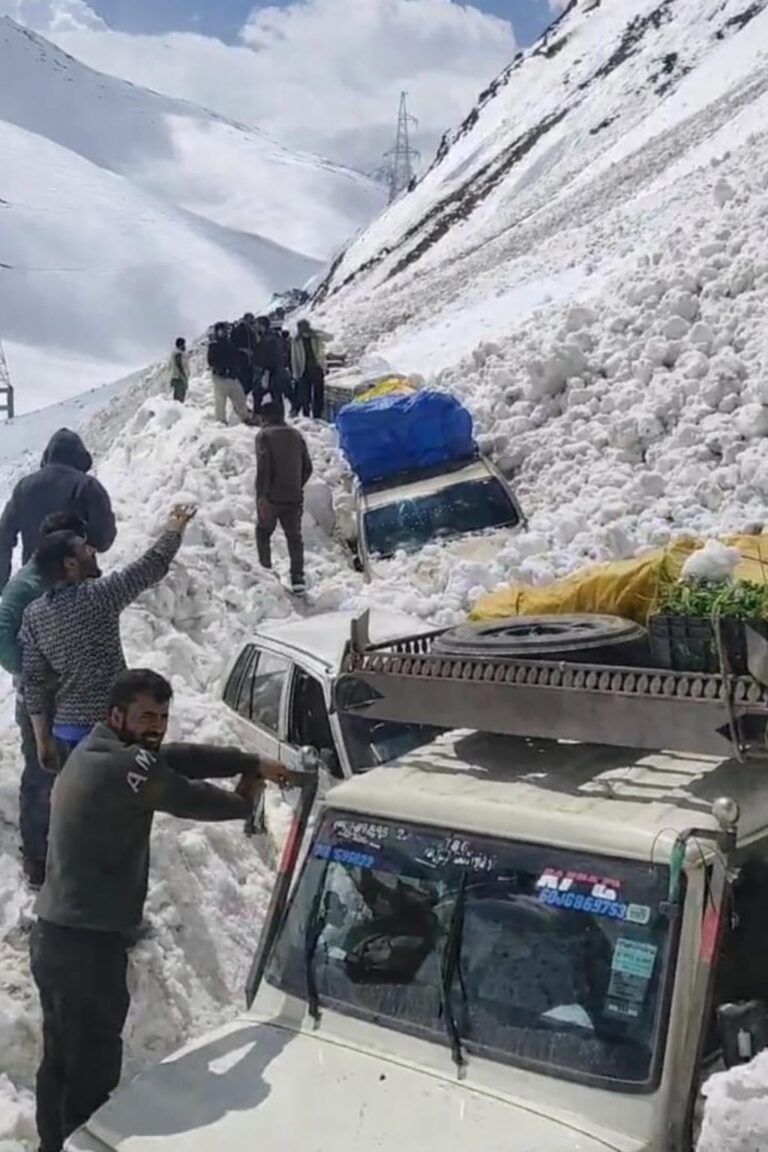
Srinagar, Mar 27: Three persons were killed and four others injured after a snow avalanche struck vehicles at Zojila Pass on Friday, officials said.

According to officials, the avalanche hit a stretch of the road where several vehicles were passing, burying them under heavy snow. Rescue teams rushed to the spot and launched an operation to evacuate the trapped persons.

The injured were pulled out and shifted to a nearby hospital for treatment. The condition of some of the injured is stated to be serious, officials added.

Meanwhile, Lieutenant Governor of Ladakh has directed the Deputy Commissioner (DC) and Senior Superintendent of Police (SSP) Kargil to visit the site and oversee the rescue and relief operations.

Authorities said efforts were ongoing to clear the road and ensure the safety of commuters in the area.(KNS)

IICT to Lead Pan-India AVGC-XR Ecosystem; Hub-and-Spoke Model to Facilitate Nationwide Collaboration

0
Vinod Bhat

New Delhi: The Ministry of Information and Broadcasting had constituted the AVGC Promotion Task Force in April 2022 to formulate a comprehensive strategy and guide policy measures for the growth of the AVGC-XR sector. The Task Force in its report had also prepared a Model State Policy framework, to support States in promoting the AVGC-XR ecosystem.

In a significant step toward making India a global hub for AVGC-XR, the Union Cabinet has approved the establishment of a National Centre of Excellence (NCoE) for AVGC-XR. The Centre is named as Indian Institute of Creative Technology (IICT) in Mumbai.

The IICT is envisaged to act as a national hub to facilitate collaboration with States and support capacity building efforts. It helps engagement with institutions that may contribute to the development of regional capabilities and Centres of Excellence in the AVGC sector. The institute is being developed under a hub-and-spoke model to facilitate collaboration with industry, academia and other stakeholders across the country.

The IICT collaborates with global technology companies, industry partners and academic institutions. These collaborations are for curriculum development, developing specialised training programmes, research and development, internships, scholarships and startup incubation, thereby strengthening industry-academia partnerships and supporting the development of talent in the AVGC-XR sector.

The institute is attracting students and trainees from various States across the country and fostering a pan-India talent pool in the AVGC-XR domain.

The Ministry regularly conducts workshops, conferences and webinars with States on various issues, including the promotion of the AVGC-XR sector.

Avalanche Near Zojila Traps Vehicles

0

Touseef Wani

Zojila, Mar 27 : A massive snow avalanche was triggered near Zero Point at Zojila on Friday, leaving several passenger vehicles trapped under snow and debris, officials said.

Reports reaching Kashmir Despatch said that around 3 to 4 vehicles were caught in the avalanche.

However, no loss of life or injuries have been reported so far, bringing relief to authorities and commuters.

Officials said the road has been blocked following the incident, while rescue and clearance operations have been launched to remove the debris and restore traffic movement.

Further details are awaited.

Government Slashes Excise Duty on Petrol and Diesel to Shield Consumers and OMCs from Global Oil Shock

0

Vinod Bhat

New Delhi: The Government of India has reduced excise duty by Rs 10 per litre on both petrol and diesel with immediate effect. This decision has been taken in response to the steep and rapid rise in international crude oil prices, which have surged from approximately USD 70 per barrel to around USD 122 per barrel over the past month — an increase of nearly 75 per cent in under four weeks, driven by the ongoing conflict in West Asia and associated disruptions to global energy supply chains.

Retail pump prices of petrol and diesel will not change. The excise reduction is not being passed on as a price cut at the pump. Instead, it directly reduces the under-recoveries being absorbed by public sector oil marketing companies (OMCs) — Indian Oil Corporation, Bharat Petroleum Corporation and Hindustan Petroleum Corporation — who have continued to supply fuel to Indian consumers at prices well below their cost of supply. At current international crude prices, under-recoveries stand at approximately Rs 26 per litre on petrol and Rs 81.90 per litre on diesel. The combined daily under-recovery being absorbed by OMCs is approximately Rs 2,400 crore. The excise reduction offsets Rs 10 per litre of these losses, ensuring OMCs can continue to supply fuel without disruption while keeping retail prices unchanged.

The contrast with global fuel markets is instructive. Fuel prices have risen by 30 to 50 per cent across South and South-East Asian countries, 30 per cent in North America, and 20 per cent in Europe since the onset of the current crisis. India has held the line. That stability carries a fiscal cost, and the Government has chosen to bear it.

The Minister for Petroleum and Natural Gas, Shri Hardeep Singh Puri, stated:

“The Government had two choices: either increase prices drastically for citizens of Bharat as all other nations have done, or bear the brunt on its finances so that the Indian citizen is insulated from international volatility. Honourable Prime Minister Shri Narendra Modi Ji decided to take a hit on Government finances to safeguard the Indian citizen. The Government has taken a substantial impact on its taxation revenues to reduce the high losses being faced by oil marketing companies at this time of sky-high international prices.”

Alongside the excise reduction, the Government has simultaneously introduced an export levy on diesel. At a time when international diesel prices have surged sharply, the levy is designed to disincentivise exports and ensure that refinery output is directed first towards meeting domestic demand. Keeping Indian pumps fully supplied takes precedence over export opportunities, however commercially attractive those may be at current global prices.

This decision is consistent with the approach adopted since the Russia-Ukraine conflict of 2022, when OMCs absorbed sustained losses and the Government cut central taxes to shield households and businesses from global price volatility. The same principle governs today’s intervention: India’s citizens and industry should not bear the cost of disruptions they did not cause. The Government will continue to monitor the evolving global energy situation and take all measures necessary to maintain supply stability and price protection for Indian consumers.

****

CJI Surya Kant Receives Traditional Ladakhi Welcome, Set to Inaugurate Court Complexes

0

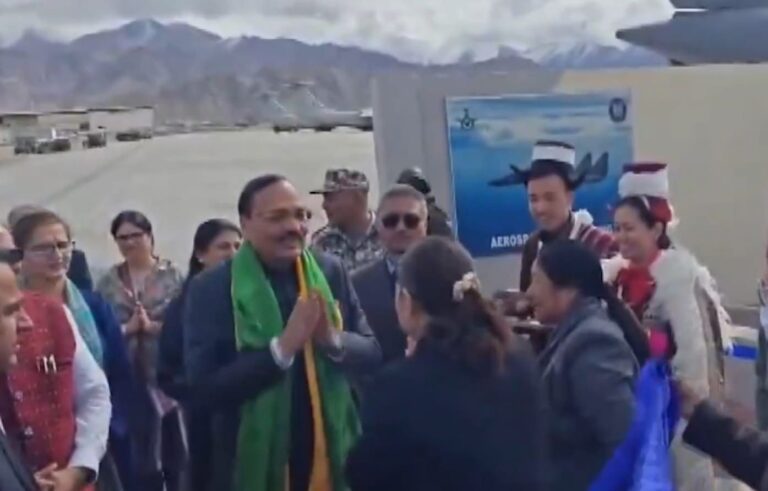
Leh, Mar 27: Chief Justice of India Surya Kant was accorded a traditional reception in Ladakh on Friday, with members of various local tribes participating in the ceremonial welcome.

Officials, said Justice Kant was briefed on Ladakh’s rich tribal diversity upon arrival and was received with a ceremonial guard of honour.

During his visit, the CJI is scheduled to inaugurate a new court complex at Melong Thang in Leh and participate in a legal awareness camp at the Sindhu Sanskriti Kendra. He will later proceed to Kargil to inaugurate the Kargil court complex and is expected to visit several rural areas of the Union Territory as part of his official tour.

BJP MLAs protest in J&K Assembly over law university demand

0

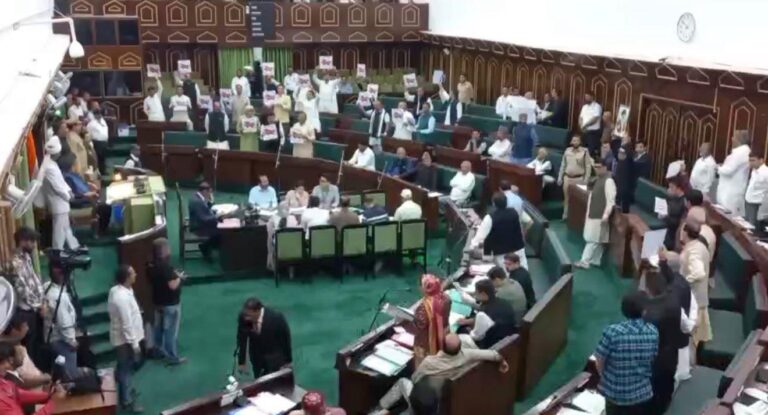
Jammu, Mar 27 : Bharatiya Janata Party (BJP) legislators on Friday staged a protest inside the Jammu and Kashmir Legislative Assembly, demanding the establishment of a National Law University (NLU) in Jammu, as the second phase of the Budget Session commenced.

The MLAs raised slogans and held placards inside the House, seeking clarity from the government on the proposed location of the university. They said Jammu has long been deprived of premier educational institutions and demanded an immediate decision.

The protest briefly disrupted normal proceedings at the start of business.

The second leg of the Assembly’s Budget session began amid heightened political activity, with opposition parties expected to raise issues such as poll promises, regional concerns and the restoration of statehood.

Officials said the session will have four sittings in March and five in April. (KNS)