KD NEWS SERVICE
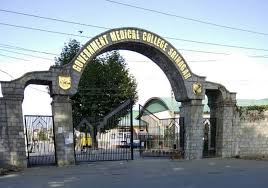
Boost for Medical Education: 90 Faculty Posts Sanctioned for GMC Srinagar, MFA hails move
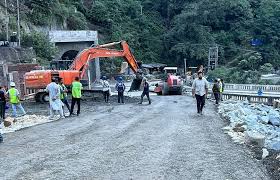
Jammu-Srinagar highway remains closed; restoration work underway
Srinagar, Mar 26: The Jammu-Srinagar National Highway (NH-44) continues to remain closed for vehicular movement between Karol Bridge and Chanderkot, officials said.
Authorities said clearance operations are currently in progress on the affected stretch, and no traffic is being allowed from either side until the road is fully restored.
“No vehicular movement shall be permitted from Jammu towards Ramban, Banihal or Srinagar and vice versa on NH-44 till the highway is cleared,” an official said.
Commuters have been advised to plan their travel accordingly and avoid undertaking journeys on the highway until further notice.
Traffic police also urged people not to pay attention to rumours and to rely only on official updates regarding road status.
For assistance and real-time updates, commuters can contact Traffic Control Units (TCUs) in Jammu, Srinagar, and Ramban or follow official social media handles of the traffic department, officials added.(KNS).
NCB Delhi Destroys 408 Kg Narcotics Worth ₹21 Crore in Major Disposal Drive
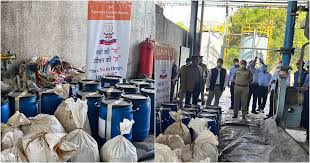
New Delhi: In furtherance of the Government of India’s commitment towards a Drug-Free India under the #NashaMuktBharat initiative, the Narcotics Control Bureau (NCB), Delhi Zonal Unit (DZU), has successfully carried out large-scale disposal of seized narcotic drugs and psychotropic substances through the Regional Drugs Disposal Committee (RDDC) and High-Level Drugs Disposal Committee (HLDDC).
A total of 39 pre-trial & post-trial cases were taken up for disposal, ensuring strict compliance with prescribed legal procedures and maintaining complete transparency throughout the process, in line with established protocols followed nationwide .
Details of Narcotic Drugs Disposed
The following quantities of drugs were destroyed:
- Ganja – 121.698 Kg
- Codeine-based cough syrup – 395 bottles (100 ml each)
- Cocaine – 29.566 Kg
- Alprazolam tablets – 122 Kg
- Heroin – 13.834 Kg
- Charas – 27.366 Kg
- Ephedrine – 28.950 Kg
- Pseudoephedrine – 63.830 Kg
- Amphetamine – 0.689 Kg
- Other narcotic drugs – 300 grams
- Total Quantity Disposed: Approximately 408 Kg
- Estimated Value: ₹21 Crores
Significance of the Operation
This large-scale disposal highlights the sustained and intensified efforts of NCB Delhi Zonal Unit in curbing drug trafficking and preventing recirculation of seized contraband into society. The destruction of such significant quantities of narcotics reflects the agency’s unwavering commitment to safeguarding public health and national security.
The operation sends a strong message to drug traffickers and organized networks that enforcement agencies remain vigilant and resolute in dismantling the illegal drug trade.
Commitment to Drug-Free India
The initiative aligns with the vision of the Government of India led by Prime Minister’s Office and Ministry of Home Affairs, reinforcing the collective resolve to eradicate drug abuse and trafficking from the country.
The Delhi Zonal Unit reiterates its commitment to the mission of Nasha Mukt Bharat and urges citizens to actively participate by sharing information related to drug trafficking with law enforcement agencies.
Over 52,000 arrested in 5 years for railway property offences
Vinod Bhat
New Delhi: The protection of railway property is entrusted to the Railway Protection Force (RPF). The RPF is empowered to register cases of theft, dishonest misappropriation, abetment, connivance, and conspiracy against railway property under the provisions of Railway Property (Unlawful Possession) Act, 1966. The cases are registered against the offender and enquiry is conducted, followed by submission of a complaint to the competent court i.e the court of the Special Railway Magistrate and in few states, in the district courts where special railway courts are not established.
During the last five years (2021–2025), a total of 52,494 persons were arrested under the provisions of the RP(UP) Act, 1966. Out of these, complaints were filed against 50,432 offenders in the respective courts.
During the last five years (2021–2025), a total of 12,157 incidents of stone pelting were registered, in which 8,441 persons were arrested by RPF/GRP.
During the last five years (2021–2025), only three incidents of derailment attributable to miscreant activities occurred on Indian Railways i.e. one each in the Waltair Division of East Coast Railway, the Jhansi Division of North Central Railway, and the Chennai Division of Southern Railway.
Further, in order to prevent incident of any criminal tampering with railway tracks, following steps are being taken by railways:-
- Regular State Level Security Committee of Railways (SLSCR) meetings are being conducted, which have been constituted in each State under the chairmanship of DGPs/Commissioner of police of respective States/Union territory with representatives of RPF, GRP and Intelligence units. Further close liaison is made by RPF with the State Police/GRP authorities at all levels to control Crime, registration of cases, their investigation and safe running of trains with focus on sabotage incidents, sharing of intelligence etc.
- Besides Central & State Intelligence agencies, Intelligence unit of RPF i.e. Crime Intelligence Branch(CIB) & Special Intelligence Branch(SIB) have been deployed to collect intelligence and take necessary action in coordination with concerned authorities for detection and prevention of any criminal activity.
- Frequent patrolling of identified black spots and vulnerable sections are being done by Railways, RPF, GRP & Civil Police.
- Regular drives are conducted to remove loose and scattered materials lying near to the railway tracks which can potentially be used by miscreant for putting obstruction on railway track.
- The people living near railway track are being sensitized about the consequences of putting foreign material on track, removing rail components, making reels etc. and are requested to keep watch and report any suspected activity immediately.
- Surveillance is also kept using drones and putting solar powered stand alone CCTV cameras.
Indigenous Universal Braking Algorithm Developed under Kavach by Railways to Help in Faster Implementation of Kavach 4.0
Vinod Bhat
New Delhi:Union Minister for Railways Shri Ashwini Vaishnaw reviewed the progress of Kavach, the indigenously developed Automatic Train Protection (ATP) system of Indian Railways. The meeting focused on accelerating deployment, and leveraging advanced technology to ensure more efficient train operations.
Technological Advancements Driving Kavach
Indian Railways has introduced several cutting-edge enhancements in Kavach. The Universal Braking Algorithm (UBA), which standardizes braking curves across different manufacturers, ensures interoperability and eliminates repetitive trials. Significant upgrades in baseline software, AI-driven design automation, and integration interfaces for locomotives, interlocking systems, and track machines are further strengthening system robustness.
A centralized monitoring platform, SURAKSHA, is being developed as a unified Operations Management System to enable real-time monitoring, and predictive maintenance of Kavach installations.
Progress So Far
So far Kavach has been installed on 3,103 Route Km. Kavach Work is currently in progress on 24,427 route kilometers, including high-density and high-utilization corridors.
As part of Version 4.0 deployment:
- 1,638 route kilometers have already been commissioned on key corridors such as Delhi–Mumbai and Delhi–Howrah.
- Recently, Indian Railways has commissioned Kavach on 190 Route Kilometres of Prayagraj–Kanpur Section of Delhi–Howrah High-Density Corridor.
- 7,100 route kilometers have trackside installations underway.
- Optical Fiber Cable (OFC) has been laid over 8,921 km, supported by 1,183 telecom towers and Kavach Data Centres installations across 767 stations.
- Kavach has been installed on 4,277 locomotives.
- Work is in progress on 8,979 locomotives.
Expansion Plans
Kavach installation is a complex process. To further expand its implementation, Railway is planning to expand Kavach network by 9,000 Route Km in next two years and thereafter it is expected to grow upto 10,000 Route Km per year.
Ram Navami Celebrated at Raghunath Mandir After 36 Years
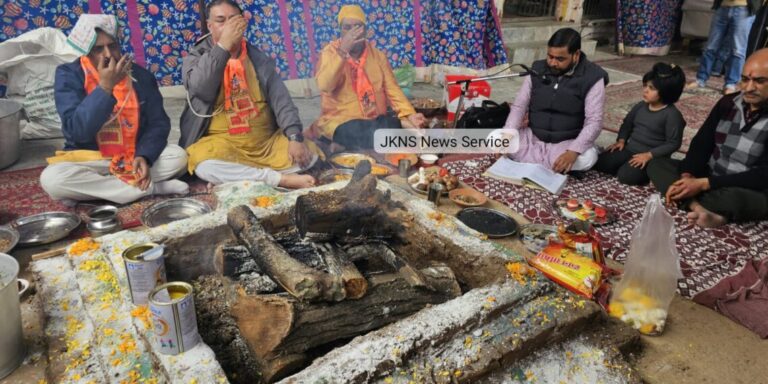
Srinagar, Mar 26: Ram Navami was celebrated on Thursday at Raghunath Mandir, Srinagar, after a historic gap of 36 years, marking an emotional and significant moment for the Kashmiri Pandit community.
Accordung to the details, A large number of devotees participated with great shradha and enthusiasm.
The revival of this event has been made possible through the dedicated efforts of the Raghunath Mandir Committee (Regd) under the leadership of President Sh. Bharat Raina and his team, who have been working tirelessly over the past few years to restore the temple.
The Committee expressed heartfelt gratitude to the Jammu & Kashmir Administration, the Kashmiri Pandit community, the local Muslim community, and the media for their support in making this historic celebration possible.
This occasion stands as a symbol of hope, unity, and revival, with a collective prayer for peace, love, and harmony in the Valley.
Ambulance Team Conducts Safe Delivery in Moving Vehicle at Gund
Touseef Wani
Ganderbal, Mar 26 : In a remarkable display of dedication and prompt response, a 108 ambulance team from PHC Gund in Kangan area of Ganderbal district successfully conducted a delivery inside a moving ambulance in the early hours of Thursday.
Reports said the delivery took place at around 4:21 AM, with both the mother and newborn reported safe. The emergency was handled efficiently by EMT Sameer Ahmad Khan and Pilot Arif Ahmad Teli, who ensured smooth coordination during the critical situation.
Their swift action and professionalism have been widely appreciated, with officials stating that the incident reflects the vital role played by emergency healthcare workers in saving lives and providing timely assistance in challenging conditions.
L-G Vinai Kumar Saxena inspects water conservation and development projects
Reviews measures to address water scarcity in Ladakh
KD News Service
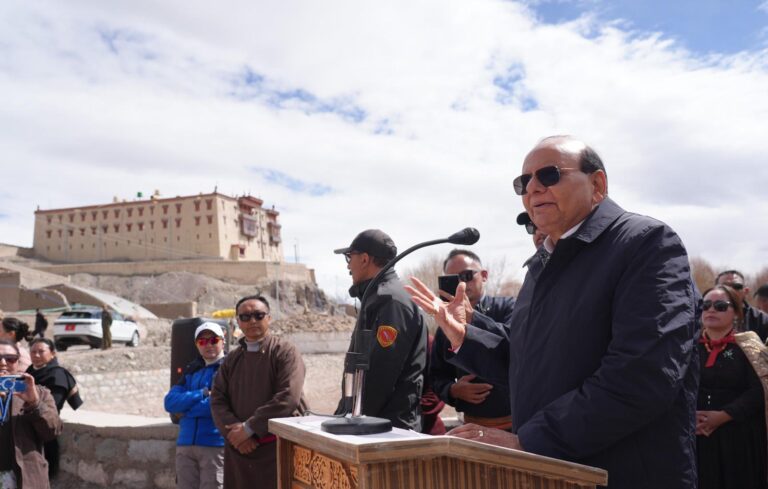
Leh, March 26: Lieutenant Governor Shri Vinai Kumar Saxena today inspected key water conservation and land development projects at Stok village and Chuchot Thongser, reaffirming the Administration’s commitment to addressing water scarcity and promoting sustainable development in the region.
The Lieutenant Governor’s visits are part of the plans to construct around 50 reservoirs or water bodies across various villages in Ladakh, along with the restoration of existing water bodies, to mitigate water woes in these villages. Shri Saxena, immediately after taking over as Lieutenant Governor of UT Ladakh on March 13, had directed the Chief Secretary to identify at least 50 locations to create small water bodies that would store snowmelt to address the water requirements of locals.
At Stok village, the Lieutenant Governor inspected the reservoir-cum-percolation tank constructed by the Rural Development Department and Panchayati Raj Institution (RDD&PRI). He was accorded a warm welcome by the local residents, led by the village Nambardar. During the inspection, Shri Saxena directed the concerned officials to undertake stone pitching, ensure proper alignment, and carry out cleaning, desilting and dredging of the reservoir, to enhance the water holding capacity of the water body. He also suggested that the site be developed in a manner that allows it to serve as a recreational and picnic spot for villagers.
Project Officer/Nodal Officer, Smt. Shenaz Tabassum, informed that the reservoir, which was earlier in a dilapidated condition, has been revitalised under the watershed development component. The village Nambardar apprised the Lieutenant Governor that, following ceremonial rituals, water will start being released and stored in the reservoir from April 1 onwards.
Subsequently, the Lieutenant Governor visited Chuchot Thongser, where he reviewed land development and bench terracing works, along with the construction of a spring box under PMKSY-WDC 2.0. He also planted a sapling at the site, underscoring the importance of ecological restoration and green initiatives.
Smt. Shenaz Tabassum informed that the 40 kanal land at the site was previously barren and has been transformed through plantation using drip irrigation techniques. She highlighted the commendable contribution of women’s Self-Help Groups in executing the project successfully.
Reiterating his resolve to address water scarcity in Ladakh, the Lieutenant Governor observed that despite the presence of natural glaciers and winter precipitation, the region continues to face challenges in meeting drinking and irrigation water needs.
Shri Saxena reiterated his commitment to make all possible efforts to resolve the issue of water scarcity within a year through a focused and sustained approach, including adoption of villages for development of water infrastructure. He stated that his visits to villages are aimed at gaining a first-hand understanding of local issues to facilitate effective and timely solutions.
The Lieutenant Governor sought active public cooperation and participation, noting that the success of such initiatives depends on collective efforts. He assured that the dedicated team of the UT Administration would work tirelessly to ensure early resolution of water-related challenges. He also stated that he would revisit the sites to monitor progress and ensure the timely completion of projects.
Fuel Supply Adequate, Omar Abdullah Urges People to Stay Calm
Tauseef Ahmad
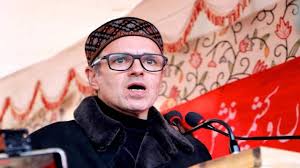
Srinagar, Mar 26: Jammu and Kashmir Chief Minister Omar Abdullah on Thursday urged people not to rush to petrol pumps amid rumours of a possible fuel shortage, warning that panic buying could create an unnecessary crisis in Jammu and Kashmir.
Speaking to the media in Srinagar, Abdullah said the government has received reports of long queues forming outside several fuel stations due to misinformation circulating among the public. He clarified that there is no shortage of petrol or diesel and appealed to people to remain calm.
“There is absolutely no need for panic. Fuel supplies are adequate, and people should avoid rushing to petrol pumps because of rumours,” he said.
The chief minister cautioned that if the rush continues and disrupts normal supply, the government may be compelled to temporarily shut petrol pumps to control the situation and prevent chaos.
Abdullah said the administration is closely monitoring the developments and coordinating with relevant authorities to ensure that fuel and other essential commodities remain available.
Referring to a meeting convened by Prime Minister Narendra Modi, he said discussions would focus on the evolving situation in Iran and neighbouring regions, and its potential impact on supply chains.
He reassured residents that the government is prepared to take necessary steps to ensure uninterrupted availability of essential commodities if the situation in the region prolongs.
India’s Energy Supply Fully Secure; Government Calls Out Deliberate Misinformation Campaign
New Delhi: The Ministry of Petroleum and Natural Gas categorically states that India’s petroleum and LPG supply situation is fully secure and under control. All retail fuel outlets have enough supplies. There is no shortage of petrol, diesel, or LPG anywhere in the country. The Ministry calls upon citizens not to be misled by a deliberately mischievous, coordinated campaign of misinformation that is being carried out to spread unjustified panic.
Petrol and Diesel: No Shortage, No Rationing
1. India is an oasis of energy security. India is the world’s 4th largest refiner and 5th largest exporter of petroleum products, supplying refined fuel to over 150 countries. Because India is a net exporter to the world, domestic petrol and diesel availability is structurally assured. All 1 lakh-plus retail fuel outlets across the country are open and dispensing fuel without interruption. Not a single outlet has been asked to ration supply. Across the world, countries are dealing with price increases, rationing, odd-even vehicle restrictions, and forced station closures. Few have declared “National Energy Emergency”. India DOES NOT FEEL THE NEED FOR ANY SUCH MEASURES. While other nations are rationing, there is no shortage of supplies in India. Where isolated instances of panic buying occurred at select pumps, they were driven by deliberate misinformation spread by certain videos in social media. Despite the surge in demand on such pumps, fuel was dispensed to all the consumers and Oil company depots have been operational through the night to ramp up supplies. Steps have also been taken by Oil Companies to increase credit to petrol pumps to over 3 days from earlier allowed 1 day in order to ensure that there is no shortage of petrol and diesel at any pump due to working capital issues of pump owners.
Crude Oil Supply: Gap More Than Compensated
2. Despite the situation at the Strait of Hormuz, India is today receiving more crude oil from its 41-plus suppliers across the world than what was previously arriving through the Straits. High volumes available in international markets — especially from the western hemisphere — have more than compensated for any disruption. Every Indian refinery is running at over 100% utilisation. Crude oil supplies for next 60 days have already been tied up by Indian Oil companies. There is NO supply gap.
Strategic Reserves: The Complete and Accurate Picture
3. Misinformation has been circulating — including through some articles and social media videos — suggesting that only 6 days of stocks are there in the country. India has 74 days of total reserve capacity and actual stock cover is around 60 days right now (including crude stocks, products stocks and the dedicated strategic storage in caverns) even as we are on the 27th day of the Middle East crisis. Nearly two months of steady supply is available for every Indian citizen regardless of what happens globally. Next 2 months of crude procurement has also been secured. India is completely secure for next many months and the quantity in strategic cavern storage becomes secondary in such a supply situation. Therefore, any representation that India’s reserves are depleted or insufficient should be dismissed with the disdain it deserves.
LPG: Production Up, Import Requirement Down, Cargoes Secured
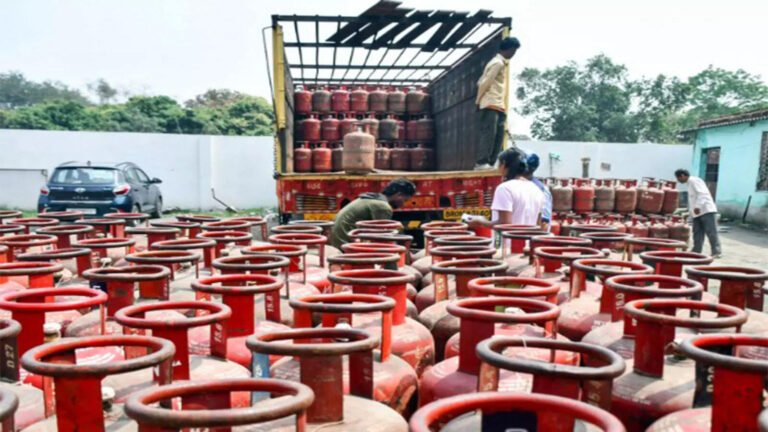
4. There is no LPG shortage. Following the LPG Control Order issued by this Ministry, domestic refinery production has been ramped up by 40%, bringing daily LPG output to 50 TMT (more than 60% of our requirement) against a total daily requirement of around 80 TMT. The net daily import requirement has consequently come down to only 30 TMT — meaning India is now producing much more than it needs to import. Over and above domestic production, 800 TMT of assured inbound LPG cargoes are already secured and en route from the United States, Russia, Australia, and other countries, arriving across India’s 22 LPG import terminals — double the 11 terminals that existed in 2014. Approximately one full month of supply is firmly arranged, with additional procurement being finalised continuously. Oil companies are successfully delivering over 50 lakh cylinders every day. Cylinder demand had gone up to 89 lakh cylinders due to panic ordering by consumers and has now come down to 50 lakh cylinders again. Commercial cylinder allocations have been raised to 50% in consultation with state governments to avoid hoarding or black marketing.
PNG Promotion: A Transition Already Underway, Not a Crisis Response
5. Piped Natural Gas is being promoted — in full coordination with state governments — because it is cheaper, cleaner, and safer for Indian households. India already produces 92 MMSCMD of natural gas domestically out of a total daily requirement of 191 MMSCMD, making India far less import-dependent on gas than on LPG. City gas distribution has expanded from 57 geographical areas in 2014 to over 300 today. Domestic PNG connections have grown from 25 lakh to over 1.5 crore. This transition was well underway before the current situation arose and reflects India’s long-term energy strategy. The claim that PNG is being pushed because LPG is running out is misinformation. LPG supply is secure. PNG is simply a better, more affordable and highly convenient fuel for India’s households.
Government Warning: Action Against Misinformation
6. The Ministry has noted with serious concern the circulation of misleading videos and posts on social media platforms that selectively use images of queues, global news footage of rationing in other countries, and completely bogus and fabricated claims of impending lockdowns and emergency fuel measures in India to create a wholly false impression of shortage.
7. Some posts have deliberately misrepresented government orders — including the Natural Gas Control Order and the LPG Control Order — as emergency declarations signalling crisis, when in fact they are standard administrative instruments for supply prioritisation issued as a prudent and pre-emptive measure.
8. This misinformation is being spread by miscreants and amplified by motivated elements, causing unnecessary public anxiety. The Ministry urges all citizens to rely only on official government communications for information regarding fuel and gas availability. Spreading false information regarding essential commodity availability is an offence under applicable laws, and the government will not hesitate to act against those found to be deliberately creating panic.