spot_imgspot_img
spot_img
Home Blog Page 77

PDP MLA Waheed Para Introduces Bill for New Divisions, New Districts in J&K

0

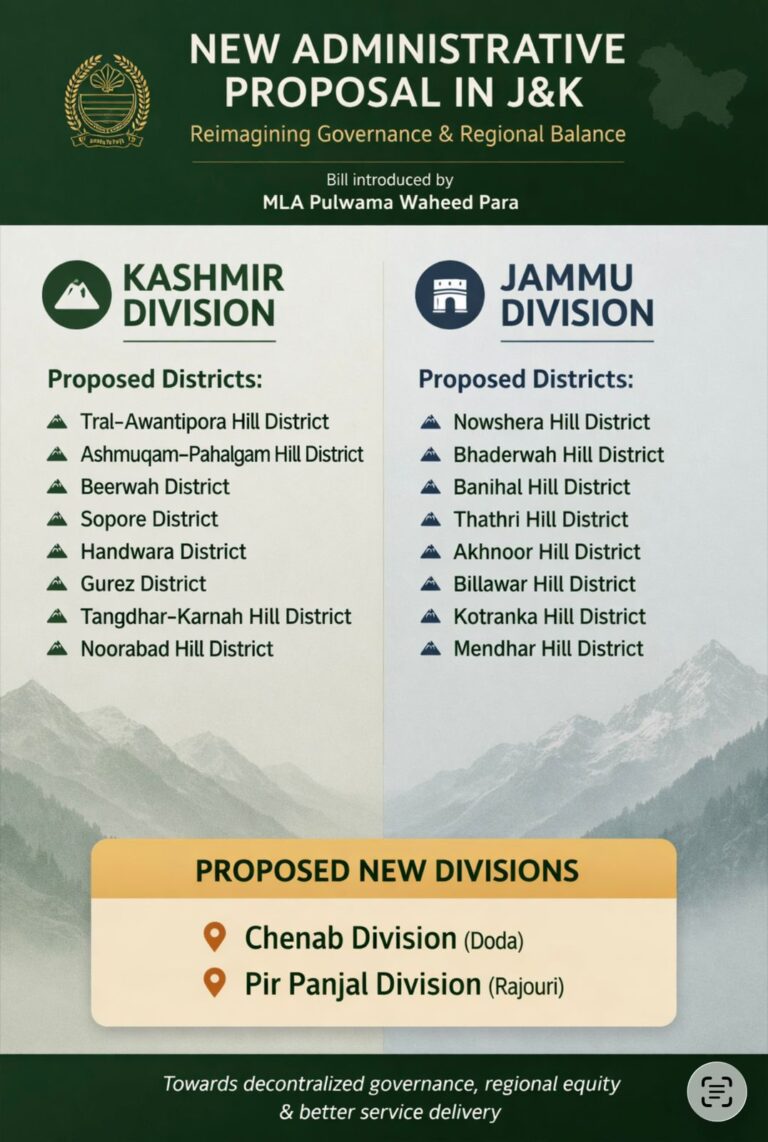
Jammu, March 23: Waheed Para, a legislator of the People’s Democratic Party (PDP), has introduced a private member’s bill in the Jammu and Kashmir Legislative Assembly seeking to establish a statutory framework for the reorganisation of administrative divisions, districts, sub-divisions, and tehsils across the Union Territory.

The proposed legislation, titled The Jammu and Kashmir Territorial Administrative Reorganisation Bill, 2026, envisages the creation of new administrative divisions, including a Chenab Division with headquarters at Doda and a Pir Panjal Division with headquarters at Rajouri, in addition to the existing Jammu and Kashmir divisions.

As part of the proposed reorganisation, the bill outlines the creation of several new districts in the Kashmir division:

• Tral–Awantipora Hill District
• Ashmuqam–Hill District
• Beerwah District
• Sopore District
• Handwara District
• Gurez District
• Tangdhar–Karnah Hill District
• Norabad Hill District

In the Jammu division, the proposed districts include Nowshera, Bhaderwah, Banihal, Thathri, Akhnoor, Billawar, Kotranka, and Mendhar, many of which are designated as hill districts to facilitate focused administrative planning and governance in geographically challenging areas.

According to the draft bill, the government will be empowered to assign districts to Jammu, Kashmir, Chenab, or Pir Panjal divisions through official notifications, while ensuring geographical continuity, administrative convenience, socio-cultural cohesion, and balanced regional development.

The bill aims to address administrative challenges arising from large geographical areas, difficult terrain, and regional imbalances, and seeks to establish a transparent legislative mechanism for the creation of new administrative units to strengthen decentralised governance and improve public service delivery.

The proposal has been submitted to the Assembly Secretariat for consideration during the ongoing Budget Session, which will resume on March 27 after a five-week recess following its first phase held from February 2 to 20.

During the initial phase of the session, Chief Minister Omar Abdullah presented the Budget on February 6, and the House passed departmental grants after detailed deliberations.

As per the notified business schedule, March 30 and April 1 have been earmarked for private members’ bills, while March 31 and April 2 are reserved for private members’ resolutions. The session is scheduled to conclude on April 4.

J&K LG announces relaxation in compassionate appointments, says 438 get approval letters

0

Jammu, Mar 23; Jammu and Kashmir Lieutenant Governor Manoj Sinha on Monday announced a relaxation in the rules governing compassionate appointments, stating that families of government employees who died “natural deaths” will now be considered for jobs, a move that comes amid a continuing drive to streamline the recruitment process in the Union Territory.

LG Sinha said 438 people have already been issued appointment letters under the new dispensation. He noted that the administration was cognisant of the distress caused by job losses during the Covid-19 pandemic and the subsequent lockdown.

“As you all know, for a long time, due to the pandemic and the lockdown, a large number of people have lost their jobs. You have all heard about their pain,” the Lt Governor.

He said all Deputy Commissioners and Senior Superintendents of Police have been instructed to send approval letters to the General Administration Department (GAD) at the earliest, while stressing that each case was being processed only after a thorough investigation.

“Because if it is given to a wrong person, then it will be discussed more,” LG Sinha said.

In a significant policy relaxation, the Lt Governor said that even families of government employees who died naturally—who were earlier not covered under the existing norms—would now be issued approval letters.

“There are some cases where people who were in government jobs died naturally. But even they are not given a letter of approval. Now, by giving them relaxation, such people are also being given a letter of approval,” he said.

When asked about the recent film Durandar, which has drawn criticism and demands for a ban, LG Sinha dismissed the need for any such action, saying there was no reason to criticise the movie.

“I feel that there is no need to criticise it. What I have said, I have said it with a lot of energy,” he added without elaborating.

The Lt Governor further stated that elements linked to the government system were being removed, while security forces, including the Jammu and Kashmir Police, Army and Central Armed Police Forces (CAPF), were operating under “a lot of pressure” in the ongoing efforts to dismantle the terror ecosystem in the region. (KNS)

Sufficient fuel stocks in Kashmir, no need to panic: Div Com

0

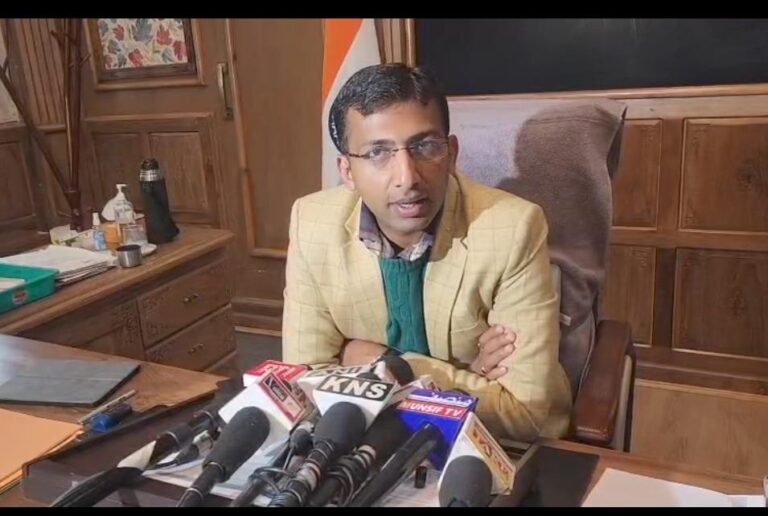
Srinagar, Mar 23 ; Jammu and Kashmir administration on Monday said there is no fuel shortage in the Kashmir Valley, with adequate stocks of petrol, diesel and domestic LPG available for up to 15 days.

Divisional Commissioner Kashmir Anshul Garg said the supply situation is stable and is being closely monitored at both divisional and district levels to prevent any disruption.

“The domestic LPG supply across Kashmir is running smoothly, with an available stock position of around 10 to 15 days. Continuous monitoring is being carried out,” Garg told reporters.

He said supplies of petrol and diesel are also stable, with oil marketing companies being monitored by district-level committees to prevent hoarding, black marketing or overpricing.

Control rooms at district and divisional levels are actively tracking supply and distribution, while daily reports are being generated by the Food and Civil Supplies Department for regular review, the official added.

On complaints regarding delays in LPG deliveries, Garg said such issues are being addressed on a case-to-case basis by deputy commissioners and the departments concerned.

The divisional commissioner urged people not to panic or believe in rumours, asserting that the government is committed to ensuring uninterrupted supply. (KNS)

Union Home Secretary to Review J&K Security, Modernisation Plan Today

0

Srinagar, Mar 23: Union Home Secretary Govind Mohan is scheduled to chair a high-level meeting later today to review the security situation in Jammu and Kashmir and finalise the modernisation requirements for the Jammu and Kashmir Police (JKP) for the 2026-27 fiscal, official sources said.

The meeting, scheduled to be held through video conferencing, comes amid a focus on intensifying counter-insurgency operations in the region, they said.

Sources in the security establishment told that the Home Secretary will review the expenditure incurred during the current financial year, which ends in ten days, and is likely to deliberate on the funds required for the modernisation of the JKP.

Top officials of the administration and the police, including Chief Secretary Atal Dulloo, Director General of Police (DGP) Nalin Prabhat, and Home Secretary Chandraker Bharti, are attending the briefing. Inspector Generals of Police (IGPs) of the Jammu and Kashmir zones are also present, they said.

The review comes in the wake of the successful elimination of top Jaish-e-Mohammad (JeM) commanders in Kishtwar last month, sources said, adding that the focus remains on stepping up operations in the upper reaches and dismantling the overground worker (OGW) network. (KNS)

Back-to-Back Snow Avalanches Hit Bandipora–Gurez Road, Traffic Suspended; No Casualties

0

Tauseef Ahmad

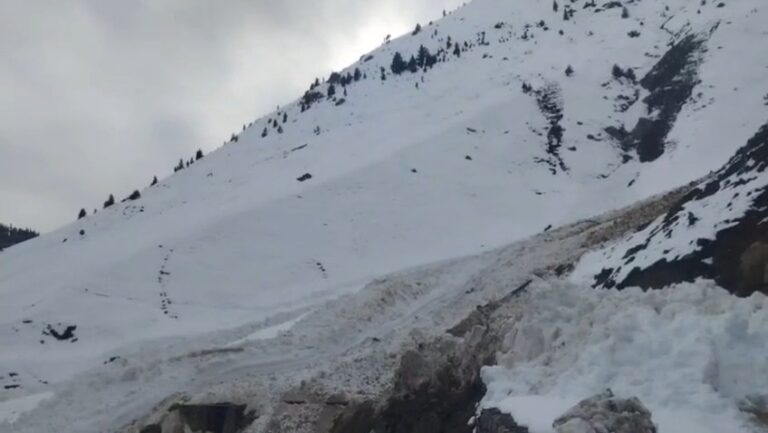
Bandipora: Traffic movement along the strategic Bandipora–Gurez road was suspended on Sunday after two back-to-back snow avalanches struck the route in north Kashmir’s Bandipora district, officials said.

The avalanches hit the 85-km-long road that connects Bandipora with the remote Gurez Valley, blocking the only surface link to the border area.


According to officials from the Border Roads Organisation (BRO), one of the major avalanches occurred at kilometre 60 on the Bandipora–Gurez (BG) road. The avalanche was estimated to be around 200 metres long and nearly 10 feet high, completely blocking the road.

Another avalanche was reported nearly a kilometre from Korkbal village, further disrupting vehicular movement and forcing authorities to suspend traffic on the route as a precautionary measure.

Officials said the region had recently received nearly three to four feet of fresh snowfall, significantly increasing the risk of avalanches along the mountainous stretch of the road.

Despite the intensity of the snow slides, no injuries or casualties were reported. Officials attributed the absence of loss of life or damage to property to the lack of traffic movement at the time of the incidents.

Soon after the avalanches were reported, the BRO pressed its men and machinery into service to restore connectivity. Around 56 RCC teams were deployed to the affected locations to carry out snow clearance and road restoration work.

Authorities said snow clearance operations are currently underway on a war footing to reopen the road as soon as possible.

Meanwhile, commuters have been advised to avoid travel on the Bandipora–Gurez road until it is declared safe. Travelers have also been urged to contact the district control room for real-time updates before undertaking any journey.

NIA conducts searches at multiple locations in Kashmir in terror case

0

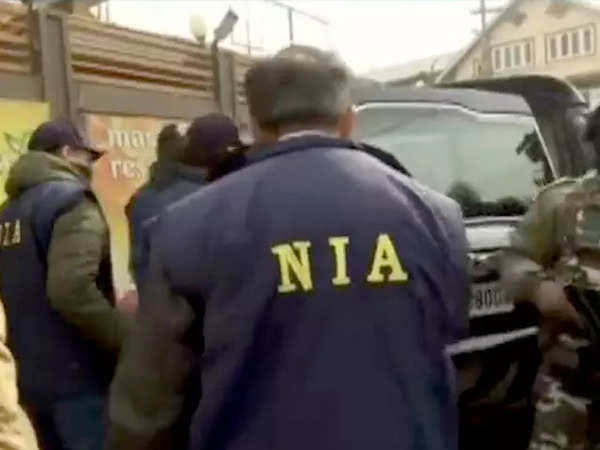
Srinagar, Mar 23: The National Investigation Agency (NIA) on Monday carried out searches across multiple districts in the Kashmir Valley as part of an ongoing probe into a terror-related case.

Official sources told that the raids were conducted simultaneously in Handwara, Rafiabad, and Kulgam districts, besides other locations in Kashmir.

In Handwara, a team of NIA officials raided the residence of a businessman in the Guloora area.

Sources said that documents and electronic devices were seized during the operation.

The federal agency also carried out a raid at the residence of Dr. Bilal Naseer Malla, the son of Naseer Ahmad Malla, in the Bonapora Shatloo area of Rafiabad.

Simultaneous search operations were also reported at multiple locations in Kulgam district.

The searches are part of a broader investigation by the agency into terrorist networks operating in the region. Further details are awaited. (KNS)

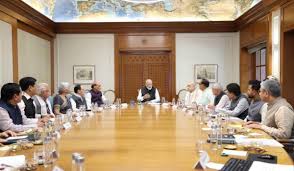
PM chairs CCS Meeting to review the situation and mitigating measures in the context of ongoing West Asia Conflict

0

Vinod Bhat

New Delhi: Prime Minister Shri Narendra Modi chaired a meeting of the Cabinet Committee on Security to review the situation and ongoing and proposed mitigating measures in the context of ongoing West Asia Conflict.

The Cabinet Secretary gave a detailed presentation on the global situation and mitigating measures taken so far and being planned by all concerned Ministries/Departments of Government of India.  The expected impact and measures taken to address it across sectors like agriculture, fertilisers, food security, petroleum, power, MSMEs, exporters, shipping, trade, finance, supply chains and all affected sectors were discussed. The overall macro-economic scenario in the country and further measures to be taken were also discussed.

The ongoing conflict in West Asia will have significant short, medium and long term impact on the global economy and its effect on India were assessed and counter-measures, both immediate and long-term, were discussed.

Detailed assessment of availability for critical needs of the common man, including food, energy and fuel security was made. Short term, Medium term and Long term measures to ensure continued availability of essential needs were discussed in detail.

The impact on farmers and their requirement for fertiliser for the Kharif season was assessed. The measures taken in the last few years to maintain adequate stocks of fertilizers will ensure timely availability and food security. Alternate sources of fertilizers were also discussed to ensure continued availability in the future.

It was also determined that adequate supply of coal stocks at all power plants will ensure no shortage of electricity in India.

Several measures were discussed to diversify sources of imports required by chemicals, pharmaceuticals, petrochemicals and other industrial sectors. Similarly new export destinations to promote Indian goods will be developed in the near future.

Several measures proposed by different ministries will be prepared and implemented in the coming days after consultation with all stakeholders.

PM directed that a group of ministers and secretaries be created to work dedicatedly in a whole of government approach. PM also instructed for sectoral groups to work in consultation with all stakeholders.

PM said that the conflict is an evolving situation and the entire world is affected in some form. In such a situation, all efforts must be made to safeguard the citizens from the impact of this conflict.  PM instructed that all arms of government should work together to ensure least inconvenience to the citizens. PM also asked for proper coordination with state governments to ensure no black-marketing and hoarding of important commodities.

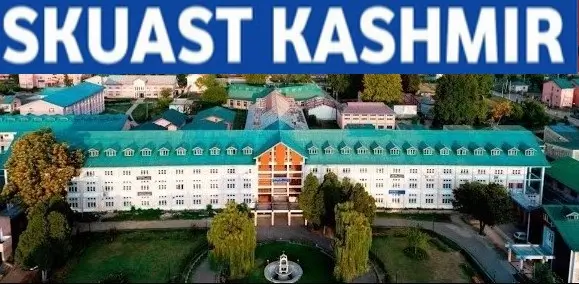
“Emerging Gulf situation”: SKUAST-K contemplates temporary online classes, introduces flexible registration for Spring Semester

0

Srinagar, Mar 22: The Sher-e-Kashmir University of Agricultural Sciences and Technology of Kashmir has announced flexible and online arrangements for registration and academic activities for the Spring Semester-2026 in view of the evolving situation in the Gulf region.

According to an official notice issued by the university, a copy of which is in the possession of news agency Kashmir Dot Com, the registration process, originally scheduled for March 23–24, will now be conducted in a flexible mode, allowing students to complete formalities either physically at their respective colleges or through online mode. The last date for registration has also been extended to March 27, 2026.

The university said the decision was taken as a precautionary measure to ensure academic continuity and minimize disruptions arising from external factors impacting essential support systems.

It further directed Deans and Associate Deans of various faculties and colleges to make necessary arrangements for facilitating online registration. They have also been asked to communicate details regarding fee structure, online payment mechanisms, and course offerings to students, reported Kashmir Dot Com.

The notice added that schedules for online classes will be notified separately by the respective faculties at the college level.

Students have been advised to remain in regular contact with their institutions and follow instructions issued by the concerned authorities.


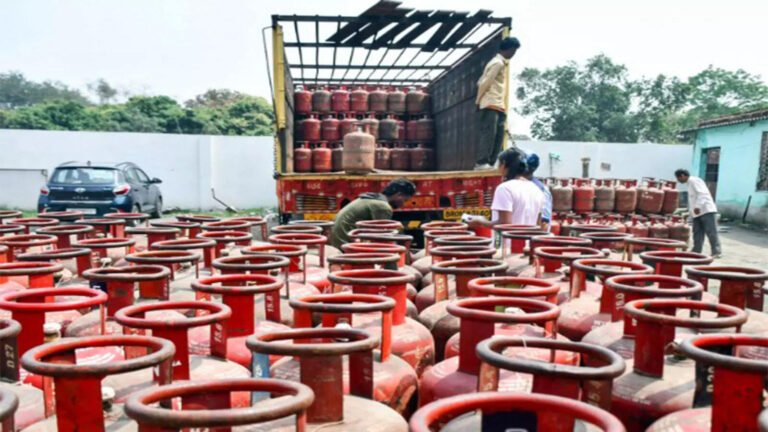
Delivery of domestic LPG cylinders remains normal; Panic Bookings reduce

0

Vinod Bhat

New Delhi: In view of the evolving situation in West Asia, the Government of India continues to take proactive steps to ensure preparedness and response across critical sectors. Updates on measures relating to energy supply, maritime operations, and assistance to Indian nationals in the region are outlined below.

Energy Supply and Fuel Availability

In view of the closure of the Strait of Hormuz, steps have been taken to ensure stable availability of petroleum products and LPG across the country. The current position is as follows:

Crude/Refineries

· All refineries are operating at high capacity, with adequate crude inventories in place. The country is also maintaining sufficient stocks of petrol and diesel.

· Domestic LPG Production from refineries has been maximised.

Retail Outlets

· No cases of fuel dry outs have been reported at any of the ROs by the Oil Marketing Companies. The Government reiterates its advice to the public not to resort to panic buying, as adequate stocks of petrol and diesel are available and supplies are being maintained regularly.

Natural Gas

· Priority sectors have been protected for their supplies incl. 100% supply to D-PNG and CNG-Transport. Supplies to industrial & commercial consumers connected on grid is at 80% of their average consumption.

· CGD entities have also been advised by Govt. of India to prioritize PNG connections for commercial establishments such as restaurants, hotels and canteens across all their Gas, to address concerns regarding the availability of commercial LPG.

· CGD Companies like IGL, MGL, GAIL Gas and BPCL have offered incentives for taking domestic and Commercial PNG connections.

· CGD entities have been directed by PNGRB to shorten the timeline between the submission of applications and the commencement of gas supply to consumer households.

· Govt. of India vide letter date 16.03.2026 has requested Govt. of States/UTs to expedite approval of applications required for expansion of CGD network.

· Govt. of India vide letter dated 18.03.2026 has offered all States/UTs additional 10% allocation of commercial LPG to States provided they can help in long term transition from LPG to PNG.

· In addition, the Govt. of India vide letter dated 19.03.2026 have requested all concerned Central Govt. Ministries-

Ø To issue necessary directions to the concerned Department/Bodies for immediate fast tracking and disposal of all pending and new permissions related to CGD infrastructure.

Ø All Central Govt. establishments/Colonies/Officers/Canteens may also be advised to switch over to PNG wherever the same is available.

· Govt. of India vide letter dated 20.03.2026 has requested all Central Govt. Ministries to undertake a comprehensive assessment of potential demand for PNG connections in establishments under various Ministries/Departments of the Govt. of India and to designate a nodal officer from each Ministry/Department to coordinate this exercise.

· In response to above Govt. of India letter, Petroleum and Explosive Safety Organisation (PESO) has advised all its offices to dispose off CGD applications on priority i.e., within 10 days of receipt.

· Commercial LPG consumers in the major cities and urban area have been requested to switch to PNG.

LPG

· Supply of LPG is still a concern in view of prevailing geopolitical situation.

Domestic LPG Supply:

· No reported dry-out at LPG distributorships.

· Majority of the Deliveries are happening via Delivery authentication code (DAC).

· Panic bookings have reduced.

· Delivery of Domestic LPG Cylinders is normal.

Commercial LPG supply:

· Government had already restored Partial Commercial LPG supply (20%) to consumers. Further, Govt. of India vide letter dated 18.03.2026 had proposed to allocate additional 10% of Commercial LPG to States/UTs based on ease of doing business reforms for PNG expansion.

· Govt. of India vide letter dated 21.03.2026 has allowed another 20% allocation of commercial LPG to States, which would take overall allocation to 50% (incl. 10% allocation based on ease of doing reforms for PNG expansion). This additional 20% allocation shall be given on priority to sectors like restaurants, dhabas, hotels, industrial canteens, food processing/dairy, subsidised canteens/outlets run by State Govt. or local bodies for food, community kitchens, 5 Kg FTL for migrant labourers.

· 20 States/UTs have issued orders to allocate the Non-domestic LPG in line with the guidelines issued by the Govt. of India. For rest of the States/UTs, PSU Oil Marketing companies are releasing Commercial LPG cylinders. A total of around 15,440 MT has been uplifted during last 8 days by commercial entities in the States/UTs.

· Educational Institutions and Hospitals have been prioritised and around 50% of the total commercial LPG allocation is going to these sectors.

Kerosene

· Additional allocation of 48000 KL of Kerosene over and above the regular allocation has been made to all the States/UTs.

· States/UTs have been requested to identify locations in districts for distribution of kerosene.

· 15 States/UTs have issued SKO allocation orders. Further, Himachal Pradesh and Ladakh has communicated that there is no SKO requirement in the State/UT. As on date, 17 States/UTs are yet to issue SKO allocation orders.

Role of State/UTs Governments

· Under Essential Commodities Act, 1955 and LPG Control Order, 2000, State Govt. are empowered to act against any hoarding and black marketing. Govt. of States/UTs have to play a primary role in monitoring and regulating supply situation of essential commodities including Petrol, Diesel and LPG.

· Govt. of India vide letter dated 13.03.2026 and 18.03.2026 has requested all States/UTs –

Ø To maintain strict vigilance so as to curb hoarding, black marketing, diversion of domestic LPG and other malpractices.

Ø To take stringent action against violators under the provisions of Essential Commodities Act, 1955, Petroleum Act, 1934, Petroleum Rules 2002, Motor Spirit and HSD order 2005 and other applicable laws.

Ø To evolve appropriate distribution methodologies for commercial LPG, keeping in view local priorities and requirements.

Ø To issue public advisories to prevent panic buying, encourage judicious use of LPG and dissemination of accurate information.

· 32 States/UTs have setup control rooms. Many of the States/UTs are doing daily press briefs also.

· 32 States/UTs have setup District Level Monitoring Committee.

· All those States/UTs who have not setup Control rooms and District Monitoring committees are requested to do so on urgent basis.

Enforcement action

· Raids continue to be carried out in many of the States/UTs to check the hoardings and black marketing of LPG. About 3,500 raids have been conducted and more than 1200 cylinders have been seized in Bihar, Haryana, Karnataka, Tamil Nadu, Uttar Pradesh etc. yesterday.

· All the States/UTs govt. are requested to conduct regular raids so that black marketing and hoardings can be arrested.

· PSU OMCs officials have conducted surprise inspections at more than 1,800 RO and LPG distributorships across the country to ensure smooth supplies and to check any hoardings/black marketing cases.

Other Government Measures

· Despite this war situation, Government’s has given highest priority to Domestic LPG and PNG, along with high priority to hospitals and educational institutions.

· The Government has already implemented several rationalisation measures on both the supply and demand side, including enhancing refinery production, increasing the booking interval from 21 to 25 days in urban areas and up to 45 days in rural areas and prioritising sectors for supply.

· Alternate fuel options like Kerosene and coal have been offered to ease pressure on LPG demand. MoEFCC has already advised State Pollution Control Board for permitting the use of kerosene and coal as alternate use.

· Ministry of Coal has already issued order to Coal India and Singareni Coallieries to allot higher quantities to States for distributing coal to small, medium and other consumers.

· States have been advised to facilitate the new PNG connections for both domestic and commercial consumers.

Public Advisory

· Government is making all efforts to ensure availability and timely delivery of LPG cylinders to all households; citizens are advised to rely only on official sources and avoid rumours.

· Consumers are requested to avoid panic bookings, use digital modes for booking, and not visit LPG distributors, as home delivery is being ensured despite isolated instances of queues.

· Citizens are encouraged to use alternate cooking options such as PNG and electric/induction cooktops, and to adopt energy conservation practices in daily use.

Maritime Safety and Shipping Operations

Necessary measures have been put in place to safeguard Indian vessels and seafarers operating in the region. As per Ministry:

· Ministry of Ports, Shipping and Waterways is closely monitoring shipping movements, port operations and safety of Indian seafarers, while ensuring continuity of maritime trade.

· All Indian seafarers in the region are safe; no incident involving Indian-flagged vessels has been reported in the past 24 hours.

· 22 Indian-flagged vessels with 611 Indian seafarers remain in the western Persian Gulf; DG Shipping is monitoring the situation in coordination with ship owners, RPSL agencies and Indian Missions.

· DG Shipping Control Room is operational 24×7, having handled 3,730 calls and 7,058 emails so far, including 60 calls and 129 emails in the last 24 hours.

· Over 547 Indian seafarers have been safely repatriated, including 13 in the past 24 hours.

· Port operations across India remain normal with no congestion; State Maritime Boards have confirmed smooth functioning.

· The Ministry continues close coordination with MEA, Indian Missions and maritime stakeholders to ensure seafarer welfare and uninterrupted operations.

Safety of Indian Nationals in the Region

Indian Missions remain in touch with the community, providing assistance and issuing advisories, the Ministry informed. As informed by Ministry:

· Ministry of External Affairs continues to monitor closely the developments in the Gulf and West Asia region, with safety, security and welfare of the Indian community as the highest priority; a dedicated 24×7 control room remains operational, with regular coordination with States/UTs.

· Missions and Posts across the region are functioning round the clock, operating helplines, maintaining contact with Indian community organisations, issuing advisories, engaging with local Governments, and assisting seafarers, students, stranded nationals and short-term visitors.

· Since 28 February, over 3,50,000 passengers have returned from the region to India.

· Around 90 flights are expected to operate today from UAE; flights continue to operate from Saudi Arabia and Oman to India; with partial reopening of airspace, Qatar Airways is expected to operate around 9–10 non-scheduled commercial flights to India today.

· Kuwait airspace remains closed; Jazeera Airways has started flight operations to various destinations in India from Al Qaisumah Airport (AQI) in Saudi Arabia.

· Bahrain airspace remains closed; Gulf Air continues to operate special non-scheduled commercial flights from Dammam Airport of Saudi Arabia to India.

· In view of flight restrictions from Kuwait, Bahrain and Iraq, travel of Indian nationals is being facilitated via Saudi Arabia.

· Six Indian nationals have lost their lives and one remains missing; Missions in Saudi Arabia, Oman, Iraq and UAE are in touch with the concerned authorities regarding the missing Indian national and for early repatriation of mortal remains of the deceased Indian nationals.
Bharat Electricity Summit 2026 Concludes with Strong Global Participation, Actionable Outcomes, and Roadmap for a Resilient, Future-ready Power Sector

0

Vinod Bhat

New Delhi: The maiden edition of the Bharat Electricity Summit (BES) concluded successfully today, bringing together policymakers, global experts, industry leaders, investors, and innovators to deliberate on the future of the power sector and accelerate the global clean energy transition. The Summit witnessed wide-ranging discussions, high-level bilateral engagements, and significant business interactions, reinforcing India’s leadership in the global energy ecosystem.

The Summit witnessed an exceptional response, with over 35,000 exhibition attendees, 28 States / Union Territories, 200+ exhibiting companies including 80+ Start-ups, 6,000+ delegates, 300+ speakers, and 100+ conference sessions, reflecting its scale and global significance.

Drawing inspiration from the Prime Minister’s vision, India continues to advance rapidly towards achieving 500 GW of non-fossil fuel capacity by 2030, having already crossed the milestone of over 50% non-fossil capacity. Initiatives such as One Sun, One World, One Grid further underscore India’s commitment to global energy cooperation.

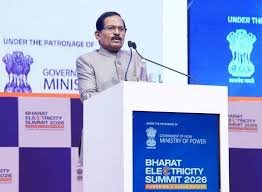
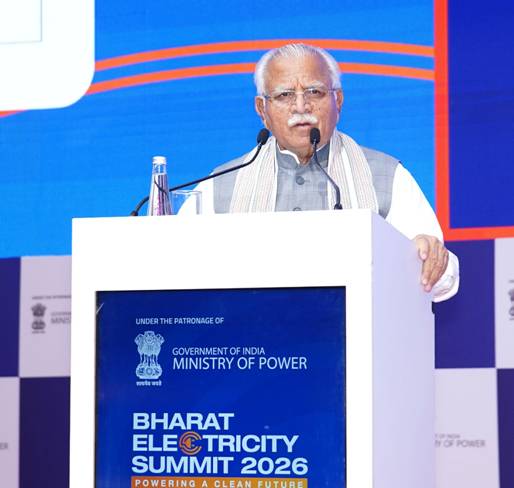
While giving his valedictory address Shri Manohar Lal, Union Power Minister noted that the Summit was extremely successful and saw impressive participation from different stakeholders of the power sector. Despite being the first Electricity Summit, it saw unprecedented participation and meaningful discussions. In particular, he said that he was particularly delighted with the participation of the Startups at the Summit and the great innovation in the sector they would bring

He said that India has a vision of Viksit Bharat by 2047 and for achieving this vision, electricity is a common resource that is needed by all economic stakeholders and citizens. Under Saubhagya Yojna we succeeded in ensuring that electricity has reached all nook and corners of the country.

Speaking on the importance of solar energy and cooperation across countries, Shri Manohar Lal noted the words of Prime Minister Narendra Modi  – One Sun, One World, One Grid. These words he said, points to the need for working together as one global family. Our focus has to be on sustainability and thus expansion of renewable energy including solar energy is critical.

A person standing at a podiumDescription automatically generated


He said that during the Summit there were fruitful discussions with many countries and especially African nations. It emerged clearly that India and the African nations have a win-win possibility of cooperating in the power sector and beyond.

Shri Manohar Lal noted that there is a need to strengthen DISCOMs through different actions and reforms. He noted that during the Summit the DISCOMs expressed a strong willingness to take necessary actions to improve their operations and financial situation. He said that the intended reforms in the sector includes adoption of smart meters, cost reflective tariffs.

The Minister also announced that Next Edition of BES will be held in 2028 in Gandhinagar, Gujarat .

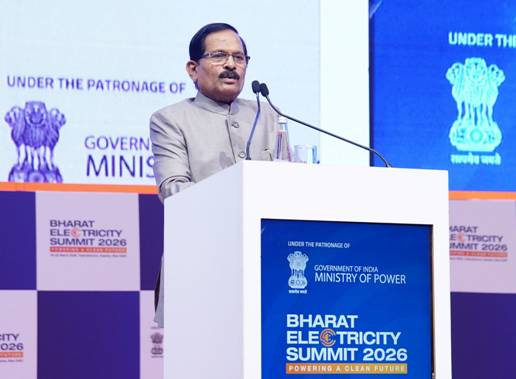
Speaking at the Valedictory Session, Shri Shripad Naik, Minister of State for Power and MNRE said what stands out most clearly from our deliberations in the Summit is that: India’s power sector is not merely expanding — it is advancing through a deeply coordinated federal architecture, where national vision and state-led execution are seamlessly aligned.

A person standing at a podiumDescription automatically generated

Shri Naik said that from this Summit, three key insights emerge. First, states are emerging as engines of innovation, shaping renewable expansion and policy evolution. Second, distribution reforms are gaining tangible momentum, strengthening the last mile of reliable electricity delivery. Third, our transition is becoming integrated and system-driven, with renewables, storage, transmission, and digital technologies evolving as one cohesive ecosystem.

Addressing the gathering, Shri Pankaj Agarwal, Secretary (Power), highlighted that discussions with industry bodies have indicated an estimated ₹32,000 crore capex pipeline by manufacturers in the power sector. He emphasised the need for system-level evaluation of power costs to ensure affordability, and underscored the urgency of rapidly scaling up energy storage capacities for effective integration of renewable energy.

Shri Piyush Singh, Additional Secretary, MoP, acknowledged the scale and success of the Summit and commended the organisers for its seamless execution.

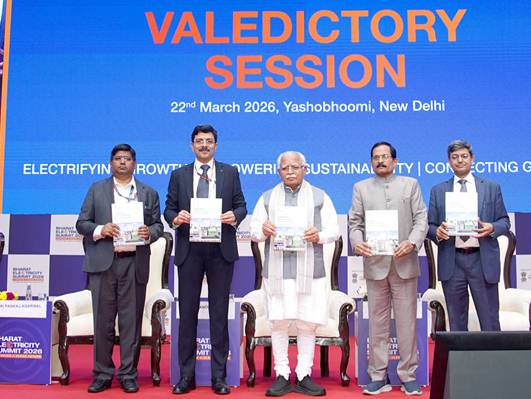
Three reports were released on the occasion. These are: Rating Regulatory Performance of States and Union Territories 2025 by Power Foundation of India; Ash Generation and Utilisation at coal/lignite-based Grid Connected thermal power stations for 2024-25 by Central Electricity Authority; and Establishing a Sodium-ion Battery Ecosystem in India – Leveraging New Technologies to Strengthen Component Manufacturing by Council on Energy, Environment and Water.


A group of people standing on a stageDescription automatically generated


Key Highlights of the Summit

India’s power sector continues to demonstrate unprecedented growth and transformation:

  • Installed capacity has reached over 520 GW, with one of the fastest expansions globally.
  • Transmission network has expanded to over 5 lakh circuit kilometres
  • Renewable energy capacity has grown significantly, with solar capacity increasing from 2.8 GW in 2014 to over 143 GW today.
  • Electricity demand is projected to grow by over 30% by 2030, driven by emerging sectors such as AI-enabled data centres and electric mobility.

The Minister of Power emphasised that while thermal power remains critical for grid stability, renewable energy will drive long-term sustainability, supported by storage, grid modernisation, and policy reforms.

Ministerial Meeting with States/UTs

A high-level Ministerial meeting chaired by the Union Minister of Power resulted in the following priority action areas:

  • Strengthening financial viability of DISCOMs through structural and operational reforms
  • Ensuring cost-reflective tariffs with targeted subsidies
  • Accelerating smart metering rollout nationwide
  • Securing adequate generation capacity tie-ups for future demand
  • Fast-tracking nuclear power development to meet long-term energy security goals

Strategic Sessions – Key Takeaways

Several strategic sessions explored critical themes shaping the future power landscape:

  • Centre-State Coordination: Emphasis on policy alignment and faster project execution
  • Green Hydrogen & Emerging Fuels: Positioning India as a global hub for green industrial fuels
  • AI-driven Power Systems: Enhancing grid intelligence, cybersecurity, and operational efficiency
  • Nuclear Energy: Scaling reliable, clean baseload capacity
  • Electrification & Power Markets: Enabling low-carbon growth through efficient trading systems
  • Financing Sectoral Growth: Mobilising trillions in investments through bankable frameworks
  • Energy Storage: Addressing rapid growth in storage requirements (expected to increase 5x by 2031–32)
  • Make in India for the World: Strengthening domestic manufacturing for global clean energy supply chains

Discussions highlighted that India’s long-term energy transition may require investments exceeding USD 22 trillion by 2070, with significant opportunities in generation, transmission, storage, and digital infrastructure.

Infrastructure, Storage and Market Developments

  • India needs to add over 1.37 lakh circuit km of transmission lines by 2030, with investments of around ₹9 lakh crore
  • Energy storage requirements are expected to rise sharply, with pumped storage potential of over 200 GW
  • Battery Energy Storage Systems (BESS) are emerging as a key solution for peak demand management
  • Renewable energy tariffs and market mechanisms continue to evolve, improving long-term price discovery and investor confidence
  • The Indian Carbon Market Portal was launched, with trading expected to begin shortly, marking a major step in climate finance

Digital Transformation

Digital transformation emerged as a defining force, with the power sector increasingly leveraging Artificial Intelligence, Machine Learning, and digital twins to move towards predictive and intelligent grid operations. The concept of “India Energy Stack,” inspired by the success of digital public infrastructure, aims to create seamless, interoperable energy systems. Initiatives such as smart metering and rooftop solar adoption are empowering consumers to become “prosumers,” actively participating in the energy ecosystem.

State-Level Leadership and Initiatives

States showcased ambitious roadmaps:

  • Gujarat: Renewable capacity target of 190 GW by 2047
  • Andhra Pradesh: Integrated clean energy hub with investments exceeding ₹6 lakh crore
  • Maharashtra: Demand projected to reach 280 TWh by 2030, with large-scale capacity expansion
  • Bihar: Advancing storage and grid infrastructure with structured investment pipelines
  • Delhi: Transitioning towards a high-renewable, storage-integrated urban power system

Global Cooperation and Bilateral Engagements

The Summit facilitated multiple high-level bilateral meetings with countries including Malawi, Tajikistan, Mauritius, Kyrgyzstan, and Russia, as well as industry stakeholders such as Africa50 and international delegations.

These engagements focused on:

  • Cross-border electricity trade
  • Renewable energy collaboration
  • Transmission infrastructure development
  • Capacity building and technology transfer

The India-Africa Strategic Meet further strengthened partnerships, with focus on expanding renewable energy, grid modernisation, and last-mile connectivity across the continent.


Business Outcomes

  • Over 1,200 buyer–seller meetings were conducted
  • Business enquiries exceeding ₹517 crore (~USD 55 million) were generated

Conclusion

The Bharat Electricity Summit 2026 has set a clear direction for India’s power sector: anchored in resilience, energy transition and global leadership. The Summit reaffirmed India’s commitment to building a future-ready, technology-driven, and investment-friendly energy ecosystem, while supporting the energy needs of both the nation and the Global South.

The outcomes of the Summit will contribute significantly to shaping policy, strengthening partnerships, and accelerating the transition towards a reliable, affordable, and clean energy future.