spot_imgspot_img
spot_img
Home Blog Page 92

Kavach 4.0 Successfully Commissioned on 1,452 Route Km Covering High-Density Delhi–Mumbai and Delhi–Howrah Routes

0

Vinod Bhat

New Delhi: 1.  Kavach is an indigenously developed Automatic Train Protection (ATP) system. Kavach is a highly technology intensive system, which requires safety certification of highest order (SIL-4).

2.  Kavach aids the Loco Pilot in running of trains within specified speed limits by automatic application of brakes in case Loco Pilot fails to do so and also helps the trains to run safely during inclement weather.

3.  The first field trials on the passenger trains were started in February 2016. Based on the experience gained and Independent Safety Assessment of the system by Independent Safety Assessor (ISA), three firms were approved in 2018-19, for supply of Kavach Ver 3.2.

4.   Kavach was adopted as National ATP system in July, 2020.

5.   Implementation of Kavach System involves following Key Activities:

a.   Installation of Station Kavach at each and every station, block section.

b.   Installation of RFID Tags throughout the track length.

c.   Installation of telecom Towers throughout the section.

d.   Laying of Optical Fibre Cable along the track.

e.   Provision of Loco Kavach on each and every Locomotive running on Indian Railways.

6.  Based on deployment of Kavach version 3.2 on 1465 RKm on South Central Railway and experience gained, further improvements were made. Finally, Kavach specification version 4.0 was approved by RDSO on 16.07.2024.

7.  Kavach version 4.0 covers all the major features required for the diverse railway network. This is a significant milestone in safety for Indian Railways. Within a short period, IR has developed, tested and started deploying Automatic Train Protection System.

8.  Major improvement in Version 4.0 includes increased Location Accuracy, Improved Information of Signal Aspects in bigger yards, Station to Station Kavach interface on OFC and Direct Interface to existing Electronic Interlocking System. With these improvements, Kavach Ver.4.0. is planned for large scale deployment over Indian Railways.

9.  After extensive and elaborate trials, Kavach Version 4.0 has been successfully commissioned on 1452 Route Kilometres, covering the high density Delhi- Mumbai and Delhi-Howrah routes as below:


S.No. Section Progress (Route Km)
1 Delhi-Mumbai route:
i) Junction cabin – Palwal – Mathura –Nagda section


667
ii) Vadodara – Ahmedabad section 96
iii) Vadodara – Virar section 336
2 Delhi – Howrah route:
i) Gaya Sarmatanr section 93
ii) Chota Ambana – Bardhaman – Howrah section 260


10. Further, track side Kavach implementation work has been taken up on 24,427 RKM covering all GQ,GD,HDN and identified sections of Indian Railways.

11.  Progress of key items of Kavach on High density routes including Delhi– Mumbai & Delhi– Howrah corridors as on 28.02.26 are as under:

SN Item Progress
i Laying of Optical Fibre Cable 8570 Km
ii Installation of Telecom Towers 1100 nos
iii Station Data Centre 767 station
iv Installation of Track side equipment 6776 RKm
v Provision of Kavach in Loco 4154 nos


12. The sections mentioned above also includes sections which pass through states of Andhra Pradesh, Maharashtra & Madhya Pradesh.

13.  In addition, work for installation of Kavach in 8979 Locomotives and 1200 EMU/MEMU has been taken up.

14. Specialized training programmes on Kavach are being conducted at centralized training institutes of Indian Railways to impart training to all concerned officials. By now more than 55,000 technicians, operators and engineers have been trained on Kavach technology. This includes about 47,500 Loco Pilots & Assistant Loco Pilots. Courses have been designed in collaboration with IRISET.

15. The cost for provision of Track Side including Station equipment of Kavach is approximately Rs. 50 Lakhs/Km and cost for provision of Kavach equipment on locomotives is approximately Rs. 80 Lakh/Loco.

16. The funds utilized on Kavach works so far up to Feb’26 is Rs. 2,763.90 Crores. The allocation of funds during the year 2025-26 is Rs. 1673.19 Crores. Requisite funds are made available as per the progress of works.

Safety is accorded the highest priority on Indian Railways. As a consequence of various safety measures taken over the years, there has been a steep decline in the number of accidents.

Number of Consequential Train Accidents has reduced as shown in the table below:-

Year Consequential Accidents
2014-15 135
2025-26 (upto 28.02.2026) 14 (90% lesser)

Another important index showing improvement in safety in train operations is Consequential Accident Index, the details of which are as under:-

Consequential Accident Index:-

Year Accident Index
2014-15 0.11
2024-25 0.03 (73% lesser)


This index measures number of consequential accidents as a ratio of total running kilometers of all trains.

Accident Index   = No. of consequential accidents / No. of trains X million kilometers run


The various safety measures taken to enhance safety in train operations are as under:-

  • On Indian Railways, the expenditure on Safety related activities has increased over the years as under:-
Expenditure/Budget on Safety related activities (Rs. in Cr.)
2013-14 2022-23 2023-24 2024-25 2025-26 2026-27
39,200 87,336 1,01,662 1,14,022 1,17,693 1,20,389


  • Electrical/Electronic Interlocking Systems with centralized operation of points and signals have been provided at 6,665 stations up to 28.02.2026 to reduce accidents due to human failure.
  • Interlocking of Level Crossing (LC) Gates has been provided at 10,153 Level Crossing Gates up to 28.02.2026 for enhancing safety at LC Gates.
  • Complete Track Circuiting of stations to enhance safety by verification of track occupancy by electrical means has been provided at 6,669 stations up to 28.02.2026.

Food Safety Team Conducts Market Checks in Srinagar

0

KD NEWS SERVICE

SRINAGAR, Mar 11: The Food Safety Team Srinagar carried out an extensive market inspection drive across several major commercial hubs of the city, including Karanagar, Balgarden and the bustling Residency Road area, in a bid to ensure strict compliance with public health protocols and food quality standards.

The inspection drive formed part of the department’s continued efforts to safeguard consumer health and strengthen regulatory oversight over food businesses operating in Srinagar. Officials said the initiative was aimed at assessing the hygiene standards maintained by food establishments and ensuring that Food Business Operators (FBOs) adhere strictly to the provisions laid down under the Food Safety and Standards Act and the regulations framed thereunder by the Food Safety and Standards Authority of India.

During the market checks, the food safety officials inspected various food establishments, including eateries, bakeries, grocery outlets, and other food-related businesses. The inspection teams examined food handling practices, storage conditions, sanitation levels, and the overall compliance with food safety guidelines. The officials also interacted with shop owners and workers, sensitizing them about the importance of maintaining hygienic conditions in food preparation and storage areas.

The Food Business Operators were issued categorical instructions to align their operations strictly with the rules and regulations governing food safety. The authorities emphasized that all FBOs must ensure full compliance with the legal framework mandated under the Food Safety and Standards Act, which is designed to protect public health by regulating the manufacture, storage, distribution, sale, and import of food products.

Special emphasis was laid on maintaining high levels of sanitation and hygiene within food establishments. Officials directed that business premises must be kept in superior sanitary condition at all times in order to prevent contamination of food items. The inspection teams observed that poor sanitation practices can significantly increase the risk of food-borne diseases, thereby posing serious health hazards to consumers.

The authorities also highlighted the importance of personal hygiene among workers involved in food handling and processing. Food handlers were instructed to maintain strict personal cleanliness while working, including wearing clean clothing, keeping nails trimmed, and ensuring proper hand hygiene. The officials stressed that maintaining personal hygiene standards is crucial in preventing the spread of harmful bacteria and contaminants in food products.

During the drive, the Food Safety Team further encouraged the business operators to upgrade their food storage and waste disposal systems in accordance with modern food safety standards. Shop owners were advised to store food items in clean and temperature-controlled environments and ensure that waste materials are disposed of in a safe and hygienic manner to prevent contamination and pest infestation.

Officials reiterated that the department would continue to intensify such inspections across Srinagar to ensure that food businesses operate in strict compliance with safety norms.

They warned that any lapse in maintaining hygiene standards or any violation of the Food Safety and Standards Act would invite strict legal action.

The authorities made it clear that violators could face heavy penalties, including substantial fines, cancellation or suspension of business licenses, and other legal consequences as per the provisions of the Act.

The Food Safety Team urged all Food Business Operators to cooperate with the regulatory authorities and maintain the highest standards of food safety and hygiene in order to protect public health and build consumer confidence in the food market.

Officials also appealed to consumers to remain vigilant while purchasing food items and report any unhygienic practices or suspected food safety violations to the concerned authorities so that timely action can be taken.

Indian Railways Renews 54,600 km of Tracks During 2014–26 to Ensure Safe Train Operations

0
Vinod Bhat

New Delhi: Upgradation and renewal of tracks is a continuous and ongoing process. The track renewal is carried out as per the laid down criteria based on age, traffic carried, condition etc.

Track Renewal Works are planned and executed duly prioritizing the condition of track and various other factors so as to ensure that track is safe for running of trains at permitted speed.

The details of track renewal carried out across the entire railway network during 2014-26 (up to Feb’26) are as under:

Track renewed ~ 54600 Km

Safety of train operation is accorded top priority on Indian Railways (IR). There is a well-established system of inspection and maintenance of railway tracks as prescribed in Indian Railways Permanent Way Manual.

The tracks on IR are regularly inspected by designated officials as per the laid down schedule. This includes daily patrolling, on-foot inspection, trolley inspection and foot plate/rear window inspection by the concerned officials. Further, to assess the health of track geometry objectively, Track Recording Car (TRC) and Oscillation Monitoring System (OMS) runs are conducted at scheduled frequencies. The entire railway network of Indian Railways is covered through TRC and OMS runs. Based on various inspections, necessary action is taken in a time bound manner to ensure safety of track.

Strengthening, upgradation, modernisation and improvement of track infrastructure is a continuous and ongoing process over Indian Railways. The following measures are being taken by Indian Railways to upgrade railway tracks:

i. Modern track structure consisting of 60kg, 90 Ultimate Tensile Strength (UTS) rails, Wider and heavier Pre-stressed Concrete Sleepers (PSC) with elastic fastening, fan-shaped layout turnout on PSC sleepers and H-beam Sleepers on girder bridges are being used while carrying out primary track renewals.

ii. The Thick Web Switches and Weldable CMS Crossings are being used in turnout renewal works.

iii. Supply of 260m long rail panels have been increased to avoid welding of joints, thereby improving safety and riding quality

iv. Thick Web Switch Expansion Joints are being used in place of earlier Conventional/Improved SEJs.

v.  Adoption of better welding technology for rails i.e. Flash Butt Welding.

vi. Adoption of mechanized system for track maintenance using high output plain tampers and points & crossing tampers for improved maintainability & reliability of track.

vii. Deployment of state-of-the-art modern machines including Rail Grinding Machines to further improve asset reliability.

viii. Mechanisation of track laying activities through use of track machines like PQRS, TRT, T-28 etc.

ix. Interlocking of Level Crossing (LC) Gates for enhancing safety at LC gates.

x. Use of advanced Phased Array technology of testing of rail and welds.

xi. Deployment of Integrated Track Monitoring Systems (ITMS) and Oscillation Monitoring System (OMS) for comprehensive health assessment to ascertain optimal maintenance requirements.

xii. Adoption of portable Track Measuring Trolley for continuous recording of track parameters in yards.

xiii. Using web enabled Track Management System (TMS) for integration and data analytics of the track inspection records received through various sources to enable precise maintenance inputs.

As a result of above measures, there has been significant increase in speed potential of the tracks. The details of speed potential of railway tracks during 2014 vis-a-vis 2026 are as under:

Sectional Speed
(kmph)
2014 2026 (up to Feb’26)
Track Km % Track Km %
130 & above 5,036 6.3 23,713 22.4
110 – 130 26,409 33.3 62,036 58.7
< 110 47,897 60.4 19,923 18.9
Total 79,342 100 1,05,672 100

This information was provided by the Union Minister for Railways, Information & Broadcasting and Electronics & Information Technology, Shri Ashwini Vaishnaw, in a reply to questions in Lok Sabha today.

All Press Registration Services Now Online through Press Sewa Portal; Over 1.5 Lakh Periodical Records Digitized

0
Vinod Bhat

New Delhi: As per Press and Registration of Periodicals (PRP) Act, 2023, all applications for registration of periodicals are processed digitally through Press Sewa Portal. Accordingly, all physical records of registration of newspapers (more than 1.5 lakh) which were created under the Press and Registration of Books (PRB) Act, 1867 (now repealed) have been digitized and made part of the Press Sewa Portal. Currently, services such as registration of new periodicals, revision of registration of existing periodicals, ownership transfer of periodicals, filing of Annual Statement, payment of penalty online, Circulation Verification of Periodicals etc. are being processed through Press Sewa Portal. As part of the implementation of the Act, Specified Authorities of 780 Districts have been onboarded on Press Sewa Portal. Since 1st March 2024, 11,081 applications have been processed, and certificates have been issued for relevant categories.

A detailed list of penalty imposed and paid through Press Sewa portal is attached at Annexure-I and a detailed state-wise list of number of such periodicals that have been cancelled is attached at Annexure-II. The Government continuously assesses impact of its various initiatives and programmes. Press Registrar General of India (PRGI) continuously takes feedback and action to facilitate better services through the portal.

The list of registered newspapers/periodicals is available on PRGI’s website i.e. https://prgi.gov.in/ under “Registered Titles” tab under “Our Services” Head.

Security forces bust terrorist hideout in Bandipora, recover arms and explosives

0

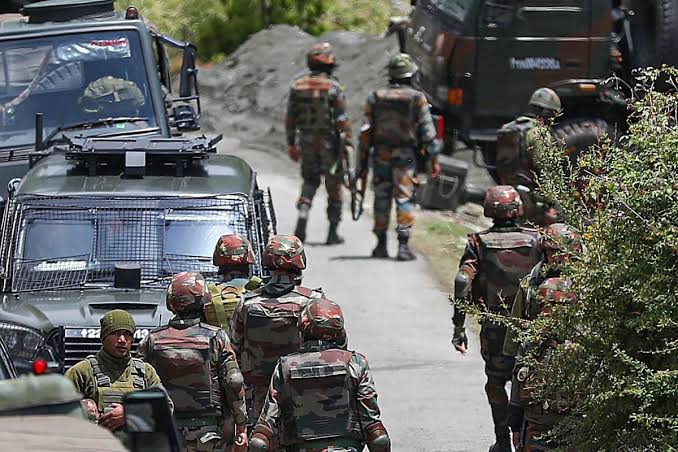
Srinagar: Security forces busted a militant hideout in north Kashmir’s Bandipora district and recovered a cache of arms and explosives during a search operation, officials said on Wednesday.

Officials said the operation was launched following specific intelligence inputs about the presence of a militant hideout in the area.

During the search, the forces recovered a large quantity of weapons and explosive material from the hideout.

The recovered arms include one rocket-propelled grenade (RPG) launcher along with five rounds and a light machine gun (LMG) along with two belt boxes, officials said.

Security personnel also seized seven AK-47 magazines, including five loaded and two empty, one pistol magazine and three ammunition pouches.

According to officials, 536 rounds of 7.62 mm ammunition for the LMG and 544 rounds of AK-47 ammunition were also recovered during the operation.

In addition, the forces seized one hand grenade, five under-barrel grenade launcher (UBGL) grenades, nine plastic explosive boxes, four TNT slabs, four primers and two electric detonators (No. 33).

A five-metre damaged firing cable was also recovered from the hideout, officials said.

They said the recovery of the arms and explosives foiled a possible militant plan in the region. Security forces have launched further searches in the area.

India Expands Promotion of Cinema and Creative Talent through DCDFC Scheme Implemented by National Film Development Corporation

0
Vinod Bhat

New Delhi: The Ministry of Information & Broadcasting allocates funds under DCDFC (Development, Communication and Dissemination of Filmic Content) Scheme to National Film Development Corporation (NFDC).

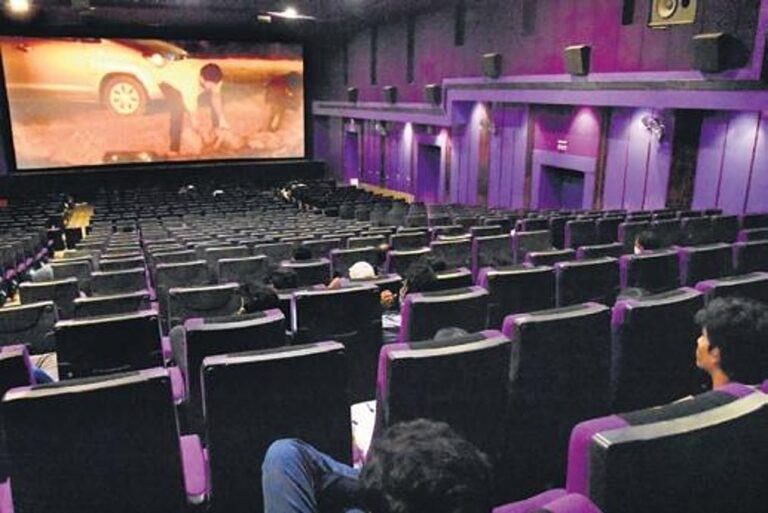
The aims of scheme are to promote the creation, innovation, and dissemination of film content. This includes organizing and participating in the film festivals to promote Indian films at national and international platforms, while also providing financial assistance to filmmakers and film-related institutions to enhance the visibility and global reach of Indian cinema. It further supports preservation, restoration, digitization, and archiving of India’s film heritage, and provides incentives for Audio-Visual co-production and international films shooting in India.

The Ministry also supports filmmakers and other creative professionals through the DCDFC Scheme by organizing and supporting various film festivals, workshops, screenings, masterclasses, and dissemination activities that encourage the growth of the film sector and facilitate interaction among filmmakers, artists, technicians, and other industry professionals. The details in this regard are available at https://www.nfdcindia.com and https://mib.gov.in/en/offerings/schemes-monitoring .

The funds utilisation details of DCDFC Scheme are given below:


S

No.

Financial Year Funds Allocated & Disbursed

to NFDC (₹ in Cr)

Funds Utilised by NFDC

(₹ in Cr)

1 2021-22 84.50 77.69
2 2022-23 127.00 122.78
3. 2023-24 348.12 339.89
4. 2024-25 340.68 324.21
5 2025-26* 232.46 156.86

*Till 26.02.2026.

The Ministry through NFDC undertakes partnerships with State Governments to promote cinema and related activities like organization of International Film Festival of India (IFFI) at Goa every year.

Further, WAVES (World Audio Visual & Entertainment Summit) was organized successfully at Mumbai in year 2025. Also, Residential Writers’ Lab was organized in collaboration with the Maharashtra Film Stage & Cultural Development Corporation Ltd. (MFSCDCL) at Maharashtra Film City. The year-wise details of major events, number of screenings/shows and approximate number of delegates/participants are placed below:


Year


Event

No. of Screenings/

Shows

Approx Delegates/

Participants

2025 International Film Festival of India (IFFI) 380 17,999
2025 World Audio Visual & Entertainment Summit (WAVES) 1,00,000 +
2024 International Film Festival of India (IFFI) 435 15,384
2024 Mumbai International Film Festival (MIFF) 314 12,027
2023 International Film Festival of India (IFFI) 318 13,902
2022 International Film Festival of India (IFFI) 293 12,431
2022 Mumbai International Film Festival (MIFF) 119 8,898
2021 International Film Festival of India (IFFI) 236 8,888


Participation in these events includes representation from various States/UTs as well as international delegates.

Fuel Stocks Sufficient for 15 Days, No Need to Panic: Div Com Kashmir

0

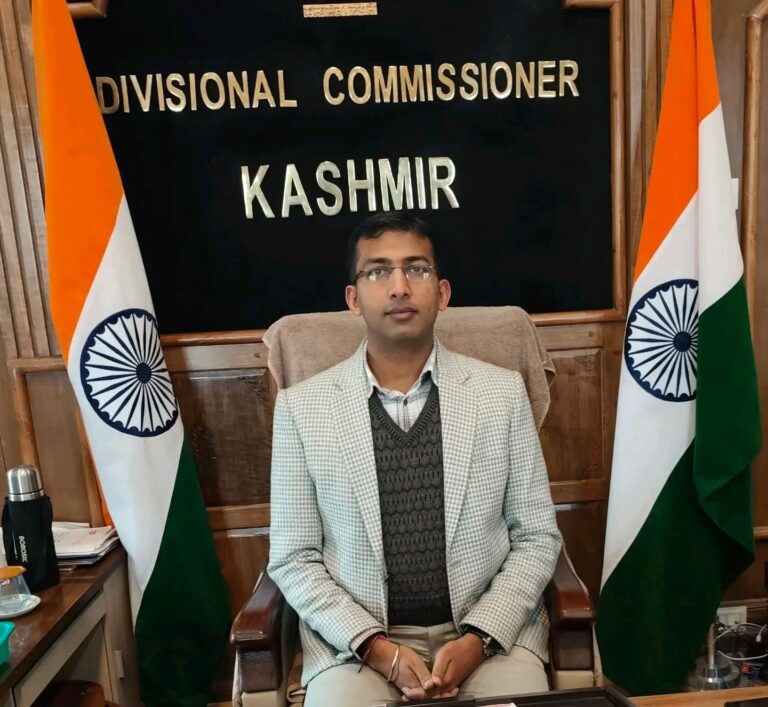
Srinagar, Mar 11 : Divisional Commissioner of Kashmir on Wednesday assured that the valley has adequate reserves of petrol, diesel, and LPG to last for over a fortnight.

Speaking to the media Divisional Commissioner confirmed that the inventory of petrol and diesel stands at more than 15 days. He further detailed that the Food and Civil Supplies Department has reported LPG stocks sufficient for nearly 13 days, ensuring the supply of essential commodities remains uninterrupted.

“We have stock of petrol and diesel for more than 15 days. The stock position is being constantly monitored by a control room. There is no need to panic at this time,” Garg stated.

Addressing concerns over misinformation, the Divisional Commissioner urged the public to rely only on official communications. “We should be aware of any news or fake information that is circulating,” he cautioned.

The administration has also called for public cooperation in curbing hoarding and black marketing. Citizens can lodge complaints regarding any malpractice at the District Control Room or the 24×7 Integrated Command and Control Centre (ICCC) helpline. Details of the helpline are available on the official X handle, and strict action will be taken against offenders, the Commissioner added. (KNS)

Historic Global AI Summit Concludes; India Firmly Established as Global Hub for Artificial Intelligence Innovation, Governance, Partnerships and Inclusive Growth

0
Vinod Bhat

New Delhi: In line with Hon’ble Prime Minister Shri Narendra Modi’s vision, the Government is democratising the development and usage of technology. The focus is using Artificial Intelligence (AI) for solving real-world problems and ultimately improving lives across various sectors. Recognising its importance, the Government of India is working closely with international partners, industry, academia and States to promote responsible and inclusive use of AI.

India hosted the India-AI Impact Summit 2026 from 16–21 February 2026 at Bharat Mandapam, New Delhi. For the first time, the Global AI Summit took place in the Global South. The shift signals a broader move toward a more inclusive global AI dialogue.

The Summit concluded as a historic global convergence, firmly establishing India as a global hub for artificial intelligence innovation, governance, partnership, and inclusive growth. The five-day mega-event, the largest of its kind hosted by any developing nation, brought together leaders from governments, industry, academia, civil society, and startups under the theme “SarvajanHitaya, SarvajanSukhaya” (Welfare for all, Happiness of all).

The India AI Impact Expo was conducted as a side event of the India AI Impact Summit 2026, aligned with the theme of showcasing India’s power of AI for Global Good. Participation was invited through Expression of Interest (EOI) from various AI ecosystem partners, viz. Corporates, Startups, Country Representations, Central Govt. (Min & Depts), State Govt., Public Sector Undertakings, Academia / Research Institutions, and NGOs. The exhibition space was allotted on a First-Come-First-Serve basis, subject to availability of space and within the approved layout framework of the Expo.

The responsibility regarding the nature of exhibits, representations made, and compliance with applicable legal and regulatory requirements rested with the respective exhibitors in the India AI Impact Expo.

The Government did not attempt to popularize a fake claim by the exhibitor. The Government took prompt action against the concerned exhibitor.

The information was submitted today in the Lok Sabha in a written reply to Shri Sachithanantham R by Dr.  L. Murugan, Minister of State for Information and Broadcasting and Parliamentary Affairs.

Railway Staff’s Honesty Shines as Lost Mobile Returned to Passenger

0

VINOD BHAT

JAMMU, Mar 11: Demonstrating exemplary honesty and dedication to passenger service, the ticket checking staff of the Northern Railway’s Jammu Division returned a lost mobile phone to its rightful owner after it was found in a moving train, setting yet another example of integrity within the railway system.
The incident occurred on Sunday when a member of the ticket checking staff at Jammu station, Mr. Deepak Sharma, discovered a mobile phone left behind by a passenger in the sleeper coach of Train No. 12471, the Swaraj Express, during routine checking between Kathua and Jammu.

According to an official press release issued by the Northern Railway’s Jammu Division, the ticket checking staff promptly took the mobile phone into their custody after discovering it during the onboard inspection of the sleeper coach. The staff followed the established safety and security protocols to ensure that the device remained protected until it could be returned to its owner.

As soon as the train arrived at Jammu railway station, the railway staff immediately initiated efforts to locate the passenger who had misplaced the phone. An announcement was made through the station’s enquiry and public address system requesting the concerned passenger to report to the ticket checking office.

Shortly after the announcement, the passenger arrived at the office and identified himself as the owner of the lost device. Railway officials carried out necessary verification procedures to confirm the ownership before handing over the mobile phone to him.

After receiving his mobile phone, the passenger expressed heartfelt gratitude to the railway authorities and the ticket checking staff for their honesty and prompt action, stating that the recovery of the phone came as a great relief.
Senior Divisional Commercial Manager of Jammu Division, Uchit Singhal, praised the staff for their integrity and professionalism. He said the incident reflects the commitment of railway employees towards ensuring not only the comfort but also the safety of passengers and their belongings during train journeys.

“Jammu Division remains committed to providing a secure and comfortable travel experience for passengers. The work carried out by our ticket checking staff today is a prime example of the ethics and integrity that define the functioning of Indian Railways. Returning unclaimed luggage or valuables found on a moving train to the rightful owner in a transparent manner is a challenging task, yet our staff accomplished it with utmost dedication,” Singhal said.

He further added that the incident highlights the seriousness with which railway employees approach their duty towards passenger service and safety. Singhal also commended the staff involved in the recovery and expressed hope that such acts of honesty would inspire other railway employees to uphold similar standards of integrity.

Officials said such incidents reinforce passengers’ trust in the railway system and showcase the responsible conduct of railway staff who remain vigilant while performing their duties.

The press release issued by the Public Relations Inspector of Jammu Division, Mr. Raghvender Singh, stated that the division continues to encourage staff members to maintain high standards of honesty, transparency, and commitment while serving passengers.

Railway authorities noted that the incident serves as a reminder of the importance of ethical conduct in public service and reflects the dedication of railway personnel working on the frontlines to assist passengers during their journeys.

General Upendra Dwivedi, Chief of the Army Staff Visits College of Defence Management, Simulator Development Division

0

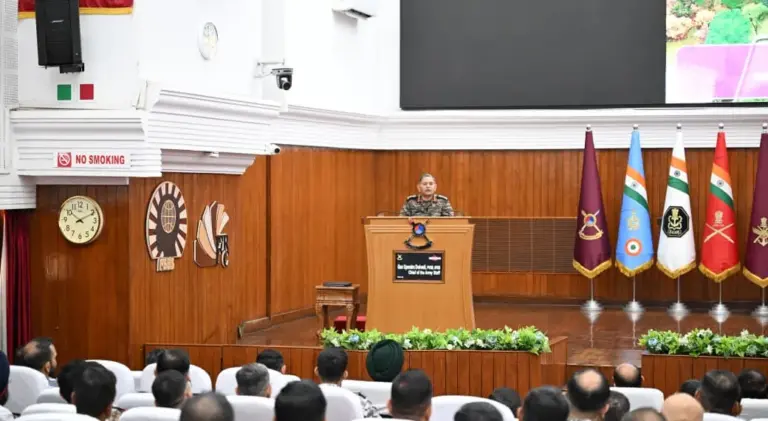
Secunderabad, Mar 10: General Upendra Dwivedi, Chief of the Army Staff (COAS), visited the College of Defence Management (CDM), Secunderabad, on March 10, 2026, where he addressed participants of the 21st Higher Defence Management Course (HDMC-21), the faculty and the permanent staff of the institution.

During the visit, he also reviewed indigenous technological innovations at the Simulator Development Division (SDD), which is developing advanced training solutions for the Indian Army.

Addressing officers undergoing the Higher Defence Management Course, General Dwivedi outlined the Indian Army’s vision for transformation in response to an evolving security environment.

He highlighted the Five Pillars of Transformation guiding the Army’s modernisation: Technology Assimilation and AI Integration, Organisational Restructuring and Force Modernisation, Human Resource Development and Leadership, Tri-Service Integration and Jointness, and Indigenisation and Atmanirbharta.

The COAS stated that the Indian Army stands at the cusp of a new era characterised by technological advancement, organisational agility and self-reliance, anchored in the core values of Truth, Trust and Transparency.

Drawing lessons from Operation Sindoor, he emphasised India’s transition from a reactive security posture to a proactive deterrence framework. He underlined the importance of effectively harnessing multi-domain operations, data-centric warfare and unmanned systems in future conflicts.

General Dwivedi stressed that Change Management is a strategic necessity rather than an option. He urged officers to cultivate five dimensions of thinking, creative, critical, systems, cognitive and imaginative, to enhance institutional adaptability and promote innovative problem-solving within the armed forces. He also emphasised the need to balance conceptual clarity with measurable operational outcomes.

Highlighting the changing character of warfare, the COAS observed that modern conflicts require the simultaneous application of all five generations of warfare through an integrated multi-domain approach. He also underscored the importance of understanding grey-zone warfare across all levels of command, from unit commanders to the highest military leadership.

In his address, General Dwivedi called for optimal utilisation of human resources within the Army and emphasised empowering Junior Commissioned Officers (JCOs) to help bridge officer shortages while strengthening leadership at the tactical level. He also referred to the raising of new operational formations such as the Bhairav Battalion and the Special Operations Forces Brigade, reflecting the Army’s proactive adaptation to emerging security challenges.

During interactions with faculty members and international participants from friendly foreign countries attending the course, the Chief of the Army Staff exchanged views on strategic management, leadership development and efficient resource utilisation. He commended the College of Defence Management for its pivotal role in developing strategic leaders, fostering tri-service synergy and strengthening India’s defence preparedness through higher defence management education.

Later in the day, General Dwivedi visited the Simulator Development Division, where he reviewed cutting-edge indigenous technologies being developed for military training. The systems demonstrated included advanced solutions in augmented and virtual reality, artificial intelligence, drones, robotics and simulator-based training designed to enhance realism in combat training environments.

Brigadier Ashish Johar, Commandant of the Simulator Development Division, briefed the COAS on the organisation’s development roadmap and innovation-driven philosophy focused on advancing indigenous niche technologies for the armed forces. The briefing highlighted ongoing initiatives aimed at improving training realism, operational preparedness and capability development.

The visit showcased a range of indigenous innovations delivering immersive and data-driven combat training environments that enhance mission readiness and support faster decision-making. These systems are expected to play a significant role as the Indian Army advances towards network-centric and multi-domain operations, with a strong emphasis on data-centric warfare.

General Dwivedi lauded the Simulator Development Division for its work in developing technology-enabled training solutions that prepare soldiers for the increasingly complex battlefields of the future.

The visit reaffirmed the Indian Army’s commitment to professional excellence, transformational leadership and jointmanship, aligned with the national vision of Viksit Bharat 2047.