spot_imgspot_img
spot_img
Home Blog Page 93

DM Rajnath Singh releases ‘Defence Forces Vision 2047; Roadmap for a Future-Ready Indian Military’

0

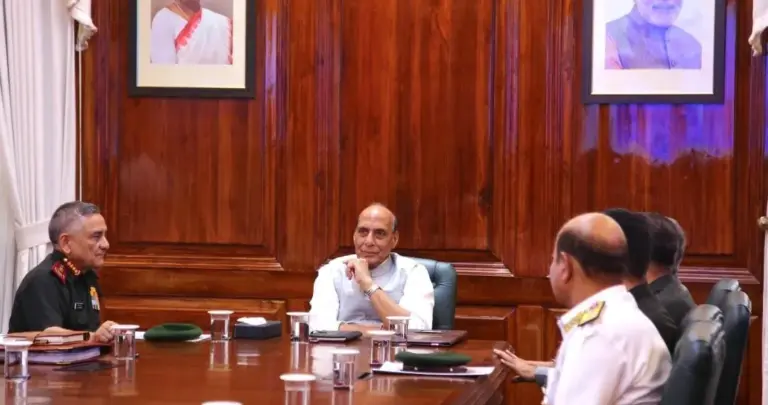
New Delhi, Mar 10: Raksha Mantri Shri Rajnath Singh released ‘Defence Forces Vision 2047: A Roadmap for a Future-Ready Indian Military’ at an event in South Block, New Delhi on March 10, 2026.

This comprehensive blueprint has been articulated by Headquarters Integrated Defence Staff to transform the Defence Forces into a modern, integrated and technologically-advanced military capable of supporting India’s aspiration to become Viksit Bharat by 2047.

The vision document outlines the strategic reforms, capability enhancements and organisational changes required within the Defence Forces to effectively address the evolving geostrategic, technological & security environment. It envisages the transformation of the military into an integrated, multi-domain and agile force capable of deterring adversaries, responding across the full spectrum of conflict & protecting expanding strategic interests, amid the rapidly changing global and regional dynamics.

A central pillar of the vision is the emphasis on jointness and synergy among the Services, promoting greater coordination in planning, operations & capability development. The document also highlights the importance of innovation, advanced technologies and modern training framework to build a force that is adaptable to future warfare challenges.

Another key focus area is Aatmanirbharta in defence, encouraging the development & adoption of indigenous technologies and solutions tailored to the country’s unique security requirements. Strengthening domestic defence manufacturing and technological capabilities is expected to enhance operational readiness while contributing to national growth.

The vision document adopts a calibrated roadmap with clearly prioritised capability goals across short-term, mid-term and long-term timelines. This structured approach will guide the development of critical military capabilities, institutional reforms and strategic partnerships required to build a world class defence force.

Recognising the complexity of future security challenges, the vision document underscores the need for a whole-of-nation approach, integrating military strength with diplomatic, technological and economic power to ensure national security. Through sustained reforms, innovation and national commitment, it aims to ensure that by the centenary of India’s independence, the nation’s military stand as a globally-respected, technologically-advanced and combat-ready military, contributing to a strong and resilient Viksit Bharat.

Chief of Defence Staff General Anil Chauhan, Chief of the Naval Staff Admiral Dinesh K Tripathi, Chief of the Air Staff Air Chief Marshal AP Singh, Defence Secretary Shri Rajesh Kumar Singh, Vice Chief of the Army Staff Lieutenant General Pushpendra Singh and other senior officials were present on the occasion.

DRDO, Indian Navy conduct in-flight release trials of indigenous Air Droppable Container ‘ADC-150’ from P8I Aircraft

0

New Delhi, Mar 10: Defence Research & Development Organisation (DRDO) and the Indian Navy jointly conducted four successful in-flight release trials of the indigenous Air Droppable Container ‘ADC-150’ from the P8I aircraft off the coast of Goa between February 21 to March 01, 2026, at different extreme release conditions.

Indigenously designed and developed to deliver 150 kg payload, the Air Droppable Container enhances the naval operational logistics capabilities for providing quick response to naval vessels under distress, needing critical stores/equipment, medical assistance etc. at blue sea deployed far from the coast.

A large orange object with black and yellow markingsDescription automatically generated with medium confidence

The Naval Science & Technological Laboratory, Visakhapatnam is the nodal laboratory for the activity. Aerial Delivery Research & Development Establishment, Agra has developed the parachute system and Centre for Military Airworthiness & Certification, Bengaluru provided the flight clearance & certification.

Defence Research & Development Laboratory, Hyderabad provided the instrumentation support for the trials.

To meet the requirement of the Indian Navy, the ADC-150 system for the P8I aircraft was developed and qualified in a short timeframe. As all the developmental flight trials have been completed successfully, the system is expected to be inducted into the Indian Navy soon.

DG CRPF Reviews 105th Batch Passing Out Parade at Lethpora; 584 Recruits Inducted

0

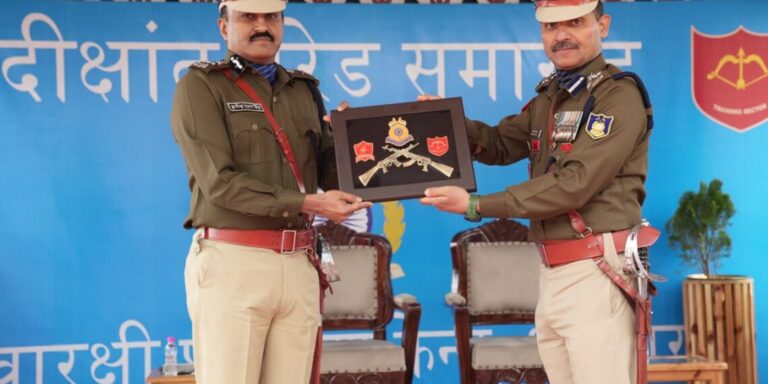
Srinagar, Mar 10: Passing Out Parade of 105th Batch of Recruits/General Duty consisting of 584 RTs/D was conducted on 10th March 2026 Tuesday at RIC CRPF Srinagar located at Lethpora Campus under District-Pulwama, JEK.

In order to preside over the felicitation of the outstanding oath-taking ceremony, a number of guests were invited to grace the occasion along with Civil Administrative authorities and Head of Dignitaries of Sister agencies.

The Parade witnessed 584 cadets passing out to become CT/GD soldiers in the elite Force, ie. C.R.P.F.: Gyanendra Pratap Singh IPS, DG CRPF was the Reviewing Officer of the parade, while Deepak Kumar, IPS, SDG (Irg), Rajesh Kumar, IPS, ADG (JK) Zone, along with other Senior Officers were also present at the parade, underscoring the importance of
this milestone event.

The skillful, crisp and synchronized drill maneuvers ignited a sense of pride amongst all spectators. Shashi Bhushan Singh, Asstt. Comdt. of this Institution was the Parade Commander of the 105th Batch of Passing-out Parade.

Gyanendra Pratap Singh (IPS), DG CRPF gave away medals/trophies to the cadets who displayed exemplary performance during their 44 week of Basic Training.

Addressing the RIs/GD cadets of the Passing Out Courses, the Reviewing Officer called upon them to uphold the values, traditions and ethos of the C.R.P.F.

He also emphasized upon the importance of compassion complimented by professional competence while discharging the duties in peace as well as during operational deployments.

The reviewing officer also intimated that, the outstanding exhibition of the Passing-Out-Parade reflects the dedication and efforts of both the recruits and their instructors. He also said, that the recruits are not only physically ready but also ethically and legally
equipped for their duties.

In the end, the reviewing officer exhorted the Recruits to abide by the oath of allegiance and pledged to respect the constitution and serve the
nation as a force multiplier.

Government aims to transform AWCs into vibrant early learning spaces: Sakeena Itoo

0

Reviews proposed interventions of SWD for upgrading existing framework for ECCE in J&K

KD News Desk

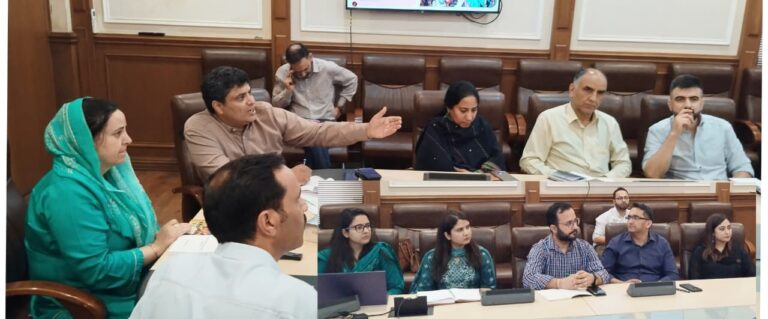
JAMMU, MARCH 10: Minister for Social Welfare, Education , Health and Medical Education, Sakeena Itoo today chaired a comprehensive review meeting to discuss various proposals focusing on enhanced convergence of Early Childhood Care and Education (ECCE) framework with Education, Health, and other allied departments to further strengthen the early learning ecosystem at Anganwadi Centres across Jammu and Kashmir.

The meeting was attended by Commissioner Secretary, Social Welfare department (SWD), Sarmad Hafeez; Mission Director POSHAN, Sajad Hussain Ganai; Director Finance and Director Planning SWD, Child Development Project Officers (CDPOs) of Jammu and other concerned officers.

During the meeting, the Social Welfare Minister took detailed assessment of various interventions proposed by the SWD for upgrading existing framework for ECCE and strengthening its convergence with Anganwadi Centres.

The meeting focused on enhancing foundational learning, improving nutritional outcomes, and ensuring holistic development of children in the 3–6 years age group through coordinated implementation of ECCE policies across the Union Territory.

During the review, the Minister underscored the critical importance of early childhood education as the cornerstone of lifelong learning and cognitive development. She directed the officers to prepare a time-bound action plan for proper implementation of these initiatives, ensuring quality standards and achieving measurable outcomes in child development indicators across Jammu and Kashmir.

Highlighting the pivotal role of Anganwadi Centres, the Minister directed officials to transform these centres into vibrant early learning spaces equipped with child-friendly infrastructure, activity-based learning materials and trained human resource. “Anganwadi workers serve as first educators for children, they must be empowered through continuous capacity-building programmes and modern pedagogical tools”, she asserted.

Calling for stronger inter-departmental coordination, the Minister stressed convergence between the Social Welfare, School Education, Health & Medical Education Department and Rural development departments to ensure seamless delivery of services to young children and mothers.

“Early childhood care is not merely a welfare initiative but a long-term investment in human capital. A child who receives proper nutrition, care and early education grows into a confident and capable citizen,” the Minister observed.

She further instructed officers to strengthen parental awareness campaigns focusing on nutrition, early stimulation and pre-school readiness, particularly in rural and underserved areas.

The Minister also reviewed plans for digital monitoring mechanisms, improved infrastructure support and enhanced learning assessment tools to track developmental milestones among children enrolled at Anganwadi Centres.

During the meeting, Commissioner Secretary SWD gave a detailed presentation on proposed initiatives for strengthening of ECCE in J&K and its convergence with other allied departments. He informed the Minister that through these initiatives Universal access and equity in early learning will be boosted which will lead to holistic development of child.

The Commissioner Secretary also apprised the Minister that strategies like mentorship programme in which Teachers from nearby primary schools will mentor Anganwadi Workers, ensuring seamless transition from preschool to Grade-I and improving pedagogical quality through monthly on-site visits. He also said that University and college students will be made stakeholders who will participate as interns under Mission POSHAN, acting as Poshan Mitras and supporting nutrition awareness, growth monitoring, and learning activities.

The Commissioner Secretary also informed that Officer Adoption Programme is proposed by which Government officers will adopt Anganwadi Centres, providing mentorship, monitoring implementation, and strengthening community engagement with monthly visits and structured reporting.

He also apprised the Minister that Anganwadi Centres are being positioned as community hubs of integrated services.

The Commissioner also outlined other initiatives like a four-tier training ecosystem involving DIETs, NIPCCD, MLTCs and mentor teachers for Capacity Building, Digital Transformation of Anganwadi Services like QR-enabled Anganwadi Centres, One Child One Card digital identity system, APAAR ID integration for preschool children, Poshan Tracker digital monitoring as well as Real-time service visibility for communities. He also briefed the Minister about other key initiatives like Poshan on Wheels for doorstep services and beneficiary registration, Ring the Bell Campaign promoting punctuality and transparency, NGO partnership initiative “Sanwarein Bachpan” for strengthening foundational learning and POSHAN Vatika nutrition gardens across AWCs.

Agri-Renewable Energy Helping Farmers Access Reliable Power, Increase Productivity and Reduce Irrigation Costs: Union Minister Shri Pralhad Joshi

0

Vinod Bhat

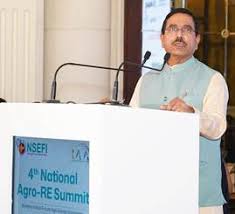
New Delhi: Union Minister of New & Renewable Energy Shri Pralhad Joshi today highlighted the growing role of renewable energy in strengthening India’s rural economy and enhancing farmers’ incomes while addressing the 4th National Agro-RE Summit in New Delhi.

Addressing the gathering, Shri Joshi said renewable energy is increasingly reaching India’s farms and households, helping farmers access reliable power while reducing irrigation costs and improving farm productivity. “ A farmer irrigating his field today may be doing so using solar power, and a household that once worried about electricity bills may now be producing its own electricity through rooftop solar. This is not just an energy transition,  it is also a transformation of the rural economy,” the Minister said.

Solar pumps reducing irrigation costs

Shri Joshi emphasised that renewable energy technologies are playing an increasingly important role in agriculture, particularly through solar irrigation pumps, which enable farmers to reduce dependence on diesel and access reliable daytime irrigation. Diesel irrigation can cost nearly ₹6,790 per acre for wheat and over ₹8,000 per acre for crops such as cotton. Solar pumps can help farmers save between ₹5,000 and ₹6,500 per acre annually, while also reducing emissions.

Under the PM-KUSUM scheme, more than 10 lakh standalone solar agricultural pumps have been installed, and over 13 lakh grid-connected agricultural pumps have been solarised across the country. The Minister noted that these initiatives are enabling farmers to become “Urjadaata” (energy providers) in addition to being “Annadata” (food providers).

PM-KUSUM 2.0 to promote Agri-PV deployment

The Minister informed that the Government is preparing PM-KUSUM 2.0, which will include a dedicated 10 GW Agri-PV component to promote the co-location of solar panels with crops. This initiative will enable farmers to generate electricity while continuing agricultural activities on the same land, creating a new model for decentralised renewable energy generation in rural India.

Agrivoltaics unlocking new income opportunities

Highlighting the emerging potential of agrivoltaic systems, Shri Joshi said that combining solar power generation with agricultural cultivation can significantly improve land productivity and provide farmers with an additional source of income. Estimates indicate that India’s agrivoltaic potential could range from 3,000 GW to nearly 14,000 GW, reflecting the scale of opportunity in integrating renewable energy with agriculture.

Studies indicate that agrivoltaic systems can significantly enhance farmers’ earnings, with annual incomes in some cases increasing from about ₹60,000 per acre to more than ₹1 lakh per acre when electricity generation income is combined with crop cultivation.

Rooftop solar expanding energy access

Shri Joshi also highlighted the progress of the PM Surya Ghar: Muft Bijli Yojana. More than 31 lakh households have already benefited from rooftop solar installations under the scheme, enabling families to generate their own electricity and reduce electricity bills, he said.

Highlighting India’s renewable energy progress, the Minister noted that the country’s non-fossil fuel capacity has increased from about 81 GW in 2014 to nearly 275 GW today, with more than half of India’s installed electricity capacity now coming from non-fossil sources.Solar capacity expanded from about 2.8 GW in 2014 to nearly 143 GW, wind capacity increased from around 21 GW to about 55 GW, and biopower capacity rose from 8.1 GW to about 12 GW, reflecting the rapid scale-up of renewable energy deployment in the country.

The Minister emphasised that India’s target of 500 GW non-fossil fuel capacity will be achieved through millions of decentralised renewable energy installations across farms, rooftops and rural enterprises.

Addressing the event, Union Minister of State for Power and New & Renewable Energy Shri Shripad Yesso Naik highlighted the emerging potential of agrivoltaics as a transformative solution for India’s energy transition. He noted that agrivoltaic systems enable the simultaneous generation of clean electricity and cultivation of crops on the same land, significantly improving land-use efficiency while addressing the challenge of competing land demands for renewable energy expansion.

Emphasising the importance of collaboration, Shri Naik called for stronger partnerships among government, industry, research institutions and financial organisations to scale up agrivoltaic deployment and develop innovative, affordable solutions that make such technologies accessible to farmers across the country.

About 4th National Agro-RE Summit in New Delhi

The Summit, organised by the National Solar Energy Federation of India (NSEFI) in collaboration with the India Agrivoltaics Alliance, brought together policymakers, industry leaders, farmer representatives and renewable energy stakeholders to discuss the integration of renewable energy with agriculture.


JNV Budgam Students Explore Innovation at IUST Entrepreneurship Program

0

KD NEWS SERVICE

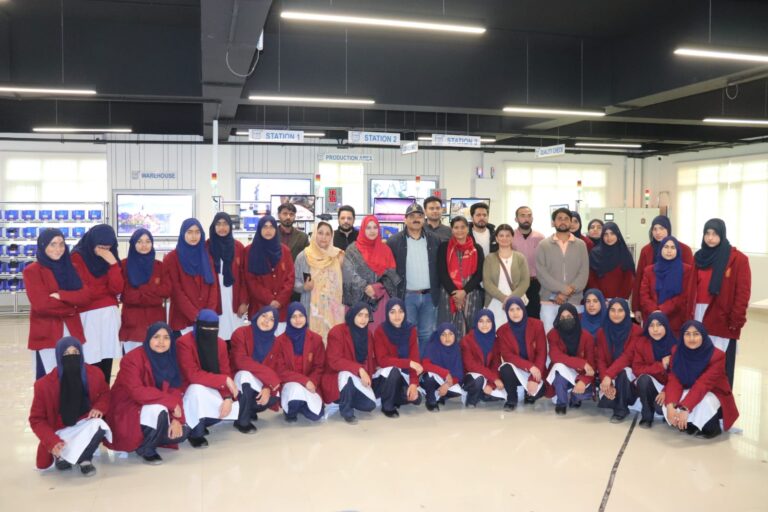
SRINAGAR, Mar 10: In an effort to promote innovation, creativity and entrepreneurial thinking among young students, more than 140 students and faculty members from PM Shri Jawahar Navodaya Vidyalaya Khanpora Budgam visited the CIED–IUST Foundation at the Islamic University of Science and Technology Innovation Campus for an Entrepreneurship Awareness Program (EAP).

The educational visit was organised with the objective of exposing students to the evolving world of entrepreneurship, technological innovation and skill-based career opportunities. The programme aimed to inspire young learners to adopt innovative thinking and equip them with knowledge about emerging avenues in entrepreneurship and technology-driven enterprises.

The visiting students and teachers were warmly welcomed by Dr. Basharat Nabi Dar, Coordinator EDC/CPMSB at the CIED–IUST Foundation. During his interaction, he introduced the participants to the Foundation’s mission, vision and key objectives, highlighting its role in promoting innovation, start-up culture and entrepreneurship among students and youth in the region.

Addressing the gathering, Syed Abdul Basit Andrabi stressed the growing importance of entrepreneurship in today’s rapidly evolving and competitive global environment. He encouraged students to focus on acquiring practical and skill-oriented education alongside traditional academic learning to enhance their employability and expand their professional opportunities.

He emphasized that innovation-driven entrepreneurship plays a crucial role in achieving sustainable development and building a culture of self-reliance among youth. Andrabi further highlighted that the ability to innovate and think creatively is increasingly becoming a defining factor for success in modern economies.

During his address, Andrabi also briefed the participants about the recently launched Mission Yuva Scheme Jammu and Kashmir, an initiative by the Government of Jammu and Kashmir aimed at encouraging entrepreneurship and empowering youth across the Union Territory. He explained that the scheme seeks to nurture entrepreneurial talent by providing support, mentorship and opportunities for aspiring young innovators.

Interacting with the students, he also informed them about several short-term skill development programmes offered by the CIED–IUST Foundation. These programmes are designed to foster innovation, develop entrepreneurial competencies and prepare students for emerging technological and industry requirements.

As part of the programme, the visiting students were given an immersive tour of various advanced laboratories and innovation facilities established at the Foundation. The tour included visits to the iFactory Lab, Design & Development (D&D) Lab, Training & Development Lab, and the UltraTech Cement Lab, where students witnessed modern technologies being used for product development, research and innovation.

During the hands-on sessions, students were introduced to a range of cutting-edge tools and equipment, including 3D printers, 3D scanners, PCB prototyping machines, CNC machines, and laser cutting machines. The participants actively interacted with the technical teams and explored how these technologies are applied in designing prototypes, developing products and solving real-world problems.

The interactive demonstrations and practical exposure enabled the students to gain a deeper understanding of how technology and innovation can be transformed into entrepreneurial ventures. Faculty members accompanying the students also appreciated the initiative, stating that such exposure helps bridge the gap between theoretical learning and practical application.

The visit proved to be highly informative and inspiring for the students, providing them with valuable insights into the rapidly growing fields of technology, innovation and entrepreneurship. The programme also helped broaden their understanding of innovation-driven career pathways and highlighted the importance of developing future-ready skills in an increasingly technology-oriented world.

Participants described the experience as motivating and educational, noting that the interaction with experts and exposure to advanced laboratories encouraged them to think creatively and explore entrepreneurship as a potential career option.

Overall, the Entrepreneurship Awareness Program served as a significant step towards nurturing innovation, strengthening skill development and encouraging young minds in Jammu and Kashmir to become future entrepreneurs and innovators.

DDC Anantnag chairs Bankers’ DLRC meeting For Quarter ending December-2025 Stresses on Priority Sector Lending, Self Employment

0

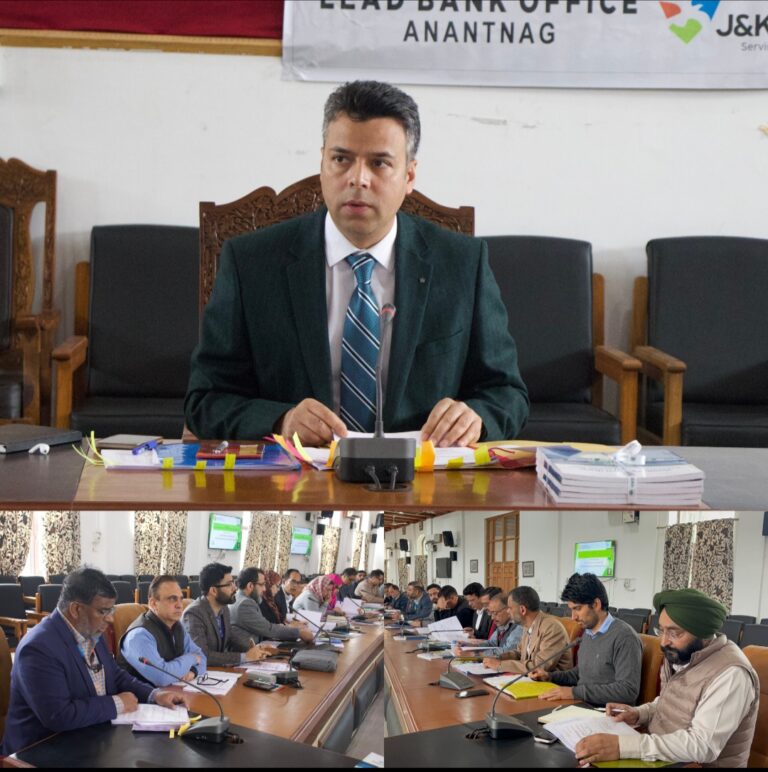
ANANTNAG, MARCH 10: A District Level Review Committee (DLRC) meeting to review the performance of the banking sector in Anantnag district for the quarter ending December 2025 (Q3 FY 2025–26) was held today under the chairmanship of District Development Commissioner, Dr. Bilal Mohiud Din Bhat at Dak Bunglalow Khanabal.

The meeting was attended by ADDC, GM DIC, CPO, CAO, CAHO, DD Fisheries, AD Employment, LDO RBI, DDM NABARD, Cluster Heads of J&K Bank, Chief Manager SBI, Director RSETI, District Coordinators of various Banks and officers from KVIB, KVIC and NRLM.

Presenting a comprehensive review, Lead District Manager (LDM), Mohammad Shafi Bhat, informed the chair that the total deposits in the district as of December 31, 2025 stood at ₹9083.54 crore, while advances amounted to ₹7207.54 crore, resulting in a Credit-Deposit (CD) ratio of 79.34%.

Under the District Credit Plan (DCP) 2025–26, the banking sector disbursed ₹2488.21 crore under the priority sector against a target of ₹3676.11 crore, thereby achieving 68% of the allotted yearly target as on 31-12-2025. Non-priority sector lending stood at ₹1610.25 crore against the target of ₹2025.74 crore, thereby achieving 79% of the allotted target as on 31-12-2025.

Further, the total credit disbursed in the district was ₹4098.47 crore, registering 72% achievement of the overall credit target for the half year ending 31-12-2025.
During the meeting, the DDC reviewed the performance of banks for the Quarter-3 (2025-26) in detail. He said special emphasis on improving the Credit–Deposit (CD) Ratio and enhancing credit flow to priority sectors, particularly agriculture.

Reviewing the status of crop loans, the DDC advised the banks to ensure adequate and timely credit to farmers. He appreciated the progress shown in crop loan disbursement and urged the banks to intensify the efforts and achieve targets in coordination with the Agriculture Department.

Observing the decline in some loan segments, the DDC directed the banks to take immediate corrective measures and improve lending performance. He further reviewed the progress of term loans and other priority sector advances and instructed the banks to increase lending to productive sectors.

The meeting stressed the need for greater awareness among farmers regarding government schemes and agricultural credit facilities. Need for better coordination between banks and line departments to ensure effective implementation of schemes and improved credit delivery was highlighted.

Dr. Bilal also reviewed progress under government-sponsored schemes like Svanidhi, Mudra, PMJJBY, PMSBY, APY, PMEGP, JDY, among others. He directed the banks and concerned departments to ensure effective implementation of these schemes.
Officers from Agriculture and allied sectors were directed to set subdivision and zone wise targets for enrollment of eligible beneficiaries under various schemes with special emphasis on KCC and HADP.

It was informed that against 2449 sanctioned cases under Mission YUVA, loans to the tune of Rs. 13456.80 Lakh have been disbursed in favour of 2136 cases so far.
Further, as a joint initiative of RBI and NABARD, five Centres for Financial Literacy are functional in the district which focus on Social Security Schemes, Women Empowerment, Digital Banking and Self Employment Schemes and have achieved 8747 linkages.
The meeting concluded with directions to all banks to improve lending performance, strengthen financial inclusion initiatives, and work closely with line departments for the development of the district’s economy.

ACB nabs Patwari for taking Rs 10,000 bribe in Srinagar

0

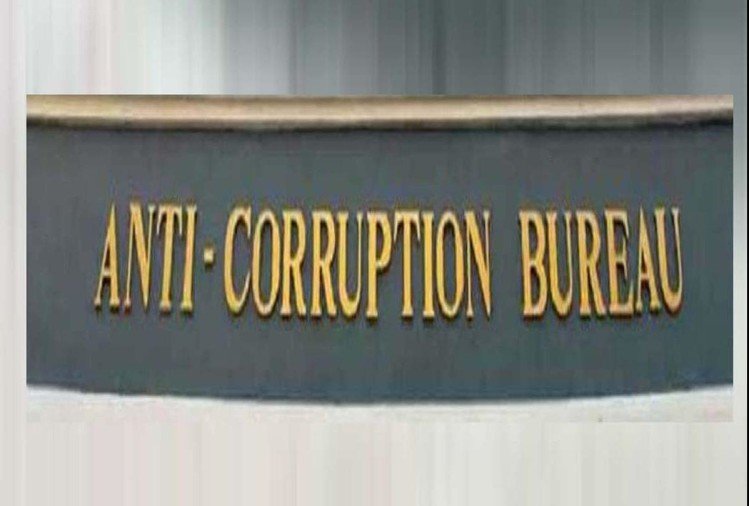
Srinagar, Mar 10: The Jammu and Kashmir Anti-Corruption Bureau (ACB) on Tuesday said it trapped and arrested a Patwari of Halqa Batmaloo in Srinagar red-handed while demanding and accepting a bribe of Rs 10,000 for issuing revenue extracts in favour of a complainant’s relative.

In a statement issued, a spokesperson said Jammu and Kashmir Anti-Corruption Bureau received a written complaint alleging therein that Patwari Halqa Batmaloo Srinagar namely Saffdar Hussain Mir is demanding rupees 10,000 as bribe in lieu of issuance of revenue extracts in favour of a relative of the complainant and was asked to be paid today in order to receive the requisite documents.

He said, unwilling to pay the bribe, the complainant approached ACB and submitted a written complaint requesting legal action against the accused public servants.

“Upon receipt of the complaint, a pre-trap verification was conducted, which established the demand of bribe, accordingly a Case FIR No.05/2026 U/S 7 PC Act 1988 was registered at ACB PS Srinagar and investigation was taken up.”

He further said, during the course of investigation, a trap team was constituted. The team laid a successful trap and caught the accused public servant Saffdar Hussain, Patwari, Halq Batamaloo red-handed while demanding and accepting rupees 10,000 as bribe from the complainant. The accused was taken into custody after completing all Medico-Legal formalities. Further investigation of the instant case is going on..

Olympian Arif Mohammad Khan urges Union sports ministry to develop infrastructure in Gulmarg to meet global standards

0

New Delhi: Two-time Olympian Arif Mohammad Khan has urged the Union sports ministry to enable at least one proper infrastructure on the slopes of Gulmarg to prepare Indian athletes for global events. A full season of “at least five months till April-end” is needed to train and compete on the slopes of Kangdoori in Gulmarg to prepare our top skiers, he said.

Lauding the Khelo India Winter Games initiative, Arif said: “Six editions of the Khelo India Winter Games have provided an incredible platform to athletes but now we have to look at ways of winning medals at major global competitions.”

Arif entered the history books at the recently-concluded Winter Olympics in Milano-Cortina in Italy. In the men’s slalom race, the Alpine skier finished 39th. It was an improvement of 10 places on India’s previous best Winter Olympics result in the event, set by Kishore Ratna Rai at Calgary 1988.

Saying his record finish in the giant slalom event has put India “in the global ski map,” Arif said it was time to invest wisely in winter sports in India and start winning medals at the Asian level. Since 2020, all six editions of Khelo India Winter Games have taken place in Gulmarg in Jammu & Kashmir. Leh in Ladakh has been hosting the ice games since 2024.

It is pertinent to mention that the Union minister for youth affairs and sports, Dr Mansukh Mandaviya, has announced the 2027 edition of Khelo India Winter Games to become a 15-day event to make Gulmarg a global winter sports destination. Arif, who learnt his ropes on the slopes of the Pir Panjal mountains, said it was an excellent idea to merge sports and tourism together.

“We have the athletes and there are ones who can be better than me. But we are missing infrastructure, coaches and funding. Given the government’s intention to develop winter sports, I can see better things in the future. We need at least one fully-developed infrastructure in Gulmarg that can function for a good five months,” said Arif, adding, “I can guarantee we will win medals at the top Asian level in 10-15 years.”

Saying his finish at the Winter Olympics should inspire youngsters to take up winter sports as a career, Arif felt that a national federation was required immediately to understand the requirement of athletes. “The government is doing a lot through its policies to streamline governance in sports bodies. Winter sports like skiing needs immediate government intervention and full support,” the 36-year-old said.

Arif is training three young boys. Two of them are from Jammu & Kashmir and one is from Himachal Pradesh. “There are a lot of talented athletes in the hilly states and Union Territories. Some skiers are also emerging from South India but the availability of year-round facilities is a major handicap. At least, skating has all-weather facilities in Dehradun and Leh, Gulmarg can be a priority now,” Arif pointed out.

Post-Budget Webinar Highlights Roadmap for Establishing AVGC Content Creator Labs in Schools and Colleges

0
Vinod Bhat

New Delhi: The Ministry of Information & Broadcasting (MIB) organised a Break-out Session on “AVGC Content Creator Labs in Schools and Colleges” as part of the Post-Budget Webinar titled “Sabka Saath, Sabka Vikas – Fulfilling Aspirations of People: Education, Skills and University Townships” on 09 March 2026. The session deliberated on the implementation roadmap for establishing AVGC Content Creator Labs (CCLs) in 15,000 secondary schools and 500 higher educational institutions, as announced in the Union Budget 2026–27.

The webinar series was inaugurated by the Hon’ble Prime Minister Modi, who emphasised that India is actively promoting the Animation, Visual Effects, Gaming and Comics (AVGC) sector as part of the country’s transition towards an innovation-driven economy. He encouraged educational institutions to strengthen industry collaboration and research-driven learning so that campuses evolve into centres of innovation and industry engagement, enabling students to gain real-world exposure and strengthening the national skill ecosystem.

Speaking at the event, Union Minister of Information and Broadcasting, Shri Ashwini Vaishnaw highlighted that the Government has established the Indian Institute of Creative Technologies (IICT) on the lines of premier institutions like IIT, IIM & AIIMS. The institute includes high-tech model laboratories that are considered among the best globally, comparable to leading facilities in the world. He said the institute will provide high-quality education and professional training to young people in emerging areas of the creative, media and technology sectors. Shri Vaishnaw also noted that Doordarshan has launched a “Creators’ Corner”, providing content creators with an opportunity to showcase their work, earn revenue and reach audiences across the country as well as globally.

The session also featured a keynote address by Shri Sanjay Jaju, Secretary, Ministry of I&B who highlighted the importance of building a robust ecosystem to nurture creative talent and position India as a global leader in the AVGC sector.

The breakout session, moderated by Shri Chaitanya Chinchlikar, VP & CTO, Whistling Woods International, brought together policymakers, industry leaders, educators and students to discuss curriculum development, infrastructure, industry collaboration and skill pathways for the emerging creator economy. Panelists included representatives from government, industry, academia and the creative technology ecosystem such as Ms. A. Srija (Economic Advisor, Department of School Education & Literacy), Dr. Ashish Kulkarni (Chairman, FICCI AVGC Forum), Shri Rajan Navani (Founder & Group CEO, JetSynthesys), Ms Sonam Bhagat (CEO, Vygr), Dr. Vishwas Deoskar (CEO, IICT), Shri Munjal Shroff (Director & COO, Graphiti Studios), Shri Biren Ghose (Founder & CEO, Astra Studios), Shri Manvendra Shukul (CEO, Lakshya Digital), Ms Mala Sharma (Global VP, Education and International, Adobe) and Ms Preeti Vyas (President, Mythik), along with participation from students and volunteers.

During the deliberations, participants emphasised that the establishment of Content Creator Labs in schools and colleges will create structured pathways for students to explore careers in animation, gaming, VFX and digital storytelling, in line with the National Education Policy (NEP) and its focus on multidisciplinary learning, creativity and design thinking. Stakeholders also stressed the importance of strong industry partnerships to provide mentorship, internships and real-world exposure.

The discussion underlined a phased implementation approach, beginning with pilot institutions and expanding based on readiness and feedback, while ensuring participation from tier-2 and tier-3 cities. Key action points included identifying suitable institutions for the labs, developing structured AVGC curricula, faculty capacity building through industry-supported training, and establishing a standardised infrastructure and technology framework, along with strengthened industry–academia collaboration.

The session witnessed wide participation, with over 16,600 attendees including representatives from nearly 500 schools, 50 colleges, industry stakeholders, parents and individual participants from across the country.

In the closing session of the Post-Budget Webinar, the Hon’ble Minister of Information & Broadcasting emphasised the growing importance of the creator economy in providing a democratic platform for citizens to showcase India’s vibrant culture and creativity. He highlighted the role of technology in transforming the media and entertainment sector and noted that the expertise of the Indian Institute of Creative Technologies (IICT) will be leveraged to support the establishment of Content Creator Labs across the country.

The discussions are aimed to contribute to the development of a robust implementation framework for the AVGC Content Creator Labs initiative, enabling young Indians to acquire creative and digital skills and strengthening India’s position in the global AVGC ecosystem.