spot_imgspot_img
spot_img
Home Blog Page 49

India Records Historic Growth in Wind Energy with 6.1 GW Addition in 2025–26: New & Renewable Energy Minister

0

Vinod Bhat

New Delhi: Union Minister for New and Renewable Energy and Consumer Affairs, Food and Public Distribution, Shri Pralhad Joshi, addressed the Foundation Day of the Wind Independent Power Producers Association (WIPPA) today, highlighting India’s remarkable progress in the wind energy sector and reaffirming the Government’s commitment to accelerating the country’s clean energy transition.

Shri Joshi stated that India has recorded its best-ever year in wind energy capacity addition, with a historic 6.1 GW added during 2025–26. India currently ranks fourth globally in wind energy, with over 56.1 GW installed capacity and an additional 28 GW under implementation.

Emphasising the vast untapped potential of the sector, the Minister highlighted that India’s wind energy potential at 150 metres hub height is estimated at nearly 1164 GW. He expressed confidence that with sustained efforts, the country will achieve 100 GW wind capacity by 2030 and 156 GW by 2036, contributing significantly to the net-zero target by 2070.

The Minister underlined that wind energy plays a critical role in stabilising India’s energy system, particularly due to its peak generation during evening and night hours, which aligns with high demand periods. He noted that nearly 45% of wind power generation occurs during peak demand hours, making it a vital complement to solar energy.

Highlighting policy interventions, Shri Joshi stated that the Government has introduced a dedicated wind component under Renewable Purchase Obligations to ensure sustained demand. Measures such as enforcement of Late Payment Surcharge rules, transparent bidding guidelines, and the implementation of the Approved List of Models and Manufacturers (ALMM) are strengthening investor confidence and promoting domestic manufacturing.

He further noted that India has developed a robust domestic manufacturing ecosystem with an annual capacity exceeding 24 GW and indigenisation levels of 70–80%. The country also has strong supply chain capabilities across blades, towers, gearboxes, and other critical components.

Addressing industry concerns, the Minister informed that the Government is actively examining the release of additional wind tenders while also promoting hybrid and round-the-clock (RTC) projects for enhanced grid efficiency. Issues related to Deviation Settlement Mechanism (DSM) penalties, curtailment, and transmission delays are under active consideration, with efforts underway to arrive at balanced and practical solutions.

The Minister also highlighted initiatives such as Green Energy Open Access rules to facilitate direct procurement of renewable power by industries, repowering of old wind turbines, and expansion of transmission infrastructure under the Green Energy Corridor.

He noted that the Government is working to mobilise long-term, low-cost financing through innovative mechanisms such as blended finance and credit enhancement frameworks. The recently launched 500 MW pilot under the Contracts for Difference (CfD) model is expected to provide revenue certainty and improve market stability.

Shri Joshi emphasised that the evolving global landscape presents a strategic opportunity for India to emerge as a trusted global manufacturing and supply partner in the wind energy sector, particularly as countries seek to diversify supply chains.

Congratulating WIPPA for its role as a credible voice of the wind energy industry, the Minister noted that the association has played a key role in shaping policy dialogue, addressing sectoral challenges, and supporting India’s renewable energy ambitions.

Concluding his address, the Minister reiterated that achieving the ambitious target of 156 GW over the next decade is well within reach, supported by clear policy direction, strong institutional backing, and industry participation. He called for greater focus on integrated hybrid systems combining wind, solar, and storage to ensure a reliable and sustainable energy future.

First Amul milk freight train from Gujarat arrives in Kashmir Valley

0

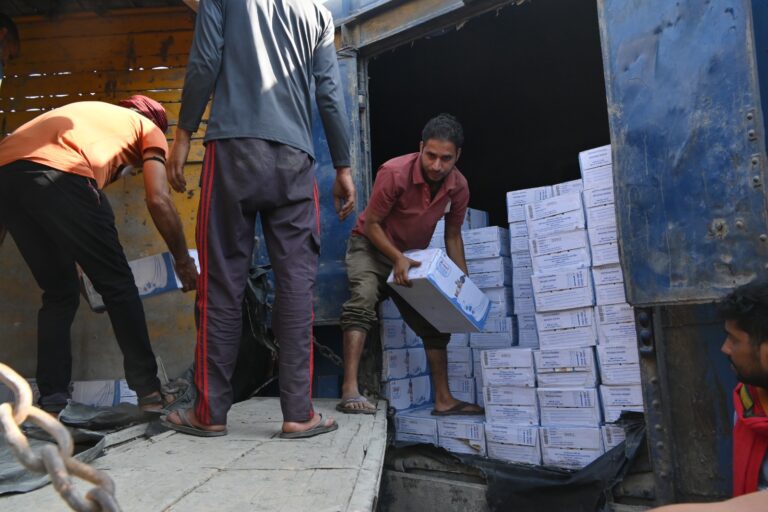
JAMMU, April 22: In a historic first, a special freight train carrying 20 wagons of Amul milk and dairy products from Gujarat arrived in the Kashmir Valley on Wednesday, officials said.

A northern railway official told  the train, which departed from the Linch Goods Shed in Ahmedabad Division on April 20, carried 10 BCN wagons to the Bari Brahman Goods Shed in Jammu and 10 to the Anantnag Goods Shed in Kashmir, he said.

Each consignment weighed approximately 500 tonnes, with total shipment including toned milk, milk powder, buttermilk, lassi and other dairy items he said.

Uchit Singhal, Senior Divisional Commercial Manager said this is a proud and historic moment for the entire union territory.

He said the initiative, designed with the interests of local traders and families in mind, would ensure round-the-clock availability of fresh milk across Jammu city and its surrounding districts.

“The direct rail service will significantly reduce both cost and time compared to road transport, yielding direct economic benefits for local markets and consumers,” Singhal added.

The development comes months after the first rail consignment of 1,350 tonnes of industrial salt reached Anantnag from Gujarat’s Kharaghoda station in October 2025.

Officials said the initiative underscores Indian Railways’ commitment to delivering essential commodities to remote regions and would strengthen commercial ties between Gujarat’s dairy sector and Kashmir Valley’s markets.

Director A&T Kashmir Reviews Tankipora Treasury, Stresses Citizen-Friendly Services

0

KD NEWS SERVICE

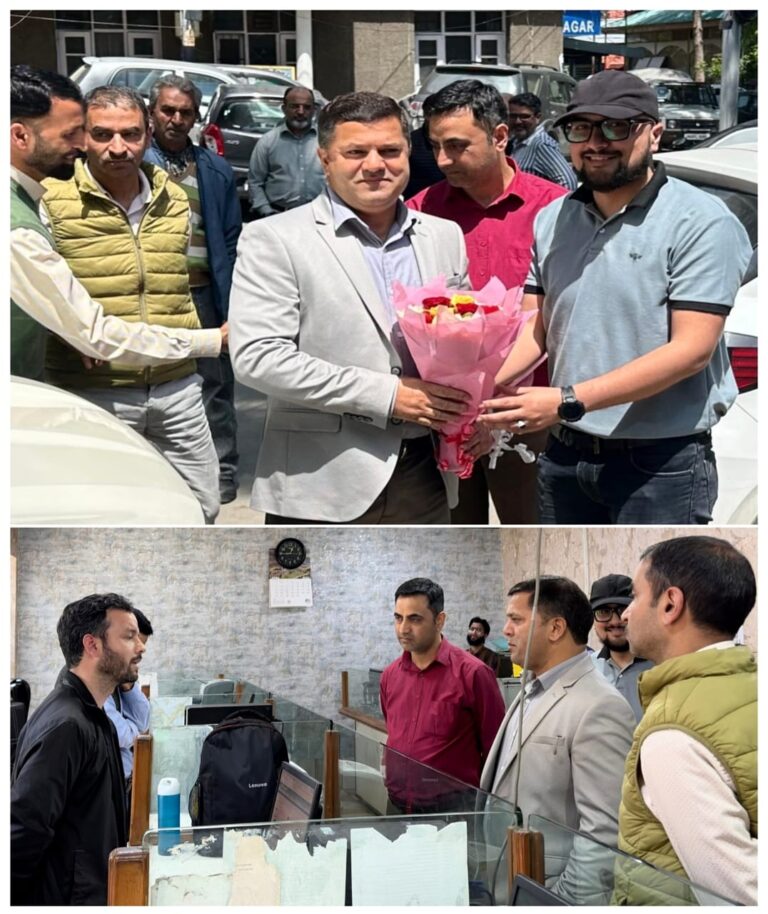
SRINAGAR, April 22: Director, Accounts and Treasuries (A&T) Kashmir, Imtiyaz Ahmad Wani on Wednesday conducted a comprehensive inspection of the Additional Treasury at Tankipora in Srinagar to review its overall functioning and evaluate the efficiency of service delivery mechanisms being provided to the public.

During the visit, the Director laid particular emphasis on ensuring a citizen-friendly approach in the functioning of the treasury, especially in delivering essential public services. He underscored the need for a smooth and hassle-free disbursement of pensions, highlighting that pensioners must not face unnecessary delays or procedural difficulties either at the treasury level or in coordination with banks.

Wani also took stock of the infrastructure and basic facilities available at the treasury, including accessibility for visitors, seating arrangements, and the general ease with which beneficiaries can avail services. He stressed that such facilities play a crucial role in enhancing public satisfaction and confidence in government institutions.

Interacting directly with pensioners present at the treasury, the Director sought firsthand feedback regarding their experiences. He assured them that their concerns and suggestions would be addressed to further streamline services and remove bottlenecks.

The inspection also included a detailed review of financial governance practices, implementation of IT initiatives, and the extent of computerisation within the treasury. Wani examined staff attendance and work discipline, reiterating the importance of accountability and punctuality in public service.

Highlighting the growing role of technology, he directed officials to make optimal use of digital systems to ensure transparency, efficiency, and faster service delivery. He stressed that integrating technology effectively with administrative processes is key to strengthening financial management and improving overall public service delivery across treasuries in Kashmir.

Pahalgam attack anniversary: Amit Shah says nation shares families’ grief

0

New Delhi, Apr 22; Union Home Minister Amit Shah on Wednesday paid tributes to the victims of the Pahalgam terror attack, asserting that the nation continues to share the grief of the families who lost their loved ones in the incident.

In a post on X, Shah said, “On this day, we solemnly remember the innocent lives we lost in the horrific Pahalgam terror attack last year. The grief and pain of losing our people still remain in the hearts of every Indian.”

“Terrorism is the greatest enemy of humanity, against which we must stand united to fight and defeat. India will continue its zero-tolerance policy against terrorism and those who harbour it,” the home minister added. (KNS)

Baisaran Massacre: A Scar on Conscience, A Testament to Kashmir’s Courage

0
April 22 has carved an indelible scar on the conscience of the nation and the soul of Kashmir. The lush green meadows of Baisaran in Pahalgam—often described as a paradise within paradise—became a killing field when terrorists unleashed a calculated and cold-blooded attack on innocent tourists. Twenty-six lives were mercilessly snuffed out. In those fleeting moments of terror, dreams were shattered, families destroyed, and humanity itself was wounded.
These 26 victims had come to Kashmir not as participants in any conflict, but as seekers of peace, beauty, and respite. They placed their trust in the Valley’s famed hospitality. That trust was betrayed by forces that thrive on bloodshed and fear. Each life lost represents a story unfinished—a parent who will never return home, a child whose laughter has been silenced, a family condemned to a lifetime of grief. Remembering them is not just an act of mourning; it is a moral obligation.
This heinous massacre must be condemned in the strongest, clearest, and most unequivocal terms. There can be no room for ambiguity: this was an act of terrorism, pure and simple—cowardly, barbaric, and inhuman. It bears all the hallmarks of Pakistan-sponsored terrorism, a long-standing and well-documented strategy aimed at destabilizing Jammu and Kashmir. By targeting unarmed civilians, particularly tourists, the perpetrators sought to achieve multiple sinister objectives: to spread panic, to cripple the region’s tourism-driven economy, and to project an image of instability.
Such acts expose not strength, but desperation. They reflect the bankruptcy of an agenda that has no support among the people and survives only through violence and intimidation.Terrorism of this nature is not a resistance; it is an assault on humanity. It is important to state, without hesitation, that those who orchestrate, sponsor, and justify such acts are equally culpable. Pakistan’s continued patronage of terror networks remains a grave threat to peace, and it must be confronted firmly at both national and international levels.

Yet, even in the face of such horror, what emerged from Kashmir that day was not fear, but defiance—moral, collective, and unmistakable.
In an extraordinary and heartening response, people across the Valley poured onto the streets, condemning the attack with rare unanimity. From Srinagar to the remotest villages, voices rose in anger and grief. Shopkeepers downed shutters, students held protests, civil society groups organized demonstrations, and ordinary citizens expressed their anguish openly. These were not orchestrated displays; they were spontaneous eruptions of conscience. The message was loud and clear: Kashmir rejects terrorism, and Kashmir stands with the victims.
This public outrage carries profound significance. For decades, the narrative around Kashmir has often been distorted by the actions of a violent minority. But the scenes witnessed on April 22 told a different story—a story of a people who refuse to be defined by violence, who refuse to remain silent when innocent blood is spilled, and who refuse to allow their land to be used as a theatre of terror.
Equally powerful were the countless acts of compassion that followed the attack. Local residents rushed to the site, risking their own safety to help the injured. Many opened their homes to stranded tourists, offered food, comfort, and reassurance in a moment of chaos. These gestures may not make headlines, but they define the true character of Kashmir. In the face of brutality, humanity prevailed.
This resilience is not accidental; it is deeply rooted in Kashmir’s cultural and moral fabric. Despite enduring decades of conflict, loss, and uncertainty, the people have consistently shown an extraordinary capacity to rise above adversity. Their response to the Baisaran tragedy is yet another reminder that the spirit of Kashmir is stronger than the forces that seek to break it.
However, mourning and moral condemnation alone are not enough. The time has come for sustained and decisive action against the ecosystem of terror. The international community must recognize the seriousness of Pakistan-sponsored terrorism and move beyond mere statements of concern. There must be accountability, pressure, and a collective commitment to dismantling the networks that enable such atrocities.
At the same time, internal efforts must be strengthened. The voices of peace that echoed across Kashmir on April 22 must be nurtured and amplified. Educational institutions, community leaders, religious scholars, and youth organizations all have a crucial role to play in reinforcing a culture that rejects violence and embraces coexistence. The fight against terrorism is not only a security challenge; it is also a societal one.
As we remember the 26 innocent victims of the Baisaran massacre, we must ensure that their deaths are not in vain. Their memory must serve as a turning point—a moment that strengthens our collective resolve to eradicate terrorism and uphold the values of humanity, dignity, and peace.
The bloodshed at Baisaran was a tragedy of immense proportions, but it also revealed something powerful: the unbreakable spirit of the people of Kashmir. Terrorism may attempt to instill fear, but it cannot extinguish the courage of a people who stand united against it.
In grief, there is resolve. In loss, there is unity. And in the face of terror, there is a resounding and unwavering voice from Kashmir: this violence is not in our name, not on our soil, not ever again.

Tourists pay tribute to Pahalgam attack victims at Razdan Pass observeve two minute silence

0

“Phalagam attack had given wounds which will remain for long, no power can divide Kashmir with India”

Tauseef Ahmad

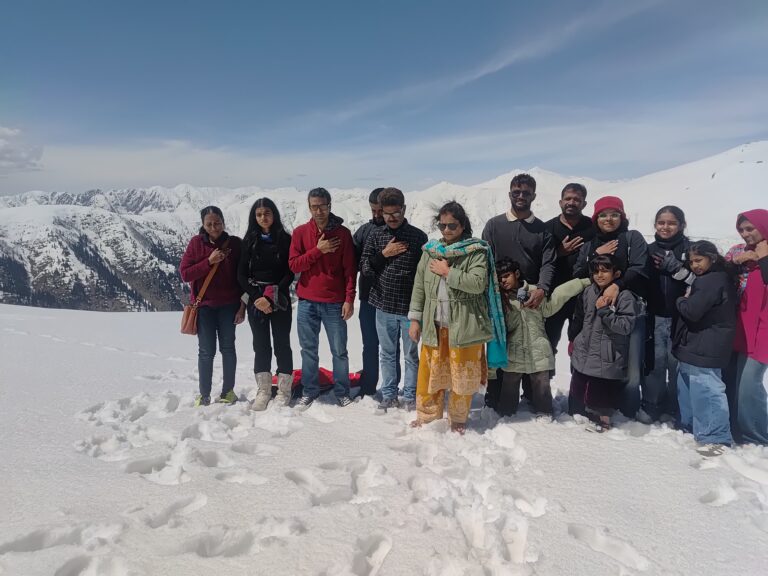
Srinagar, Apr 21: A group of tourists on Tuesday paid tribute to the victims of last year’s Pahalgam terror attack at Razdan Pass in Gurez, marking the first anniversary of the incident that left 27 people, including 26 tourists, dead.

The visitors, joined by tour operators, drivers gathered at the high-altitude pass to offer prayers and observe a moment of silence in memory of those killed in the attack, one of the deadliest targeting tourists in Kashmir in recent years.

Divya Rathi, a tourits from Mumbai said the tragedy had left lasting wounds in the hearts of people across the region and beyond. However, they stressed that such acts of violence cannot break the spirit of unity and harmony that defines Kashmir. “No power can divide Kashmir and India. The brotherhood of Kashmir is the strongest example of its integral bond,” speakers said.

“We are deeply saddened by what happened last year. Such untoward incidents leave wounds in the hearts of every citizen, but they cannot break our resolve. We feel safe here and the love shown by locals is overwhelming,” said Naveen another tourist to Kashmir Despatch.

“As we are here and today marks the first anniversary, we want to send a strong message to those who seek to destabilise peace that we are one. Terror cannot divide us, and the unity we see here will always stand stronger.”

Local tourits guides echoed similar sentiments, stating that Kashmir has always welcomed visitors with open arms and will continue to do so despite attempts to disrupt peace. They said the participation of tourists in the remembrance event reflects resilience and hope.

The tribute concluded with prayers for peace and a pledge to uphold unity, ensuring that the memories of the victims continue to inspire collective resolve against violence.

Milk procurement, processing, and supply across the country have remained uninterrupted amid the ongoing West Asia crisis

0

Vinod Bhat

New Delhi: As part of its ongoing outreach to keep the media informed on the evolving situation in West Asia, the Government of India convened a briefing at the National Media Centre today. Officials from the Ministries of Petroleum and Natural Gas, Ports, Shipping and Waterways, and External Affairs provided updates on fuel availability, maritime operations, assistance to Indian nationals in the region, and measures being undertaken to maintain stability across key sectors. The Department of Animal Husbandry and Dairying, Ministry of Fisheries, Animal Husbandry and Dairying also shared updates during the briefing.

Updates On Animal Husbandry & Dairying

The Department of Animal Husbandry & Dairying (DAHD) has been closely monitoring the situation and has taken a series of proactive measures in coordination with the Ministry of Petroleum & Natural Gas (MoPNG) and other concerned ministries to ensure smooth operations of Dairy value chain.

Milk procurement, processing, and supply across the country have remained uninterrupted amid the ongoing West Asia crisis. Price of milk and milk products are stable, no supply disruption has occurred in the market, and payments to dairy farmers have continued throughout the crisis period.

The measures taken by the Department are as under:

  • Regular meetings are being convened under the chairmanship of the Secretary (AHD) with stakeholders to assess the evolving situation.

Fuel Availability

  •  As regards fuel (gas) supplies, MoPNG order dated 8.4.2026 ensured critical industries, including dairy processing plants, will receive 70% of their pre-March 2026 bulk non-domestic LPG supply, averting any disruption to dairy operations.   Subsequently, all dairy plants are advised to transition from LPG to Piped Natural Gas (PNG) wherever operationally feasible to reduce dependence on LPG.

Packaging Material

  • As a member of Joint Working Group on Petrochemicals convened by MoPNG, concerns related to packaging material requirements of Dairy sector has been resolved by the JWG.  MoPNG has allocated 0.23 TMT of LDPE, a key input for plastic packaging used by the dairy industry and has assured continued supplies of polypropylene and polystyrene, which are essential for plastic cups used in dairy packaging.
  • Department is closely coordinating with the suppliers of plastic packing material for smooth supply of packaging material across the country.
  • A meeting held on 20.4.2026 with State Milk Federations/ Milk Unions across India to review the milk situation and monitor the impact of West Asia crisis on Dairy Sector.  There are no issues related to supply of fuel(gas) and plastic packaging material to Dairy Sector.
  • A dedicated portal was launched on 30.3.2026 with all State Federations and Milk Unions as members to enable daily monitoring of dairy supply chains and availability of milk, fuel and packaging material.

Exports

  • A simplified animal quarantine clearance procedure was notified w.e.f. 25.03.2026 to facilitate easy return of exported cargo to Indian ports.

Energy Supply and Fuel Availability

The Ministry of Petroleum and Natural Gas is taking  steps to ensure uninterrupted availability of petroleum products and LPG across the country, in the context of the ongoing situation involving the Strait of Hormuz. As per Ministry:

Public Advisory and Citizen Awareness

  • Citizens are advised to avoid panic purchase of petrol, diesel and LPG as the Govt is making all efforts to ensure availability of petrol, diesel and LPG.
  • Beware of rumours and rely on official sources for correct information.
  • LPG consumers are requested to use digital booking platforms and avoid visiting distributors.
  • Citizens are encouraged to use alternate fuels such as PNG and electric or induction cooktops.
  • All citizens are requested to make necessary efforts to conserve energy in their daily use during the current situation.

Government Preparedness and Supply Management Measures

  • Despite the ongoing geopolitical situation, the Government has ensured that 100% supply is being made to Domestic LPG, Domestic PNG and CNG (Transport).
  • For commercial LPG, priority has been given to hospitals, educational institutions. Besides this, priority has also been given to pharma, steel, automobile, seed, agriculture, etc. In addition to this, supply of 5 Kg FTL to migrant labour is also doubled based on avg. daily supply on 2nd and 3rd March 2026.
  • The Government has already implemented several rationalisation measures on both the supply and demand side, including enhancing refinery production, increasing the booking interval from 21 to 25 days in urban areas and up to 45 days in rural areas and prioritising sectors for supply.
  • Alternate fuels such as kerosene and coal have been made available to ease pressure on LPG demand.
  • The Ministry of Coal has directed Coal India and Singareni Collieries to supply additional coal to States for distribution to small and medium consumers.
  • States have been advised to facilitate new PNG connections for domestic and commercial consumers.

Coordinated Efforts with States/UTs and Institutional Mechanisms

  • State Governments are empowered under the Essential Commodities Act, 1955 and LPG Control Order, 2000 to monitor supply and act against hoarding and black marketing.
  • Govt. of States/UTs have to play a primary role in monitoring and regulating supply situation of essential commodities including Petrol, Diesel and LPG. Govt. of India has reiterated the same via multiple letters and VCs to all States/UTs.
  • The Government of India vide letters dated 27.03.2026 and 02.04.2026 have stressed the need for proactive public communication to reassure citizens regarding adequate fuel availability. Regular review meetings are being held with States/UTs. In this context, meetings were convened on 02.04.2026 (Chaired by Secretary, MoPNG) and on 06.04.2026 (Chaired bySecretary, MoPNG along with Secretaries of I&B and Consumer Affairs), wherein the following was emphasized:
    • To issue daily press briefings and issue regular public advisories.
    • To actively monitor and counter fake news / misinformation on social media.
    • To intensify daily enforcement drives by District admin and to continue raids and inspections in coordination with OMCs
    • To issue Commercial LPG allocation orders within their States/UTs
    • To issue SKO allocation orders for additional SKO allotted to the States/UTs.
    • To promote PNG adoptions and alternate fuels.
    • To prioritize LPG supply, especially for domestic needs, and adopt targeted distribution of 5 kg FTL cylinders to ensure supply stability.
  • All States/UTs have established control rooms and district monitoring committees to curb hoarding and black marketing.
  • Many states/UTs are issuing/carrying out press briefs.

Enforcement and Monitoring Actions

  • Enforcement actions continue across the country to curb hoarding and black marketing of LPG. Yesterday, more than 2200 raids were conducted across the country.
  • PSU OMCs have strengthened and continued surprise inspections and imposed penalties on 274 LPG distributorships, and 67 LPG distributorships have been suspended till yesterday.


LPG Supply

Domestic LPG Supply Status:

  • LPG supply continues to be affected by the prevailing geopolitical situation.
  • Supply of LPG to domestic households has been prioritized.
  • No dry-outs have been reported at LPG distributorships.
  • Online LPG cylinder bookings have increased to 98% on industry basis yesterday.
  • Delivery Authentication Code (DAC) based deliveries have increased to around 92% to prevent diversion. DAC is received on the registered mobile number of the consumer.

Commercial LPG Supply and Allocation Measures:

  • Total commercial LPG allocation has been increased to about 70% of pre-crisis levels, including 10% reform-linked allocation.
  • The Government of India vide letter dated 06.04.2026 has conveyed that daily quantity of 5 Kg FTL cylinders in each State available for disbursal to migrant labourers is being doubled based on the average daily supply (Number of cylinders) to migrant labourers during 2nd-3rd March 2026 beyond the limit of 20% mentioned in letter dated 21.03.2026. These 5 Kg FTL cylinders are at disposal of the State Government for supplying only to migrant labourers in their State with assistance of Oil Marketing Companies (OMCs).
  • Since 3rd April 2026, PSU OMCs have organised more than 7400 awareness camps for 5 Kg FTL Cylinders, wherein more than 1,07,000 – 5Kg FTL cylinders were also sold. Yesterday, 5891 – 5 Kg FTLs were sold through more than 410 camps.
  • Recently, at one of the 5 kg FTL awareness camps organised by IOCL at Tarapur (Maharashtra) on 20th April 2026, a good response was observed and about 550 – 5 Kg FTL cylinders were sold during the day.
  • Since 23rd March 2026, more than 19.28 Lakh – 5 Kg FTL cylinders have been sold.
  • A three-member committee of Executive Directors from IOCL, HPCL and BPCL is coordinating with State authorities and industry bodies to plan commercial LPG distribution in the States/UTs.
  • During the month of April-26 (till 20.04.26), a total of 1,23,680 MT (Equivalent to more than 65 Lakh of 19 Kg LPG Cylinders) of Commercial LPG has been sold.
  • On 20.04.2026, 8822 MT of Commercial LPG (Equivalent to more than 4.64 Lakh – 19 Kg cylinders) was sold.

Natural Gas Supply and PNG Expansion Initiatives

  • Consumers have been prioritised with 100% supplies to D-PNG and CNG-Transport.
  • The overall gas allocation to fertilizer plants has been enhanced to approximately 95% of their six-month average consumption.
  • Additionally, gas supply to other industrial and commercial sectors, including supplies through CGD networks, is enhanced up to 80%.
  • CGD entities have been advised to prioritize PNG connections for commercial establishments such as hotels, restaurants and canteens across all their GAs, to address concerns regarding the availability of commercial LPG.
  • CGD companies including IGL, MGL, GAIL Gas and BPCL are offering incentives for domestic and commercial PNG connections.
  • States/UTs and Central Ministries have been requested to expedite approvals required for expansion of CGD networks.
  • The Government of India vide letter dated 18.03.2026 has offered all States/UTs additional 10% allocation of commercial LPG to States provided they can help in long term transition from LPG to PNG.
  • 22 States/UTs are receiving additional commercial LPG allocation linked to PNG expansion reforms.
  • The Ministry of Road Transport & Highways vide letter dated 24.03.26 has adopted an ‘Accelerated Approval Framework for CGD infrastructure with reduced timelines’ as a special for 3 months to process applications pertaining to CGD infrastructure on priority.
  • The Government of India vide Gazette dated 24.03.2026 has notified the Natural Gas and Petroleum Products Distribution (Through Laying, Building, Operation and Expansion of Pipelines and Other Facilities) Order, 2026 under the Essential Commodities Act, 1955. The Order provides a streamlined and time-bound framework for laying and expanding pipelines across the country, addressing delays in approvals and access to land, and enabling faster development of natural gas infrastructure, including in residential areas. It is expected to accelerate PNG network growth, enhance last-mile connectivity, and support the transition to cleaner fuels, thereby strengthening energy security and advancing India’s gas-based economy.
  • PNGRB has directed CGD entities to expedite D-PNG connections. Also, the National PNG Drive 2.0 has been extended till 30.06.2026 to sustain momentum in PNG expansion.
  • To encourage a cleaner, more secure and self-reliant energy future, the Government of India has developed a model draft State CBG Policy. The model policy is intended to serve as a comprehensive flexible guiding framework to enable States to create their own investor-friendly and implementation-oriented ecosystem for CBG development. Those States which opt for this, will be prioritized for the next tranche of additional allocation of commercial LPG.
  • MoEFCC vide order dated 07.04.2026 has directed CPCB to issue necessary directions to SPCB/PCCs for granting consent to establish or consent to operate within 15 days for CGD network/infrastructure.
  • Since March 2026, more than 5.01 Lakh PNG connections have been gasified. Further, more than 5.68 Lakh customers have been registered for new connections.
  • Till 19.04.2026, about 39,400 PNG consumers have surrendered their LPG connections via MYPNGD.in website

Crude Position and Refinery Operations

  • All refineries are operating at high capacity with adequate crude inventories, while sufficient stocks of petrol and diesel are being maintained.
  • Domestic LPG production from refineries has been increased to support domestic consumption.
  • An inter-ministerial Joint Working Group (JWG) has been set up to ensure availability of petrochemical feedstock supply for the domestic market. Subsequently, Govt. of India vide order dated 01.04.2026 has permitted Oil Refinery companies including Petrochemical Complexes to make certain minimum quantities of C3 & C4 streams available for critical sectors as determined by Centre for High Technology (CHT).
  • Based on the requests received from the Department of Pharmaceuticals, Department of Chemicals & Petro Chemicals (DCPC), Dept. for Promotion of Industry and internal trade (DPIIT), the provision for 1000 MT/day, from LPG pool, has been made for Pharma and Chemical sector companies.
  • Since 9th April 2026, more than 4400 MT of propylene has been sold.


Retail Fuel Availability and pricing Measures

  • Retail outlets across the country are operating normally.
  • The Middle East crisis has led to an abnormal increase in crude prices; however, to protect consumers, the Government of India has reduced excise duty on petrol and diesel by ₹10 per litre.
  • Govt. of India vide Gazette notification dated 11.04.2026 has increased the export levy on diesel to Rs. 55.50 per litre and on ATF to Rs. 42 per litre, to ensure availability of these products in the domestic market.
  • Regular Retail Prices for Petrol and Diesel are unchanged and there is no price increase at PSU OMCs Retail Outlets.


Kerosene Availability and Distribution Measures

  • An additional allocation of 48,000 KL of kerosene has been provided to States/UTs over and above regular allocation.
  • 18 States/UTs have issued SKO allocation orders, while Himachal Pradesh and Ladakh have indicated no requirement.


Maritime Safety and Shipping Operations

The current maritime situation in the Persian Gulf, along with measures being undertaken to safeguard Indian vessels and crew, was also briefed by the Ministry of Ports, Shipping and Waterways. It was stated that:

  • Port operations across India remain normal, with no congestion reported. In this context, cargo movement has improved significantly, and as informed earlier, nearly 97% of back-to-town containers have been cleared from key western ports.
  • Average yard occupancy has moderated to around 60%, down from nearly 80% during the peak of the conflict, indicating easing pressure on port infrastructure.
  • Since 28 February 2026, a total of 9 LPG vessels and 1 crude oil vessel have safely transited the Strait of Hormuz, reflecting the gradual stabilization of maritime movement in the region.
  • The Ministry of Ports, Shipping and Waterways continues to closely monitor the evolving situation in West Asia in coordination with the Ministry of External Affairs, Indian Missions, and maritime stakeholders to ensure seafarer welfare and the continuity of maritime operations.
  • All Indian seafarers in the region are safe, and no incident involving Indian-flagged vessels has been reported in the past 24 hours.
  • DG Shipping Control Room Update: The Control Room has handled 7,086 calls and more than 14,975 emails since activation. In the past 24 hours, 168 calls and 370 emails have been received.
  • Repatriation Update: The Ministry, through the Directorate General of Shipping (DG Shipping), has facilitated the safe repatriation of more than 2,590 Indian seafarers so far, including 27 in the last 24 hours from various locations across the Gulf region.


Safety of Indian Nationals in the Region

The Ministry of External Affairs continues to monitor developments in the Gulf and West Asia region, with focussed efforts on ensuring safety, security and welfare of the Indian community in the region. It was informed that:

  • On the directions of the Prime Minister, a focused outreach to countries in the Gulf is being made.
  • National Security Advisor visited Saudi Arabia on 19th April 2026.
  • Earlier External Affairs Minister visited UAE  and Minister of Petroleum and Natural Gas visited Qatar.
  • The Minister for Commerce and Industry also had interactions with several of his counterparts in the Gulf region.
  • Dedicated special control rooms in the Ministry of External Affairs are operational and are working in coordination with Indian missions.
  • The Ministry of External Affairs is in regular contact with State Governments and Union Territories for sharing of information and better alignment of efforts.
  • Indian Missions and Posts continue to operate round-the-clock helplines and are proactively assisting Indian nationals. They remain in close contact with the local Governments.
  • Updated advisories are being issued regularly, including information on local government guidelines, flight and travel situations and consular services and various welfare measures being undertaken to support our community.
  • Indian Missions are actively engaged with the resident Indian community. Ambassadors are regularly interacting with the Indian community associations, organizations, professional groups, an Indian companies to address their concerns.
  • Government is according high priority to the welfare of Indian seafarers in the region. Indian Missions are extending all assistance to them including coordination with the local authorities and agencies, extending consular assistance, and assisting for requests to return to India.
  • Flights continue to operate from the region to India from countries where airspace is open. Since 28 February, around 11,61,000 passengers have travelled from the region to India.
  • In the UAE, airlines continue to operate limited commercial flights between the UAE and India based on operational and safety considerations, with around 110 flights expected today between UAE and India.
  • Flights continue to operate from various airports in Saudi Arabia and Oman to various destinations in India.
  • With Qatar airspace partially open, Qatar Airways is operating flights to various destinations in India.
  • Kuwait airspace remains closed. Jazeera Airways and Kuwait Airways are operating non-scheduled commercial flights from Dammam Airport in Saudi Arabia to India.
  • Bahrain airspace is open. Gulf Air of Bahrain has announced that beginning from today, they are starting flights from Bahrain International airport to various destinations in India.
  • Iraq airspace is open with limited flight operations to destinations in the region, which can be used for onward travel to India.
  • Iranian airspace remains partially open for cargo and chartered flights. Indian embassy in Tehran continues to facilitate movement of Indian nationals through Armenia and Azerbaijan for onward travel to India.
  • Israel: Israel airspace is open and limited flight operations have resumed to destinations in the region, which can be used for onward travel to India. We also continue to facilitate travel of Indian nationals from Israel, through Jordan and Egypt to India.

Iltija Mufti Visits Ramban Victim’s Family, Seeks Probe in Alleged Hate Crime Killing

0

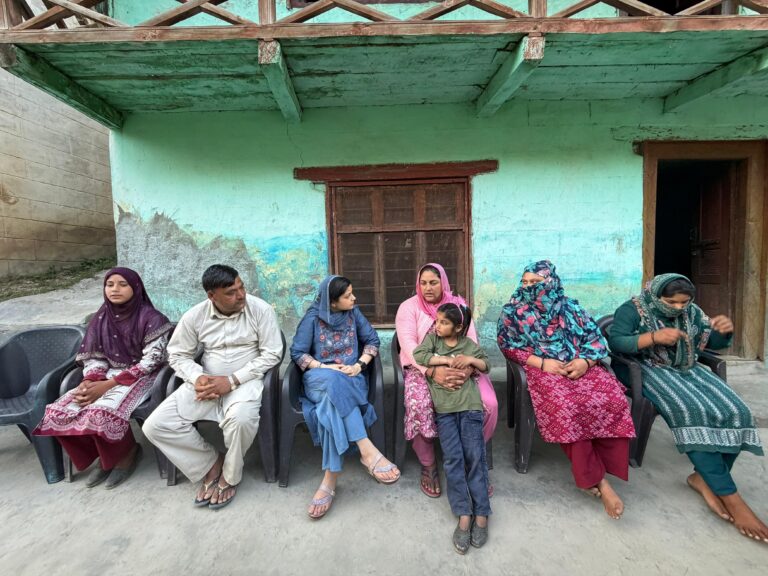
Ramban: Iltija Mufti visited the family of 18-year-old Tanveer Chopan in Ramsoo and called for a thorough probe into the incident, demanding strict action and the arrest of all those involved.

Tanveer Chopan, the only brother of four sisters, reportedly fell victim to a brutal act of violence in the Ramsoo–Makarkot area of Ramban district. He was allegedly attacked by a group of local men, who have since been arrested by Jammu and Kashmir Police.

According to reports, Tanveer, a member of the Phardi community who reared cows for milk, was transporting a cow in a Tata Mobile vehicle to his home. He was allegedly targeted on suspicion related to this, leading to a violent assault involving lynching and stone pelting. His body was later reportedly thrown into Nallah Bishnadi along NH44 near Makarkot.

The incident has raised serious concerns, with allegations that he was targeted by so-called cow vigilantes. Authorities are investigating the case, and further details are awaited.

The Great Unbundling: How India and China Dethroned US-Style Market Concentration While Mumbai’s IPO Engine Roars

0

KD NEWS SERVICE

MUMBAI, April 21: For three decades, the script of global equity markets has been written in Washington and Wall Street. Yet, as a new fiscal year dawns, a meticulous dissection of 30 years of data from the National Stock Exchange, drawing on LSEG Workspace and NSE EPR sources, reveals a stunning reversal of fortunes.

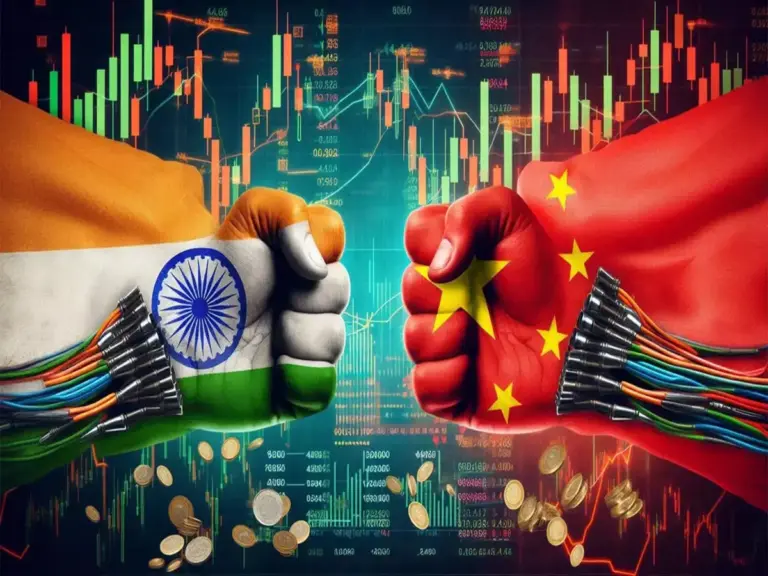
The United States, once the beacon of diversified capitalism, has grown more concentrated than at any point since 1995, with its Herfindahl-Hirschman Index, or HHI, a measure of market concentration where a lower score indicates a more evenly distributed market capitalisation across sectors and companies, falling from 119 in 1995 to a low of 59 by 2015 only to surge back to 164 by the end of 2025. Meanwhile, China and India have done the opposite, systematically broadening their market bases even as they outrun the US in long-term growth.

In 1995, China’s market was extraordinarily concentrated, with an HHI of 301, a reflection of its real estate dominance, which then accounted for 34 percent of market capitalisation. By 2025, that real estate share had collapsed to just 2 percent, replaced by a balanced duopoly of Financials and Information Technology, each commanding 18 percent of the market. Consequently, China’s HHI plummeted to 37.7 in 2025, down from 301 three decades earlier. India’s transformation is nearly as dramatic, with its HHI falling from 202.2 in 1995 to 80.9 in 2025. In 1995, financials made up just 10 percent of Indian market capitalisation; by 2025, that share had risen to 25 percent. Yet the Indian story is not one of uniform dispersion, as sectoral concentration remains stark within the country: Communication Services is the most concentrated sector with an HHI of 4,399 in 2025, followed by Energy at 4,010, while Financials stand at 401, Consumer Discretionary at 293, and Information Technology at 1,331, all relatively lower and more moderate. Japan, meanwhile, has remained a portrait of industrial stability, with industrials still accounting for 24 percent of market cap in 2025 and its HHI moving only modestly from 83.9 in 1995 to 75.0 in 2025.

When it comes to sheer size, the US remains unassailable. Its listed market capitalisation grew from $3.0 trillion in 1995 to $9.4 trillion in 2000, then to $11.5 trillion in 2005, $12.9 trillion in 2010, $21.2 trillion in 2015, $42.3 trillion in 2020, and finally $73.3 trillion in 2025. China rose from $0.22 trillion in 1995 to $0.96 trillion in 2000, $1.3 trillion in 2005, $6.2 trillion in 2010, $10.7 trillion in 2015, $17.7 trillion in 2020, and $20.9 trillion in 2025, with data for companies listed in Hong Kong included under China. Japan moved from $2.3 trillion in 1995, remaining at $2.3 trillion in 2000, then rising to $4.0 trillion in 2005, $3.6 trillion in 2010, $4.8 trillion in 2015, $6.7 trillion in 2020, and $7.8 trillion in 2025. India, starting from a mere $0.08 trillion in 1995, grew to $0.11 trillion in 2000, $0.49 trillion in 2005, $1.5 trillion in 2010, $1.4 trillion in 2015, $2.5 trillion in 2020, and $5.3 trillion in 2025.

But velocity tells a different story. Over the full 30-year period from 1995 to 2025, China recorded the fastest annualised growth in listed market capitalisation at 16.4 percent, followed by India at 15.2 percent, the United States at 11.2 percent, and Japan at just 4.2 percent. Over the last 25 years, India leads with a compound annual growth rate of 16.7 percent, compared to China’s 13.1 percent, the US’s 8.6 percent, and Japan’s 5.1 percent. Over 20 years, China’s CAGR of 14.7 percent outpaces India’s 12.7 percent, the US’s 9.7 percent, and Japan’s 3.4 percent. Over 15 years, the US leads with 12.3 percent, followed by India at 8.9 percent, China at 8.4 percent, and Japan at 5.3 percent. Over 10 years, the US again leads with 13.2 percent, then India at 14.0 percent, China at 6.9 percent, and Japan at 5.1 percent. Over the last five years ending in 2025, India actually leads all four nations at 16.4 percent, compared to the US at 11.6 percent, China at 3.4 percent, and Japan at 3.1 percent.

Shifting from this three-decade view to the fiscal year just ended, FY26, the Indian market has delivered what can only be described as a blockbuster performance. Total fund mobilisation through equity and debt instruments reached ₹20.3 lakh crore, a 9 percent increase year-on-year. Within this, equity issuances stood at ₹4.5 lakh crore, up 5 percent year-on-year, while debt issuances were ₹15.5 lakh crore, up 10 percent year-on-year. The initial public offering market was the undisputed star. A total of 219 companies raised ₹1.8 lakh crore in FY26, the highest annual fund mobilisation on record. The impact on market capitalisation was immediate: newly listed companies added approximately ₹12.5 lakh crore to total market capitalisation as of the end of March 2026.

The Mainboard was the primary engine. It witnessed 108 listings raising ₹1.7 lakh crore, marking the highest ever in both the number of listings and the total funds raised. The SME platform, NSE Emerge, also remained exceptionally healthy. In FY26, 111 issuances raised ₹5,363 crore. Looking at the longer track record, since inception, 721 SME IPOs have collectively mobilised over ₹22,000 crore. The market capitalisation of NSE Emerge companies, including those that have since migrated to the Mainboard, stood at ₹1.8 lakh crore. Market depth improved tangibly. In FY26, there were 4 IPOs above the ₹10,000 crore threshold, compared with just 3 in FY25. Furthermore, the average IPO size on the NSE Emerge platform has undergone a dramatic expansion: from ₹13 crore in FY20 to ₹44 crore in FY25, and further to ₹48 crore in FY26.

As of the end of FY26, the National Stock Exchange’s registered investor base reached 12.9 crore. This represents a 3.2-fold increase over the last five years from FY21 to FY26, a growth rate faster than that seen in the previous five-year period from FY16 to FY21. However, the pace of new additions has moderated. In FY26, total new investor additions stood at 1.6 crore. The monthly average fell to 13.5 lakh in FY26, down from 17.5 lakh per month in the prior year. Geographically, participation is broadening. Over the past five years, the combined share of the top 10 states has declined from 76.3 percent in FY21 to 73 percent in FY26. Maharashtra continues to lead the nation, becoming the first state to cross 2 crore registered investors, holding a 15.6 percent share in FY26. Along with Maharashtra, Uttar Pradesh, Gujarat, West Bengal, and Rajasthan together account for 48 percent of the total investor base as of FY26.

Demographically, the market is getting younger and more female. Younger investors, those below 40 years, accounted for nearly 79 percent of all new registrations in FY26. The median age of registered investors has declined from 36 years in March 2021 to 33 years in March 2026. Female participation has continued its structural rise, reaching 24.9 percent of total investors as of FY26.

Yet, for all the fanfare about broadening participation, the distribution of actual trading activity in FY26 tells a radically different story, one of extreme concentration across cash, futures, and options. In the equity cash market, the skew is stark. The top 0.2 percent of investors, defined as those who traded more than ₹10 crore monthly, contributed 78 percent of the average monthly turnover in FY26, up from 77 percent in FY25 and 75 percent in FY24. At the opposite end, nearly 70 percent of cash market investors traded below ₹1 lakh and contributed just 0.4 percent of the turnover. Within that top trading cohort above ₹10 crore in the cash market, institutional investors dominated. Proprietary traders led with 40 percent of average monthly turnover, followed by Foreign Institutional Investors at 19 percent, and Domestic Institutional Investors at 18 percent. Together, these three segments accounted for 76 percent of average monthly turnover.

In equity options, the concentration is even more pronounced. The top 0.3 percent of investors, again those with premium turnover above ₹10 crore, accounted for 70 percent of all premium turnover. Another 4.8 percent of investors, those with premium turnover between ₹1 crore and ₹10 crore, contributed 17 percent. Thus, just 5.1 percent of all investors, those with premium turnover above ₹1 crore, accounted for 87 percent of total activity, a figure broadly similar to FY25. Meanwhile, around 37 percent of active investors in equity options, those trading with less than ₹1 lakh in premium, contributed only 0.15 percent of premium turnover, underscoring the skewness in activity. Equity futures showed the sharpest concentration despite lower overall participation. The top 8.5 percent of investors, those with monthly turnover above ₹10 crore, accounted for 93.6 percent of turnover. Investors trading above ₹1 crore contributed nearly 99 percent of total activity in the futures segment.

The data presents two parallel realities. On one hand, India and China have successfully dismantled the old, narrow foundations of their markets, replacing them with broader, more diverse structures, even as the US marches toward a tech-concentrated future. On the other hand, India’s record-breaking IPO machine, with ₹1.8 lakh crore raised across 219 listings and a maturing SME segment where average issue sizes have grown from ₹13 crore in FY20 to ₹48 crore in FY26, is bringing millions of new, young, and geographically dispersed investors into the fold. Yet the final statistic remains striking: while 12.9 crore Indians are now registered, with female participation at 24.9 percent and the median age now 33 years, the actual business of trading remains the preserve of a microscopic elite, with 0.2 percent of cash market investors driving 78 percent of turnover, 0.3 percent of options traders controlling 70 percent of premiums, and 8.5 percent of futures traders accounting for 93.6 percent of turnover. The great unbundling of market capitalisation has succeeded. The great unbundling of trading activity has not.

“When Boundaries of Humanity Are Crossed, Response Is Decisive: India Stands United”: Army’s Strong Message on Op Sindoor Anniversary

0

Srinagar, Apr 21: The Indian Army on Tueaday conveyed a strong message ahead of the anniversary of the Pahalgam terror attack, stating that any breach of humanity invites a decisive response and reaffirming that India stands united.

In a post on social media, the ADG PI said: “When boundaries of humanity are crossed, the response is decisive. Justice is served. India stands united.”

An accompanying poster read: “Some boundaries should never be crossed. India does not forget.”

The statement comes a day before the anniversary of the April 22, 2025 terror attack in Baisaran, Pahalgam, where terrorists targeted tourists, killing 26 people, including 25 tourists and one pony ride operator.

In the aftermath of the attack, India conducted retaliatory strikes on terror launch pads across the border on May 7 under “Operation Sindoor,” which continued for three days. The operation was followed by a ceasefire announcement on May 11 at 5 PM.