spot_imgspot_img
spot_img
Home Blog Page 129

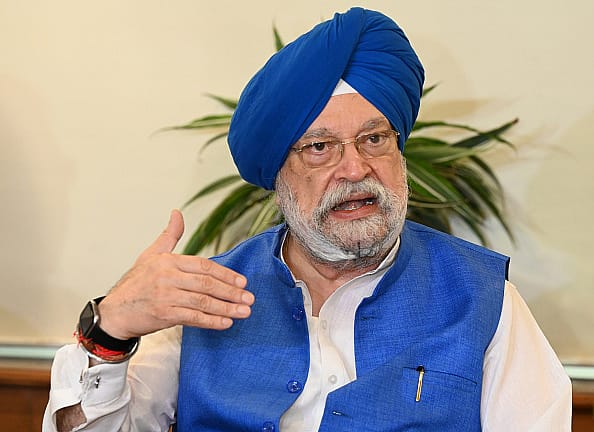
Union Budget 2026–27 Reflects Confidence of a Strong, Resilient and Fast-Growing India: Hardeep Singh Puri

0

VINOD BHAT

Delhi, Feb 07:

Shri Hardeep Singh Puri, Union Minister for Petroleum and Natural Gas, today addressed the media during a press interaction on Union Budget 2026–27 in Dehradun, stating that the Budget reflects the confidence and maturity of an economy that has undergone a fundamental transformation since 2014. He said the Budget strikes a careful balance between promoting growth and maintaining fiscal discipline, underscoring India’s journey from being counted among the “fragile five” to becoming the world’s fourth-largest economy and one of the most trusted global growth stories.Union Minister for Petroleum and Natural Gas


Describing the Budget as forward-looking and consolidation-oriented, Shri Puri said it builds on the foundations laid over the past decade while preparing India for the next phase of global leadership. India’s GDP growth for FY26 is estimated at 7.4 per cent, driven by consumption and investment, reaffirming India’s position as the fastest-growing major economy for the fourth consecutive year, even as global growth hovers around 3 per cent.


On price stability, the Minister highlighted the sharp improvement achieved since 2014, noting that India recorded the steepest reduction in headline inflation among major economies in 2025, at around 1.8 per cent. Between April and December 2025, inflation averaged about 1.7 per cent, supported by lower food prices, particularly vegetables and pulses. He pointed out that India’s inflation levels are significantly lower than those prevailing in several advanced and emerging economies.


Emphasising the decisive shift towards capital-led growth since 2014, Shri Puri said overall capital expenditure in 2026–27 stands at about ₹12.2 lakh crore, representing an increase of over 430 per cent compared to 2013–14. Allocations for national highways have risen by about 500 per cent, defence by over 210 per cent, health and family welfare by nearly 176 per cent, and education by over 110 per cent during this period. He noted that infrastructure spending has become a key growth engine, with every rupee spent on national highway development generating ₹3.2 in GDP.


Highlighting the strengthening of defence and strategic capabilities, the Minister said sustained investment since 2014 has helped reduce import dependence while accelerating indigenous defence manufacturing in line with the Aatmanirbharta vision.


Shri Puri underscored that human capital development has been central to India’s growth trajectory over the past decade. Since 2014, the number of IITs has increased from 16 to 23, IIMs from 13 to 21, AIIMS from 7 to 23, and medical colleges from 387 to 819. He added that India now has international IIT campuses in Zanzibar and Abu Dhabi, reflecting the global recognition of India’s education ecosystem.


The Minister said infrastructure expansion since 2014 has transformed connectivity and everyday life across the country. The length of national highways has expanded from about 91,000 km in 2014 to nearly 1.46 lakh km in 2026, while the metro network has grown from 248 km to over 1,000 km. The number of airports has more than doubled from 70 to around 160. Over the last five years alone, more than 57,000 km of national highways have been constructed, generating around 33 crore person-days of employment annually. He also highlighted that over 164 Vande Bharat Express trains are operational today, with 260 sleeper trainsets planned, and that indigenous technologies will power seven newly announced high-speed rail corridors.


Shri Puri further noted that India has invested over ₹2.5 lakh crore since 2014 in domestically building more than 2,000 metro coaches. Under the UDAN scheme, 1.5 crore passengers have flown on routes that did not exist earlier, making India the world’s third-largest domestic aviation market.


On MSMEs and clean growth, the Minister said the Budget builds on the progress made since 2014 by aligning competitiveness with sustainability. Initiatives such as Bio-Pharma SHAKTI with an outlay of ₹10,000 crore, a ₹10,000 crore MSME Growth Fund, and a ₹2,000 crore top-up to the Self-Reliant India Fund will further strengthen innovation and enterprise. Clean growth has been embedded into the economic strategy through a ₹20,000 crore CCUS Mission and duty exemptions for lithium-ion battery equipment, critical minerals and nuclear power projects till 2035.


Summing up, Shri Puri said Union Budget 2026–27 recognises India’s decade-long transformation since 2014 into a major global economy and focuses on strengthening the foundations for sustained, inclusive and innovation-driven growth. He described it as a nation-building Budget that advances India steadily towards a truly Aatmanirbhar and Viksit Bharat.
India AI Impact Summit to Unite Nations, Innovators and Citizens for Inclusive, Responsible and Resilient AI

0

VINOD BHAT

Delhi, Feb 07:

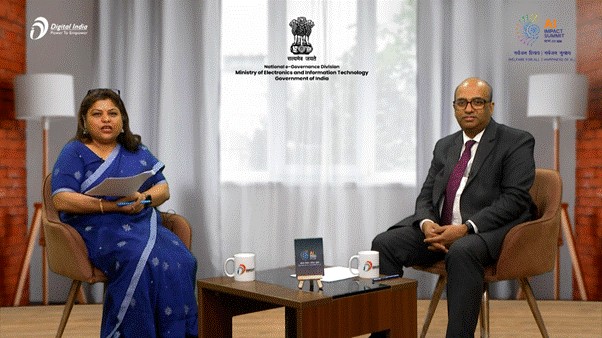
Artificial Intelligence is no longer a future concept. It is already reshaping how Indians learn, work, access services and solve everyday problems. This message took centre stage in the latest episode of Digital India – Ask Our Experts organised on February 6, 2026, which featured an engaging and thought-provoking conversation with Shri Abhishek Singh, CEO, IndiaAI Mission, on the upcoming India AI Impact Summit.


The episode highlighted how the Summit will act as a people-centric platform, moving beyond technical discussions to focus on how citizens can use AI for their own benefit—in education, healthcare, agriculture, governance, startups, services and employment.


The Summit aims to translate global AI conversations into real, usable outcomes for people on the ground, especially in developing economies and the Global South.“Through the India AI Impact Summit, India is moving the global AI conversation from intent to impact—ensuring that innovation, skills and benefits of AI are accessible to all, especially countries of the Global South,” Shri Singh said.


During the discussion, it was emphasised that AI can help farmers improve crop planning, enable doctors to make faster and more accurate diagnoses, support teachers with personalised learning tools, assist small businesses and startups in scaling faster, and help job seekers discover new career paths. The Summit will showcase such practical use cases, demonstrating how AI can be a tool for inclusion, efficiency and empowerment, not just automation.“Artificial Intelligence is not meant to replace people; it is meant to empower them. The India AI Impact Summit is about helping citizens understand how AI can improve daily life, create new opportunities and make India future-ready,” Shri Singh noted.


Addressing common fears and myths, Shri Singh clarified that AI is not about replacing humans, but about augmenting human capability. While certain tasks will change, AI is expected to create new jobs, new skills and new opportunities—especially for India’s youth, professionals, researchers and entrepreneurs. Citizens were encouraged to focus on continuous learning, adaptability and AI literacy, rather than fear of disruption.


The episode also outlined what different groups can gain from the Summit.


Students can explore future career paths.


Professionals can understand reskilling opportunities.


Farmers can learn how AI can support crop planning, weather insights and more.


Startups can access networks, policy insights and global collaboration.


Researchers and academicians can engage with cutting-edge AI work.


Policymakers and institutions can co-create responsible AI frameworks.


Concluding the conversation, the expert called upon citizens to actively participate in the India AI Impact Summit, stressing that India’s AI journey will succeed only when people understand, trust and use AI responsibly. The Summit, he noted, is not just about technology—it is about shaping an AI future that works for every Indian.


The live session witnessed active engagement from viewers across thecountry, who appreciated the clear and accessible explanations shared by the expert.

Article 370 history, irreversibly buried; special status has no basis: Sunil Sharma

0

Says NC misleading people; Constitution has no provision called special status for J&K

Jammu, Feb 07: Senior BJP leader and Leader of the Opposition in the Jammu and Kashmir Assembly, Sunil Sharma, on Saturday said there is no mention of any “special status” for Jammu and Kashmir in the Indian Constitution and accused the National Conference (NC) of misleading people by repeatedly raising the issue.

Speaking in the Assembly, Sharma said that constitutional demands must be backed by explicit constitutional provisions. “As far as I know and have studied, there is no word called ‘special status’ in the Indian Constitution in relation to Jammu and Kashmir’s accession or merger. When you make a constitutional demand, it must have a constitutional basis,” he said.

Sharma argued that the term “special status” is used loosely by several states to seek economic or employment-related packages and should not be linked to Article 370. “Special status can mean an employment package or a financial package. Do not connect it with Article 370. Article 370 is history and has been buried,” he said.

Referring to sloganeering by an NC MLA in the House, Sharma asked where such a status exists in the Constitution. “If anyone can show me where the Constitution mentions a special status for J&K, I am ready to face any punishment. But this claim is a lie,” he said.

The BJP leader accused the Abdullah family of deceiving the people of Kashmir and using the demand for special status to cover up governance failures. He alleged that the issue was being raised to legitimise past electoral promises.

Sharma further said that instead of addressing concerns of daily wagers, unemployed youth and beneficiaries under AAY, DPL and EWS categories, the ruling party was resorting to rhetoric. “When questioned on failures, they raise the bogey of special status,” he said.

CIED–IUST Foundation Concludes One-Week MDP for MSME Entrepreneurs

0


Showkat Dar

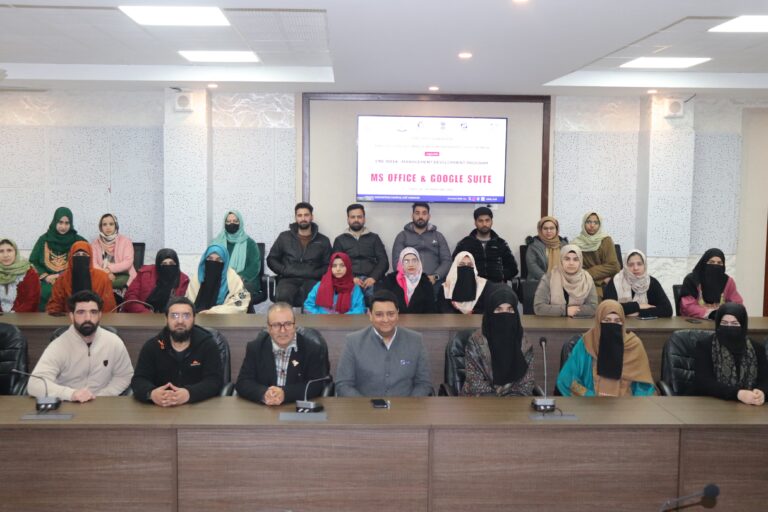
Awantipora, Feb 07: CIED–IUST Foundation successfully concluded a one-week Management Development Program (MDP) on Microsoft Office and Google Suite for IUST Interns, sponsored by the Ministry of MSME, at the IUST Innovation Campus, Awantipora.

More than 28 interns participated in the program, which was designed to enhance managerial efficiency and strengthen digital competencies for effective, technology-driven business operations. The intensive training focused on the practical application of Microsoft Word, Microsoft Excel, PowerPoint Presentations, Canva and Google Suite, enabling participants to streamline day-to-day business management and professional communication.

The program was facilitated by experienced trainers from the CIED–IUST Foundation, who delivered hands-on sessions blending conceptual understanding with real-world business use cases to ensure practical learning outcomes.

As part of the program, the participants also visited various technology and innovation laboratories at the CIED–IUST Foundation, including the C4i4 Lab, DND Lab, Fab Lab and UltraTech Cement Lab, where they were exposed to advanced tools, infrastructure and innovation-driven manufacturing and prototyping facilities.

The valedictory session was attended by Prof. Parvez A. Mir, CEO CIED–IUST Foundation, Mr. Sameer Wazir, Finance Officer IUST, along with other esteemed members of the Foundation.

During the session, participants expressed their gratitude to the trainers for the insightful and enriching sessions and requested that similar capacity-building programs be organized more frequently. They appreciated the valuable knowledge and practical skills gained throughout the program, highlighting its relevance to their entrepreneurial journeys. Certificates of participation were also distributed among the participants during the valedictory session.

Indian Coast Guard Busts International Oil Smuggling Syndicate in Daring Mid-Sea Operation

0


High-tech surveillance leads to interception of three vessels off Mumbai coast


VINOD BHAT

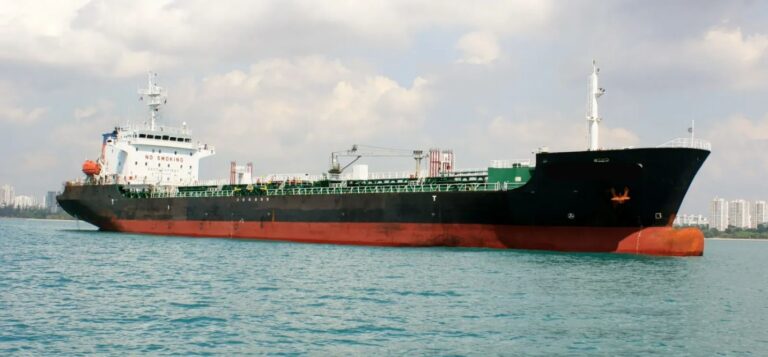
NEW DELHI, Feb 7: In a major blow to an international oil smuggling network, the Indian Coast Guard (ICG) successfully dismantled a well-organised transnational syndicate involved in the illegal transfer of oil and oil-based cargo during a meticulously planned mid-sea operation conducted on February 6, officials said.

According to PRO, Indian Coast Guard, Commandant Amit Uniyal, the operation was the result of an intricate sea-air coordinated surveillance and enforcement mission, executed nearly 100 nautical miles west of Mumbai, underscoring the growing technological and operational prowess of the force.

Commandant Uniyal stated that the syndicate had devised a sophisticated modus operandi to smuggle large quantities of low-cost oil originating from conflict-ridden regions, which was then transferred at sea to motor tankers in international waters. The illegal consignments were subsequently routed to evade customs duties and regulatory scrutiny, resulting in significant revenue losses to coastal states, including India.

“The smuggling racket operated through a multi-national network of handlers, coordinating the movement, sale and mid-sea transfer of oil cargo between sea-going vessels,” the PRO said. “These operations were deliberately conducted far from shore to avoid detection and law enforcement action.”

The operation was triggered after ICG’s tech-inclusive maritime surveillance systems detected a motor tanker engaged in suspicious movements within the Indian Exclusive Economic Zone (EEZ). This prompted an in-depth digital and behavioural analysis of the vessel’s activity, Commandant Uniyal explained.

Further analysis of maritime data patterns revealed that two additional vessels were closing in on the tanker in an unusual manner. These vessels were subsequently flagged as potential suspects involved in illicit ship-to-ship transfer of oil-based cargo, a known tactic employed by smuggling syndicates to bypass port inspections and tax liabilities.

On February 5, 2026, Indian Coast Guard ships intercepted all three vessels, following which specialist boarding teams were deployed. According to the PRO, the teams carried out sustained rummaging operations, verification of ship documents, scrutiny of electronic navigation and communication data, and detailed interrogation of crew members.

“The corroboration of digital evidence onboard, combined with inconsistencies in documentation and crew statements, enabled our teams to establish the complete chain of events and confirm the criminal modus operandi,” Commandant Uniyal said.

The vessels were also found to have frequently changed their identities, including vessel names and flag details, a deliberate attempt to evade tracking and law enforcement action by multiple coastal states. Preliminary investigations have revealed that the owners of the vessels are based in foreign countries, further highlighting the international dimension of the racket.

Following confirmation of illegal activity, the vessels were apprehended and are likely to be escorted to Mumbai for comprehensive investigation. They will subsequently be handed over to Indian Customs and other law enforcement agencies for further legal action, the PRO added.

Commandant Amit Uniyal emphasised that the successful operation once again demonstrated the Indian Coast Guard’s role as a key enforcer of maritime law and a net provider of maritime security in the region.

“This operation, initiated through digital surveillance and executed through our expanding maritime presence, reinforces India’s commitment to upholding the international rules-based order at sea and combating transnational maritime crime,” he said.

The seizure marks yet another significant success for the Indian Coast Guard in its sustained campaign against smuggling, economic offences and non-traditional maritime threats, reaffirming India’s vigilance across its vast maritime domain.


Army Chief Reviews Security in J&K, Commends White Knight Corps for High Vigilance

0


KD NEWS SERVICE

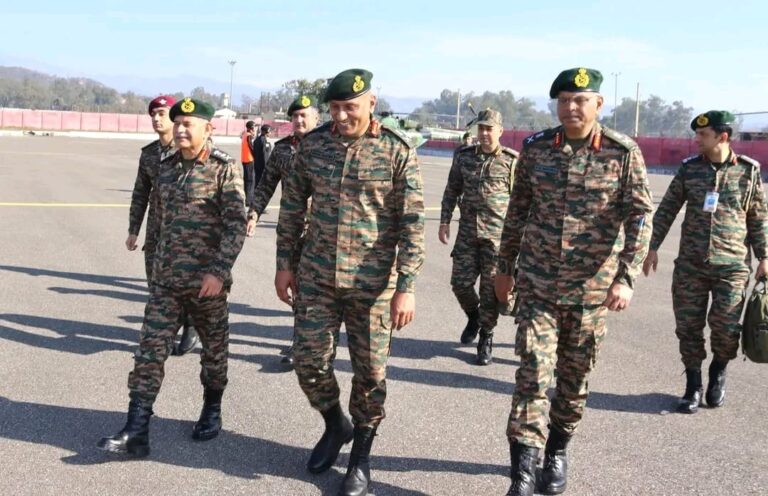
JAMMU, Feb 6: Chief of Army Staff (COAS) General Upendra Dwivedi on Friday visited the headquarters of the White Knight Corps to undertake a comprehensive review of the prevailing security scenario and to assess the operational preparedness of the formation tasked with safeguarding peace in the region.

During the visit, the Army Chief was briefed in detail on the existing counter-terrorism grid, recent operational developments, and the overall security environment. Senior commanders apprised him of the measures in place to counter infiltration attempts, neutralise terrorist threats, and maintain a robust security posture along sensitive axes.

General Dwivedi was informed about the close coordination and seamless synergy between the Army and other security agencies, including paramilitary forces and local police, in executing joint operations. He expressed satisfaction over the integrated approach adopted on the ground, noting that effective inter-agency cooperation has played a crucial role in maintaining peace and stability in the region.

The COAS lauded the relentless efforts of officers and troops involved in counter-terrorism and area domination operations, acknowledging their professionalism, dedication, and operational effectiveness. He emphasised the need to sustain a high level of vigilance at all times, particularly in view of evolving security challenges.

Highlighting the importance of winning the trust of the local population, General Dwivedi stressed a people-centric approach while conducting operations, especially in sensitive and populated areas. He underlined that adherence to professionalism, restraint, and respect for civilians remains essential for long-term peace and stability.

Expressing full confidence in the leadership and troops of the White Knight Corps, the Army Chief said the formation continues to remain fully capable and well-prepared to effectively safeguard national security interests and ensure peace across its area of responsibility.

Research Symposium at India AI Impact Summit Draws the World’s AI Minds

0

VINOD BHAT

Delhi, Feb 06:

The Research Symposium on ‘AI and its Impact’ being organised as part of the India AI Impact Summit 2026 has received a strong response from both the national and the global research community, with 250+ submissions.


Designed to bring AI research closer to real-world decision-making, the Symposium will serve as a bridge between research, policy and practice and bring together diverse perspectives from India and abroad.


Scheduled to be held on February 18, 2026 at Bharat Mandapam, it will feature 30 selected posters under the Global South Poster Track, 15 from the India Forum Showcase and 15 under the Students Showcase.


The Symposium has been conceived as an interdisciplinary forum, bringing together leading researchers and practitioners from India, the Global South, and the wider international community to present frontier work on the impact of AI, exchange methods and evidence, and forge collaborations. They will engage on key areas such as human capital, inclusion, safety and trust, resilience, innovation, science, and the use of AI for economic growth and social good.


The Symposium will broadly feature Plenary Keynotes and research dialogues, International Research panels and Global South Research & Posters Showcase.


The Plenary Sessions will have thought-provoking keynotes, fireside chats and dialogues with eminent Indian and international researchers, featuring in-depth discussions on the transformative potential of AI, exploring theoretical foundations, practical applications, and societal implications.


The International Research Panels will have short, focused presentations by global research leaders highlighting groundbreaking AI innovations. This track provides a platform for sharing cutting-edge methodologies, novel algorithms, and breakthrough applications from premier institutions worldwide.


During the Global South Research & Posters Showcase, there will be a vibrant showcase of research posters by students and collaborative teams from the Global South. This track celebrates emerging talent, fostering mentorship opportunities and highlighting innovative solutions to regional and global challenges.


The Symposium is expected to lead to clear and implementable outcomes, stronger collaboration between research institutions and decision-makers, and better use of research to support responsible AI adoption.


More information about the Research Symposium is available on https://impact.indiaai.gov.in/events/research-symposium. Further details regarding the AI Impact Summit 2026, including the programme, thematic focus and participation modalities, are available on the official Summit website – https://impact.indiaai.gov.in/. Interested stakeholders are encouraged to visit the website and register to be part of this global dialogue aimed at advancing the responsible and impactful use of Artificial Intelligence.

Mock Avalanche Drill in Gulmarg Tomorrow : Officials

0


Baramulla, Feb 06  ; The administration in north Kashmir’s Baramulla district on Friday said it will conduct an avalanche disaster preparedness exercise at the famous ski-resort of Gulmarg on Saturday.


The two-hour mock drill, from 3 pm to 5 pm, is aimed at testing the coordination and response mechanisms of various agencies, Deputy Commissioner Baramulla said in an order.


The exercise will involve sirens, movement of emergency vehicles and deployment of response teams, but the public should not panic as it is only a simulation, the order stated accessed by Kashmir News Service (KNS).


It advised residents, tourists, hoteliers, shopkeepers and visitors to cooperate with the authorities and avoid spreading rumours.


People have been asked to avoid unnecessary movement in and around the identified exercise area during the scheduled time and to strictly follow any instructions issued by police, SDRF, Army or civil administration.


The order also cautioned against obstructing emergency responders or attempting to film or enter the exercise zone.


The mock drill is being conducted in the interest of public safety to ensure better preparedness during real disaster situations, it said. (KNS)

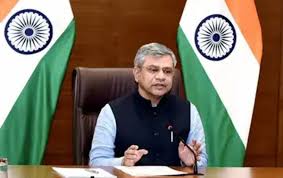
5.08 Lakh Recruitment in Indian Railways Between 2014–15 and 2024–25: Ashwini Vaishnaw

0

Vinod Bhat

New Delhi: Presently, recruitment against 1,43,086 vacancies of non-gazetted personnel has been taken up on Indian Railways as per  Annual Calendar 2024 and 2025.

During January to December 2024, ten Centralized Employment Notifications (CENs) for 92,116 vacancies were notified for filling up of posts of Assistant Loco Pilots (ALPs), Technicians, Sub-Inspectors, Constables in Railway Protection Force (RPF), Junior Engineers (JEs)/ Depot Material Superintendent (DMS)/ Chemical & Metallurgical Assistant (CMA), Paramedical Categories, Non-Technical Popular Categories (Graduate), Non-Technical Popular Categories (Under-Graduate), Ministerial & Isolated Categories and Level-1 categories such as Assistants, Track Maintainers and Pointsman.

First stage/Single stage Computer Based Tests (CBTs) for 59,678 posts has been completed.  Details are as under:-


Exam Candidates Cities Languages
1st Stage CBT for the post of ALP

(18,799 vacancies)

18,40,347 156 15
CBT for the post of Technician

(14,298 vacancies)

26,99,892 139 15
1st Stage CBT for the post of JE/DMS/CMA (7,951 vacancies) 11,01,266 146 15
CBT for the post of RPF-SI (452 vacancies) 15,35,635 143 15
CBT for the post of RPF-Constable

(4,208 vacancies)

45,30,288 147 15
 CBT for Paramedical Categories

(1,376 vacancies)

7,08,321 143 15
 1st Stage CBT for Non-Technical Popular Categories (Graduate) (8,113 vacancies) 58,41,774 141 15
1st Stage CBT for Non-Technical Popular Categories (Under Graduate) (3,445 vacancies) 63,27,473 157 15
CBT for Ministerial & Isolated categories

(1,036 vacancies)

4,46,013 139 15
Total Candidates 2,50,31,009    


2nd stage CBTs for the posts of ALP, JE/DMS/CMA and Non-Technical Popular Categories (Graduate & Under-Graduate) have also been completed.  Details are as under: –

Exam Candidates Cities Languages
2nd Stage CBT for the post of ALP

(18,799 vacancies)

2,66,363 112 15
2nd Stage CBT for the post of JE/DMS/CMA (7,951 vacancies) 1,17,339 118 15
2nd Stage CBT for Non-Technical Popular Categories (Graduate) (8,113 vacancies) 1,21,931 129 15
2nd Stage CBT for Non-Technical Popular Categories (Under-Graduate) (3445 vacancies) 51,978 79 15
Total Candidates 5,57,611    


Computer Based Aptitude Test (CBAT) for the post of ALP and Non-Technical Popular Categories (Graduate) and Computer based Skill Test for the post of Non-Technical Popular Categories (Graduate-level) and Ministerial & Isolated Categories have also been completed. Details are as under:-

Exam Candidates Cities Languages
CBAT for the post of ALP (18,799 vacancies) 1,32,044 84 2
Translation Test  for  Ministerial and Isolated Categories 1,233 8 2
CBAT for the post of Non-Technical Popular Categories (Graduate) 13,616 38 2
Computer Based Typing Skill Test  (CBTST) for the post of  Non-Technical Popular Categories (Graduate-level) 30,341 58 2
Total Candidates 1,77,234    


CBT for 32,438 vacancies for level -1 categories has commenced from 27.11.2025 in 140 cities in 15 languages. Physical efficiency Test (PET) for 4,208 vacancies of Constable (RPF) has been completed on 06.12.2025.

Panels for more than 34,000 candidates for various posts including the posts of Technicians, Junior Engineers, Paramedical Categories, Sub-Inspectors (RPF) and Assistant Loco Pilots have been finalised.  Majority of them are in safety categories.

In addition, as per Annual Calendar for the year 2025, nine Centralized Employment Notifications (CENs) for 50,970 vacancies have also been issued. Details are as under:-

CEN No. Post Name No. of Vacancies notified Month  of Notification
01/2025 Assistant  Loco Pilots 9,970 March 2025
02/2025 Technician 6,238 June 2025
03/2025 Paramedical categories 434 July 2025
04/2025 Section Controller 368 August 2025
05/2025 Junior Engineer/ Depot Material Superintendent 2,585 October 2025
06/2025 Non-Technical Popular Categories (Graduate) 5,810 October 2025
 07/2025 Non-Technical Popular Categories (Under-Graduate) 3,058 October 2025
 08/2025 Isolated Categories 312 December 2025
09/2025 Level-1 22,195 December 2025

The RRB examinations are quite technical in nature entailing large scale mobilization of men and resources and training of manpower. Railway overcame all these challenges and successfully conducted the recruitment in a transparent manner following all laid down guidelines. No instance of paper leakage or similar malpractice has occurred during the entire process.

Recruitment done in Indian Railways during 2004-05 to 2013-14 vis-à-vis during 2014-15 to 2024-25 is given as under:-

Period Recruitments
2004-05 to 2013-14 4.11 lakh
2014-15 to 2024- 25 5.08 lakh
2025-26 (till date) 34,929


Further, as system improvement, the Ministry of Railways has introduced a system of publishing the annual calendar from 2024 for recruitment to various categories of Group ‘C’ posts. The introduction of the annual calendar is benefitting the aspirants in the following manner:

•    More opportunities for candidates;

•    Opportunities to those becoming eligible every year;

•    Certainty of exams;

•    Faster Recruitment process, Training and Appointments

This information was provided by the Union Minister for Railways, Information & Broadcasting and Electronics & Information Technology, Shri Ashwini Vaishnaw, in a written reply to a question in Rajya Sabha today.

Ministry of Railways Following up the Land Acquisition Process with Govt. of Kerala for Angamali – Sabarimala New Line Project

0

Vinod Bhat

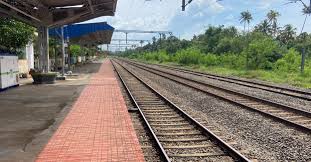
New Delhi: Tirur is presently being served by 90 train services including 20631/20632 Mangaluru Central-Thiruvananthapuram Central Vande Bharat Express, inter alia providing connectivity to cities like Delhi, Mumbai, Kolkata, Chennai, etc. To facilitate the passengers of Tirur, stoppage of 22475/22476 Hisar-Coimbatore Express has been provided at Tirur w.e.f 28.01.2026. Further, 16329/16330 Nagercoil-Mangaluru Junction Amrit Bharat Express (with scheduled stoppage at Tirur), has also been introduced w.e.f 27.01.2026.

Besides, provision of stoppages of train services depends on the traffic justification, operational feasibility including availability of extra time on the section & availability of matching infrastructure such as Platform length etc.

Angamali – Sabarimala New Line Project

Angamali – Sabarimala  via  Erumeli  new  line  project  was sanctioned in 1997-98 on 50:50 cost sharing basis. Work on Angamali-Kaladi (7 Km) and long lead works on Kaladi-Perumbavoor (10 Km) was taken up. However, further works on this project could not be taken forward due to protests by local people against land acquisition and fixing of alignment of the line, court cases filed against the project and inadequate support from the Government of Kerala. Accordingly, the project was kept under abeyance in Sept, 2019.

Subsequently, to provide connectivity to Sabarimala Shrine, a survey on alternate alignment i.e. Chengannur – Pamba (75 Km) new line was also carried out. However, the project was not found feasible.

Meanwhile, the estimated cost of the Angamali – Sabarimala  via  Erumeli  new  line  project was updated at ₹3,801 crore and submitted to Government of Kerala for the acceptance of the estimate and willingness to share cost of the project.

In August 2024, the Government of Kerala communicated their conditional consent. Government of Kerala was requested by Railway to submit unconditional consent for sharing the cost.

Then the Minister of Railways requested the Chief Minister of Kerala to acquire land using their share of 50% of the cost of the project. Once land acquisition by State starts, work can proceed further.

Now, on the request of Ministry of Railways, the Govt. of Kerala has initiated land acquisition proceedings and the Angamali – Sabarimala new line project has moved forward. Ministry of Railways is following up the land acquisition process with Govt. of Kerala.

Budget allocation in the recent years has increased significantly. Budget allocation for infrastructure  projects  and  safety  works,  falling  fully/partly  in  the  State  of  Kerala including Angamali – Sabarimala project is as under:-

Period Outlay
2009-14 ₹ 372 crore/year
2025-26 ₹3,042 crore  (more than 8 times)

https://x.com/i/status/2019702172381073892

Amrit Bharat Station Scheme

So far, 1,337 stations have been identified for development under the Amrit Bharat Station Scheme. Development works at railway stations under Amrit Bharat Station Scheme have been taken up at a good pace.