spot_imgspot_img
spot_img
Home Blog Page 47

M.Y. Tarigami chairs review meeting on Power Supply issues of Kulgam Constituency

0

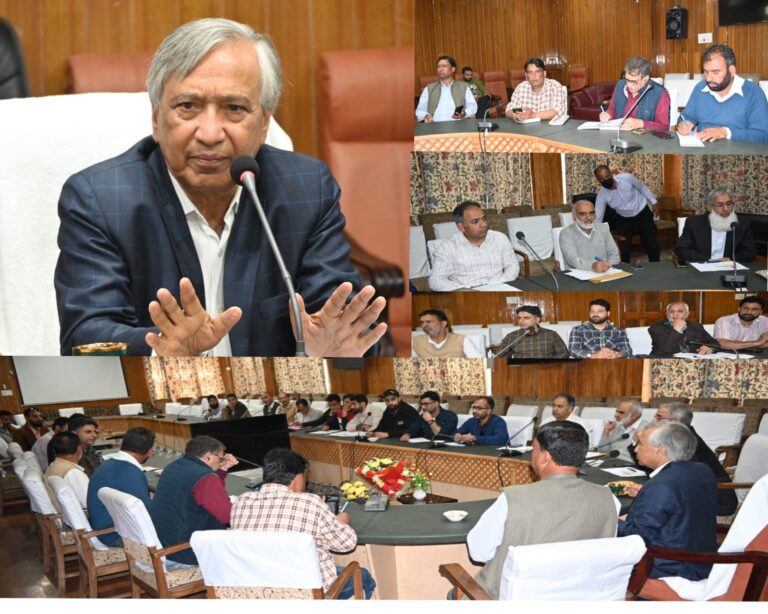
KULGAM, APRIL 23: MLA Kulgam, Mohammad Yousuf Tarigami, today chaired a review meeting at Rest House Chawalgam to assess the functioning of the Power Development Department in the constituency.

The meeting was attended by officers and officials of the department and other concerned agencies.

During the meeting, various issues related to electricity supply and power infrastructure in the constituency were discussed.

Emphasis was laid on strengthening the existing power distribution network, ensuring reliable electricity supply, and addressing public grievances in a timely manner.
Tarigami also reviewed the progress of centrally sponsored schemes, particularly the Revamped Distribution Sector Scheme (RDSS).

The meeting also discussed uninterrupted power supply to PHC Behibagh, where the department informed that the proposal for providing a UPS backup system to the hospital is being expedited and is expected to be finalized within a week.

The status of dedicated power supply to Lift Irrigation Hanjer was also reviewed. The department informed that estimates have already been prepared and, upon receipt of the required Administrative Approval (AA), the work will be tendered without delay.
The meeting further discussed the construction of a new Receiving Station at Katrusoo, for which demarcation of the identified land will be carried out so that the project can be taken up at the earliest.

He stressed the need for coordinated efforts to ensure the timely execution of power infrastructure projects in the district.

NCB Issues Strong Advisory for Indians Travelling to Maldives Amid Tougher Drug Laws

0
VINOD BHAT
NEW DELHI, April 23: In view of the tightening of anti-narcotics regulations in the Maldives, the Narcotics Control Bureau (NCB) on Thursday issued a detailed advisory cautioning Indian citizens to strictly adhere to the island nation’s stringent drug laws while travelling abroad.
According to the press release dated April 23, 2026, recent amendments to the Maldives’ Drugs Act, which came into effect in March this year, have significantly enhanced penalties for drug-related offences. The revised legislation prescribes severe punishments, including life imprisonment and, in cases involving large-scale drug trafficking, even the death penalty, subject to confirmation by competent courts under Maldivian law.
The advisory further highlights that the amended law enforces strict penalties not only for trafficking but also for possession of even small quantities of prohibited substances, underscoring the zero-tolerance stance adopted by Maldivian authorities.
The NCB noted with concern that several recent cases have emerged involving foreign nationals, including Indian citizens, being arrested in the Maldives on charges related to narcotics offences. In response, the High Commission of India in Malé has also issued separate advisories urging Indian travellers to exercise utmost caution and comply fully with local laws and regulations.
Issuing a set of precautionary guidelines, the NCB has strongly advised Indian citizens not to carry any baggage, package, or item on behalf of others under any circumstances without being fully aware of its contents. Travellers have also been cautioned to remain vigilant at airports, seaports, and transit points, where they may be approached by unknown individuals requesting them to transport goods.
The Bureau further emphasised the importance of maintaining strict personal control over one’s belongings at all times to avoid any inadvertent legal complications. It reiterated that ignorance of local laws cannot be cited as a defence and any violation may invite stringent legal consequences under Maldivian jurisdiction.
Citizens have also been encouraged to report any suspicious approach or incident through the MANAS National Narcotics Helpline (1933), a dedicated platform aimed at combating drug trafficking and related activities.
Reaffirming its zero-tolerance policy against narcotics, the NCB urged all Indian travellers to remain vigilant, responsible, and law-abiding while visiting foreign destinations, particularly countries with strict drug enforcement regimes like the Maldives.
The advisory comes as part of broader efforts by Indian authorities to safeguard citizens abroad and prevent their involvement—knowingly or unknowingly—in drug-related offences that could lead to severe legal repercussions.

Safe repatriation of more than 2,680 Indian seafarers facilitated so far, including 65 in the last 24 hours from various locations across the region

0

Vinod Bhat

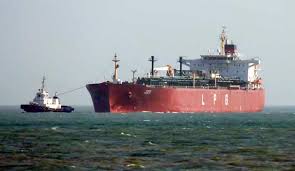
New Delhi: Amid the evolving situation in West Asia, the Government of India continues its efforts to keep citizens informed through regular updates. In this regard, a media briefing was held today at the National Media Centre, where officers from the Ministries of Petroleum and Natural Gas, Ports, Shipping and Waterways, and External Affairs provided updates on fuel availability, maritime operations, assistance to Indian nationals in the region, and measures being undertaken to maintain stability across key sectors.

Energy Supply and Fuel Availability

The Ministry of Petroleum and Natural Gas provided an update on the current fuel supply situation, outlining measures being taken to ensure uninterrupted availability of petroleum products and LPG in the context of the evolving situation in West Asia. It was noted that:

Public Advisory and Citizen Awareness

  • Citizens are advised to avoid panic purchase of petrol, diesel and LPG as the Govt is making all efforts to ensure availability of petrol, diesel and LPG.
  • Beware of rumours and rely on official sources for correct information.
  • LPG consumers are requested to use digital booking platforms and avoid visiting distributors.
  • Citizens are encouraged to use alternate fuels such as PNG and electric or induction cooktops.
  • All citizens are requested to make necessary efforts to conserve energy in their daily use during the current situation.

Government Preparedness and Supply Management Measures

  • Despite the ongoing geopolitical situation, the Government has ensured that 100% supply is being made to Domestic LPG, Domestic PNG and CNG (Transport).
  • For commercial LPG, priority has been given to hospitals, educational institutions. Besides this, priority has also been given to pharma, steel, automobile, seed, agriculture, etc. In addition to this, supply of 5 Kg FTL to migrant labour is also doubled based on avg. daily supply on 2nd and 3rd March 2026.
  • The Government has already implemented several rationalisation measures on both the supply and demand side, including enhancing refinery production, increasing the booking interval from 21 to 25 days in urban areas and up to 45 days in rural areas and prioritising sectors for supply.
  • Alternate fuels such as kerosene and coal have been made available to ease pressure on LPG demand.
  • The Ministry of Coal has directed Coal India and Singareni Collieries to supply additional coal to States for distribution to small and medium consumers.
  • States have been advised to facilitate new PNG connections for domestic and commercial consumers.

Coordinated Efforts with States/UTs and Institutional Mechanisms

  • State Governments are empowered under the Essential Commodities Act, 1955 and LPG Control Order, 2000 to monitor supply and act against hoarding and black marketing.
  • Govt. of States/UTs have to play a primary role in monitoring and regulating supply situation of essential commodities including Petrol, Diesel and LPG. Govt. of India has reiterated the same via multiple letters and VCs to all States/UTs.
  • The Government of India vide letters dated 27.03.2026 and 02.04.2026 have stressed the need for proactive public communication to reassure citizens regarding adequate fuel availability. Regular review meetings are being held with States/UTs. In this context, meetings were convened on 02.04.2026 (Chaired by Secretary, MoPNG) and on 06.04.2026 (Chaired by Secretary, MoPNG along with Secretaries of I&B and Consumer Affairs), wherein the following was emphasized:
    • To issue daily press briefings and issue regular public advisories.
    • To actively monitor and counter fake news / misinformation on social media.
    • To intensify daily enforcement drives by District admin and to continue raids and inspections in coordination with OMCs
    • To issue Commercial LPG allocation orders within their States/UTs
    • To issue SKO allocation orders for additional SKO allotted to the States/UTs.
    • To promote PNG adoptions and alternate fuels.
    • To prioritize LPG supply, especially for domestic needs, and adopt targeted distribution of 5 kg FTL cylinders to ensure supply stability.
  • All States/UTs have established control rooms and district monitoring committees to curb hoarding and black marketing.
  • Many states/UTs are issuing/carrying out press briefs.

Enforcement and Monitoring Actions

  • Enforcement actions continue across the country to curb hoarding and black marketing of LPG. Yesterday, more than 2600 raids were conducted, wherein about 285 cylinders were seized across the country.
  • Cumulatively, till date more than 1.5 Lakh raids have been conducted, and more than 66,000 cylinders have been seized across the country. Further, more than 1100 FIRs have been registered, and 255 persons have been arrested.
  • PSU OMCs have strengthened and continued surprise inspections and imposed penalties on 298 LPG distributorships, and 70 LPG distributorships have been suspended till yesterday.

LPG Supply

Domestic LPG Supply Status:

  • LPG supply continues to be affected by the prevailing geopolitical situation.
  • Supply of LPG to domestic households has been prioritized.
  • No dry-outs have been reported at LPG distributorships.
  • Online LPG cylinder bookings have increased to 98% on industry basis yesterday.
  • Delivery Authentication Code (DAC) based deliveries have increased to around 94% to prevent diversion. DAC is received on the registered mobile number of the consumer.
  • On 22.04.2026, more than 52 Lakh domestic LPG cylinders were delivered.    

Commercial LPG Supply and Allocation Measures:

  • Total commercial LPG allocation has been increased to about 70% of pre-crisis levels, including 10% reform-linked allocation.
  • The Government of India vide letter dated 06.04.2026 has conveyed that daily quantity of 5 Kg FTL cylinders in each State available for disbursal to migrant labourers is being doubled based on the average daily supply (Number of cylinders) to migrant labourers during 2nd-3rd March 2026 beyond the limit of 20% mentioned in letter dated 21.03.2026. These 5 Kg FTL cylinders are at disposal of the State Government for supplying only to migrant labourers in their State with assistance of Oil Marketing Companies (OMCs).
  • Since 1st April 2026, more than 17 Lakh – 5 Kg FTL cylinders have been sold.
  • Yesterday, more than 86,000 – 5 Kg FTL cylinders were sold across the country.
  • Since 3rd April 2026, PSU OMCs have organised more than 8200 awareness camps for 5 Kg FTL Cylinders, wherein more than 1,27,000 – 5Kg FTL cylinders were also sold.
  • Yesterday, 7877 – 5 Kg FTLs were sold through more than 320 camps.
  • A three-member committee of Executive Directors from IOCL, HPCL and BPCL is coordinating with State authorities and industry bodies to plan commercial LPG distribution in the States/UTs.
  • During the month of April-26 (till 22.04.26), a total of 1,40,362 MT (Equivalent to more than 73.87 Lakh of 19 Kg LPG Cylinders) of Commercial LPG has been sold.
  • On 22.04.2026, 8483 MT of Commercial LPG (Equivalent to more than 4.46 Lakh – 19 Kg cylinders) was sold.

Natural Gas Supply and PNG Expansion Initiatives

  • Consumers have been prioritised with 100% supplies to D-PNG and CNG-Transport.
  • The overall gas allocation to fertilizer plants has been enhanced to approximately 95% of their six-month average consumption.
  • Additionally, gas supply to other industrial and commercial sectors, including supplies through CGD networks, is enhanced up to 80%.
  • CGD entities have been advised to prioritize PNG connections for commercial establishments such as hotels, restaurants and canteens across all their GAs, to address concerns regarding the availability of commercial LPG.
  • CGD companies including IGL, MGL, GAIL Gas and BPCL are offering incentives for domestic and commercial PNG connections.
  • States/UTs and Central Ministries have been requested to expedite approvals required for expansion of CGD networks.
  • The Government of India vide letter dated 18.03.2026 has offered all States/UTs additional 10% allocation of commercial LPG to States provided they can help in long term transition from LPG to PNG.
  • 22 States/UTs are receiving additional commercial LPG allocation linked to PNG expansion reforms.
  • The Ministry of Road Transport & Highways vide letter dated 24.03.26 has adopted an ‘Accelerated Approval Framework for CGD infrastructure with reduced timelines’ as a special for 3 months to process applications pertaining to CGD infrastructure on priority.
  • The Government of India vide Gazette dated 24.03.2026 has notified the Natural Gas and Petroleum Products Distribution (Through Laying, Building, Operation and Expansion of Pipelines and Other Facilities) Order, 2026 under the Essential Commodities Act, 1955. The Order provides a streamlined and time-bound framework for laying and expanding pipelines across the country, addressing delays in approvals and access to land, and enabling faster development of natural gas infrastructure, including in residential areas. It is expected to accelerate PNG network growth, enhance last-mile connectivity, and support the transition to cleaner fuels, thereby strengthening energy security and advancing India’s gas-based economy.
  • PNGRB has directed CGD entities to expedite D-PNG connections. Also, the National PNG Drive 2.0 has been extended till 30.06.2026 to sustain momentum in PNG expansion.
  • To encourage a cleaner, more secure and self-reliant energy future, the Government of India has developed a model draft State CBG Policy. The model policy is intended to serve as a comprehensive flexible guiding framework to enable States to create their own investor-friendly and implementation-oriented ecosystem for CBG development. Those States which opt for this, will be prioritized for the next tranche of additional allocation of commercial LPG.
  • MoEFCC vide order dated 07.04.2026 has directed CPCB to issue necessary directions to SPCB/PCCs for granting consent to establish or consent to operate within 15 days for CGD network/infrastructure.
  • Since March 2026, about 5.18 Lakh PNG connections have been gasified and infrastructure has been created for additional 2.58 lakh connections, taking the total to 7.76 lakh connections. Further, about 5.87 Lakh customers have been registered for new connections.
  • Till 21.04.2026, more than 41,000 PNG consumers have surrendered their LPG connections via MYPNGD.in website.

Crude Position and Refinery Operations

  • All refineries are operating at high capacity with adequate crude inventories, while sufficient stocks of petrol and diesel are being maintained.
  • Domestic LPG production from refineries has been increased to support domestic consumption.
  • An inter-ministerial Joint Working Group (JWG) has been set up to ensure availability of petrochemical feedstock supply for the domestic market. Subsequently, Govt. of India vide order dated 01.04.2026 has permitted Oil Refinery companies including Petrochemical Complexes to make certain minimum quantities of C3 & C4 streams available for critical sectors as determined by Centre for High Technology (CHT).
  • Based on the requests received from the Department of Pharmaceuticals, Department of Chemicals & Petro Chemicals (DCPC), Dept. for Promotion of Industry and internal trade (DPIIT), the provision for 1000 MT/day, from LPG pool, has been made for Pharma and Chemical sector companies.
  • Since 9th April 2026, more than 6300 MT of propylene has been sold by Mumbai, Kochi and Mathura refineries to Chemical and Pharma Industry.

Retail Fuel Availability and pricing Measures

  • Retail outlets across the country are operating normally.
  • The Middle East crisis has led to an abnormal increase in crude prices; however, to protect consumers, the Government of India has reduced excise duty on petrol and diesel by ₹10 per litre.
  • Govt. of India vide Gazette notification dated 11.04.2026 has increased the export levy on diesel to Rs. 55.50 per litre and on ATF to Rs. 42 per litre, to ensure availability of these products in the domestic market.
  • Regular Retail Prices for Petrol and Diesel are unchanged and there is no price increase at PSU OMCs Retail Outlets.

Kerosene Availability and Distribution Measures

  • An additional allocation of 48,000 KL of kerosene has been provided to States/UTs over and above regular allocation.
  • 18 States/UTs have issued SKO allocation orders, while Himachal Pradesh and Ladakh have indicated no requirement.

Maritime Safety and Shipping Operations

The Ministry of Ports, Shipping and Waterways provided an update on the prevailing maritime situation in the Persian Gulf, detailing the measures being undertaken to ensure the safety and security of Indian vessels and crew in the region. It was stated that:

In the past 24 hours, some incidents of firing on foreign-flagged vessels have been reported in the Strait of Hormuz involving Indian seafarers. All seafarers on board both vessels are safe.

a. Vessel Euphoria, a container ship flagged with Panama has 21 Indian seafarers onboard. All of them are safe.

b. Vessel Epaminondas, a container ship flagged with Panama has 1 Indian seafarer onboard. He is safe.

  • All Indian seafarers in the region are safe.
  • Indian-flagged crude oil tanker Desh Garima safely crossed the Strait of Hormuz on 18 April 2026. The vessel, carrying 31 Indian seafarers, reached Mumbai on 22 April 2026.
  • The Ministry of Ports, Shipping and Waterways continues to coordinate with the Ministry of External Affairs, Indian Missions, and maritime stakeholders to ensure seafarer welfare and uninterrupted maritime operations.
  • DG Shipping Control Room Update: The Control Room has handled 7,403 calls and more than 15,639 emails since activation. In the past 24 hours, 161 calls and 320 emails have been received.
  • The Ministry, through the Directorate General of Shipping (DG Shipping), has facilitated the safe repatriation of more than 2,680 Indian seafarers so far, including 65 in the last 24 hours from various locations across the Gulf region.
  • Port Operations: Port operations across India remain normal, with no congestion reported.

Safety of Indian Nationals in the Region

The Ministry of External Affairs continues to monitor developments in the Gulf and West Asia region, with focused efforts on ensuring safety, security and welfare of the Indian community in the region. It was informed that:

  • Dedicated special control rooms in the Ministry of External Affairs are operational and are working in coordination with Indian missions.
  • The Ministry of External Affairs is in regular contact with State Governments and Union Territories for sharing of information and better alignment of efforts.
  • Indian Missions and Posts continue to operate round-the-clock helplines and are proactively assisting Indian nationals. They remain in close contact with the local Governments.
  • Updated advisories are being issued regularly, including information on local government guidelines, flight and travel situations and consular services and various welfare measures being undertaken to support our community.
  • Indian Missions are actively engaged with the resident Indian community. Ambassadors are regularly interacting with the Indian community associations, organizations, professional groups, an Indian companies to address their concerns.
  • Government is according high priority to the welfare of Indian seafarers in the region. Indian Missions are extending all assistance to them including coordination with the local authorities and agencies, extending consular assistance, and assisting for requests to return to India.
  • The overall flight situation continues to improve with additional flights operating from the region to various destinations in India. Since 28 February, around 12,12,000 passengers have travelled from the region to India.
  • In the UAE, airlines continue to operate limited commercial flights between the UAE and India based on operational and safety considerations, with around 110 flights expected today between UAE and India.
  • Flights continue to operate from various airports in Saudi Arabia and Oman to various destinations in India.
  • With Qatar airspace partially open, Qatar Airways is operating flights to various destinations in India.
  • Kuwait airspace remains closed. Jazeera Airways and Kuwait Airways are operating non-scheduled commercial flights from Dammam Airport in Saudi Arabia to India.
  • Bahrain airspace is open. Gulf Air is operating flights from Bahrain to various destinations in India.
  • Iraq airspace is open with limited flight operations to destinations in the region, which can be used for onward travel to India.
  • Iran airspace is partially open for cargo and chartered flights. Indian embassy in Tehran continues to facilitate movement of Indian nationals through Armenia and Azerbaijan for onward travel to India. So far, 2428 Indian nationals have moved out of Iran into Armenia and Azerbaijan. This includes 1096 Indian students and 657 Indian fishermen.
  • Israel airspace is open and limited flight operations have resumed to destinations in the region, which can be used for onward travel to India.

District Administration Ganderbal Conducts Civil Defence Air Raid Mock Drill at Degree College Ganderbal

0

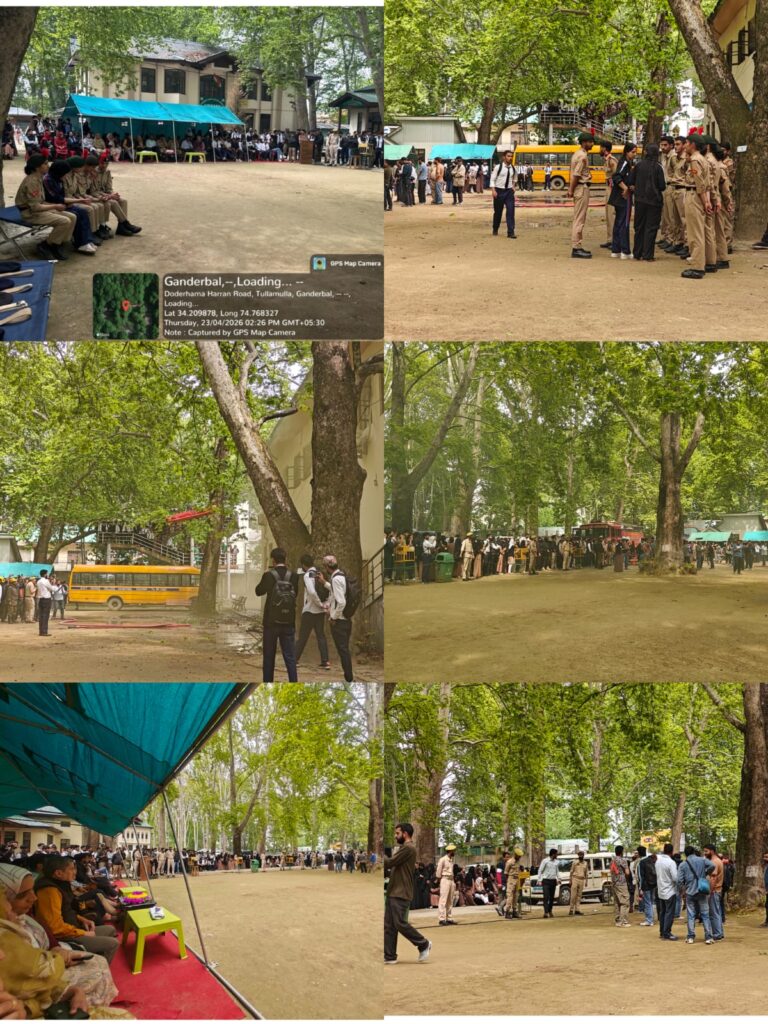
Ganderbal, Apr 23: District Administration Ganderbal Conducts Civil Defence Air Raid Mock Drill at Degree College GanderbalA Civil Defence Air Raid Mock Drill was conducted by the District Administration Ganderbal on 23 April 2026 at the campus of Govt. Degree College Ganderbal. The initiative aimed to educate students and staff on civil defence measures and emergency response procedures during disasters.

On this occasion, representatives from J&K Police, SDRF, and the Medical Department were present. The experts highlighted the Do’s and Don’ts to be followed in such emergency situations.

The program was organized under the patronage of the Worthy District Development Commissioner and the Principal, GDC Ganderbal, and was coordinated by Prof. Mansoor Ahmad Lone, Coordinator, Disaster Management Club and ANO, NCC, along with Dr. Salma, NCC Unit Girls Wing, and the Sports Department.

NCC cadets played a key role in the mock drill, demonstrating rescue of the injured using proper techniques followed during disasters.

A large number of participants, including faculty members, staff, and students, gained valuable knowledge on fire prevention, evacuation procedures, and emergency response protocols.

The college administration expressed gratitude to the experts/trainers for their valuable contribution to the program.

Pakistan Should Clamp Down On Terror Groups Like LeT,: US Lawmaker

0

WASHINGTON, Apr 23: US Congressman Brad Sherman has called on Pakistan to clamp down on terror groups such as Lashkar-e-Taiba (LeT), which has been linked to the 2025 Pahalgam terror attack.

Speaking at an exhibition organised by the Indian Embassy here on the “Human Cost of Terrorism”, Sherman remembered the victims of the Pahalgam attack on the first anniversary of the incident in which 26 innocent lives were killed.

“The attackers, identified as The Resistance Front, targeted innocent people, reportedly separating victims by religion. The group is widely seen as linked to Lashkar-e-Taiba, which has found sanctuary in Pakistan,” Sherman said at the exhibition on Wednesday evening.
“We must use this moment to demand that the Pakistani government clamp down on Lashkar-e-Taiba, Jaish-e-Mohammed and other terrorist groups,” the Democrat leader said.

The exhibition, organised at Capitol Hill, comes at a time when Pakistan is projecting itself as a peacemaker by mediating efforts to end the seven-week US-Iran war.
The event was attended by lawmakers from both Democratic and Republican parties.
The digital exhibition also displays major terror attacks perpetrated across the world, including the 1993 Mumbai bomb blasts, the 2008 Mumbai terror attacks and the Pahalgam attack. It also identifies the terror outfits responsible for the attacks, including several Pakistan-based individuals and entities such as Lashkar-e-Taiba terror group.

“The special exhibition essentially serves to remind us of a few things. One, the scourge of terror upon humanity remains determined to destroy our societies.
Countries around the world need to come together and remain resolute in defeating terrorism,” India’s Ambassador to the US Vinay Mohan Kwatra told reporters.
Kwatra said Prime Minister Narendra Modi has been clear about India’s unwavering resolve to deal with and defeat the scourge of terrorism.

Lawmakers who attended the exhibition included Michael Baumgartner, Bill Huizenga and Lisa McClain (all Republicans), and Julie Johnson, April Delaney, Ro Khanna, Raja Krishnamoorthi, Jamie Raskin, Shree Thanedar and Jonathan Jackson (all Democrats).
“We can share intelligence, ideas, policies and information to fight this threat jointly. When you work in silos, it is harder to coordinate and respond effectively. Through partnership, we can combine what each side is doing and build on what works,” McClain, chair of the House Republican Conference, said.

“That is the right way forward: working hand in hand, sharing information, learning from each other and acting together,” she added.
The images and visuals at the exhibition — each moment, memory, artefact and word — narrated stories of lives interrupted and altered by terrorism.

On May 7, 2025, India launched Operation Sindoor targeting terror infrastructure decimated multiple terror infrastructures in Pakistan and
Pakistan-occupied Kashmir. The operation targeted nine sites, including the headquarters and training centres of LeT and another terrorist group, Jaish-eMohammed, from where terror attacks against India were planned and directed.
Pakistan later also launched offensives against India. The military conflict between the two nuclear-armed neighbours, lasting nearly 88 hours, halted after they reached an understanding on the evening of May 10.

“Leaders like Atal Bihari Vajpayee were warning about this threat back in the 1990s, but very few people took him seriously. After the September 11 attacks, the United States realised terrorism is not confined to one region; it spreads and threatens freedom around the world,” Khanna said. “What Prime Minister Vajpayee said years ago was true: this is a global threat,” he added.

“I look forward to continuing to work as a co-chair of the caucus to support intelligence sharing, defence cooperation and the fight against terrorism, while standing up for freedom and democracy around the world,” Khanna said. Congressman Richard McCormick described terrorism as a “unique evil” threatening both India and the US.

“We face extremist forces that seek to crush those who think differently and reject freedom, self-determination and unity. That is our common enemy,” McCormick said.
“Terrorism is everyone’s problem. Those who try to destroy our diversity through violence, and who do not accept us for who we are, are the true enemy. I stand with you, and I look forward to working together. We will have peace through strength,” he said.

Mandaviya to inaugurate 30-bedded ESIC Hospital in Budgam on Friday

0

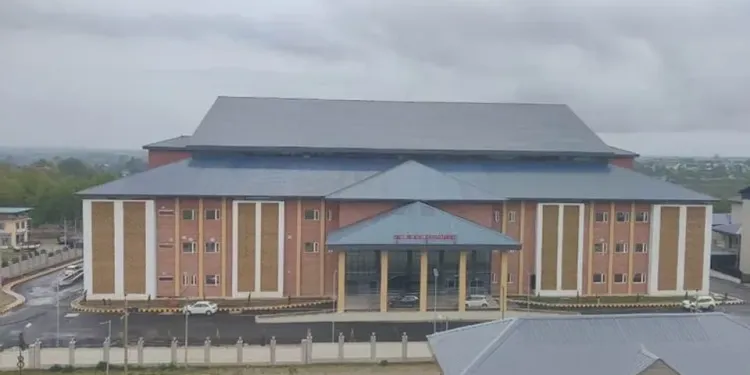
New Delhi, Apr 23: Union Minister of Labour and Employment and Youth Affairs and Sports, Mansukh Mandaviya, would inaugurate the newly constructed 30-bedded ESIC Hospital (expandable upto 100 bedded) at Ompora, Budgam, on Friday.

The facility, which is extendable up to 100 beds, marks a major milestone in enhancing healthcare delivery under the Employees’ State Insurance (ESI) scheme in the region.

In a special gesture, Mandaviya would honour the construction workers who contributed to the development of the hospital.

The facility would serve over 50,000 workers and their families of the region, improving healthcare access for residents of Budgam and surrounding districts.

The hospital project is constructed on a sprawling area of 5 acres with a project cost of around Rs 165 crore.

The hospital project includes the hospital building, service building, and 32 residential quarters covering the plinth area of around 24,500 sq m.

Initially, the hospital will begin with 30-beds and gradually, the bed strength will be increased to 100-beds.

The facility includes three modular operation theatres and one dedicated emergency OT for both planned and critical procedures.

It is equipped with four patient lifts for efficient movement and a modern HVAC system to ensure optimal air quality and comfort.

The infrastructure features eco-friendly systems such as solar water heating and sewage and effluent treatment plants.

The ESI scheme was introduced in J&K on October 16, 1989, covering about 7000 workers in Jammu, Kathua, and Srinagar.

At present, the ESI scheme is implemented across all districts of J&K serving approximately 1,83,119 insured persons and about 7,00,000 beneficiaries and is administered through the ESIC Regional Office at Jammu and the Jammu-Kashmir Employees’ State Insurance Society (JKESIS).

The Medical Benefit Delivery System in J&K provides primary healthcare through five Dispensary Cum Branch Offices at Srinagar, Kathua, Katra, Samba, and Udhampur, and eight Employees’ State Insurance Scheme (ESIS) Dispensaries – three in Srinagar, two in Jammu, and one each in Budgam, Kathua, and Samba under the JKESI Society.

Secondary care is available at the 50-bedded ESIC Model Hospital, Bari-Brahmana, Samba, with additional tie-up arrangements with 15 private nursing homes, hospitals, and diagnostic centres for secondary and super-specialty treatment.

J&K Govt Orders Attachment of CEO Baramulla, Assigns Charge to Joint Director

0

Jammu, Apr 23: The Jammu and Kashmir School Education Department on Thursday ordered the attachment of a chief education officer with immediate effect, according to an official order.

As per Government Order No. 159-JK (Edu) of 2026 dated April 23, Abdul Rashid Mir, In-charge Chief Education Officer (CEO) Baramulla, who was also holding additional charge as CEO Bandipora, has been attached to the Directorate of School Education, Kashmir.

The order, issued by the Civil Secretariat, Jammu, stated that the decision was taken by the competent authority and will come into force immediately.

It further directed that the Joint Director, Education (North) Kashmir shall look after the responsibilities previously held by Mir, in addition to his own duties, until further orders.

The order was issued by Commissioner/Secretary to the Government, School Education Department, Ram Niwas Sharma. (KDC)

NCF–SaMaPa MoU to Amplify Kashmir’s Musical Legacy

0

KD NEWS SERVICE

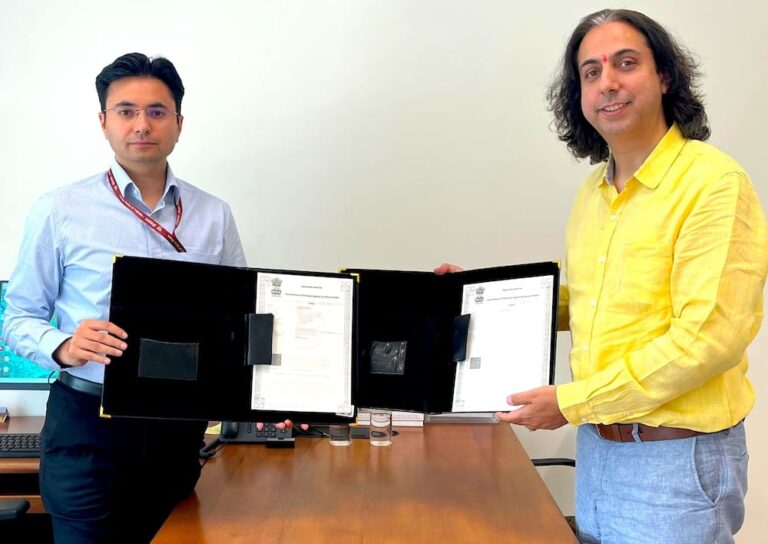
NEW DELHI, April 23:In a landmark step aimed at preserving and promoting Kashmir’s rich cultural heritage, the National Culture Fund (NCF), under the Ministry of Culture, has signed a Memorandum of Understanding (MoU) with the Sopori Academy of Music and Performing Arts. The collaboration is set to play a pivotal role in safeguarding the Valley’s timeless musical traditions and ensuring their transmission to future generations.

The MoU was formally signed at Kartavya Bhawan in New Delhi by Sh. Inderjeet Singh, Member Secretary, NCF, and noted Santoor maestro Abhay Rustum Sopori, Managing Trustee of SaMaPa. The partnership underscores the Government of India’s continued commitment to preserving the country’s diverse and vibrant cultural legacy.
Described as a visionary initiative, the collaboration seeks to revitalize and promote the age-old musical traditions of Kashmir by engaging both veteran maestros and emerging young artists. It is expected to provide a structured platform for documentation, dissemination, and innovation within traditional Kashmiri music, particularly the Sufiana and Santoor traditions that have long been synonymous with the region’s spiritual and artistic identity.

Speaking on the occasion, Pandit Abhay Sopori emphasized that the initiative carries forward the legacy of his father, the legendary Bhajan Sopori, revered as the “Saint of Santoor” and “King of Strings.” He described the MoU as a significant milestone in India’s cultural journey, noting that it would ensure that the “timeless sounds of Kashmir continue to resonate across the world.”

He further expressed gratitude to the Ministry of Culture and NCF for supporting a project that aims not only to preserve but also to rejuvenate Kashmir’s musical heritage. The initiative will focus on bridging generational gaps by creating opportunities for collaboration between seasoned artists and young talent, thereby fostering continuity and innovation.

Pandit Abhay Sopori, widely regarded as a cultural icon, is the present custodian of the centuries-old Sopori–Sufiana Gharana, a lineage that traces back over 300 years and is deeply rooted in the region’s Shaivite-Sufi ethos. Known for his contributions as a composer, innovator, and cultural philanthropist, he has introduced new ragas, led cultural reforms, and contributed to award-winning musical projects, earning recognition as a global ambassador of Indian classical music.

The NCF–SaMaPa partnership is expected to open new avenues for cultural exchange, research, and global outreach, reinforcing Kashmir’s position as a cradle of rich artistic traditions. By institutionalizing efforts to preserve and promote its musical heritage, the initiative marks a significant step toward ensuring that the Valley’s unique cultural voice continues to inspire audiences across the world.

Staff Crunch Cripples Healthcare at CHC Pattan

0

MOHAMMAD LATEEF

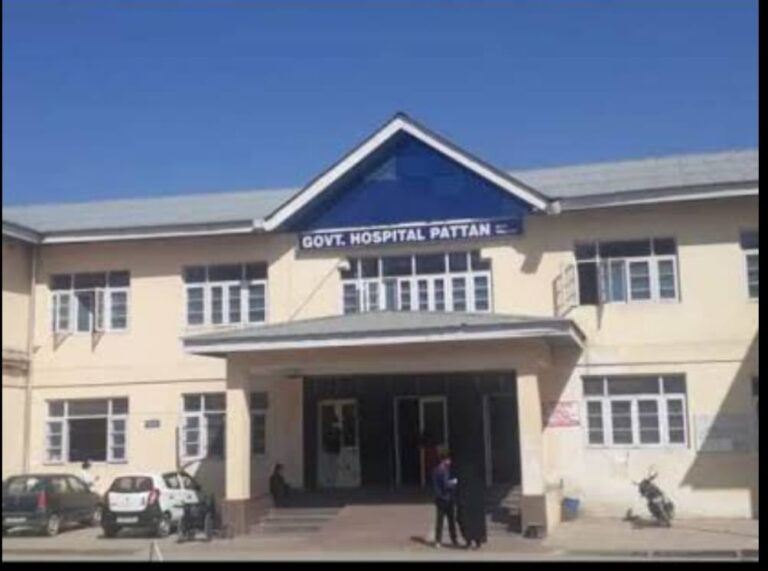
Pattan, April 23: The Community Health Centre (CHC) Pattan is facing a severe shortage of medical staff and essential facilities, leaving patients in distress and struggling to access timely treatment.For years, several key specialist posts at the hospital have remained vacant, including those of Consultant Surgery, Consultant Anesthesia, and Consultant Pediatrics. The situation has further deteriorated after the transfer of existing doctors, with no replacements appointed so far. This has placed a heavy burden on the already stretched healthcare system in the area.

The shortage is not limited to specialist doctors. The hospital is also grappling with a lack of paramedical staff. Important positions lying vacant include three pharmacists, two head pharmacists, one supervisor, a senior X-ray technician, a junior X-ray technician, and a basic health worker. The absence of adequate support staff has compounded the challenges faced by both patients and the available medical personnel.

In addition, two Medical Officer posts at Palhalan and Gund Khawaja Qasim have remained unfilled following transfers, leaving these adjoining areas without adequate medical coverage.

Despite having seven surgeons, including four from the gynecology department, the hospital has only one anesthesiologist. This imbalance has drastically reduced the number of surgeries being conducted. Locals point out that other hospitals have multiple anesthesia specialists and suggest that some could be deputed to Pattan to ease the crisis, but no such measures have been taken so far.
The hospital’s location along the busy National Highway-1—an accident-prone stretch—makes the lack of emergency and surgical support even more concerning. In critical situations, patients often face delays due to inadequate staffing and limited resources.

Adding to the woes, a dialysis centre set up at the hospital remains non-functional due to the absence of a proper water supply and a trained dialysis technician, depriving patients of a crucial life-saving service.

Residents of Pattan have urged Lieutenant Governor Manoj Sinha, Chief Minister Omar Abdullah, Health Minister Sakeena Itoo, and Chief Secretary Atal Dulloo to personally intervene and address the pressing issues at the earliest to restore effective healthcare services at the facility.

SKIMS Bemina Launches Transformative CBME Drive to Redefine Medical Education

0
CBME will shape future-ready doctors: Dr. Fazlul Parray
KD NEWS SERVICE
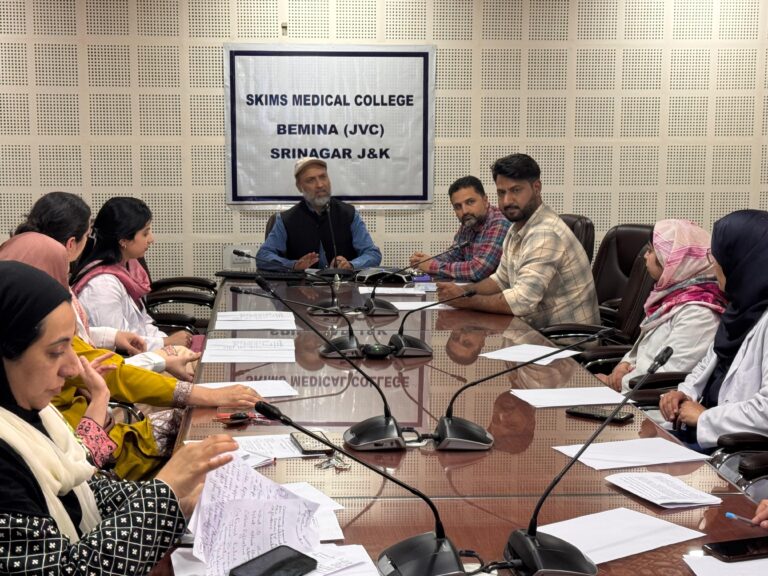
SRINAGAR, April 23: In a significant stride towards reshaping medical education in Jammu and Kashmir, SKIMS Medical College Hospital (MCH), Bemina, on Thursday inaugurated an innovative series of sessions on Competency-Based Medical Education (CBME), setting the stage for a paradigm shift from traditional teaching to outcome-driven learning.
Held in the Board Room of the institution under the patronage of Principal Prof. Dr. Fazlul Qadir Parray, the inaugural session was organized by the Department of Community Medicine with a clear objective: to sensitize faculty members and senior residents to the principles, philosophy, and practical implementation of CBME.
The event drew enthusiastic participation from faculty and senior residents across multiple pre-clinical and para-clinical disciplines, reflecting a shared institutional resolve to modernize medical pedagogy. The interdisciplinary engagement not only enriched the deliberations but also underscored a collective commitment to enhancing the quality and relevance of medical training.
The session commenced on an interactive note with a brainstorming exercise titled “From Known to Unknown,” facilitated by Dr. Yasmeen, Dr. Qudsia, and Dr. Manoj. Designed to gauge participants’ baseline understanding of CBME, the activity encouraged open dialogue and critical thinking. It served as a dynamic entry point into the subject, breaking the monotony of conventional sessions and fostering an atmosphere of collaborative learning.
Building on this momentum, Dr. Ashfaq Ahmad Bhat delivered a comprehensive presentation on “CBME: The Basics.” His talk delved into the conceptual underpinnings of competency-based education, highlighting its emphasis on clearly defined learning outcomes, measurable competencies, and a systems-based approach to curriculum design. He articulated the urgent need to transition from time-bound, teacher-centric models to learner-centric frameworks that prioritize skills, attitudes, and real-world applicability.
A distinctive feature of the session was its emphasis on reflective learning. Facilitated by Dr. Beenish and Dr. Altaf, participants engaged in structured reflection writing, allowing them to internalize key concepts and articulate their insights. This exercise reinforced one of the core tenets of CBME—continuous self-assessment and reflective practice as tools for professional growth.
Further enhancing the session’s interactivity, an “Exit Ticket” exercise was conducted by Dr. Fahd Bukhari and Dr. Labeeb Mir. Participants were invited to summarize their key takeaways and provide feedback, enabling organizers to assess the immediate impact of the session while identifying areas for refinement in future modules.
The session concluded with an engaging discussion, during which queries were addressed and participants were briefed about upcoming sessions in the CBME series. The closing remarks emphasized sustained engagement and the need for a gradual yet determined transition towards competency-based teaching methodologies.
Overall, the inaugural session was widely appreciated for its interactive design and practical orientation. It not only laid a strong foundation for understanding CBME principles but also marked a crucial step in aligning the institution’s academic framework with global standards in medical education.
As SKIMS MCH Bemina embarks on this transformative journey, the initiative is expected to play a pivotal role in producing future-ready medical professionals equipped with the competencies required to meet evolving healthcare challenges.